Japanese Culture Habits That Can Feel Different
Quality checked lesson
Learn how to explain Japanese culture habits in simple English, with careful language, useful examples, and respectful questions.
 English lesson
Article
Choose how to use this lesson
You can switch anytime.
Study mode
Introduction
Typing practice
Type the text exactly. Timer starts with your first key.
Text to type: Japan can feel familiar and surprising at the same time. You will study everyday habits around quietness, indirect speech, shoes, gifts, service, groups, seasons, apologies, and small details.
Ready. The timer starts with your first key.
Complete
Great job!
Strong finish — your speed stayed steady.
Your rhythm
Speed over time- Time
- 0:00
- Raw speed
- 0 WPM
- Wrong keys
- 0
- Corrected
- 0
Before you begin
Warm-Up Questions
What Japanese habit or custom have you heard about before?
What public place feels quiet or noisy in your country?
When you visit another country, do you like learning small social rules?
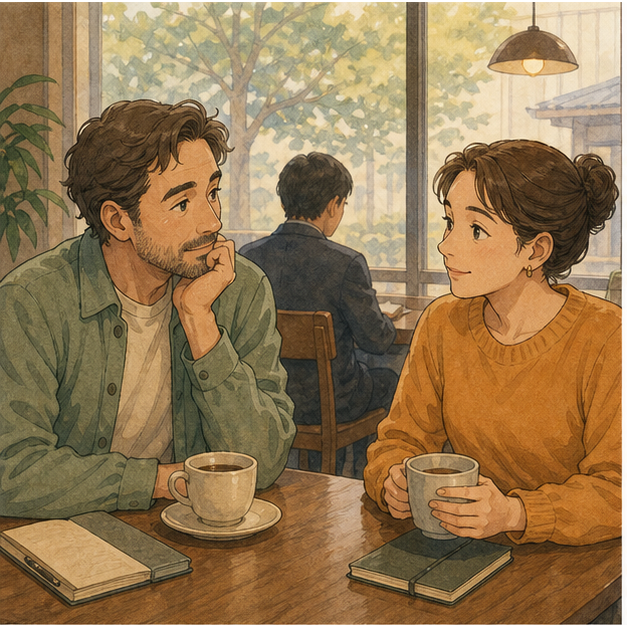
Show a public space design moment where a small playful change makes a better everyday choice easier to notice and enjoy, with no readable text.Reading
1. Silence Can Be Polite
Typing practice
Type the text exactly. Timer starts with your first key.
Text to type: In Japan, silence is not always awkward. A quiet moment can show respect, careful thinking, or the wish not to speak too directly. In many Western settings, people often fill silence with conversation. If nobody speaks, it can feel uncomfortable. In a Japanese conversation, a pause can give people time. It can also protect the relationship when the topic is sensitive. This does not mean every quiet person agrees. It means silence can carry social meaning.
Ready. The timer starts with your first key.
Complete
Great job!
Strong finish — your speed stayed steady.
Your rhythm
Speed over time- Time
- 0:00
- Raw speed
- 0 WPM
- Wrong keys
- 0
- Corrected
- 0
Check your understanding
1. Why can silence be polite in Japan?
Sample answer
Because it can show respect, careful thinking, or the wish not to speak too directly.
Think one step further
Do you feel comfortable with silence in conversation, or do you prefer people to keep talking?
Helpful clue
- I feel comfortable with silence when...
- I prefer people to keep talking because...
Reading
2. Saying "No" Indirectly
Typing practice
Type the text exactly. Timer starts with your first key.
Text to type: In Japan, people often avoid a strong direct "no," especially in formal or delicate situations. They may say "That might be difficult," "I'll think about it," or "Maybe another time." The answer can sound soft, but the meaning may still be no. This style can feel polite because it lowers pressure. It can also confuse visitors who expect a direct answer. A useful listening question is: Is this person really agreeing, or are they gently refusing?
Ready. The timer starts with your first key.
Complete
Great job!
Strong finish — your speed stayed steady.
Your rhythm
Speed over time- Time
- 0:00
- Raw speed
- 0 WPM
- Wrong keys
- 0
- Corrected
- 0
Check your understanding
1. Why can an indirect answer confuse visitors?
Sample answer
Because the words may sound soft, but the real meaning may be no.
Think one step further
Do you think it is better to say no directly, or to say it softly?
Helpful clue
- I think direct no is better when...
- A soft no is better when...
Reading
Useful Speaking Patterns: Quiet and Soft Answers
Typing practice
Type the text exactly. Timer starts with your first key.
Text to type: - In Japan, silence can show... - A soft answer may mean... - This can feel different because...
Ready. The timer starts with your first key.
Complete
Great job!
Strong finish — your speed stayed steady.
Your rhythm
Speed over time- Time
- 0:00
- Raw speed
- 0 WPM
- Wrong keys
- 0
- Corrected
- 0
Reading
3. Taking Shoes Off Indoors
Typing practice
Type the text exactly. Timer starts with your first key.
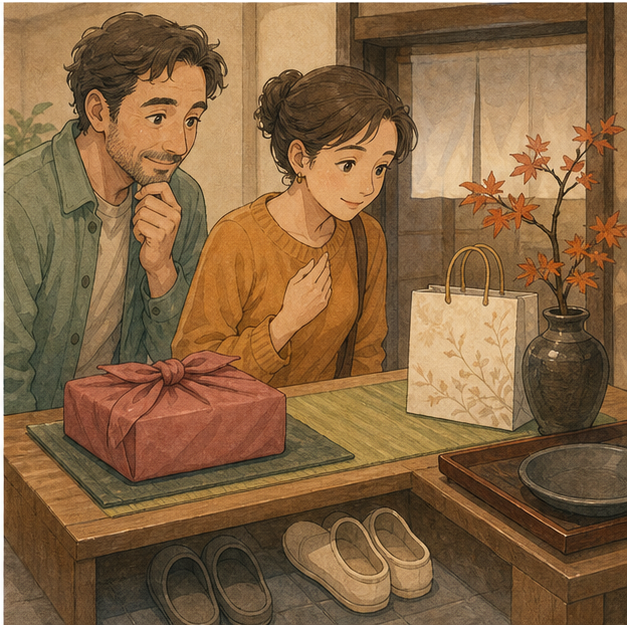
Text to type: In Japan, people usually take off outdoor shoes before entering a home. Some traditional inns, temples, hot springs, and restaurants also have no-shoe areas. This separates the outside ground from the clean inside space. For Japanese people, wearing outdoor shoes in a home can feel dirty or uncomfortable. For visitors, the important skill is simple: look at the entrance. If shoes are lined up, slippers are waiting, or the floor rises, stop and check.
Ready. The timer starts with your first key.
Complete
Great job!
Strong finish — your speed stayed steady.
Your rhythm
Speed over time- Time
- 0:00
- Raw speed
- 0 WPM
- Wrong keys
- 0
- Corrected
- 0
Check your understanding
1. Why do people usually take off shoes before entering a Japanese home?
Sample answer
Because it keeps the inside space clean and separates outside from inside.
Think one step further
Would you feel uncomfortable if someone wore outdoor shoes inside your home?
Helpful clue
- I would feel uncomfortable because...
- In my home, people usually...
 Show a public space design moment where a small playful change makes a better everyday choice easier to notice and enjoy, with no readable text.
Reading
4. Omiyage Is More Than a Souvenir
Typing practice
Type the text exactly. Timer starts with your first key.
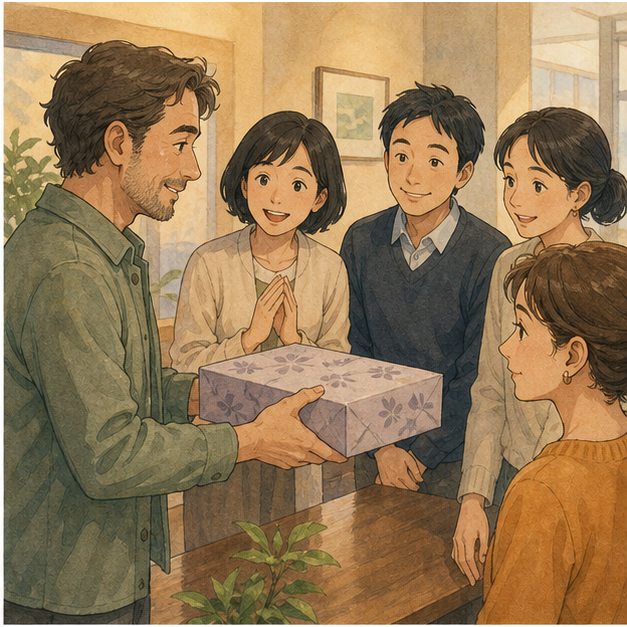
Text to type: When Japanese people travel, they often buy omiyage, or small gifts, for family, friends, or coworkers. Omiyage is not only a memory of the trip. It can also show thanks and show that you thought about other people. Many omiyage gifts are local sweets or snacks, often packed in small pieces so they are easy to share. In many Western settings, people buy souvenirs for themselves or close family, but they may not bring gifts for everyone at work after a short trip.
Ready. The timer starts with your first key.
Complete
Great job!
Strong finish — your speed stayed steady.
Your rhythm
Speed over time- Time
- 0:00
- Raw speed
- 0 WPM
- Wrong keys
- 0
- Corrected
- 0
Check your understanding
1. What makes omiyage different from a simple souvenir?
Sample answer
Omiyage is often a shareable gift for other people, not only a memory for yourself.
Think one step further
Do you like buying gifts when you travel, or does it feel like pressure?
Helpful clue
- I like buying gifts because...
- It feels like pressure when...
Reading
Useful Speaking Patterns: Homes and Gifts
Typing practice
Type the text exactly. Timer starts with your first key.
Text to type: - People take off shoes because... - Omiyage is more than a souvenir because... - This habit shows care for...
Ready. The timer starts with your first key.
Complete
Great job!
Strong finish — your speed stayed steady.
Your rhythm
Speed over time- Time
- 0:00
- Raw speed
- 0 WPM
- Wrong keys
- 0
- Corrected
- 0
Reading
5. Careful Customer Service
Typing practice
Type the text exactly. Timer starts with your first key.
Text to type: Japanese customer service is often careful and formal. Staff may bow, use very polite language, and try to make the customer feel comfortable. This is connected with omotenashi, a Japanese idea of wholehearted hospitality. In many Western settings, service can be friendly but more casual. Staff may speak directly or joke with customers. Japanese service can feel beautiful, but some visitors may also feel it is very formal. Both styles can be good; they just create a different feeling.
Ready. The timer starts with your first key.
Complete
Great job!
Strong finish — your speed stayed steady.
Your rhythm
Speed over time- Time
- 0:00
- Raw speed
- 0 WPM
- Wrong keys
- 0
- Corrected
- 0
Check your understanding
1. What is omotenashi connected with?
Sample answer
It is connected with wholehearted hospitality and careful service.
Think one step further
Do you prefer very polite service or friendly casual service?
Helpful clue
- I prefer polite service when...
- I prefer casual service because...
Reading
6. Group Harmony Matters
Typing practice
Type the text exactly. Timer starts with your first key.
Text to type: In Japan, people often think about the group before speaking or acting. At school, work, or in the community, people may try not to disturb others. This idea is connected with wa, or social harmony. Group harmony does not mean Japanese people have no personal opinions. It means people may choose the right time, place, and words to express them. A strong opinion may be easier to share after listening, reading the room, and keeping the relationship smooth.
Ready. The timer starts with your first key.
Complete
Great job!
Strong finish — your speed stayed steady.
Your rhythm
Speed over time- Time
- 0:00
- Raw speed
- 0 WPM
- Wrong keys
- 0
- Corrected
- 0
Check your understanding
1. What does group harmony mean?
Sample answer
It means thinking about the group and trying not to disturb others.
Think one step further
When is it good to think about the group, and when is it important to speak your own opinion?
Helpful clue
- It is good to think about the group when...
- It is important to speak my opinion when...
Reading
Useful Speaking Patterns: Service and Harmony
Typing practice
Type the text exactly. Timer starts with your first key.
Text to type: - Japanese service can feel... - Group harmony means... - In my country, people usually...
Ready. The timer starts with your first key.
Complete
Great job!
Strong finish — your speed stayed steady.
Your rhythm
Speed over time- Time
- 0:00
- Raw speed
- 0 WPM
- Wrong keys
- 0
- Corrected
- 0
 Show a public space design moment where a small playful change makes a better everyday choice easier to notice and enjoy, with no readable text.
Reading
7. Public Manners Are Often Quiet
Typing practice
Type the text exactly. Timer starts with your first key.
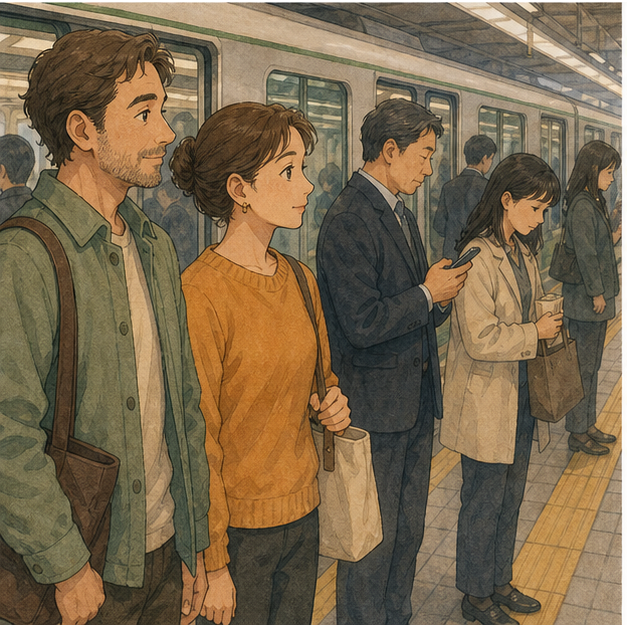
Text to type: In Japan, trains and buses are often quiet. Talking loudly on the phone is usually seen as bad manners. People may still talk softly with friends, but the public space is shared, so voices are often lower. In some Western countries, public transport can be louder. People may chat, take calls, or act more openly. A visitor in Japan does not need to be perfect, but noticing the volume around you is a useful sign of respect.
Ready. The timer starts with your first key.
Complete
Great job!
Strong finish — your speed stayed steady.
Your rhythm
Speed over time- Time
- 0:00
- Raw speed
- 0 WPM
- Wrong keys
- 0
- Corrected
- 0
Check your understanding
1. What is one thing people usually avoid on Japanese trains?
Sample answer
People usually avoid talking loudly on the phone.
Think one step further
Do you like quiet public spaces, or do they feel too strict?
Helpful clue
- I like quiet public spaces because...
- They feel too strict when...
Reading
8. Seasonal Culture Is Strong
Typing practice
Type the text exactly. Timer starts with your first key.
Text to type: Japan often connects seasons with daily life. Cherry blossoms in spring, summer festivals, red leaves in autumn, and hot foods in winter can all shape how people enjoy the year. Seasonal culture also appears in shops. Snacks, drinks, packages, clothes, and decorations may change for a short time only. Many countries enjoy seasons, but Japan often makes the seasonal feeling visible in many small everyday things.
Ready. The timer starts with your first key.
Complete
Great job!
Strong finish — your speed stayed steady.
Your rhythm
Speed over time- Time
- 0:00
- Raw speed
- 0 WPM
- Wrong keys
- 0
- Corrected
- 0
Check your understanding
1. How does Japan show strong seasonal culture?
Sample answer
Seasons appear in flowers, festivals, food, shops, products, clothes, and decorations.
Think one step further
What season feels most special to you, and why?
Helpful clue
- The most special season for me is...
- It feels special because...
Reading
9. Apologizing Can Smooth the Relationship
Typing practice
Type the text exactly. Timer starts with your first key.
Text to type: In Japan, people may say sorry to keep a relationship smooth, even when the problem is not fully their fault. The apology can mean "I care about the trouble" or "I want to repair the situation," not only "I did something bad." In some Western settings, people may avoid saying sorry if they do not want to accept blame. This can create misunderstanding. In Japan, an apology can be a social tool for repair, trust, and care.
Ready. The timer starts with your first key.
Complete
Great job!
Strong finish — your speed stayed steady.
Your rhythm
Speed over time- Time
- 0:00
- Raw speed
- 0 WPM
- Wrong keys
- 0
- Corrected
- 0
Check your understanding
1. Why might someone apologize even when something is not fully their fault?
Sample answer
To show care about the trouble and help repair the relationship.
Think one step further
Do you think saying sorry often is kind, or can it become too much?
Helpful clue
- Saying sorry often is kind when...
- It becomes too much when...
 Show a public space design moment where a small playful change makes a better everyday choice easier to notice and enjoy, with no readable text.
Reading
10. Small Details Matter
Typing practice
Type the text exactly. Timer starts with your first key.
Text to type: In Japan, small details often carry meaning: clean presentation, careful timing, polite wording, and beautiful wrapping. A simple snack may be wrapped neatly. A shop may prepare the bag carefully. A train station may use clear lines and signs to guide people. This attention to detail is one reason many Japanese products and services feel high quality. But detail also takes time and effort. A useful question is not "Which culture is better?" It is "What does this culture try to protect?"
Ready. The timer starts with your first key.
Complete
Great job!
Strong finish — your speed stayed steady.
Your rhythm
Speed over time- Time
- 0:00
- Raw speed
- 0 WPM
- Wrong keys
- 0
- Corrected
- 0
Check your understanding
1. What are some small details that matter in Japan?
Sample answer
Clean presentation, careful timing, polite wording, beautiful wrapping, and clear public guidance.
Think one step further
Do you enjoy small details, or do you prefer things to be simple and fast?
Choose three habits from this lesson. Explain what each habit tries to protect.
Which habit would be easiest for you to follow in Japan? Which would be hardest?
Compare one Japanese habit with a habit in your country. Be careful and respectful.
Helpful clue
- I enjoy small details when...
- I prefer things to be simple and fast because...
Reading
Useful Speaking Patterns: Comparing Culture
Typing practice
Type the text exactly. Timer starts with your first key.
Text to type: - This habit helps protect... - In my country, people usually... - I prefer this style when...
Ready. The timer starts with your first key.
Complete
Great job!
Strong finish — your speed stayed steady.
Your rhythm
Speed over time- Time
- 0:00
- Raw speed
- 0 WPM
- Wrong keys
- 0
- Corrected
- 0
What you can do now
Final Reflection
Learning cards
My cards
Japanese Culture Habits That Can Feel Different
0 due · 13 new · about 3 min
Learn the sense first · then retrieve it
Focused Reading Mode is open.
Listening
Lesson audio
Listen from the beginning, or choose “Play this part” as you read along.
Reading
1. Silence Can Be Polite
Reading
2. Saying "No" Indirectly
Reading
Useful Speaking Patterns: Quiet and Soft Answers
Reading
3. Taking Shoes Off Indoors
Reading
4. Omiyage Is More Than a Souvenir
Reading
Useful Speaking Patterns: Homes and Gifts
Reading
5. Careful Customer Service
Reading
6. Group Harmony Matters
Reading
Useful Speaking Patterns: Service and Harmony
Reading
7. Public Manners Are Often Quiet
Reading
8. Seasonal Culture Is Strong
Reading
9. Apologizing Can Smooth the Relationship
Reading
10. Small Details Matter
Reading
Useful Speaking Patterns: Comparing Culture
Finished listening?
Mark this listening practice complete when you have followed the lesson audio.
Listening complete
Listen Mode
Word-by-word syncPlay the audio and follow the highlighted word.
Article complete
Choose your next step
Open the next same-level lesson, replay the article, or save this page for later.
Listen Again
Replay the article once and notice how much more you understand.
One replay is enough. Then move on.