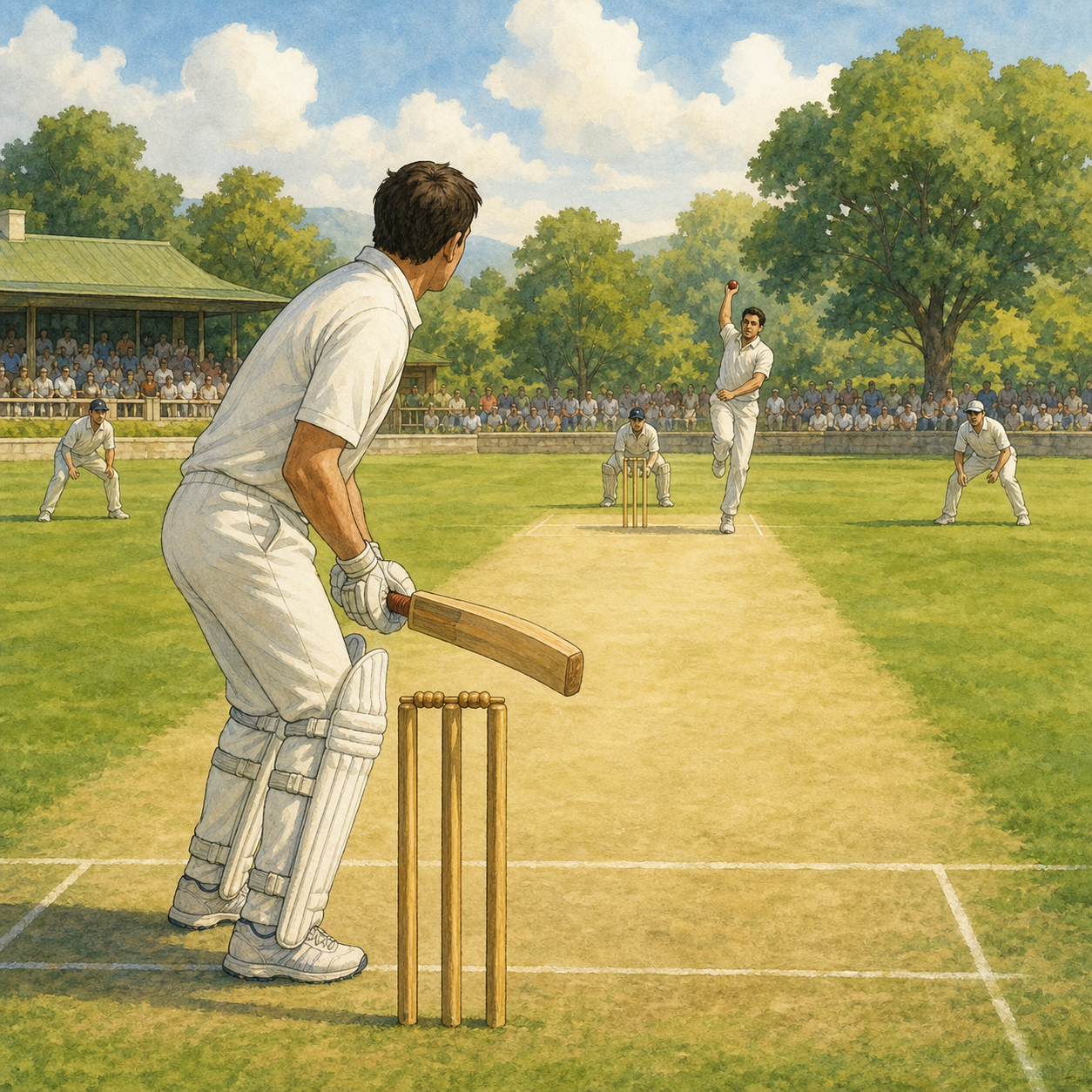
 English lesson
Article
Choose how to use this lesson
You can switch anytime.
Study mode
Introduction
Typing practice
Type the text exactly. Timer starts with your first key.
Text to type: Cricket is a sport played by two teams of eleven players. One team bats, and the other team bowls and fields. The game uses a bat, ball, pitch, and wickets. Teams score runs and play in three main match formats. This explainer has at least five short parts with an immediate guided check after each part, so you can learn one idea at a time.
Ready. The timer starts with your first key.
Complete
Great job!
Strong finish — your speed stayed steady.
Your rhythm
Speed over time- Time
- 0:00
- Raw speed
- 0 WPM
- Wrong keys
- 0
- Corrected
- 0
Before you begin
Warm-Up
Do you know any sport where one team bats and the other team bowls or pitches?
Need a starting line?
This gets you thinking about bat-and-ball sports before we start.
How many players do you think are on one cricket team?
Need a starting line?
Knowing the team size helps you picture the game.
Look at the word wicket. What do you think a wicket might be in a sport?
Need a starting line?
This word is very important in cricket. You will learn more about it soon.
Reading
Part 1: The Teams and the Aim
Typing practice
Type the text exactly. Timer starts with your first key.
Text to type: Cricket is played by two teams. Each team has eleven players. One team bats. The other team fields and bowls. The batting team tries to score as many runs as possible. The fielding team tries to get the batters out. An innings can end when ten batters are out or when the team finishes its overs. Then the other team bats. The team with more runs usually wins.
Ready. The timer starts with your first key.
Complete
Great job!
Strong finish — your speed stayed steady.
Your rhythm
Speed over time- Time
- 0:00
- Raw speed
- 0 WPM
- Wrong keys
- 0
- Corrected
- 0
Check your understanding
Check: The Teams and the Aim
1. What does the batting team try to do, and what does the fielding team try to do?
Sample answer
These are the two opposite goals of the game.
Think one step further
If you played cricket, would you rather bat or field? Why?
 Part 2: The Pitch and the Wickets
Reading
Part 2: The Pitch and the Wickets
Typing practice
Type the text exactly. Timer starts with your first key.
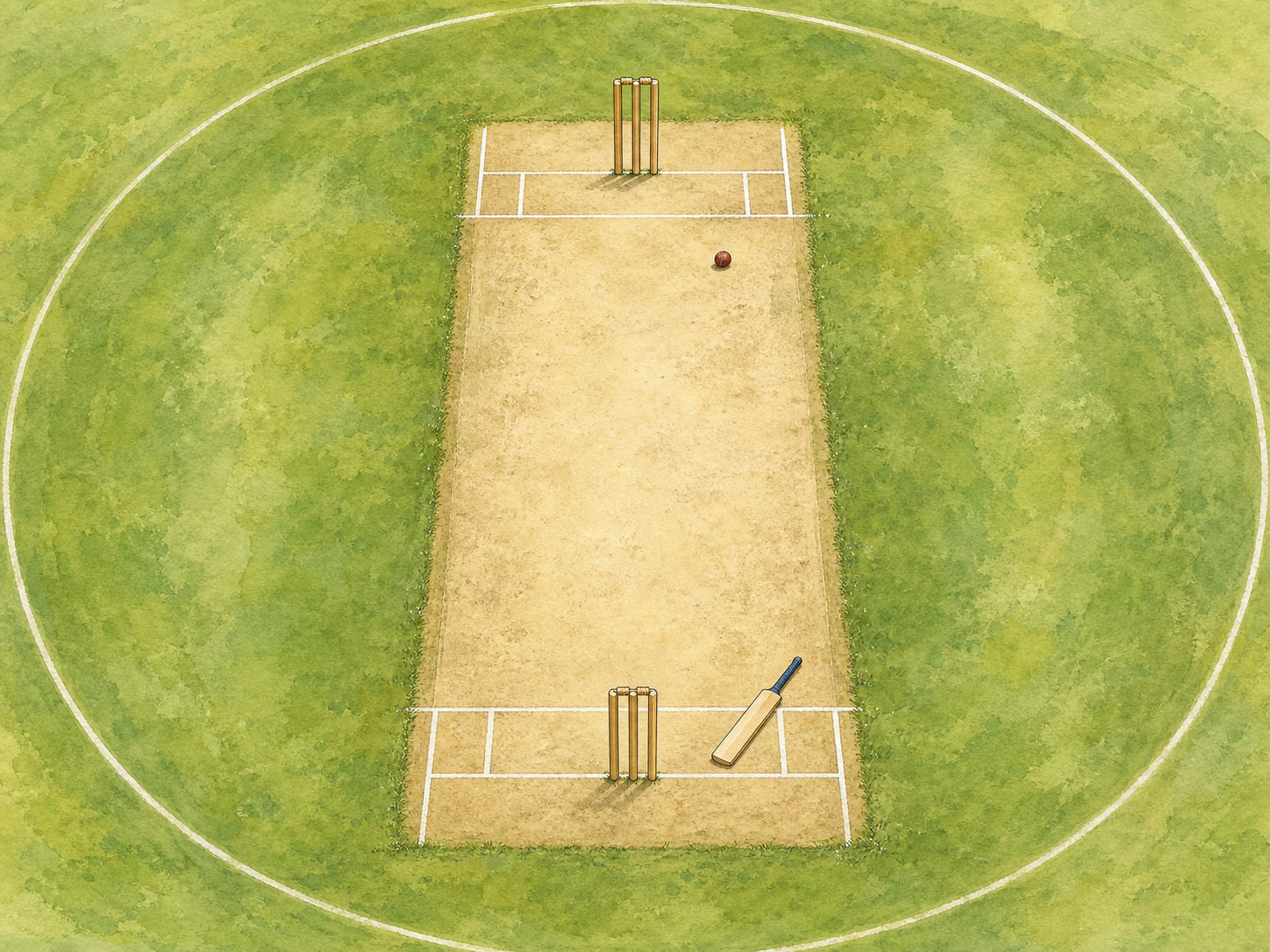
Text to type: The pitch is a flat strip of ground in the middle of the field. It is 22 yards long. At each end of the pitch there is a wicket. A wicket is made of three wooden sticks called stumps. Two small pieces of wood called bails sit on top of the stumps. The bowler stands at one end and sends the ball toward the wicket at the other end. The batter stands in front of their wicket to protect it.
Ready. The timer starts with your first key.
Complete
Great job!
Strong finish — your speed stayed steady.
Your rhythm
Speed over time- Time
- 0:00
- Raw speed
- 0 WPM
- Wrong keys
- 0
- Corrected
- 0
Check your understanding
Check: The Pitch and the Wickets
1. What is a wicket made of, and why does the batter stand in front of it?
Sample answer
The wicket is the target. Protecting it is the batter's main job.
Think one step further
Why do you think the bails are important? What might happen if they fall off?
 Part 3: Batting and Scoring Runs
Reading
Part 3: Batting and Scoring Runs
Typing practice
Type the text exactly. Timer starts with your first key.
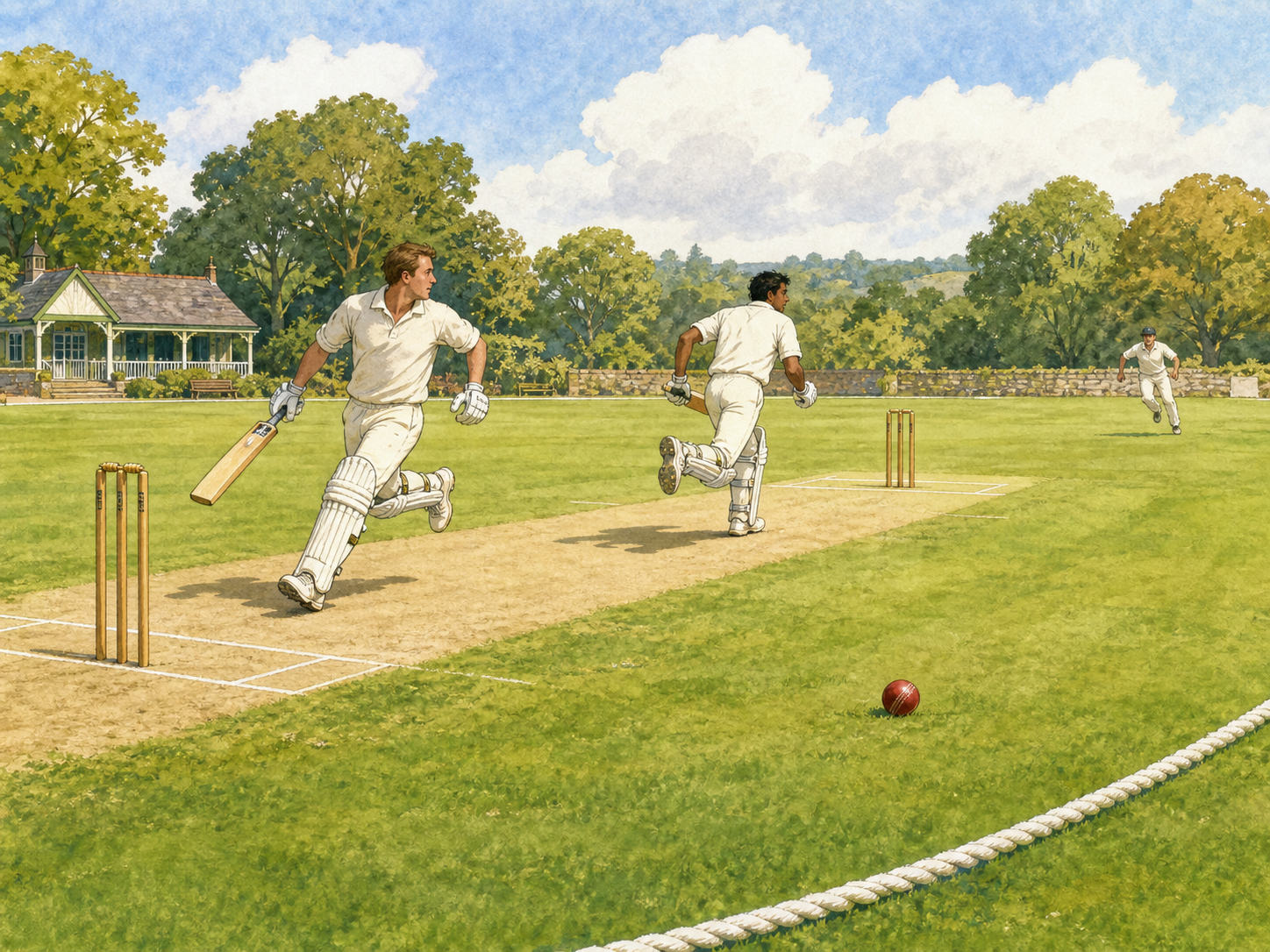
Text to type: The batter uses a flat bat to hit the ball. When the ball is hit, the two batters at the wickets can run to each other’s end. Each completed run adds one run to the score. If the ball reaches the boundary rope around the field, the batting team gets four runs without running. If the ball flies over the boundary without bouncing, the team gets six runs.
Ready. The timer starts with your first key.
Complete
Great job!
Strong finish — your speed stayed steady.
Your rhythm
Speed over time- Time
- 0:00
- Raw speed
- 0 WPM
- Wrong keys
- 0
- Corrected
- 0
Check your understanding
Check: Batting and Scoring Runs
1. How does a team score six runs from one hit?
Sample answer
A six is the biggest single score from one ball in cricket.
Think one step further
Do you think it is harder to score a four or a six? Why?
Reading
Part 4: Bowling and Overs
Typing practice
Type the text exactly. Timer starts with your first key.
Text to type: The bowler runs up and bowls the ball toward the batter. The ball may bounce once on the pitch before it reaches the batter. Six valid balls from one bowler make one over. After each over, a different bowler takes the ball from the other end. One bowler cannot bowl two overs in a row.
Ready. The timer starts with your first key.
Complete
Great job!
Strong finish — your speed stayed steady.
Your rhythm
Speed over time- Time
- 0:00
- Raw speed
- 0 WPM
- Wrong keys
- 0
- Corrected
- 0
Check your understanding
Check: Bowling and Overs
1. How many balls are in one over, and can the same bowler bowl two overs in a row?
Sample answer
This rule keeps the game fair and means teams need several good bowlers.
Think one step further
Why do you think cricket uses the word over for a set of six balls?
Reading
Part 5: Common Ways to Get Out
Typing practice
Type the text exactly. Timer starts with your first key.
Text to type: There are several ways a batter can be dismissed. Bowled means the ball hits the stumps and the bails fall off. Caught means a fielder catches a ball hit by the bat before it touches the ground. Run out means the batter is outside the crease line when a fielder breaks the wicket with the ball during a run. Ten dismissals can end an innings.
Ready. The timer starts with your first key.
Complete
Great job!
Strong finish — your speed stayed steady.
Your rhythm
Speed over time- Time
- 0:00
- Raw speed
- 0 WPM
- Wrong keys
- 0
- Corrected
- 0
Check your understanding
Check: Common Ways to Get Out
1. What is the difference between being bowled and being caught?
Sample answer
Both end the batter's turn, but they happen in different ways.
Think one step further
Which dismissal do you think is the most exciting to watch? Why?
 Part 6: The Three Formats
Reading
Part 6: The Three Formats
Typing practice
Type the text exactly. Timer starts with your first key.
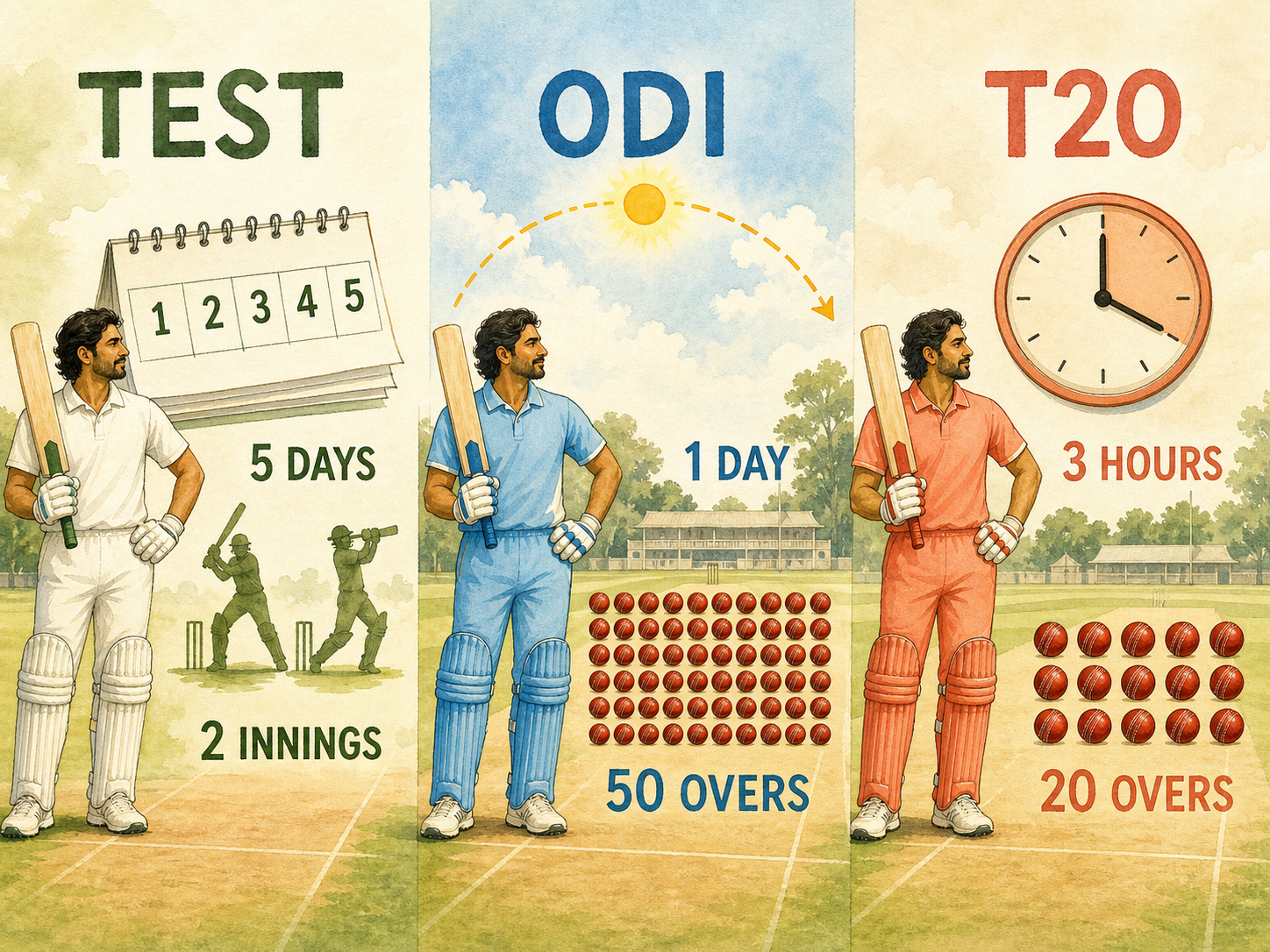
Text to type: Cricket has three main formats. A Test match is the longest. Each team can bat in two innings, and the match can last up to five days. A One Day International, called an ODI, gives each team 50 overs to bat. An ODI usually finishes in one day. A Twenty20, called a T20, gives each team only 20 overs. A T20 match takes about three hours. The ICC Cricket World Cup uses ODI matches. The ICC Men’s T20 World Cup uses T20 matches.
Ready. The timer starts with your first key.
Complete
Great job!
Strong finish — your speed stayed steady.
Your rhythm
Speed over time- Time
- 0:00
- Raw speed
- 0 WPM
- Wrong keys
- 0
- Corrected
- 0
Check your understanding
Check: The Three Formats
1. How is a T20 match different from a Test match?
Sample answer
The number of overs decides how long the match takes.
Think one step further
Which format sounds most interesting to you, and why?
What you can do now
Final Reflection
Imagine a friend asks you to explain cricket in three sentences. What would you say?
Need a starting line?
A good answer connects the aim, the players, and the formats in your own words.
Learning cards
My cards
What Is Cricket?
0 due · 12 new · about 3 min
Learn the sense first · then retrieve it
Focused Reading Mode is open.
Listening
Lesson audio
Listen from the beginning, or choose “Play this part” as you read along.
Reading
Part 1: The Teams and the Aim
Reading
Part 2: The Pitch and the Wickets
Reading
Part 3: Batting and Scoring Runs
Reading
Part 4: Bowling and Overs
Reading
Part 5: Common Ways to Get Out
Reading
Part 6: The Three Formats
Finished listening?
Mark this listening practice complete when you have followed the lesson audio.
Listening complete
Listen Mode
Word-by-word syncPlay the audio and follow the highlighted word.
Article complete
Choose your next step
Open the next same-level lesson, replay the article, or save this page for later.
Listen Again
Replay the article once and notice how much more you understand.
One replay is enough. Then move on.