Horse Riding: Start Slow and Have Fun!
Quality checked lesson
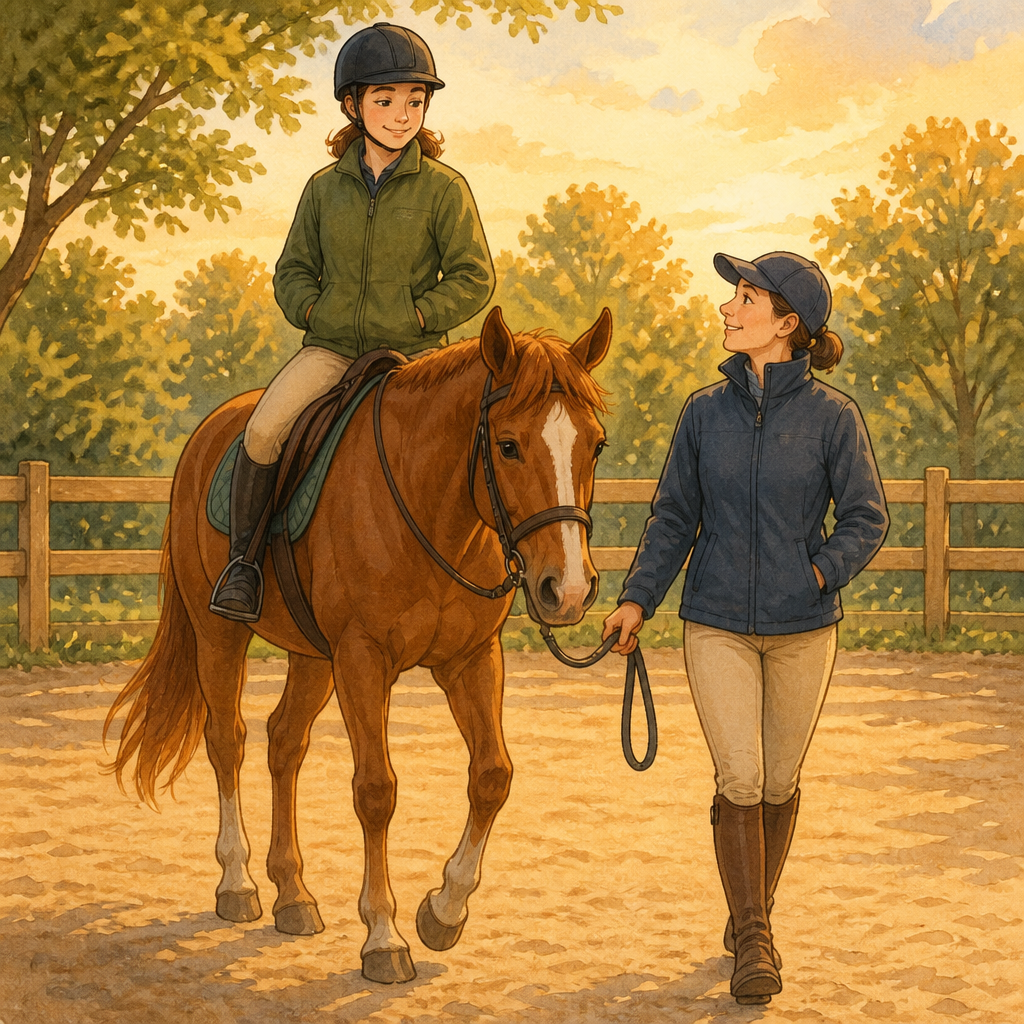
Horse riding means sitting on a horse and moving with it. A good rider learns slowly, wears safe clothes, and is kind to the horse.
 English lesson
Article
Choose how to use this lesson
You can switch anytime.
Study mode
Introduction
Typing practice
Type the text exactly. Timer starts with your first key.
Text to type: Horse riding means sitting on a horse and moving with it. A good rider learns slowly, wears safe clothes, and is kind to the horse.
Ready. The timer starts with your first key.
Complete
Great job!
Strong finish — your speed stayed steady.
Your rhythm
Speed over time- Time
- 0:00
- Raw speed
- 0 WPM
- Wrong keys
- 0
- Corrected
- 0
Before you begin
Warm-up
Have you ever seen a horse?
Where can people ride horses?
Do you think a horse walks fast or slowly?
 Part 1: What Is Horse Riding?
Reading
Part 1: What Is Horse Riding?
Typing practice
Type the text exactly. Timer starts with your first key.
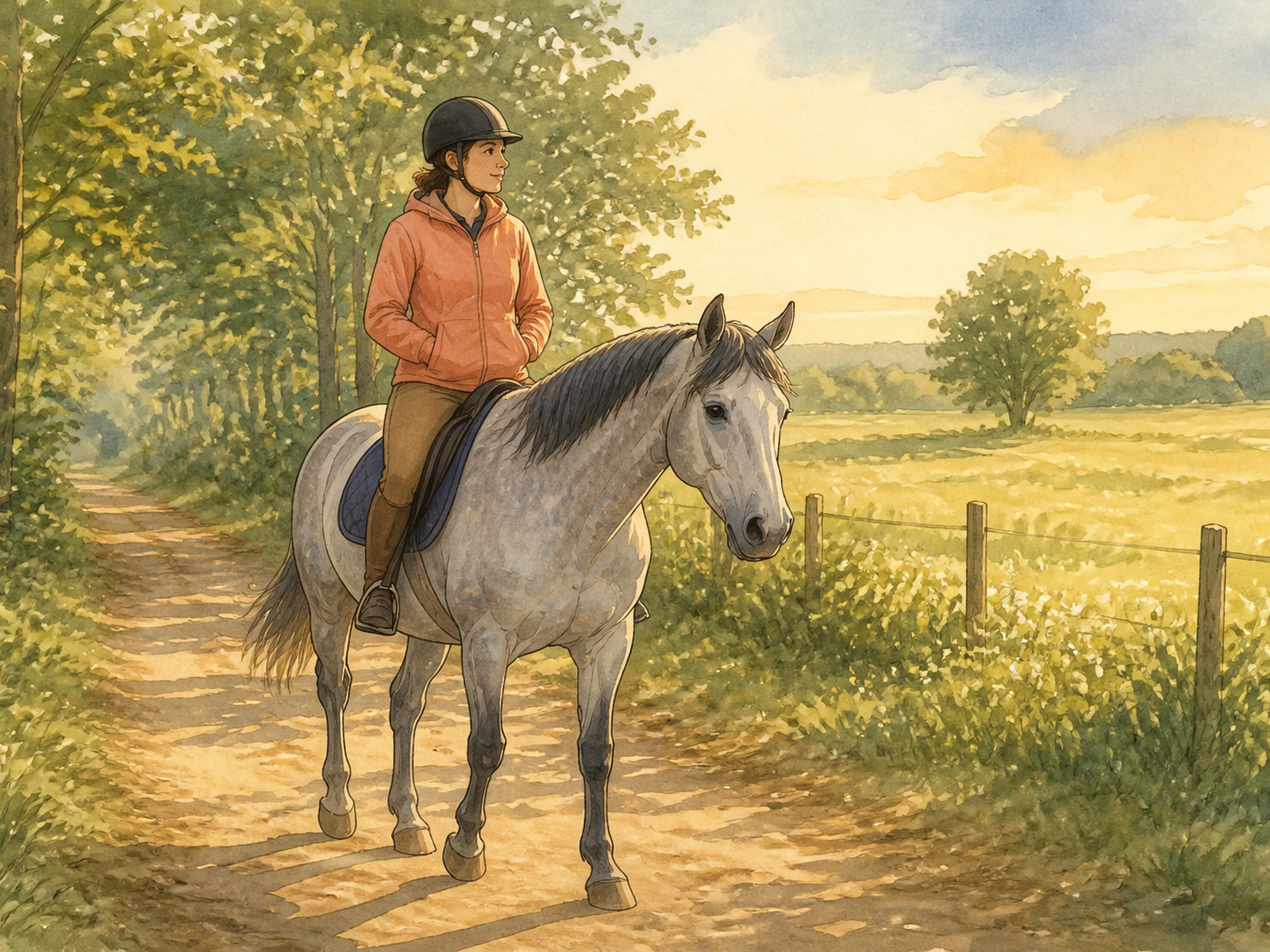
Text to type: People ride horses for fun, work, and sport. Some people enjoy a quiet ride outside. Police officers may ride horses at work. In the Olympic Games, riders do sports such as jumping and dressage. In dressage, the horse does careful moves when the rider asks. Horse riding is teamwork: the rider gives small signs, and the horse answers.
Ready. The timer starts with your first key.
Complete
Great job!
Strong finish — your speed stayed steady.
Your rhythm
Speed over time- Time
- 0:00
- Raw speed
- 0 WPM
- Wrong keys
- 0
- Corrected
- 0
Check your understanding
Check: Part 1: What Is Horse Riding?
1. Why do people ride horses?
Sample answer
People ride horses for fun, work, and sport.
Reading
Part 2: Your First Ride
Typing practice
Type the text exactly. Timer starts with your first key.
Text to type: Horse riding for kids starts slowly at a riding school. Charlotte Dujardin also began with a quiet walk, not a race. A new rider should start at a good riding school with a teacher. The first horse is often quiet and kind. The teacher may lead the horse around an arena, which is a safe place for riding. The horse usually walks slowly. Sometimes the rider tries a short trot, which feels more bouncy. There is no need to hurry.
Ready. The timer starts with your first key.
Complete
Great job!
Strong finish — your speed stayed steady.
Your rhythm
Speed over time- Time
- 0:00
- Raw speed
- 0 WPM
- Wrong keys
- 0
- Corrected
- 0
Check your understanding
Check: Part 2: Your First Ride
1. What does a new rider usually do first?
Sample answer
A new rider usually rides a quiet horse at a slow walk with a teacher.
Think one step further
What would help you feel calm on your first ride, and why?
 Part 3: Safe Clothes and Safe Moves
Reading
Part 3: Safe Clothes and Safe Moves
Typing practice
Type the text exactly. Timer starts with your first key.
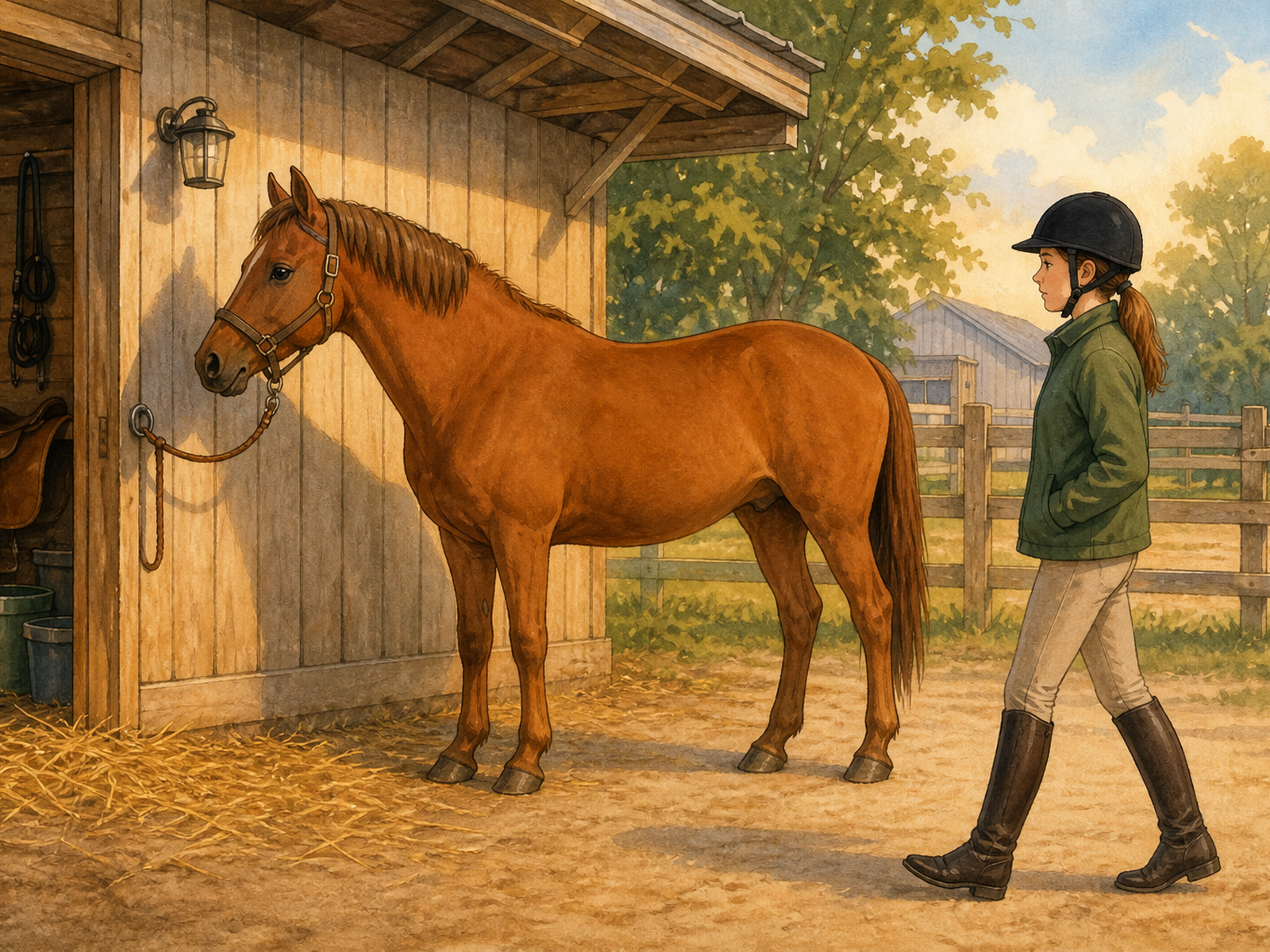
Text to type: Always wear a riding helmet that fits well and is closed under your chin. A riding helmet helps protect your head if you fall. Wear strong boots that cover your ankles. Do not walk behind a horse because it may kick. Walk to the horse from the side. Talk softly and move gently, so the horse knows you are there.
Ready. The timer starts with your first key.
Complete
Great job!
Strong finish — your speed stayed steady.
Your rhythm
Speed over time- Time
- 0:00
- Raw speed
- 0 WPM
- Wrong keys
- 0
- Corrected
- 0
Check your understanding
Check: Part 3: Safe Clothes and Safe Moves
1. How should you go near a horse?
Sample answer
You should go near a horse from the side, speak softly, and move gently.
Reading
Part 4: The Saddle
Typing practice
Type the text exactly. Timer starts with your first key.
Text to type: A saddle is the seat on the horse’s back. A strap under the horse holds it in place. The saddle spreads the rider’s weight across the horse’s back. This helps the horse stay comfortable. Stirrups hang on both sides of the saddle. The rider puts a foot in each stirrup for balance. Boots with heels help stop the feet from sliding through.
Ready. The timer starts with your first key.
Complete
Great job!
Strong finish — your speed stayed steady.
Your rhythm
Speed over time- Time
- 0:00
- Raw speed
- 0 WPM
- Wrong keys
- 0
- Corrected
- 0
Check your understanding
Check: Part 4: The Saddle
1. What do the saddle and stirrups do?
Sample answer
The saddle gives the rider a seat, and the stirrups support the rider’s feet and balance.
Reading
Part 5: The Reins
Typing practice
Type the text exactly. Timer starts with your first key.
Text to type: Reins are long straps that go from the rider’s hands to the horse’s bridle. The bridle is the gear on the horse’s head. Reins help a rider ask the horse to turn, slow down, or stop. They are a little like a steering wheel, but riders must use small, soft moves. Pulling hard can hurt the horse. Riders also use their legs and body.
Ready. The timer starts with your first key.
Complete
Great job!
Strong finish — your speed stayed steady.
Your rhythm
Speed over time- Time
- 0:00
- Raw speed
- 0 WPM
- Wrong keys
- 0
- Corrected
- 0
Check your understanding
Check: Part 5: The Reins
1. Why should a rider use the reins softly?
Sample answer
A rider should use the reins softly because hard pulling can hurt the horse.
 Part 6: Famous Riders
Reading
Part 6: Famous Riders
Typing practice
Type the text exactly. Timer starts with your first key.
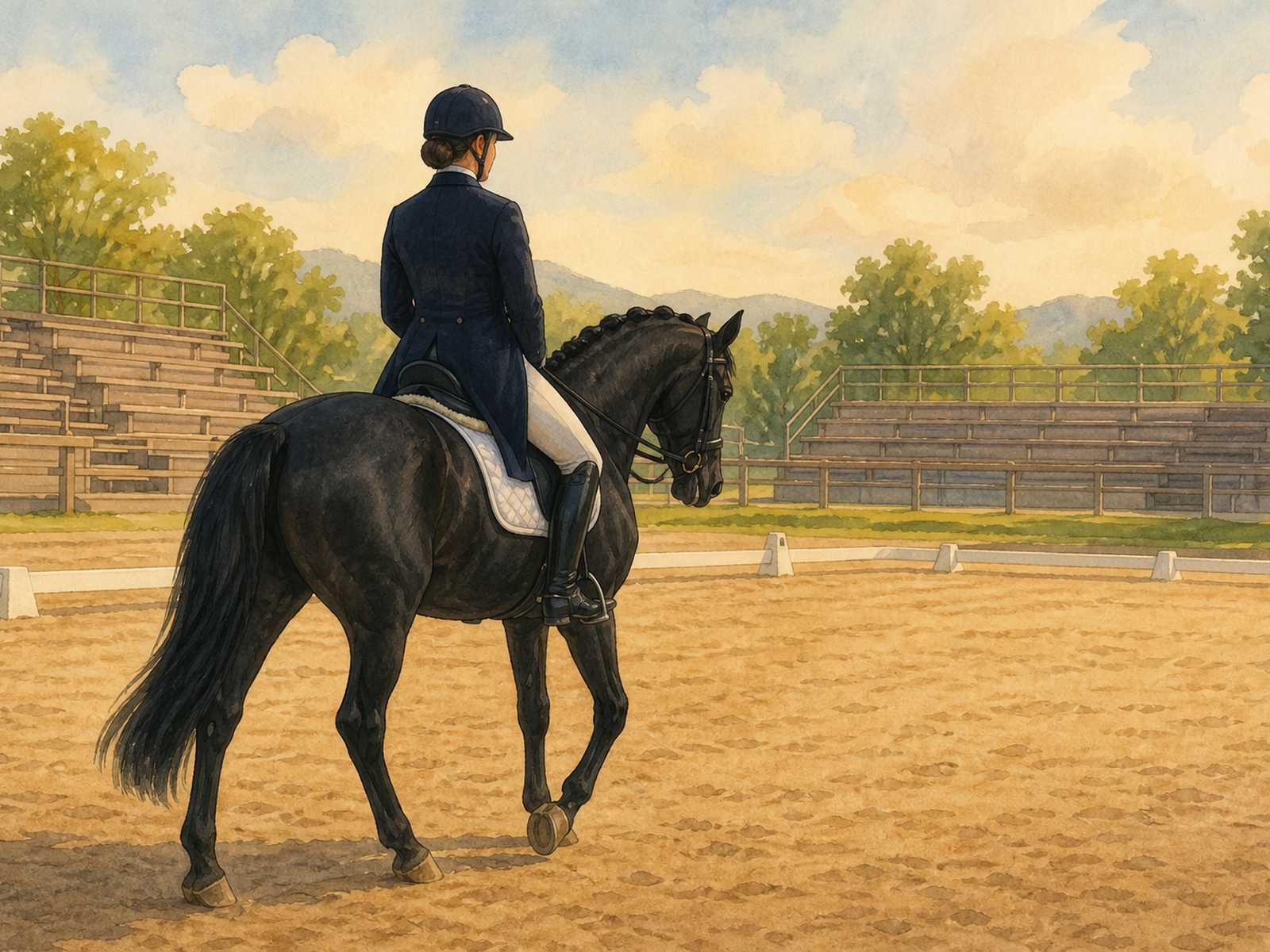
Text to type: Charlotte Dujardin rode Valegro in dressage. They won individual Olympic gold in London in 2012 and Rio in 2016. Frankie Dettori was a famous race rider. In 1996, he won all seven races on one day at Ascot. Ron Turcotte rode the fast racehorse Secretariat, which won the US Triple Crown in 1973. Famous riders go fast or do hard moves, but new riders begin with a slow walk.
Ready. The timer starts with your first key.
Complete
Great job!
Strong finish — your speed stayed steady.
Your rhythm
Speed over time- Time
- 0:00
- Raw speed
- 0 WPM
- Wrong keys
- 0
- Corrected
- 0
Check your understanding
Check: Part 6: Famous Riders
1. How is a new rider different from these famous riders?
Sample answer
A new rider starts with a slow walk, but famous riders race or do difficult moves.
What you can do now
Final Reflection
Which first-ride habit helps you stay safe and kind to the horse, and why?
Learning cards
My cards
Horse Riding: Start Slow and Have Fun!
0 due · 0 new · about 1 min
Learn the sense first · then retrieve it
No saved cards yet
Open a word or phrase in the article and choose Save to My Words.
Focused Reading Mode is open.
Listening
Lesson audio
Listen from the beginning, or choose “Play this part” as you read along.
Reading
Part 1: What Is Horse Riding?
Reading
Part 2: Your First Ride
Reading
Part 3: Safe Clothes and Safe Moves
Reading
Part 4: The Saddle
Reading
Part 5: The Reins
Reading
Part 6: Famous Riders
Finished listening?
Mark this listening practice complete when you have followed the lesson audio.
Listening complete
Listen Mode
Word-by-word syncPlay the audio and follow the highlighted word.
Article complete
Choose your next step
Open the next same-level lesson, replay the article, or save this page for later.
Listen Again
Replay the article once and notice how much more you understand.
One replay is enough. Then move on.