Everyday Customs in France and the USA
Quality checked lesson
Everyday habits in France and the USA, from cheek kisses to tips and long lunches, come from history, values and daily life.
 English lesson

Article
Choose how to use this lesson
You can switch anytime.
Study mode
Introduction
Typing practice
Type the text exactly. Timer starts with your first key.
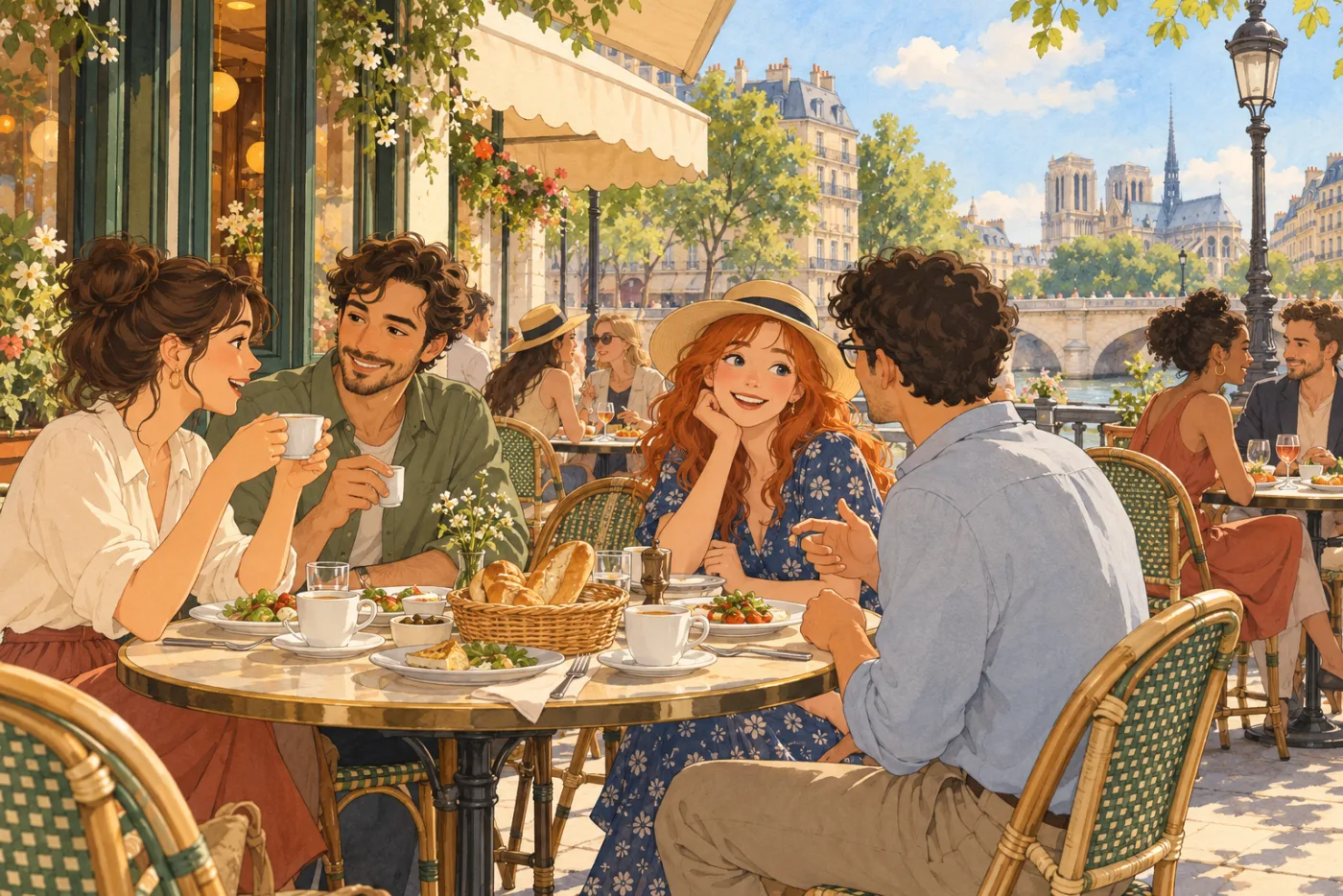
Text to type: Why do friends in France kiss on the cheek? Why do people in the USA give extra money to a waiter? In this lesson, we visit France and the USA. We look at six everyday customs. They are greetings, bonjour, tips, meals, small talk and two ways to say you. For each custom, we find the reason behind it. It can be history, values or simple daily life.
Ready. The timer starts with your first key.
Complete
Great job!
Strong finish — your speed stayed steady.
Your rhythm
Speed over time- Time
- 0:00
- Raw speed
- 0 WPM
- Wrong keys
- 0
- Corrected
- 0
Before you begin
Warm-up
How do you greet your best friend?
Do you usually eat lunch alone or with other people?
Do you talk to strangers in shops or on the train?
 Part 1: Kisses, Handshakes and Hugs
Reading
Part 1: Kisses, Handshakes and Hugs
Typing practice
Type the text exactly. Timer starts with your first key.
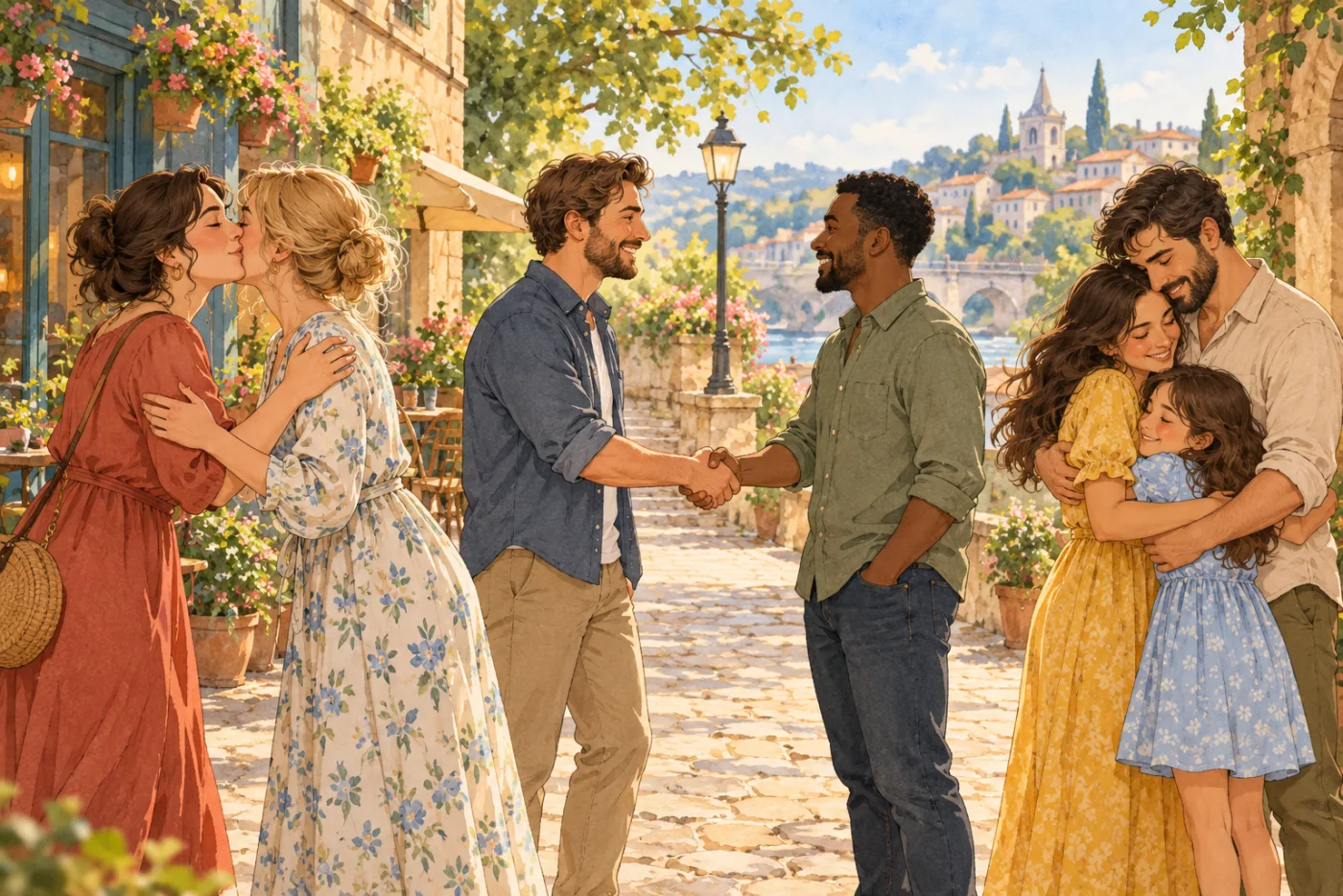
Text to type: In France, friends and family often say hello with la bise. La bise is a light kiss on the cheek. The cheek is the soft side of the face. Usually the lips do not really touch the face. People touch cheeks and make a small kiss sound. Then they do the same on the other cheek. How many kisses? That depends on the place. Mathieu Avanzi studies languages. From 2016 to 2019, Mathieu Avanzi asked thousands of people about it online. In most of France, people give two kisses. In parts of the south, such as Languedoc, they give three. In east Brittany and around the Loire, many older people give four. In Finistère, at the far west of Brittany, many people give only one. People in France joke about it. You can guess the city by counting the kisses! Nobody knows how la bise started. It is very old. In the south, men often kiss male friends and family too. In the north, two men who are not family usually shake hands. In the USA, a kiss is not the normal hello. People shake hands when they meet someone new. A handshake is also the usual greeting at work. Close friends and family often hug. One reason is personal space. When they talk, people in the USA like about 1.2 metres of space. Many people in Europe stand closer, about 60 to 90 centimetres. A cheek kiss puts two faces very close. For most Americans, that is too close for a hello. Miami is different. There, a kiss on the cheek is much more common. In Japan, people bow. They move their head and body down and do not touch.
Ready. The timer starts with your first key.
Complete
Great job!
Strong finish — your speed stayed steady.
Your rhythm
Speed over time- Time
- 0:00
- Raw speed
- 0 WPM
- Wrong keys
- 0
- Corrected
- 0
Check your understanding
Check: Part 1: Kisses, Handshakes and Hugs
1. How many kisses in most of France?
Sample answer
Two.
 Part 2: Bonjour Before Every Request
Reading
Part 2: Bonjour Before Every Request
Typing practice
Type the text exactly. Timer starts with your first key.
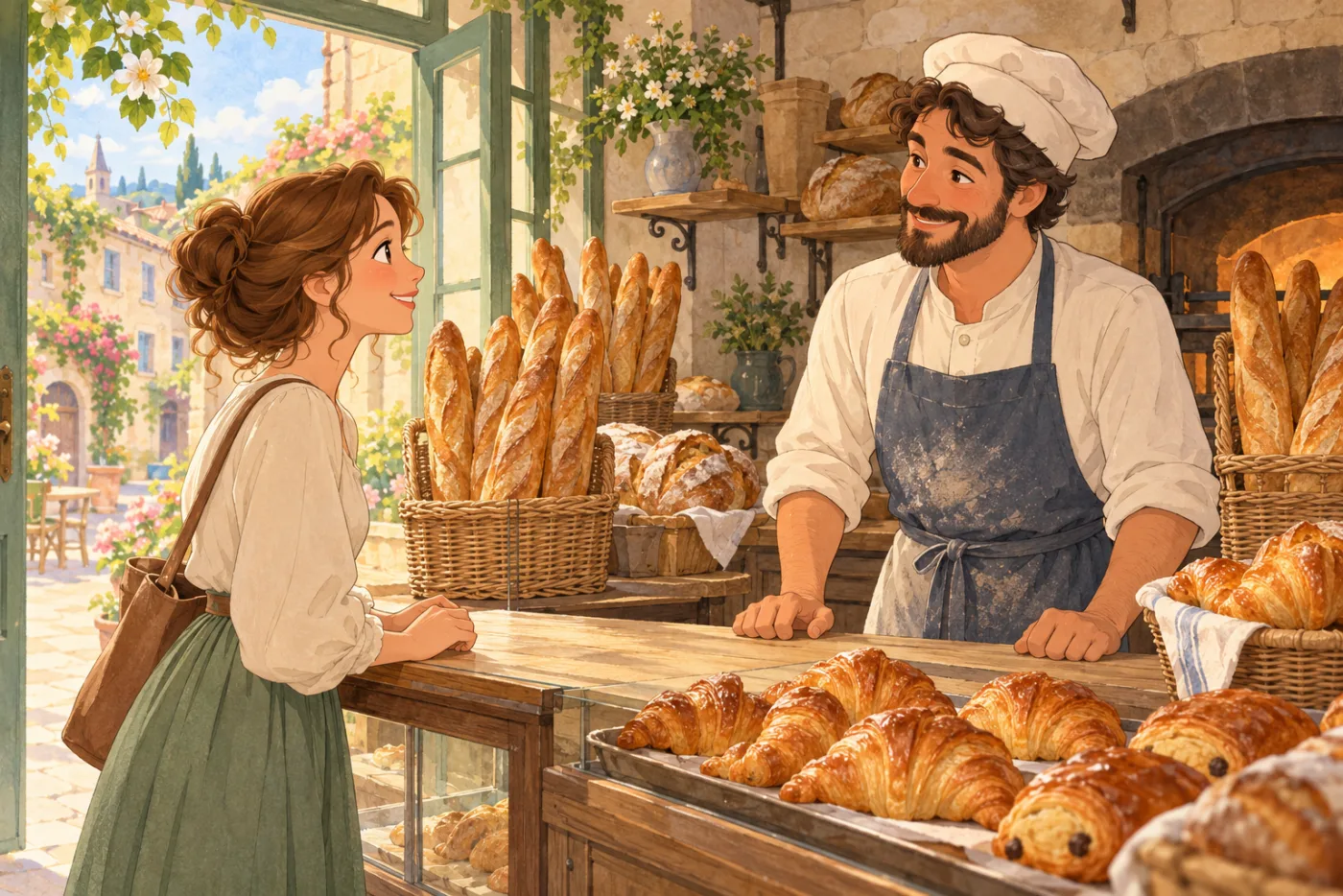
Text to type: In France, the most important word is bonjour. In English, bonjour is good day. Before you ask for anything, you say bonjour. You say it in a shop, a café or an office. Imagine this. You walk into a bread shop and say: Bread, please. You said please, so you think you were polite. But the shop worker thinks you were rude. You forgot bonjour! Why is one word so important? In France, bonjour says: I see you, and you are a person. A shop worker told the news site The Local about this. With no bonjour, the worker feels like a machine. When you greet someone first, you show respect. Then they are happy to hear your question. Often the shop worker says bonjour first when you come in. You say bonjour too. After that, you ask your question. At work, colleagues say bonjour to each other every morning. A colleague is a person you work with. If someone does not say it, others may think that person is angry. Children in France learn this habit at school. After about 6 pm, people say bonsoir. That is good evening. In the street, there is no need to greet strangers.
Ready. The timer starts with your first key.
Complete
Great job!
Strong finish — your speed stayed steady.
Your rhythm
Speed over time- Time
- 0:00
- Raw speed
- 0 WPM
- Wrong keys
- 0
- Corrected
- 0
Check your understanding
Check: Part 2: Bonjour Before Every Request
1. What do you say first in a shop?
Sample answer
Bonjour.
 Part 3: Tipping in the USA
Reading
Part 3: Tipping in the USA
Typing practice
Type the text exactly. Timer starts with your first key.
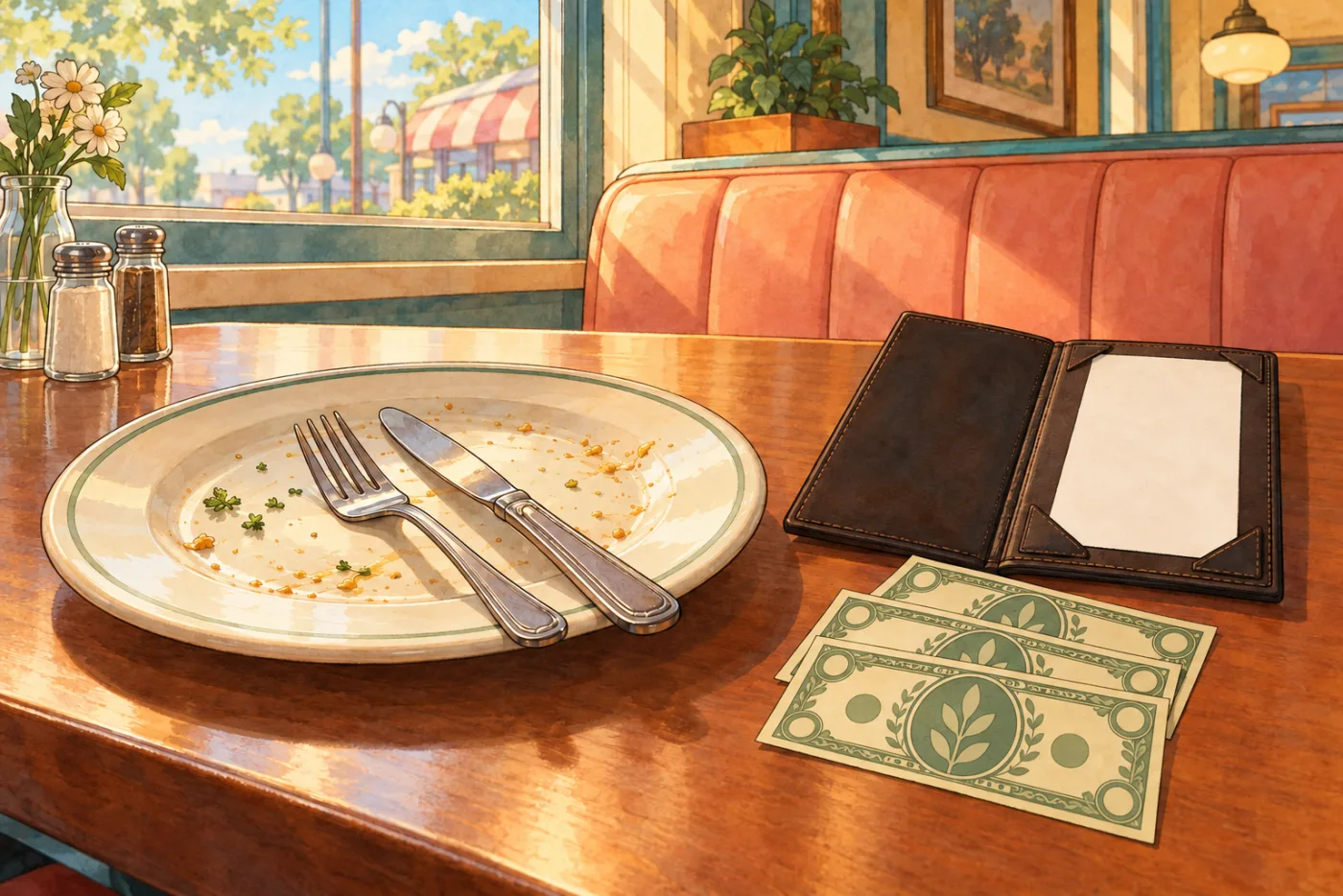
Text to type: In a restaurant in the USA, people pay for the food. Then they add a tip. A tip is extra money for the waiter. The Pew Research Center asked people in the USA about tips in 2023. Of people who sit and eat in restaurants, 81% said they always tip. For a normal meal, a little more than half give 15% or less. About a quarter give 20% or more. Why is the tip so important? Because of the law. The minimum wage is the lowest pay a boss can give. Under national law, it is $7.25 an hour. Many states have a higher minimum wage. Workers who get tips are different. Under national law, the boss can pay them only $2.13 an hour. This number has not changed since 1991. With tips, the pay must get to at least the minimum wage. If it does not, the boss pays the difference. So tips are often most of a waiter's pay. In 43 states, tipped workers can get less from the boss. Seven states, such as California, give them the full state minimum wage. Tipping came from Europe. In the 1850s and 1860s, rich Americans traveled to Europe. They copied the custom at home. They wanted to look like important old families in Europe. After the Civil War, the Pullman train company needed workers. In the late 1860s, it started to give jobs to Black men. Most of them had been slaves. They worked as porters. A porter carries bags and helps people on trains. Pullman paid the porters very little. So they needed tips from the passengers. Many people in the USA hated tipping. Between 1909 and 1926, six states made tips against the law. But these laws did not work. In 1919, the USA decided to stop selling alcohol. Alcohol is in drinks like beer and wine. The law stopped people from making and selling these drinks. This was Prohibition. Restaurants could not sell wine or beer, so they lost money. So owners used tips to pay their workers. The custom stayed. In Japan, people do not usually tip.
Ready. The timer starts with your first key.
Complete
Great job!
Strong finish — your speed stayed steady.
Your rhythm
Speed over time- Time
- 0:00
- Raw speed
- 0 WPM
- Wrong keys
- 0
- Corrected
- 0
Check your understanding
Check: Part 3: Tipping in the USA
1. Under national law, what can a boss pay a tipped worker?
Sample answer
$2.13 an hour.
 Part 4: Long Lunches and Quick Meals
Reading
Part 4: Long Lunches and Quick Meals
Typing practice
Type the text exactly. Timer starts with your first key.
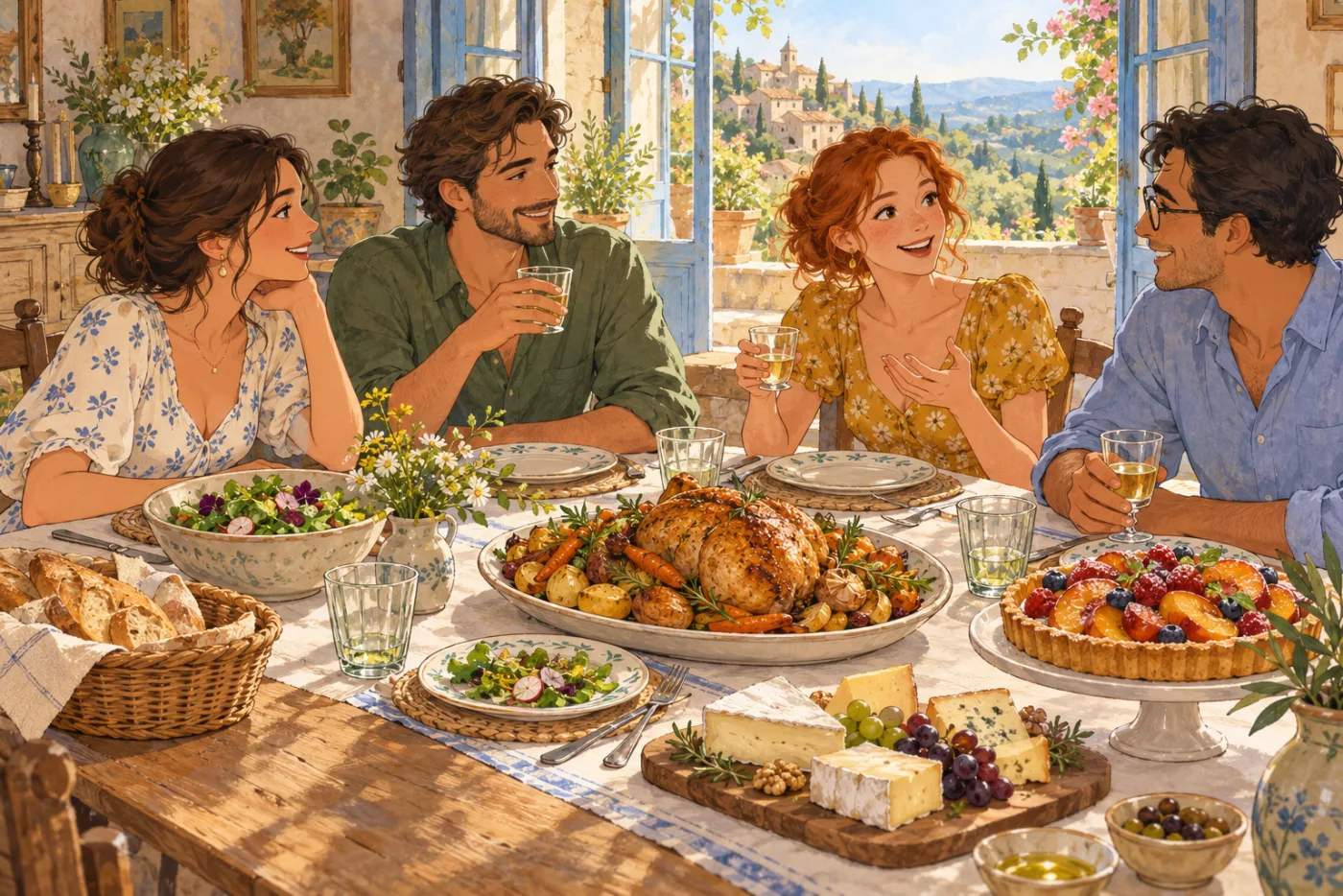
Text to type: People in France spend more time at the table than almost anyone. The OECD is a group of mostly rich countries. It looked at how long people eat and drink each day. In France, it is about 2 hours and 13 minutes. That is the most of all the countries in the study. In the USA, it is about one hour, near the bottom. Lunch is the big moment. In 2010, about half of France was eating lunch at 1 pm. A meal in France often has three courses. A course is one part of a meal. First comes a starter. Then comes meat or fish. At the end, there is cheese or dessert. In France, the law says workers should not eat lunch where they work. Then Covid came. In 2021, the government allowed lunch at the desk for a short time. Why? In France, a meal is not only food. It is time together. In 2010, UNESCO put the gastronomic meal of France on its world culture list. A gastronomic meal is a big meal for special days, such as weddings. It is also for the birth of a baby. UNESCO says this meal brings people together. It celebrates the pleasure of eating. It also makes family and friends closer. In the USA, meals are often quick. Many people drink their coffee while they walk. Dinner is early, often at 6 or 7 pm. In France, dinner usually starts at 8 pm or later. Today, the USA has the biggest fast food business in the world. In the 1940s, fast food chains started the drive-through. You buy food from a window and stay in your car. Work is another reason. National law in the USA does not give workers a lunch break. Only some states do. In France, the law looks after lunch.
Ready. The timer starts with your first key.
Complete
Great job!
Strong finish — your speed stayed steady.
Your rhythm
Speed over time- Time
- 0:00
- Raw speed
- 0 WPM
- Wrong keys
- 0
- Corrected
- 0
Check your understanding
Check: Part 4: Long Lunches and Quick Meals
1. How long do people in France spend at meals?
Sample answer
About 2 hours 13 minutes.
 Part 5: Small Talk with Strangers in the USA
Reading
Part 5: Small Talk with Strangers in the USA
Typing practice
Type the text exactly. Timer starts with your first key.
Text to type: In the USA, strangers often talk to each other. A cashier asks: How are you doing today? A person in the line talks about the weather. Many visitors are surprised. This short, nice chat is called small talk. The topics are safe and easy, such as the weather and TV. How are you? is not a real question here. It is a hello. The usual answer is short and happy: Good, thanks, and you? Nobody wants a long story about your problems. Why do people in the USA do it? Small talk fills silence. It also makes a stranger feel welcome. Another reason is that Americans move house a lot. The Census Bureau has a number for this. A person in the USA can expect about 11.7 moves in one life. So people often arrive in new towns. They meet new neighbours all the time. Safe topics help them start talking easily. But a nice chat is not a friendship. The cashier is polite but does not plan to be your friend. In France, it is different. In the street, people do not usually talk to strangers.
Ready. The timer starts with your first key.
Complete
Great job!
Strong finish — your speed stayed steady.
Your rhythm
Speed over time- Time
- 0:00
- Raw speed
- 0 WPM
- Wrong keys
- 0
- Corrected
- 0
Check your understanding
Check: Part 5: Small Talk with Strangers in the USA
1. Is How are you? a real question?
Sample answer
No, it is a hello.
 Part 6: Tu and Vous in France
Reading
Part 6: Tu and Vous in France
Typing practice
Type the text exactly. Timer starts with your first key.
Text to type: English has one word for you. French has two: tu and vous. Tu is for family, friends, children and pets. Vous is for strangers, older people, bosses and doctors. Vous is also the word for you when you talk to a group. Why two words? The idea is very old. In the 4th century, people started to speak to the emperor with vos. The emperor was the leader of the Roman Empire. In Latin, vos is you for many people. Using it for one person showed respect and power. French kept this idea. English once had two words too: thou and you. In the 1600s, thou left normal English. Changing from vous to tu is a big step. It says: we are closer now. The older or more important person decides when. A boss may tell a worker: you can use tu with me. If the younger person asks first, it can seem rude. People in France tried to end vous twice. On 8 November 1793, during the French Revolution, a new law came. It said government offices must use tu with everyone. The leaders wanted no person to be above another. But the law did not last. In 1968, students used tu with everyone. They wanted to break the walls between social groups. This did not end vous either. Today, young people often use tu with each other from the first minute. But children over about nine still use vous with their teacher.
Ready. The timer starts with your first key.
Complete
Great job!
Strong finish — your speed stayed steady.
Your rhythm
Speed over time- Time
- 0:00
- Raw speed
- 0 WPM
- Wrong keys
- 0
- Corrected
- 0
Check your understanding
Check: Part 6: Tu and Vous in France
1. Who decides on tu?
Sample answer
The older or more important person.
What you can do now
Final Reflection
These small habits come from history and show what people value.
Which custom in this lesson surprised you most, and why?
Do you like long lunches or quick meals more?
Does your language have something like tu and vous?
Learning cards
My cards
Everyday Customs in France and the USA
0 due · 0 new · about 1 min
Learn the sense first · then retrieve it
No saved cards yet
Open a word or phrase in the article and choose Save to My Words.
Focused Reading Mode is open.
Listening
Lesson audio
Listen from the beginning, or choose “Play this part” as you read along.
Reading
Part 1: Kisses, Handshakes and Hugs
Reading
Part 2: Bonjour Before Every Request
Reading
Part 3: Tipping in the USA
Reading
Part 4: Long Lunches and Quick Meals
Reading
Part 5: Small Talk with Strangers in the USA
Reading
Part 6: Tu and Vous in France
Finished listening?
Mark this listening practice complete when you have followed the lesson audio.
Listening complete
Listen Mode
Word-by-word syncPlay the audio and follow the highlighted word.
Article complete
Choose your next step
Open the next same-level lesson, replay the article, or save this page for later.
Listen Again
Replay the article once and notice how much more you understand.
One replay is enough. Then move on.