Everyday Talk in Real Places: New York City, London, Madrid, Berlin, and Paris
Quality checked lesson
People in a New York City subway, a London cafe queue, a Madrid plaza, a Berlin office kitchen, and a Paris bakery line all talk about weather, food, work, and weekends. A lens of place, pace, and topic shows why short talk fits one place and longer chat fits another.
 English lesson
Article
Choose how to use this lesson
You can switch anytime.
Study mode
Introduction
Typing practice
Type the text exactly. Timer starts with your first key.
Text to type: People in a New York City subway, a London cafe queue, a Madrid plaza, a Berlin office kitchen, and a Paris bakery line all talk about weather, food, work, and weekends. A lens of place, pace, and topic shows why short talk fits one place and longer chat fits another.
Ready. The timer starts with your first key.
Complete
Great job!
Strong finish — your speed stayed steady.
Your rhythm
Speed over time- Time
- 0:00
- Raw speed
- 0 WPM
- Wrong keys
- 0
- Corrected
- 0
Before you begin
Warm-up
Where do you talk to strangers most often: on a train, in a line, or in a park?
What do you say first to a new coworker?
Do you talk more in the morning or in the evening?
 Part 1: New York City subway commute
Reading
Part 1: New York City subway commute
Typing practice
Type the text exactly. Timer starts with your first key.
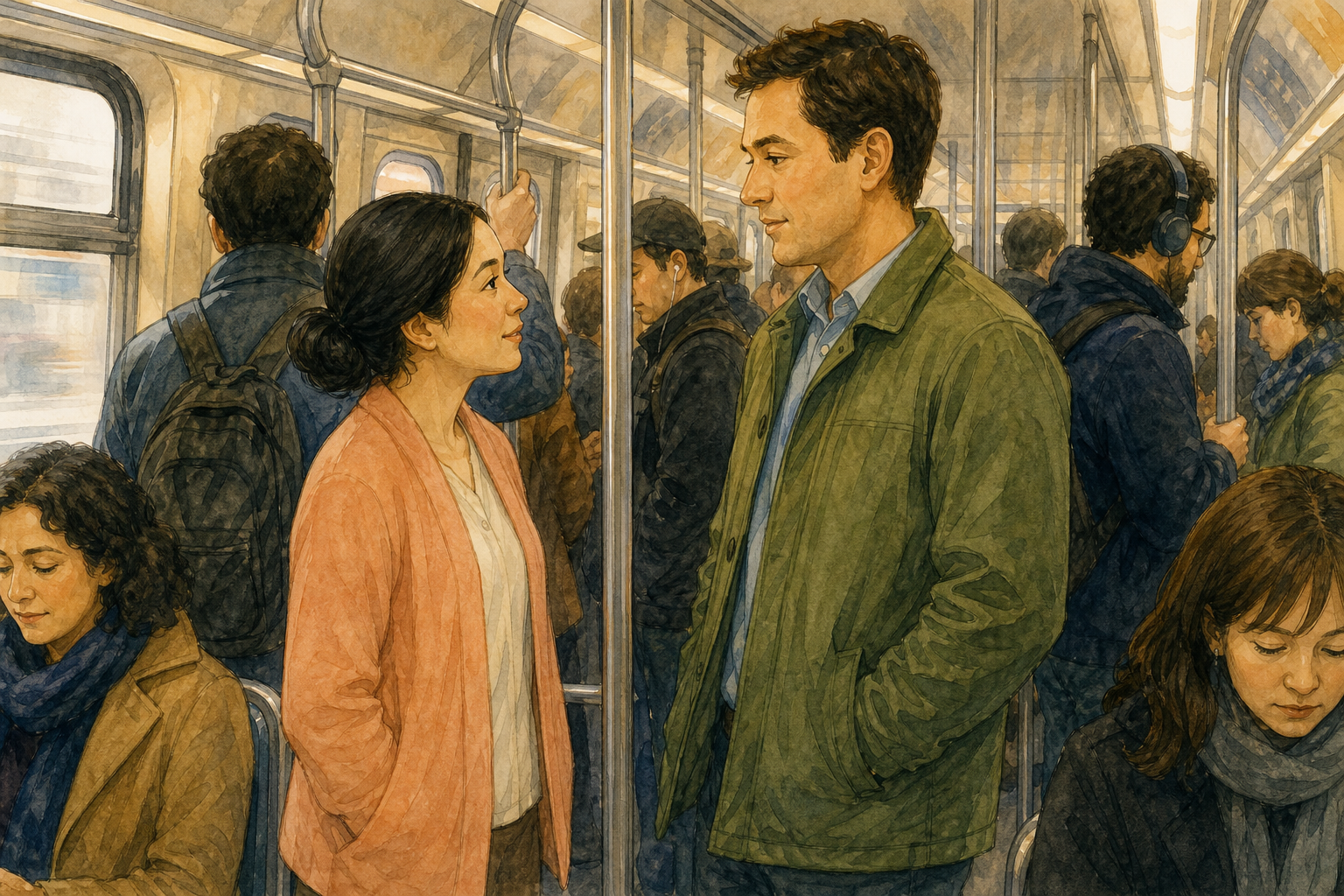
Text to type: Small talk is short, friendly talk about light things, like the weather. In New York City, a lot of it happens on the move. The New York City Subway carries millions of riders every day, and the cars are often crowded. People stand close, but most stay quiet with strangers. When they do speak, the pace is fast and the topic is practical. A rider asks which train stops at a station, or mentions another delay. Weather comes up, but in a useful way: it is raining, so the walk from the station will be wet. Here is the lens for the whole lesson: place, pace, and topic. On the subway, the place is tight, the pace is quick, and the topic is getting somewhere. A morning train in Tokyo feels similar in that way.
Ready. The timer starts with your first key.
Complete
Great job!
Strong finish — your speed stayed steady.
Your rhythm
Speed over time- Time
- 0:00
- Raw speed
- 0 WPM
- Wrong keys
- 0
- Corrected
- 0
Check your understanding
Check: Part 1: New York City subway commute
1. Why is subway talk in New York City short and practical?
Sample answer
The car is crowded and people are traveling to work or school, so they mostly stay quiet, and when they talk it is about delays, which train to take, or the weather for the walk outside.
Think one step further
Do you talk to anyone on your way to work or school?
What do you say when a train is late where you live?
Do you find the weather useful on your commute, or just friendly?
Reading
Part 2: London cafe queue
Typing practice
Type the text exactly. Timer starts with your first key.
Text to type: In London, people wait in queues, and a queue is a line. The queue is orderly, and standing in it is a shared moment. This is where small talk fits well. The place is calm, the pace is medium, and the topic is often the weather. Someone mentions that it is cold today, and the next person agrees and adds that it may rain later. These are short turns, a sentence or two each, and then the talk stops when the coffee arrives. Politeness matters in United Kingdom culture, so people use please, thank you, and sorry often, even in a two-line chat. Coffee culture is social in many countries, but the London queue version is light and quick. It feels warmer than the subway car because nobody is rushing to a door.
Ready. The timer starts with your first key.
Complete
Great job!
Strong finish — your speed stayed steady.
Your rhythm
Speed over time- Time
- 0:00
- Raw speed
- 0 WPM
- Wrong keys
- 0
- Corrected
- 0
Check your understanding
Check: Part 2: London cafe queue
1. How is the London cafe queue different from the New York City subway for small talk?
Sample answer
The queue is calm and orderly, so people have a shared waiting moment and make short polite comments, often about the weather, while subway riders are moving fast and mostly stay quiet.
Think one step further
What do you usually wait for when you stand in a cafe line?
Do you say sorry or thank you a lot when you wait in line?
What do you usually say about today's weather?
 Part 3: Madrid plaza life in the evening
Reading
Part 3: Madrid plaza life in the evening
Typing practice
Type the text exactly. Timer starts with your first key.
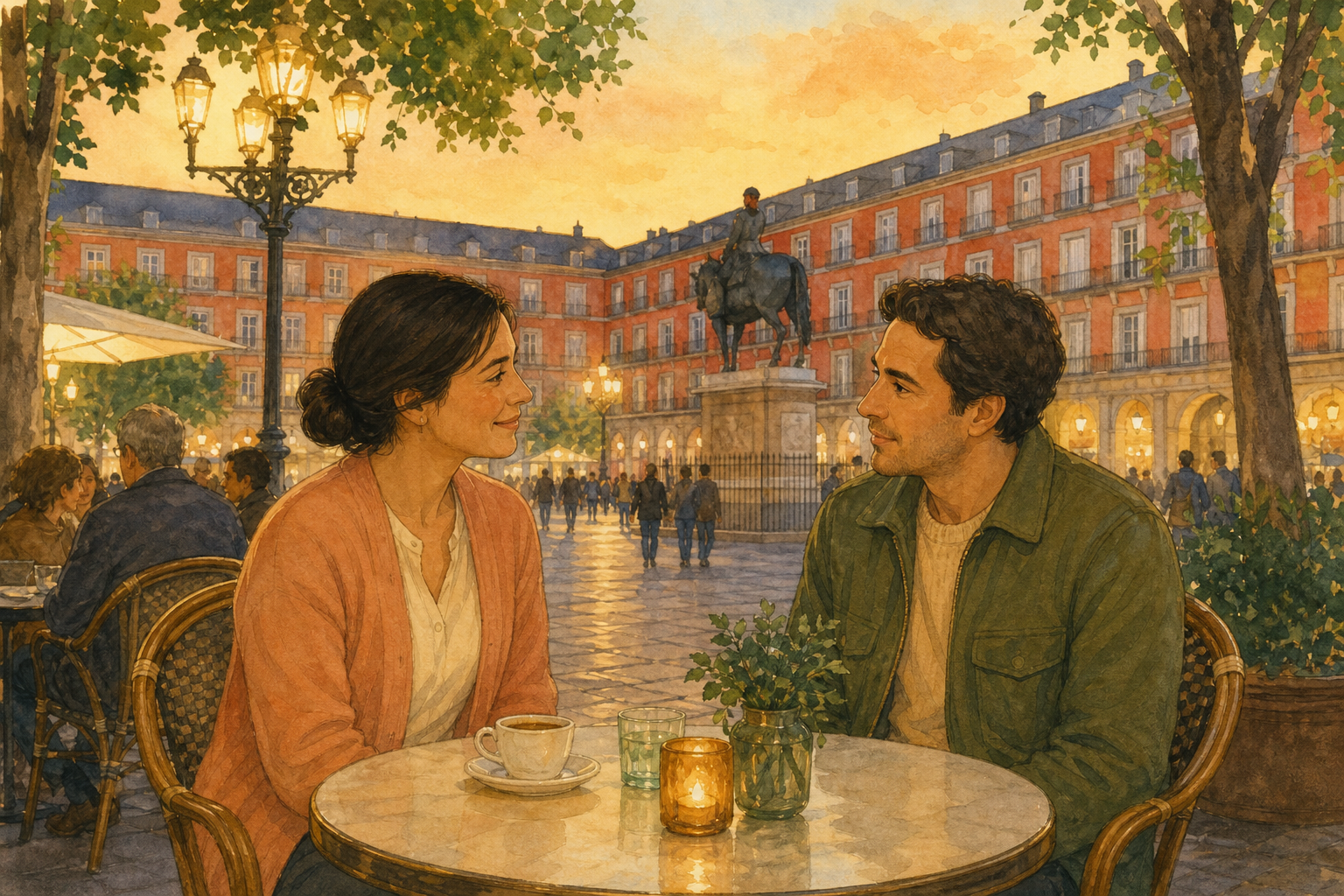
Text to type: Madrid is the capital of Spain, and much of its social life happens outdoors in the evening. Plaza Mayor is a big historic square in the center of Madrid, and it works as a public meeting place. Smaller neighborhood plazas do the same job for the people who live nearby. Now apply the lens. The place is open and shared, the pace is slow, and the topic is people. Friends and families sit outside, and the talk lasts an hour or more. Food is a natural topic: what to eat tonight, and which bar has good snacks. Weekend plans come up, and so do family news and children. This is the opposite end from the subway. Nobody is going anywhere, so the talk can grow long and relaxed.
Ready. The timer starts with your first key.
Complete
Great job!
Strong finish — your speed stayed steady.
Your rhythm
Speed over time- Time
- 0:00
- Raw speed
- 0 WPM
- Wrong keys
- 0
- Corrected
- 0
Check your understanding
Check: Part 3: Madrid plaza life in the evening
1. What makes plaza talk in Madrid longer than commute talk?
Sample answer
People come to the plaza to sit and meet in the evening, not to travel, so the slow pace lets them talk for a long time about food, family, and weekend plans.
Think one step further
Is there a square or park where people meet in the evening in your town?
What food do you talk about with friends outside?
When do you make weekend plans, early in the week or late?
Reading
Part 4: Berlin office kitchen
Typing practice
Type the text exactly. Timer starts with your first key.
Text to type: Berlin is the capital of Germany, and it is a working city with a normal workday rhythm. The office kitchen is where short workday talk happens. People come in for coffee, and that gives them a reason to stand together for a minute. Conversation norms in Germany are direct and practical, so the talk is clear and to the point. Someone asks about the meeting at ten, or mentions that the project is behind. Weekend plans appear on Friday: a trip, a birthday, or just rest. Weather is fine as a topic, but it usually leads to a plan, like taking the bike if it stays dry. Under the lens, the place is a work space, the pace is quick, and the topic is the day. The talk ends when the cup is full.
Ready. The timer starts with your first key.
Complete
Great job!
Strong finish — your speed stayed steady.
Your rhythm
Speed over time- Time
- 0:00
- Raw speed
- 0 WPM
- Wrong keys
- 0
- Corrected
- 0
Check your understanding
Check: Part 4: Berlin office kitchen
1. What kind of talk fits a Berlin office kitchen?
Sample answer
Short, direct, practical talk about the workday, like a meeting or a project, plus simple weekend plans, all while people get coffee for a minute.
Think one step further
Do you chat during short breaks at work or at school?
Where do you take short breaks at work or school?
What do you usually say about your weekend on a Monday?
Reading
Part 5: Paris bakery line
Typing practice
Type the text exactly. Timer starts with your first key.
Text to type: Paris is the capital of France, and its mornings often start at a bakery. A bakery is a shop that sells bread and pastries, and in the morning a line forms outside. The place is busy, the pace is quick, and the topic is food first. People name the bread they want, and they comment on the croissants being fresh or the good ones being gone. Talk with a neighbor in line is a short turn, often about morning plans: work, school, or a visit. The bakery line is like the London queue in shape, but the topic moves from weather to bread. In Japan, a quick word at a station bakery or a convenience store counter plays a similar role. It is talk that fits between two other tasks.
Ready. The timer starts with your first key.
Complete
Great job!
Strong finish — your speed stayed steady.
Your rhythm
Speed over time- Time
- 0:00
- Raw speed
- 0 WPM
- Wrong keys
- 0
- Corrected
- 0
Check your understanding
Check: Part 5: Paris bakery line
1. What do people mostly talk about in a Paris bakery line, and why is it short?
Sample answer
They talk about bread and pastries and about their morning plans, and it is short because the line is busy and everyone is between other tasks.
Think one step further
What do you buy in the morning before work or school?
Do you talk to the person behind the counter, or just order?
Which topic do you prefer while waiting in line, food or the weather?
 Part 6: Same needs, different talk by place
Reading
Part 6: Same needs, different talk by place
Typing practice
Type the text exactly. Timer starts with your first key.
Text to type: This lesson looks at everyday conversations in real places in America with clear city examples. Cities in Europe give more examples of the same daily talk. These chats happen in named settings that learners can picture. This shows how talk differs by place while needs stay familiar. Put the five places side by side with the lens. The human needs are the same everywhere: weather, food, work or school, and weekend plans. The place changes what comes first and how long it lasts. On the New York City subway, weather is about a wet walk, and the talk lasts seconds. In a London cafe queue, weather is the polite opening, and the talk lasts a minute. In a Madrid plaza, food and family fill an evening. In a Berlin office kitchen, work and coffee fill a short break. In a Paris bakery line, bread fills the moment. Fast, tight, task places make short practical talk. Slow, open, social places make long personal talk. If you know the place and the pace, you can guess the topic.
Ready. The timer starts with your first key.
Complete
Great job!
Strong finish — your speed stayed steady.
Your rhythm
Speed over time- Time
- 0:00
- Raw speed
- 0 WPM
- Wrong keys
- 0
- Corrected
- 0
Check your understanding
Check: Part 6: Same needs, different talk by place
1. What does the lens of place, pace, and topic predict about talk in a new city?
Sample answer
A fast, crowded place like a commute will bring short practical talk, and a slow, open social place like a plaza will bring longer talk about food, family, and plans.
Think one step further
Which of the five places feels most like your daily life?
Where do you have your longest talks in a normal week?
What you can do now
Final Reflection
Think of one place you visit every day and describe its place, pace, and topic.
Learning cards
My cards
Everyday Talk in Real Places: New York City, London, Madrid, Berlin, and Paris
0 due · 0 new · about 1 min
Learn the sense first · then retrieve it
No saved cards yet
Open a word or phrase in the article and choose Save to My Words.
Focused Reading Mode is open.
Listening
Lesson audio
Listen from the beginning, or choose “Play this part” as you read along.
Reading
Part 1: New York City subway commute
Reading
Part 2: London cafe queue
Reading
Part 3: Madrid plaza life in the evening
Reading
Part 4: Berlin office kitchen
Reading
Part 5: Paris bakery line
Reading
Part 6: Same needs, different talk by place
Finished listening?
Mark this listening practice complete when you have followed the lesson audio.
Listening complete
Listen Mode
Word-by-word syncPlay the audio and follow the highlighted word.
Article complete
Choose your next step
Open the next same-level lesson, replay the article, or save this page for later.
Listen Again
Replay the article once and notice how much more you understand.
One replay is enough. Then move on.