Autumn Time in Four Countries
Quality checked lesson
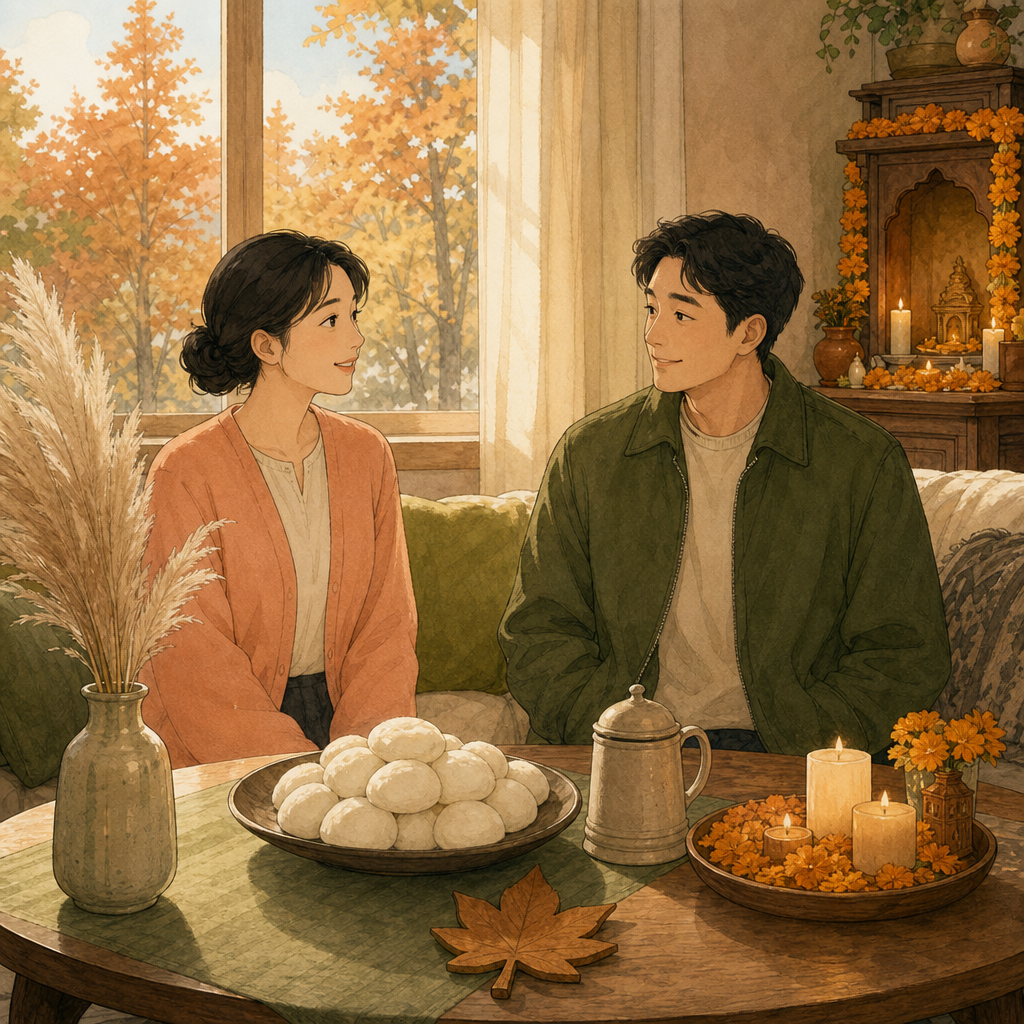
See how autumn customs connect people with the moon, changing leaves, a large festival, and family members who have died. Compare the time, place, and meaning of each activity.
 English lesson
Article
Choose how to use this lesson
You can switch anytime.
Study mode
Introduction
Typing practice
Type the text exactly. Timer starts with your first key.
Text to type: See how autumn customs connect people with the moon, changing leaves, a large festival, and family members who have died. Compare the time, place, and meaning of each activity.
Ready. The timer starts with your first key.
Complete
Great job!
Strong finish — your speed stayed steady.
Your rhythm
Speed over time- Time
- 0:00
- Raw speed
- 0 WPM
- Wrong keys
- 0
- Corrected
- 0
Before you begin
Warm-up
What changes do you notice in autumn?
Do you like spending autumn time at home or outside?
What autumn events happen where you live?
 Part 1: Moon Viewing in Japan
Reading
Part 1: Moon Viewing in Japan
Typing practice
Type the text exactly. Timer starts with your first key.
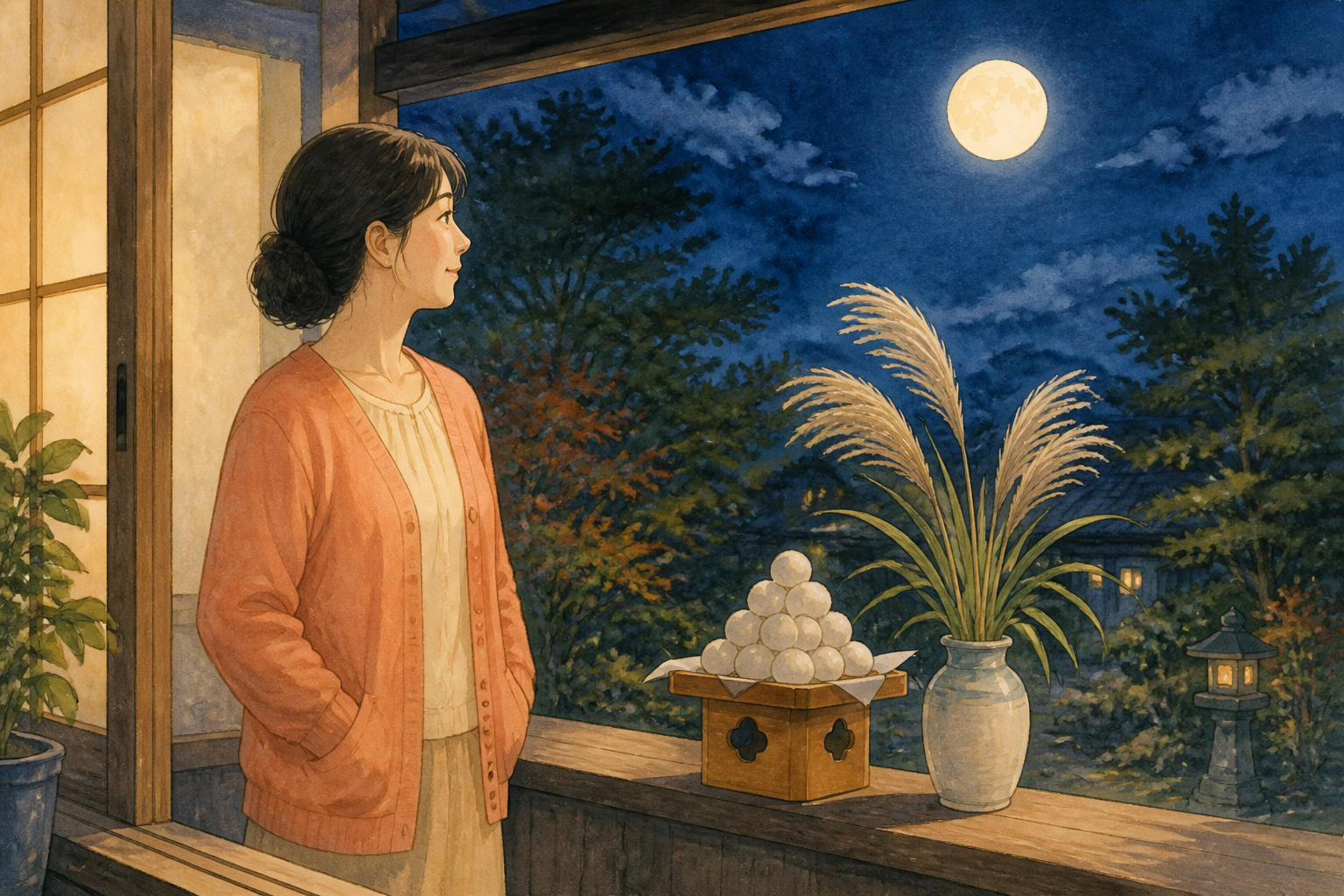
Text to type: Autumn activities are easier to understand with three questions: When do they happen? Where do people spend time? What does the activity mean? We can use these questions in all four countries. To see how people spend time in autumn in Japan, start with Tsukimi, the Japanese autumn moon-viewing custom. Jugoya is the fifteenth night of the eighth lunar month. In 2026, Tsukimi is on 25 September. People display dango, round rice dumplings, and susuki, or silver grass. The round dango stand for the full moon. The grass stands for rice and good crops.
Ready. The timer starts with your first key.
Complete
Great job!
Strong finish — your speed stayed steady.
Your rhythm
Speed over time- Time
- 0:00
- Raw speed
- 0 WPM
- Wrong keys
- 0
- Corrected
- 0
Check your understanding
Check: Part 1: Moon Viewing in Japan
1. What do the dango and silver grass mean in a Tsukimi display?
Sample answer
The round dango stand for the full moon, and the silver grass stands for rice and good crops.
Reading
Part 2: Tsukimi in Daily Life
Typing practice
Type the text exactly. Timer starts with your first key.
Text to type: Now add place and daily routine to our three questions. Many people enjoy Tsukimi at home under the moonlight. It is a custom, not a national public holiday. There are no holiday days connected with the moon festival, so work continues as normal. Offices and shops stay open. Businesses may still mark the season with special foods and marketing. This shows how a meaningful custom can be part of an ordinary working day. People do not need a whole day away from work to notice the season and enjoy the moon.
Ready. The timer starts with your first key.
Complete
Great job!
Strong finish — your speed stayed steady.
Your rhythm
Speed over time- Time
- 0:00
- Raw speed
- 0 WPM
- Wrong keys
- 0
- Corrected
- 0
Check your understanding
Check: Part 2: Tsukimi in Daily Life
1. Why can Tsukimi be part of an ordinary working day?
Sample answer
Tsukimi is not a national public holiday, so offices and shops stay open and work continues as normal.
 Part 3: Autumn Colour in Canada
Reading
Part 3: Autumn Colour in Canada
Typing practice
Type the text exactly. Timer starts with your first key.
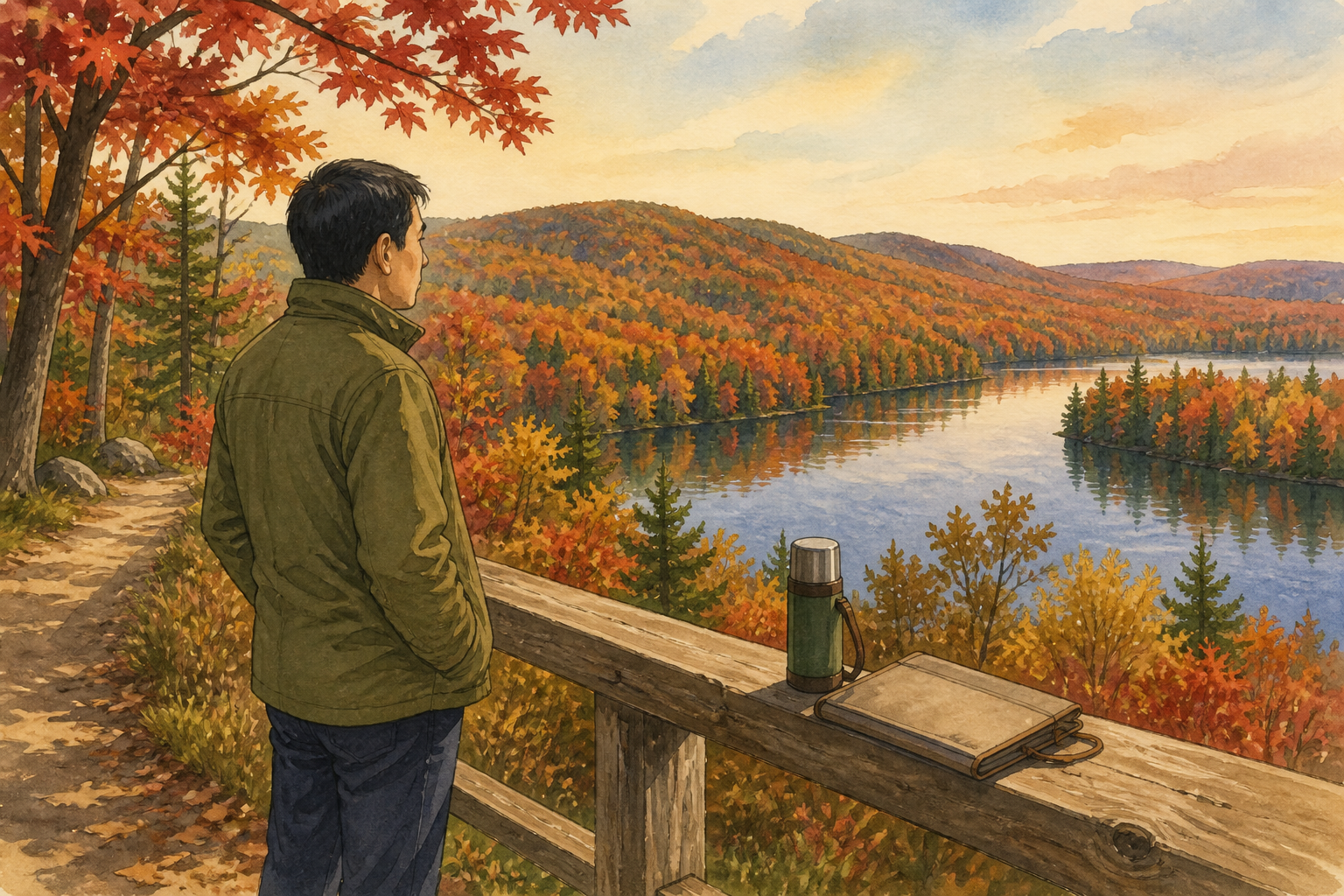
Text to type: In Canada, people spend time in autumn looking at fall colour and marking Thanksgiving. Fall colour means leaves changing colour in autumn. Algonquin Park, a large provincial park in Ontario, is one place where people can see this change. The colour of Sugar Maple and Red Maple leaves is usually strongest in the last week of September or the first week of October. Canadian Thanksgiving is on the second Monday in October, and some park services stay open until that weekend. In our three-question lens, the place is a park, the time is early autumn, and the changing leaves are the main natural event.
Ready. The timer starts with your first key.
Complete
Great job!
Strong finish — your speed stayed steady.
Your rhythm
Speed over time- Time
- 0:00
- Raw speed
- 0 WPM
- Wrong keys
- 0
- Corrected
- 0
Check your understanding
Check: Part 3: Autumn Colour in Canada
1. When is maple fall colour usually strongest in Algonquin Park?
Sample answer
It is usually strongest in the last week of September or the first week of October.
Reading
Part 4: A Large Festival in Germany
Typing practice
Type the text exactly. Timer starts with your first key.
Text to type: In Germany, people spend autumn days at Oktoberfest, Munich’s big autumn festival. Munich is a city in Bavaria. The 191st Oktoberfest will take place at Theresienwiese, the festival ground in Munich, from 19 September to 4 October 2026. This is a very large public event. About 6.5 million guests visited in 2025. Its history began with a royal marriage celebration on fields outside Munich on 12 October 1810. Horse races happened again the next year, and the event grew into Oktoberfest. Here, autumn time is spent in a busy public place rather than at home.
Ready. The timer starts with your first key.
Complete
Great job!
Strong finish — your speed stayed steady.
Your rhythm
Speed over time- Time
- 0:00
- Raw speed
- 0 WPM
- Wrong keys
- 0
- Corrected
- 0
Check your understanding
Check: Part 4: A Large Festival in Germany
1. How is Oktoberfest different from enjoying Tsukimi at home?
Sample answer
Oktoberfest is a large public festival in Munich, while many people enjoy Tsukimi at home.
Reading
Part 5: Welcoming the Dead in Mexico
Typing practice
Type the text exactly. Timer starts with your first key.
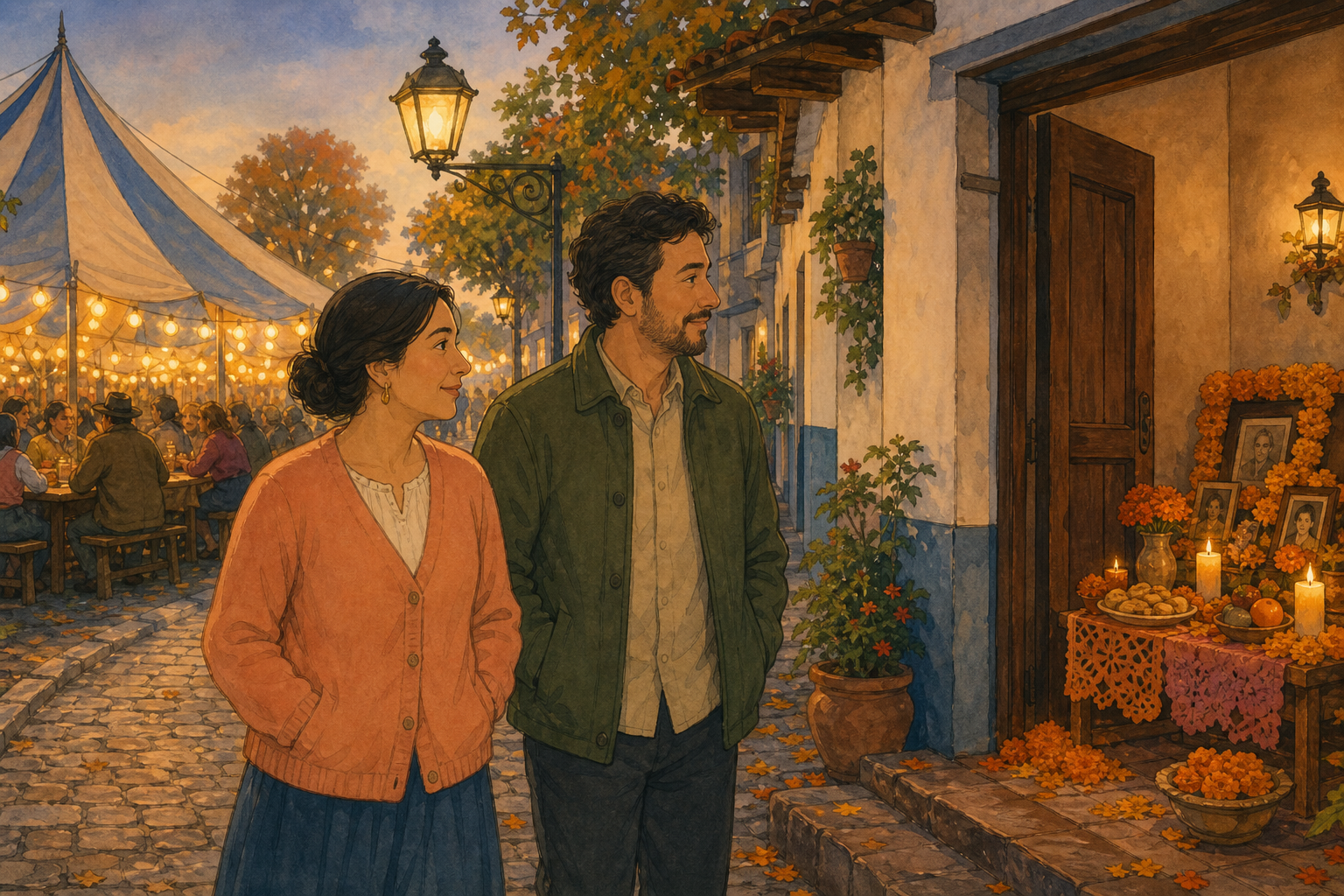
Text to type: In Mexico, people spend time in autumn preparing for Día de Muertos, the Mexican Day of the Dead festivity. It happens each year from the end of October to the beginning of November. It marks the short return of family members who have died. Families make an ofrenda, a home offering or shrine for the dead. They place favourite dishes, flowers, candles, and handmade objects around home shrines and tombs. Flower petals and candles can also mark paths. The period comes at the end of the yearly maize, or corn, growing cycle. UNESCO put this living tradition on its Intangible Cultural Heritage list in 2008.
Ready. The timer starts with your first key.
Complete
Great job!
Strong finish — your speed stayed steady.
Your rhythm
Speed over time- Time
- 0:00
- Raw speed
- 0 WPM
- Wrong keys
- 0
- Corrected
- 0
Check your understanding
Check: Part 5: Welcoming the Dead in Mexico
1. How does an ofrenda help families welcome the dead?
Sample answer
An ofrenda welcomes the dead with favourite dishes, flowers, candles, and handmade objects.
 Part 6: Comparing Autumn Time
Reading
Part 6: Comparing Autumn Time
Typing practice
Type the text exactly. Timer starts with your first key.
Text to type: Our three questions show important differences. In Japan, many people view the moon at home while normal work continues. In Canada, people look at changing leaves in places such as Algonquin Park and mark Thanksgiving. In Germany, people attend a large public festival in Munich. In Mexico, families prepare home shrines and tombs for relatives who have died. The places are different: a home, a park, a festival ground, or a tomb. The times are also different, from late September to early November. However, each activity gives people a way to notice the autumn season and spend time with a custom, place, or memory.
Ready. The timer starts with your first key.
Complete
Great job!
Strong finish — your speed stayed steady.
Your rhythm
Speed over time- Time
- 0:00
- Raw speed
- 0 WPM
- Wrong keys
- 0
- Corrected
- 0
Check your understanding
Check: Part 6: Comparing Autumn Time
1. What three questions can help us compare these autumn activities?
Sample answer
We can ask when they happen, where people spend time, and what each activity means.
What you can do now
Final Reflection
Which autumn activity would you most like to experience, and why?
Learning cards
My cards
Autumn Time in Four Countries
0 due · 0 new · about 1 min
Learn the sense first · then retrieve it
No saved cards yet
Open a word or phrase in the article and choose Save to My Words.
Focused Reading Mode is open.
Listening
Lesson audio
Listen from the beginning, or choose “Play this part” as you read along.
Reading
Part 1: Moon Viewing in Japan
Reading
Part 2: Tsukimi in Daily Life
Reading
Part 3: Autumn Colour in Canada
Reading
Part 4: A Large Festival in Germany
Reading
Part 5: Welcoming the Dead in Mexico
Reading
Part 6: Comparing Autumn Time
Finished listening?
Mark this listening practice complete when you have followed the lesson audio.
Listening complete
Listen Mode
Word-by-word syncPlay the audio and follow the highlighted word.
Article complete
Choose your next step
Open the next same-level lesson, replay the article, or save this page for later.
Listen Again
Replay the article once and notice how much more you understand.
One replay is enough. Then move on.