Small Conversations in Busy Places
Quality checked lesson
Small conversations help people share space in trains, cafes, kitchens, and bakeries. Clear questions make everyday requests easier to understand.
 English lesson
Article
Choose how to use this lesson
You can switch anytime.
Study mode
Introduction
Small conversations
Typing practice
Type the text exactly. Timer starts with your first key.
Text to type: Small conversations help people share space in trains, cafes, kitchens, and bakeries. Clear questions make everyday requests easier to understand. Read these everyday examples, then try a short conversation with a clear request and a helpful answer.
Ready. The timer starts with your first key.
Complete
Great job!
Strong finish — your speed stayed steady.
Your rhythm
Speed over time- Time
- 0:00
- Raw speed
- 0 WPM
- Wrong keys
- 0
- Corrected
- 0
Before you begin
Your everyday conversations
Where do you usually talk to people you do not know?
What do you say when you need more space?
How do you ask someone to repeat something?
Reading
Making room on a train
Typing practice
Type the text exactly. Timer starts with your first key.
Text to type: Imagine a short conversation on a New York City subway train. You are standing near another passenger, and your bag is between you. You want to move without touching the other person. A simple opening is enough: ‘Excuse me.’ Then explain your request: ‘Could you move your bag a little, please?’ The passenger can answer, ‘Of course,’ and move it beside their feet. You can then stand in the space and say, ‘Thank you.’ If someone asks you to move, answer before you act. ‘Sure, I can move’ tells them you understood. This exchange is about sharing space, not asking for a route or a train time.
Ready. The timer starts with your first key.
Complete
Great job!
Strong finish — your speed stayed steady.
Your rhythm
Speed over time- Time
- 0:00
- Raw speed
- 0 WPM
- Wrong keys
- 0
- Corrected
- 0
Check your understanding
A clear request
1. Why is ‘Could you move your bag a little, please?’ clearer than only saying ‘Excuse me’?
Sample answer
‘Excuse me’ gets the passenger’s attention. The full question explains what you need them to do.
Think one step further
What could you say after the passenger moves the bag?
Useful language
Asking for space
- Excuse me.
- A polite way to get someone’s attention.Excuse me. Thank you.
- Could you move your bag a little, please?
- Ask someone to make more space.Could you move your bag a little, please? Thank you.
- Sure, I can move
- Agree to make space for someone.Sure, I can move. There is enough room now.
Reading
Joining a cafe queue
Typing practice
Type the text exactly. Timer starts with your first key.
Text to type: Picture a conversation in a London cafe. You see people waiting, but you do not know who is last. Ask a person near the end, ‘Are you waiting in the queue?’ If they say yes, ask, ‘Can I stand behind you?’ Their answer gives you a clear place to wait. You do not need to guess or walk in front of anyone. If you miss the answer, say, ‘Sorry, could you say that again?’ The other person can repeat it in simple words. Finish with ‘Thanks’ and join the queue. These questions concern the people beside you; they do not require information about prices or opening hours.
Ready. The timer starts with your first key.
Complete
Great job!
Strong finish — your speed stayed steady.
Your rhythm
Speed over time- Time
- 0:00
- Raw speed
- 0 WPM
- Wrong keys
- 0
- Corrected
- 0
Check your understanding
Finding your place
1. How can you find your place in the queue without guessing?
Sample answer
I can ask whether the person is waiting in the queue. Then I can ask if I can stand behind them.
Think one step further
What can you say if you do not hear their answer?
Useful language
Checking and repeating
- Are you waiting in the queue?
- Check whether someone is waiting.Are you waiting in the queue? Thank you.
- Can I stand behind you?
- Ask where you can join the queue.Can I stand behind you? Thank you.
- Sorry, could you say that again?
- Ask someone to repeat their words.Sorry, could you say that again? Thank you.
Reading
Letting someone pass
Typing practice
Type the text exactly. Timer starts with your first key.
Text to type: Picture a short exchange inside a Paris bakery. You are near the door when another customer wants to leave. The customer says, ‘Excuse me, could I get past?’ You can answer, ‘Of course,’ and move to the side. If you also need to leave, ask, ‘Are you going out too?’ A clear answer helps you decide who will move first. ‘Yes, please go first’ makes the next action easy to understand. You can say, ‘Thanks,’ walk through the door, and finish the conversation. Nobody needs a long explanation about why they are leaving. The important thing is to make your request clear and give the other person room.
Ready. The timer starts with your first key.
Complete
Great job!
Strong finish — your speed stayed steady.
Your rhythm
Speed over time- Time
- 0:00
- Raw speed
- 0 WPM
- Wrong keys
- 0
- Corrected
- 0
Check your understanding
Words and actions
1. What should you do when someone asks to get past you?
Sample answer
I can say ‘Of course’ and move to the side. My answer and my action both show that the person can pass.
Think one step further
What could you say if you want the other person to leave first?
Useful language
Making a way through
- Could I get past?
- Ask for enough space to pass someone.Could I get past? Thank you.
- Are you going out too?
- Check whether someone is also leaving.Are you going out too? Thank you.
- Please go first.
- Let another person move before you.Please go first. Thank you.
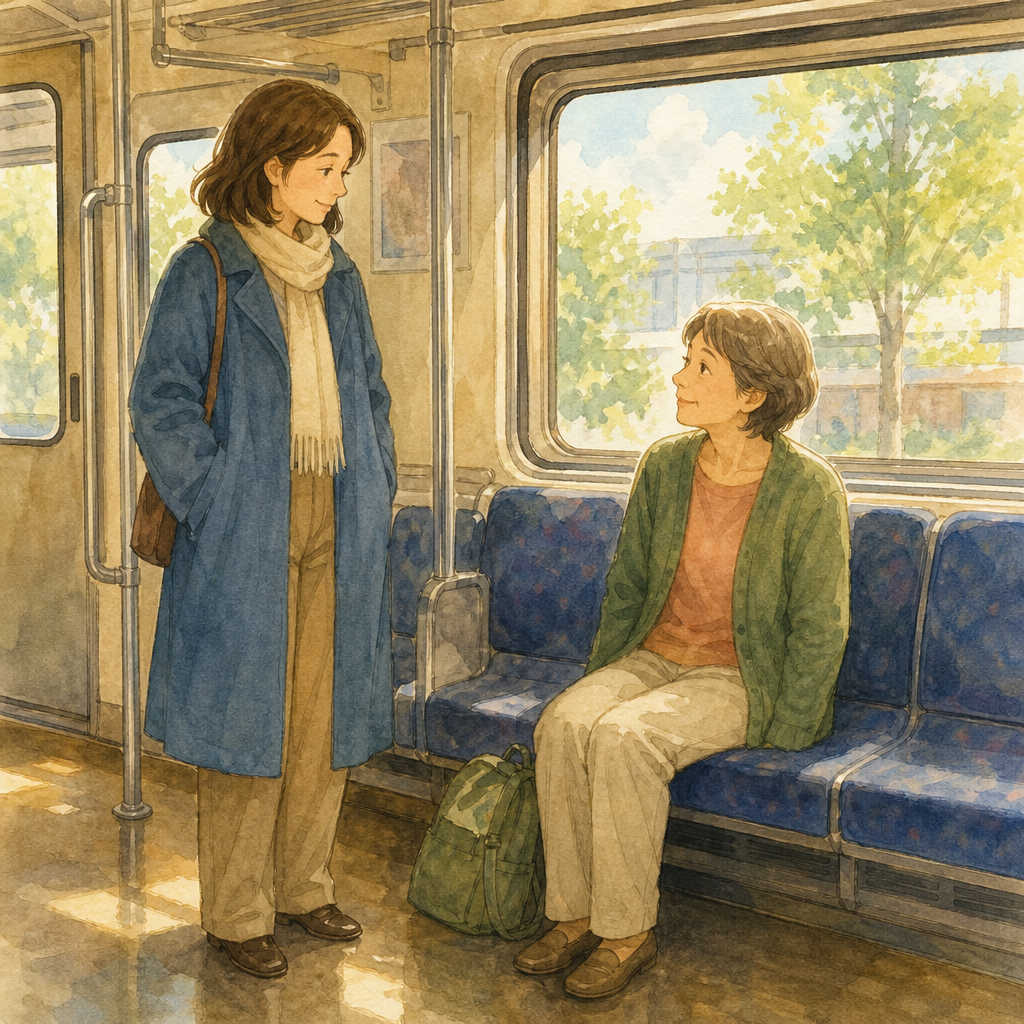
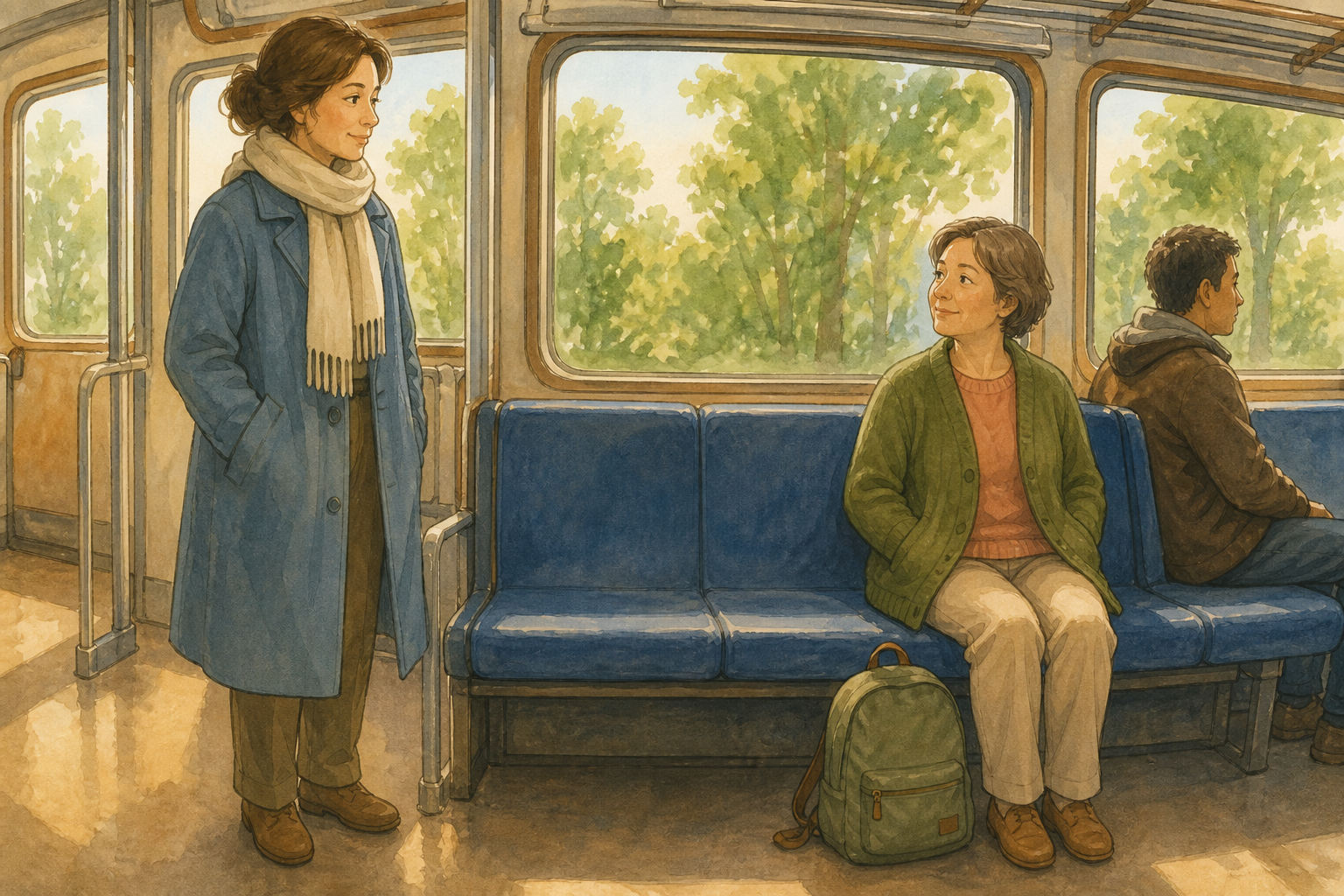 A bag beside a passenger
Scene
A bag beside a passenger
Typing practice
Type the text exactly. Timer starts with your first key.
Text to type: On a train, you are standing beside a passenger whose bag is between you. You need a little more room, and the passenger can move the bag beside their feet. Your goal is to ask for space and thank the passenger after they make room.
Ready. The timer starts with your first key.
Complete
Great job!
Strong finish — your speed stayed steady.
Your rhythm
Speed over time- Time
- 0:00
- Raw speed
- 0 WPM
- Wrong keys
- 0
- Corrected
- 0
Roleplay
A little more room
You
Excuse me.
Passenger
Yes?
You
Sorry, is this your bag?
Passenger
Yes, it is.
You
Could you move it a little, please? I need a little more room.
Passenger
Of course. Where should I put it?
You
Beside your feet is fine, thank you.
Passenger
Okay. I’ll put it beside my feet.
You
Thank you. That helps a lot.
Passenger
No problem. Is that enough space now?
You
Yes, I have enough room now. Thanks again.
Passenger
You’re welcome.
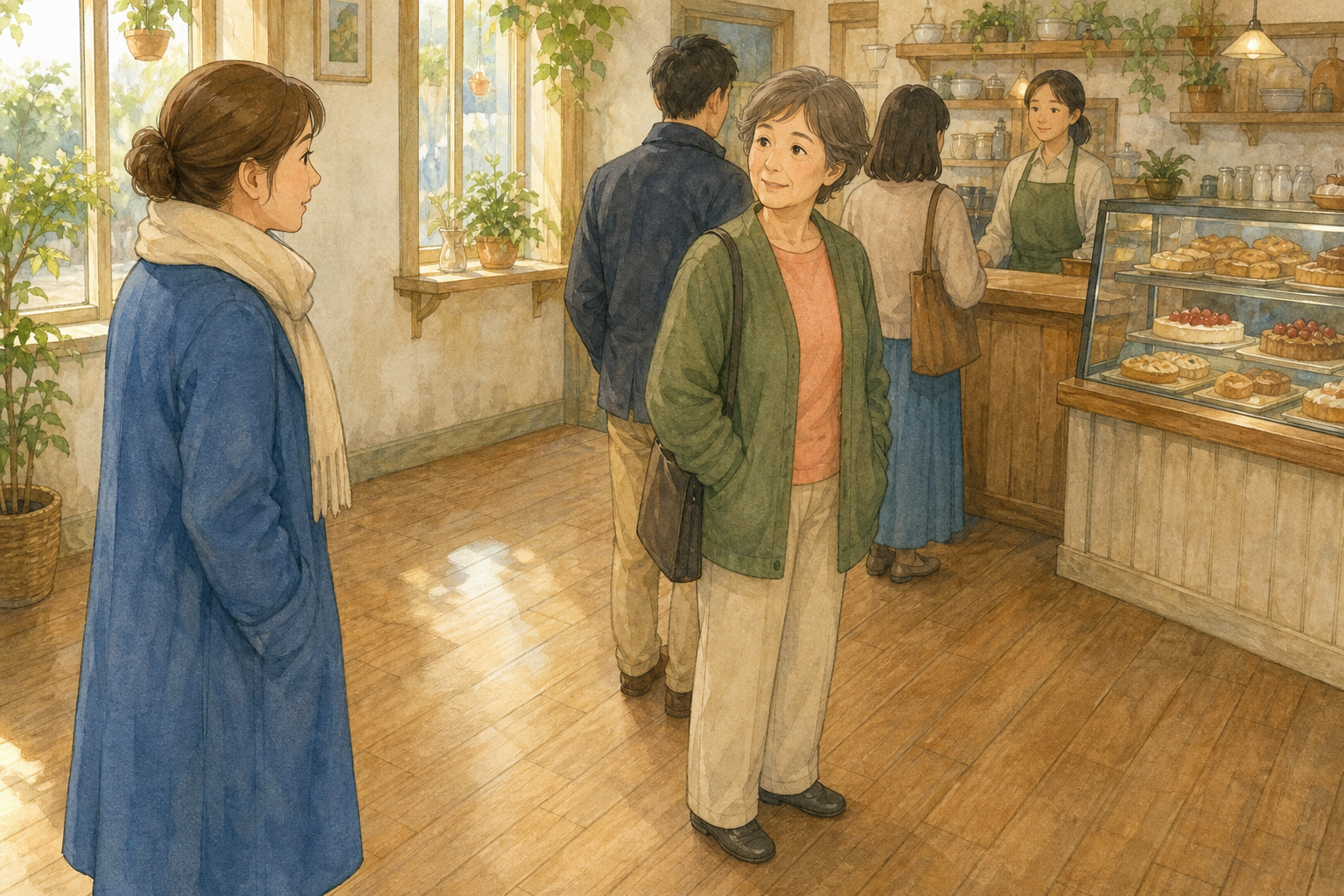 Finding the end of the queue
Scene
Finding the end of the queue
Typing practice
Type the text exactly. Timer starts with your first key.
Text to type: In a cafe, you approach a customer who is waiting at the end of a queue. You want to join behind them, but you do not hear their first answer clearly. Your goal is to confirm where to wait and join the queue.
Ready. The timer starts with your first key.
Complete
Great job!
Strong finish — your speed stayed steady.
Your rhythm
Speed over time- Time
- 0:00
- Raw speed
- 0 WPM
- Wrong keys
- 0
- Corrected
- 0
Roleplay
Behind you?
You
Excuse me.
Customer
Yes?
You
Are you waiting in the queue?
Customer
Sorry, what did you say?
You
Are you waiting in the queue?
Customer
Yes, I am.
You
Can I stand behind you?
Customer
Yes. You can stand behind me.
You
Sorry, could you say that again? It was a little noisy.
Customer
Sure. I’m waiting here. Please stand behind me.
You
Thanks. I’ll wait here, behind you.
Customer
That’s right. You’re in the right place now.
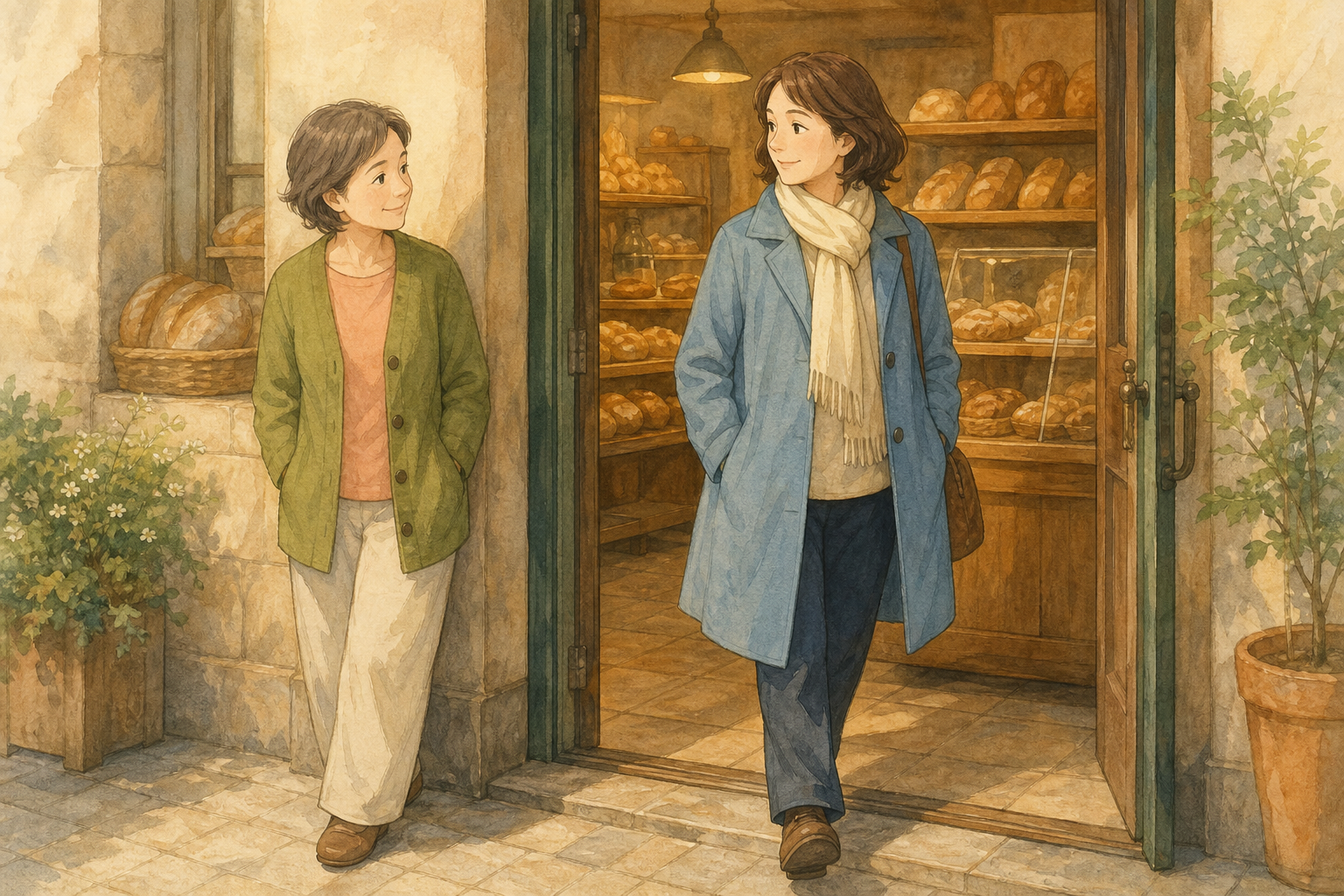 Leaving through the same door
Scene
Leaving through the same door
Typing practice
Type the text exactly. Timer starts with your first key.
Text to type: At a bakery door, you and another customer are both leaving. The customer is in front of you and steps aside to let you pass. Your goal is to ask to get past, agree who goes first, and leave politely.
Ready. The timer starts with your first key.
Complete
Great job!
Strong finish — your speed stayed steady.
Your rhythm
Speed over time- Time
- 0:00
- Raw speed
- 0 WPM
- Wrong keys
- 0
- Corrected
- 0
Roleplay
Please go first
You
Excuse me. Could I get past?
Customer
Of course. Just a moment.
You
Thank you.
Customer
I’ll move to the side.
You
Are you going out too?
Customer
Yes, I am.
You
Oh — who should go first?
Customer
Please go first. I can wait.
You
Are you sure?
Customer
Yes. Please go first.
You
Thanks. I’m going out now. Have a nice day.
Customer
You’re welcome. Goodbye.
Speak
A conversation in a shared kitchen
In a shared kitchen, a colleague is using the sink and you want to wash your cup. Speak both parts of a short conversation: get their attention, ask for space, give a clear answer, and finish after they make room.
What you can do now
Final reflection
Clear questions help people share seats, queues, and doorways. A helpful answer tells the other person what they can do next. Which question from these conversations would be useful to you, and where would you use it?
Learning cards
My cards
Small Conversations in Busy Places
0 due · 0 new · about 1 min
Learn the sense first · then retrieve it
No saved cards yet
Open a word or phrase in the article and choose Save to My Words.
Focused Reading Mode is open.
Listening
Lesson audio
Listen from the beginning, or choose “Play this part” as you read along.
Reading
Making room on a train
Reading
Joining a cafe queue
Reading
Letting someone pass
Finished listening?
Mark this listening practice complete when you have followed the lesson audio.
Listening complete
Listen Mode
Word-by-word syncPlay the audio and follow the highlighted word.
Article complete
Choose your next step
Open the next same-level lesson, replay the article, or save this page for later.
Listen Again
Replay the article once and notice how much more you understand.
One replay is enough. Then move on.