Spain: People, Culture, History, and Food
Quality checked lesson
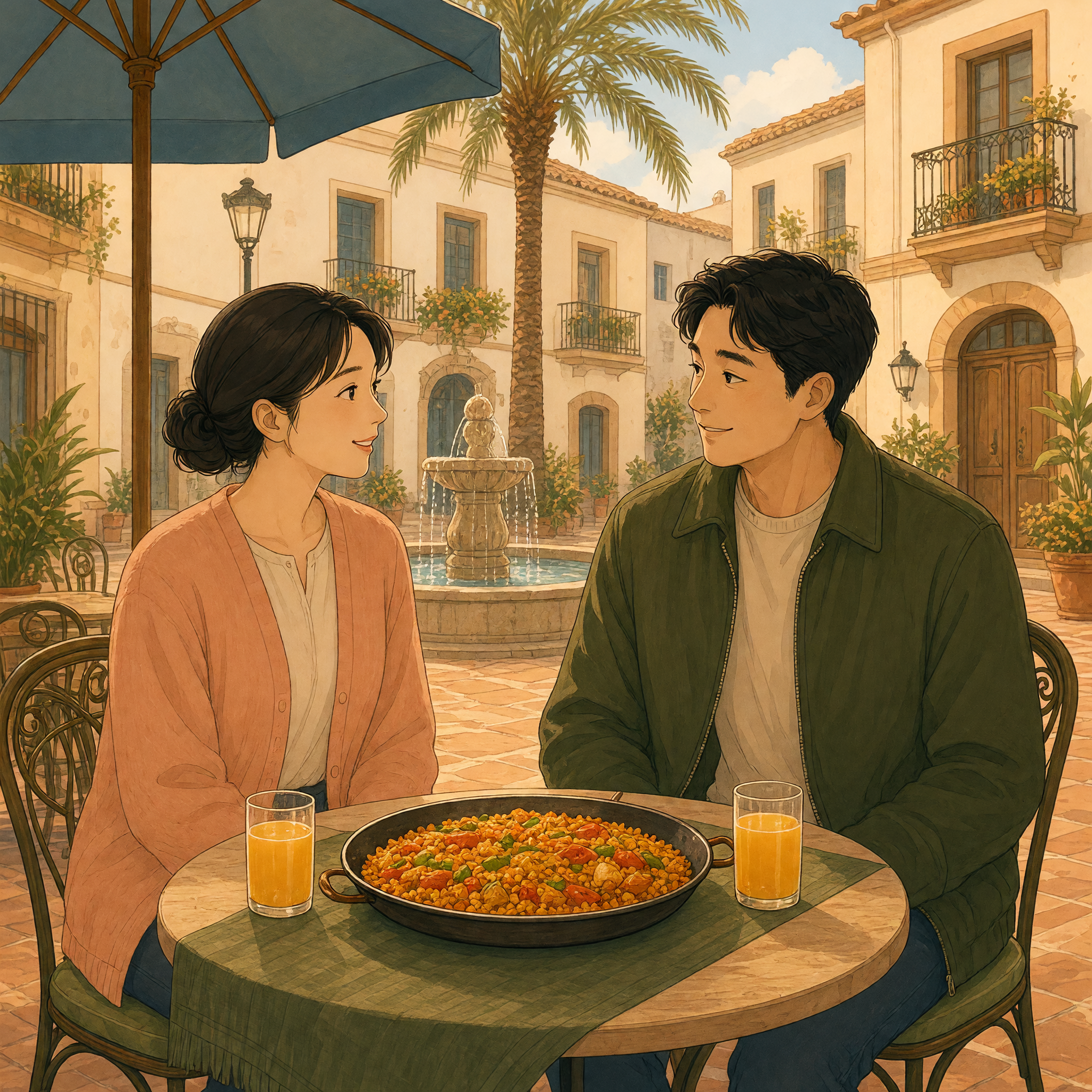
Spanish people and everyday life, a little history, regions and languages, famous places, food and meals, and the Seville Fair with flamenco all help explain Spain.
 English lesson
Article
Choose how to use this lesson
You can switch anytime.
Study mode
Introduction
Typing practice
Type the text exactly. Timer starts with your first key.
Text to type: Spanish people and everyday life, a little history, regions and languages, famous places, food and meals, and the Seville Fair with flamenco all help explain Spain.
Ready. The timer starts with your first key.
Complete
Great job!
Strong finish — your speed stayed steady.
Your rhythm
Speed over time- Time
- 0:00
- Raw speed
- 0 WPM
- Wrong keys
- 0
- Corrected
- 0
Before you begin
Warm-up
What food do you know from Spain?
Have you ever visited Spain, or would you like to go?
What time do you usually eat dinner?
 Part 1: People and everyday life
Reading
Part 1: People and everyday life
Typing practice
Type the text exactly. Timer starts with your first key.
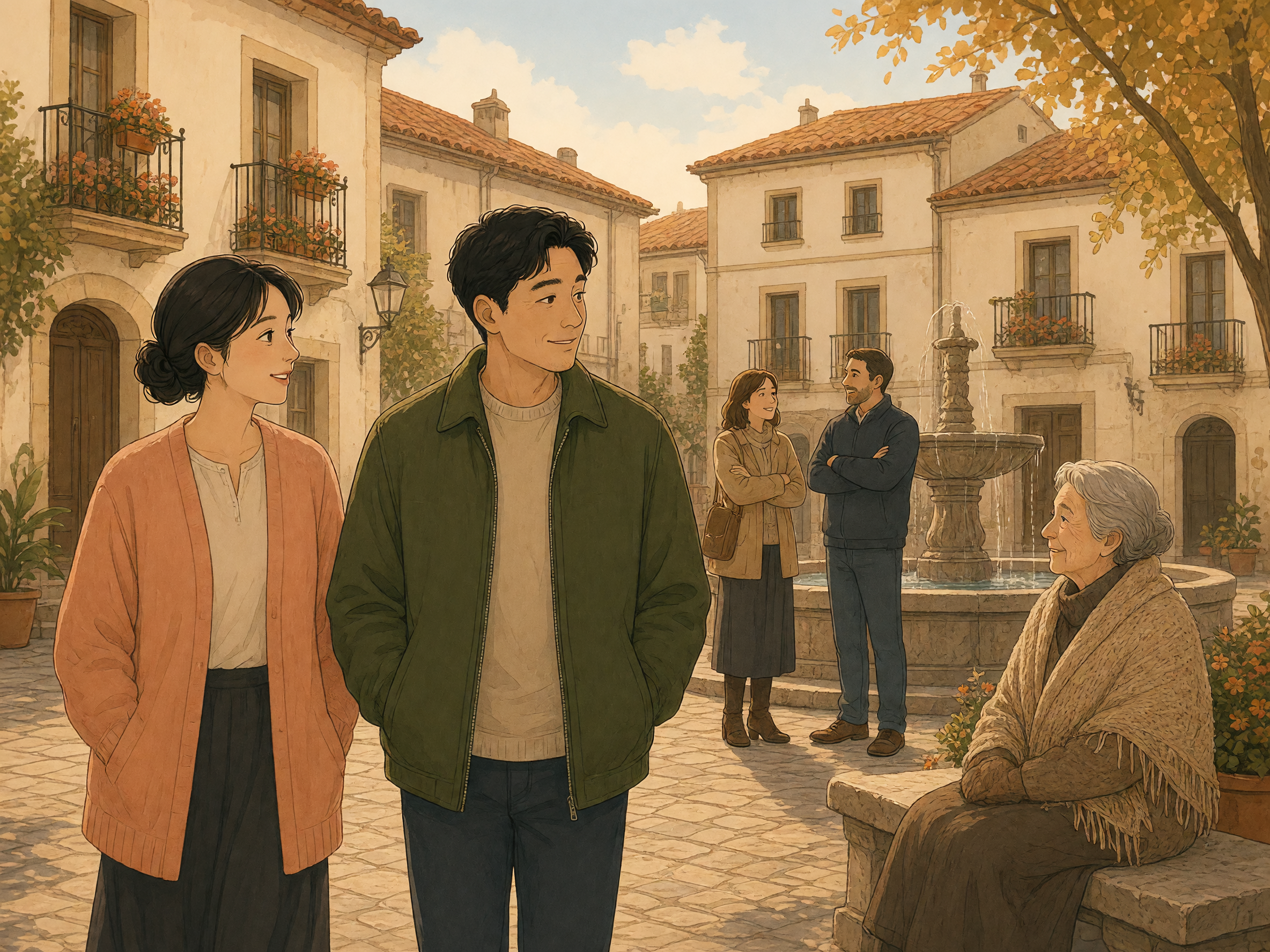
Text to type: Spain is in southern and western Europe. It covers most of the Iberian Peninsula, the land it shares with Portugal. France and Andorra are to the north. Madrid is Spain’s capital and largest city. Other big cities include Barcelona, Valencia, Seville, and Bilbao. Spain also includes islands: the Canary Islands in the Atlantic Ocean and the Balearic Islands in the Mediterranean Sea. So everyday life has many different settings, from a large city to an island. Meal times give us another way to understand daily life. Dinner in Spain often starts from about 8:30 in the evening.
Ready. The timer starts with your first key.
Complete
Great job!
Strong finish — your speed stayed steady.
Your rhythm
Speed over time- Time
- 0:00
- Raw speed
- 0 WPM
- Wrong keys
- 0
- Corrected
- 0
Check your understanding
Check: Part 1: People and everyday life
1. Which city is Spain’s capital, and when does dinner often start?
Sample answer
Madrid is Spain’s capital, and dinner often starts from about 8:30 in the evening.
Think one step further
Would you rather stay in a big city or on an island?
Who do you usually meet in your free time?
Would dinner at 8:30 fit your daily routine?
Reading
Part 2: A little history
Typing practice
Type the text exactly. Timer starts with your first key.
Text to type: From 711 to 1492, Muslim-ruled lands on the Iberian Peninsula were called Al-Andalus. The Alhambra, a palace and fortress in Granada, connects us with that time. A fortress is a strong building made to protect a place. In 1492, Granada’s Muslim kingdom surrendered to Queen Isabella and King Ferdinand, known as the Catholic Monarchs. That same year, Christopher Columbus sailed to the Americas on a journey paid for by Isabella. Much later, the Spanish Civil War lasted from 1936 to 1939. Spain’s present constitution dates from 1978. This sets out the country’s main rules. Today, Spain is a democracy with a king, and it belongs to the European Union.
Ready. The timer starts with your first key.
Complete
Great job!
Strong finish — your speed stayed steady.
Your rhythm
Speed over time- Time
- 0:00
- Raw speed
- 0 WPM
- Wrong keys
- 0
- Corrected
- 0
Check your understanding
Check: Part 2: A little history
1. What happened in Granada in 1492?
Sample answer
Granada’s Muslim kingdom surrendered to Queen Isabella and King Ferdinand in 1492.
Think one step further
Do you enjoy visiting old buildings?
Which period of history would you like to know more about?
Would you rather learn history from a book or at a museum?
 Part 3: Regions and languages
Reading
Part 3: Regions and languages
Typing practice
Type the text exactly. Timer starts with your first key.
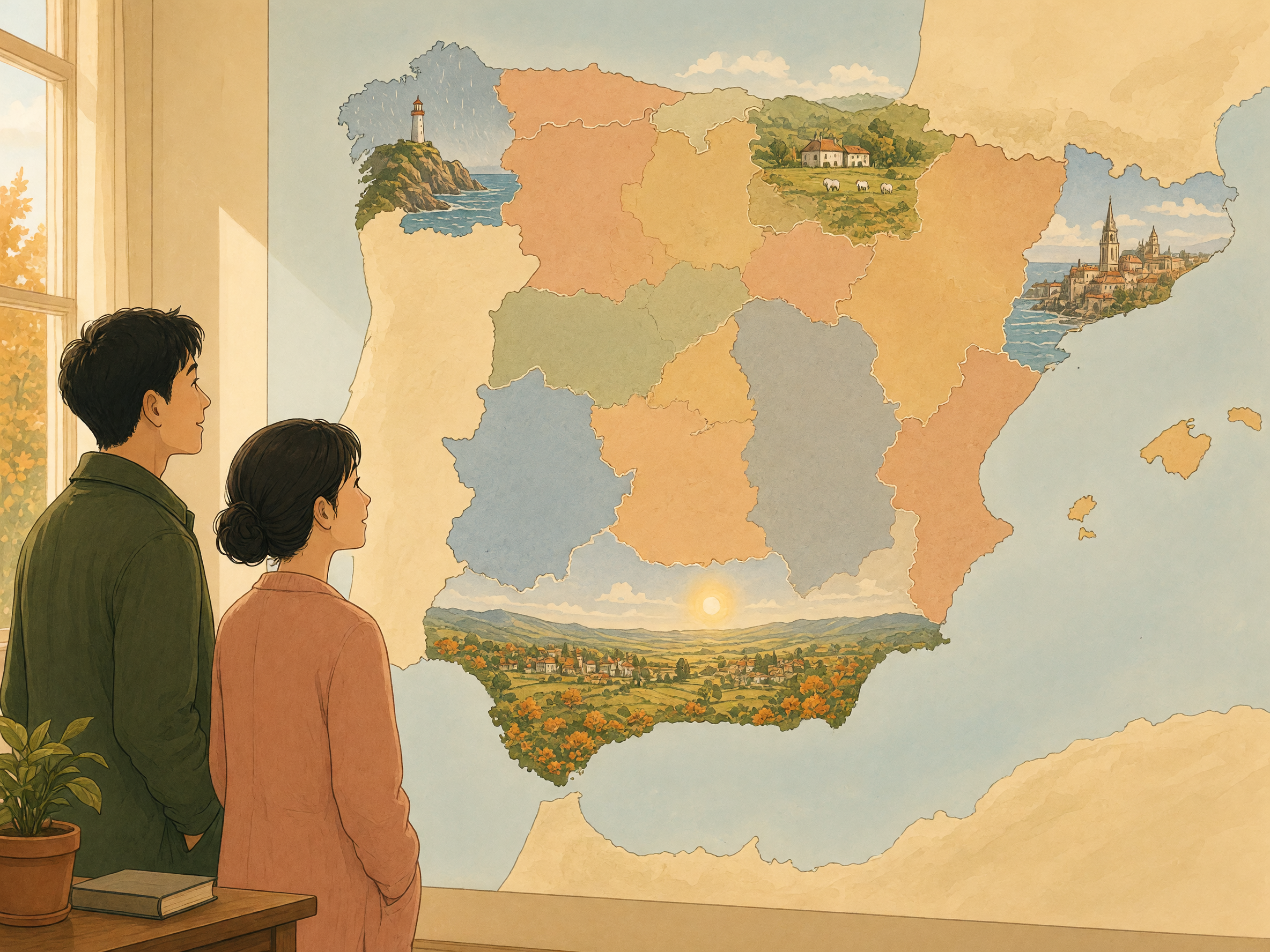
Text to type: Spain has 17 autonomous communities. An autonomous community is a region with its own government. Andalusia is in the south, Catalonia is in the north-east, and Galicia is in the north-west. The Basque Country is in the north. Spanish, also called Castilian, is the official national language. But some regions have another official language next to Spanish. Catalan is spoken around Barcelona in Catalonia. It is called Valencian in Valencia. Galician is spoken in Galicia, and Basque is spoken in the Basque Country, including Bilbao. Basque is not related to Spanish or to most other European languages. These differences are part of Spain’s local life.
Ready. The timer starts with your first key.
Complete
Great job!
Strong finish — your speed stayed steady.
Your rhythm
Speed over time- Time
- 0:00
- Raw speed
- 0 WPM
- Wrong keys
- 0
- Corrected
- 0
Check your understanding
Check: Part 3: Regions and languages
1. Which language is spoken next to Spanish around Barcelona?
Sample answer
Catalan is spoken next to Spanish around Barcelona, in Catalonia.
Think one step further
Would you like to learn a second language spoken near you?
Which region of Spain would you like to visit?
Have you ever heard a language you could not understand?
Reading
Part 4: Famous places
Typing practice
Type the text exactly. Timer starts with your first key.
Text to type: Let’s connect three cities with three famous places. In Barcelona, the Sagrada Familia is a Catholic church designed by Antoni Gaudi. It is the tallest church in the world, and parts of it are a UNESCO World Heritage Site. In Granada, Andalusia, the Alhambra brings us back to Al-Andalus. This old palace and fortress is a famous example of Islamic building design. In central Madrid, the Museo del Prado is Spain’s main national art museum. It opened in 1819 and has many paintings by Francisco Goya and Diego Velazquez. These places offer different ways to explore Spain: through a church, a palace, or art.
Ready. The timer starts with your first key.
Complete
Great job!
Strong finish — your speed stayed steady.
Your rhythm
Speed over time- Time
- 0:00
- Raw speed
- 0 WPM
- Wrong keys
- 0
- Corrected
- 0
Check your understanding
Check: Part 4: Famous places
1. How does the Alhambra connect with the history of Spain?
Sample answer
The Alhambra is a palace and fortress from the time when Muslim rulers governed Granada, connecting it with Al-Andalus.
Think one step further
Which of these three places would you visit first?
Do you like looking at paintings?
What old building would you show a visitor in your town?
Reading
Part 5: Food and meals
Typing practice
Type the text exactly. Timer starts with your first key.
Text to type: Lunch is usually Spain’s large main meal, starting around 2:00 to 2:30 in the afternoon. A small snack, called merienda, may come around 6:00. Dinner starts late, from about 8:30. After a meal, people may stay at the table to relax and talk. This time together is called sobremesa. Food also connects with regions. Paella is a Valencian rice dish from the east coast, cooked in a wide, flat pan. Gazpacho is an Andalusian cold vegetable soup, often made with tomato and eaten in summer. Tortilla is a thick omelette with eggs and potatoes, often with onion. Tapas are small snacks that can be hot or cold. Several tapas together can make a full meal.
Ready. The timer starts with your first key.
Complete
Great job!
Strong finish — your speed stayed steady.
Your rhythm
Speed over time- Time
- 0:00
- Raw speed
- 0 WPM
- Wrong keys
- 0
- Corrected
- 0
Check your understanding
Check: Part 5: Food and meals
1. What is sobremesa, and when does it happen?
Sample answer
Sobremesa is time spent relaxing and talking at the table after a meal.
Think one step further
Which food here would you like to try?
Do you like eating dinner late?
Would you prefer a large lunch or a large dinner?
 Part 6: The Seville Fair and flamenco
Reading
Part 6: The Seville Fair and flamenco
Typing practice
Type the text exactly. Timer starts with your first key.
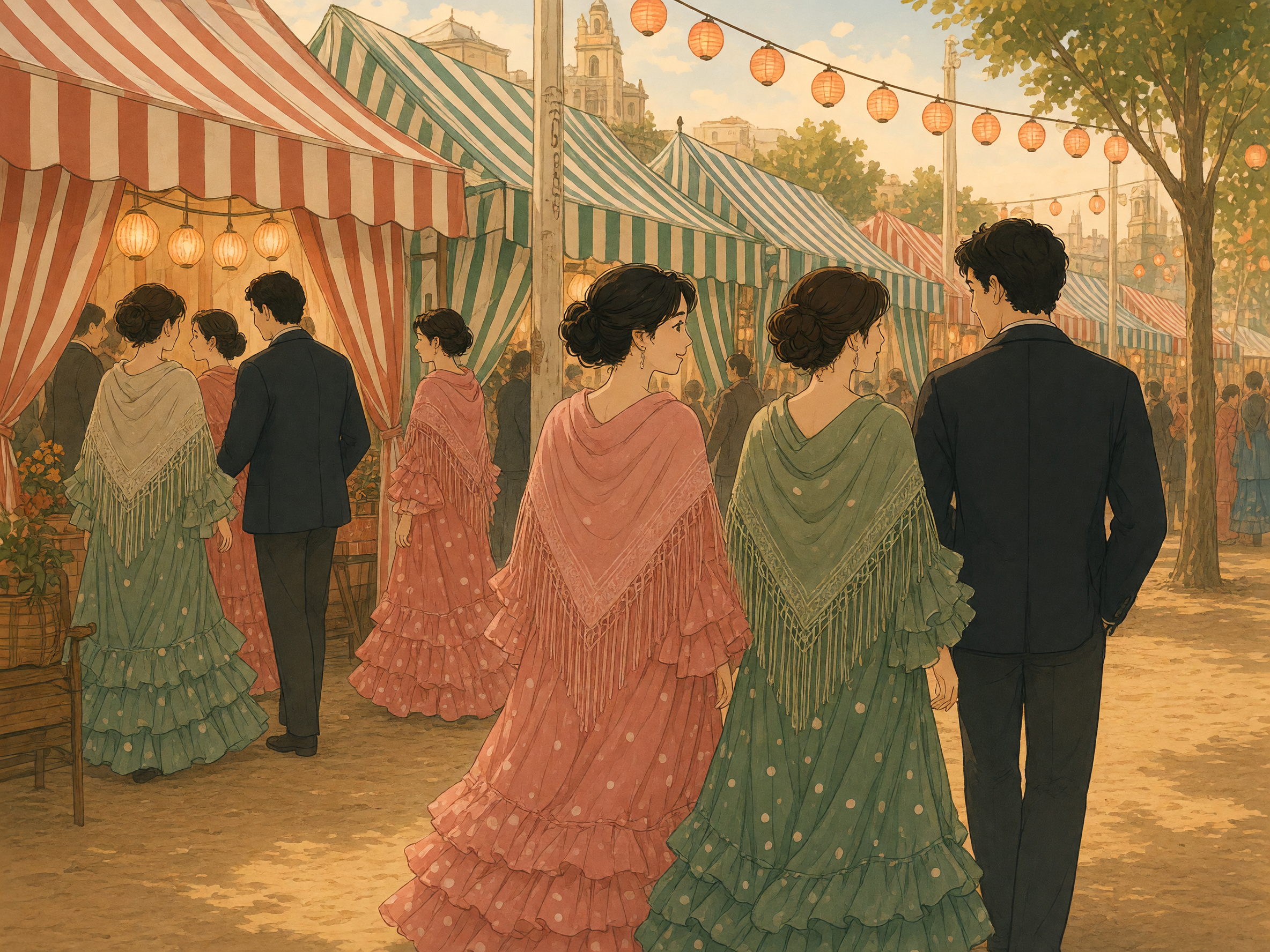
Text to type: The Seville Fair, also called Feria de Abril, is an Andalusian fair in Seville. It usually begins two weeks after Holy Week, the week before Easter. The fair has rows of decorated tents called casetas. These belong to families, groups of friends, clubs, and other groups. From about nine at night until early morning, people dance sevillanas, a folk dance danced in pairs. Southern Spain is also the home of flamenco. Flamenco is an Andalusian art of music, song, and dance. The Romani people of Andalusia helped create it. Like Valencian paella, flamenco has a local home, even though people know it far beyond that region.
Ready. The timer starts with your first key.
Complete
Great job!
Strong finish — your speed stayed steady.
Your rhythm
Speed over time- Time
- 0:00
- Raw speed
- 0 WPM
- Wrong keys
- 0
- Corrected
- 0
Check your understanding
Check: Part 6: The Seville Fair and flamenco
1. Where does flamenco come from, and who helped create it?
Sample answer
Flamenco comes from Andalusia in southern Spain, and the Romani people of Andalusia helped create it.
Think one step further
Would you like to go to the Seville Fair?
Do you enjoy dancing with other people?
Would you enjoy dancing at a night fair?
What you can do now
Final Reflection
Imagine you have one free day in Spain. Which place would you visit and which food would you try, and why?
Learning cards
My cards
Spain: People, Culture, History, and Food
0 due · 0 new · about 1 min
Learn the sense first · then retrieve it
No saved cards yet
Open a word or phrase in the article and choose Save to My Words.
Focused Reading Mode is open.
Listening
Lesson audio
Listen from the beginning, or choose “Play this part” as you read along.
Reading
Part 1: People and everyday life
Reading
Part 2: A little history
Reading
Part 3: Regions and languages
Reading
Part 4: Famous places
Reading
Part 5: Food and meals
Reading
Part 6: The Seville Fair and flamenco
Finished listening?
Mark this listening practice complete when you have followed the lesson audio.
Listening complete
Listen Mode
Word-by-word syncPlay the audio and follow the highlighted word.
Article complete
Choose your next step
Open the next same-level lesson, replay the article, or save this page for later.
Listen Again
Replay the article once and notice how much more you understand.
One replay is enough. Then move on.