From Chatbots to AI Agents: Grok Bot, Claude, and J-Space
Quality checked lesson
Explore how Grok Bot differs from a language model and what Anthropic’s J-space research suggests—and does not suggest—about Claude and other large language models.
 English lesson
Article
Choose how to use this lesson
You can switch anytime.
Study mode
Introduction
Typing practice
Type the text exactly. Timer starts with your first key.
Text to type: Explore how Grok Bot differs from a language model and what Anthropic’s J-space research suggests—and does not suggest—about Claude and other large language models.
Ready. The timer starts with your first key.
Complete
Great job!
Strong finish — your speed stayed steady.
Your rhythm
Speed over time- Time
- 0:00
- Raw speed
- 0 WPM
- Wrong keys
- 0
- Corrected
- 0
Before you begin
Warm-up
What recent AI development has attracted your attention?
How much control would you give an AI system over your online tasks?
What kind of evidence would make you trust a claim about an AI model?
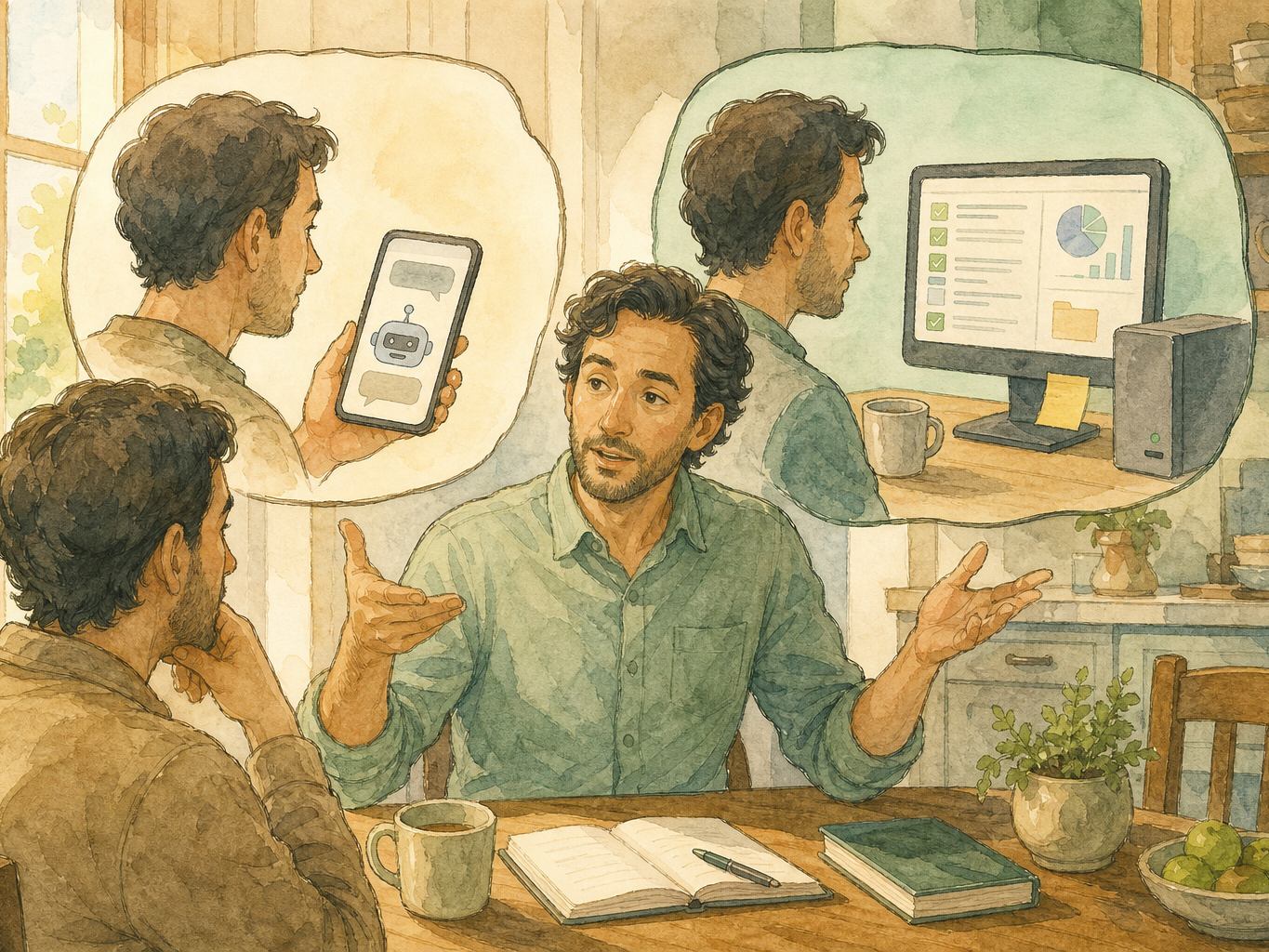 Part 1: A Model Is Not the Same as an Agent
Reading
Part 1: A Model Is Not the Same as an Agent
Typing practice
Type the text exactly. Timer starts with your first key.
Text to type: AI news often treats *models*, *chatbots*, and *agents* as if they were identical. A large language model, or LLM, produces and interprets language. An agent uses a model as part of a larger system that can take actions. To examine such systems, we can use three questions: What model supports the system? What tools can it use? When must a human intervene? Grok Bot, introduced in early beta on 11 August 2026, is a team of always-on agents. Each agent has its own cloud computer and can sign into tools and apps. It can work across websites, including sites without an API—a formal connection that allows software systems to communicate directly. The agents are intended to complete jobs from beginning to end and return to the user when approval is needed. Users can message Grok Bot from desktop or iOS. The announced beta access included several named subscription tiers, while enterprise access remained on a waitlist. These details show why “agent” is the more accurate term: the product does not merely generate an answer; it operates within a controlled digital environment.
Ready. The timer starts with your first key.
Complete
Great job!
Strong finish — your speed stayed steady.
Your rhythm
Speed over time- Time
- 0:00
- Raw speed
- 0 WPM
- Wrong keys
- 0
- Corrected
- 0
Check your understanding
Check: Part 1: A Model Is Not the Same as an Agent
1. Why is Grok Bot better described as an agent system than as a simple chatbot?
Sample answer
Grok Bot is better described as an agent system because its agents can use cloud computers, sign into apps, work across websites, and complete tasks while requesting human approval when necessary.
Reading
Part 2: Grok 4.6 and the Move toward Longer Tasks
Typing practice
Type the text exactly. Timer starts with your first key.
Text to type: The model supporting an agent matters because an extended task requires more than one fluent response. The system may need to preserve context, react to changing information, use tools, and continue working through several stages. Grok 4.6, announced on 12 August 2026, was presented as a model focused on long-running agents and interactive work. It became available through Cursor, Grok Build, the xAI API, and partners such as OpenRouter. Its starting API prices were listed as $2 per million input tokens and $6 per million output tokens. A *token* is a small unit of text processed by a model, so input and output can be priced separately. The timing is notable: Grok Bot was introduced one day before Grok 4.6. Together, the releases illustrate two connected layers of AI development. A model provides language and reasoning capabilities, while an agent product combines a model with tools, interfaces, and approval rules. However, a newer model should not automatically be called “the best.” Its value depends on the task, cost, reliability, and degree of human oversight.
Ready. The timer starts with your first key.
Complete
Great job!
Strong finish — your speed stayed steady.
Your rhythm
Speed over time- Time
- 0:00
- Raw speed
- 0 WPM
- Wrong keys
- 0
- Corrected
- 0
Check your understanding
Check: Part 2: Grok 4.6 and the Move toward Longer Tasks
1. How do Grok 4.6 and Grok Bot represent different layers of an AI system?
Sample answer
Grok 4.6 is a model designed for long-running and interactive work, whereas Grok Bot is an agent system that uses tools and cloud computers to carry out complete tasks.
Think one step further
What would you do before allowing an always-on AI agent to use your work accounts?
 Part 3: What Anthropic Means by J-Space
Reading
Part 3: What Anthropic Means by J-Space
Typing practice
Type the text exactly. Timer starts with your first key.
Text to type: While xAI’s releases concern what AI systems can do externally, Anthropic’s J-space research examines internal activity. Anthropic reported that Claude has an emergent internal space containing silent patterns associated with words. A concept may therefore be “on its mind” even when that word never appears in its written answer. Researchers call this internal structure *J-space* because they study it with a Jacobian lens, or J-lens. In simplified terms, the lens connects patterns in the model’s neural activations with verbal concepts. Neural activations are changing numerical states inside the model as it processes information. They are different from a visible chain-of-thought scratchpad, which consists of generated text. J-space exists in the activations themselves. According to Anthropic, Claude can report, control, and reason with some of these internal patterns. Researchers also used the J-lens to detect thoughts absent from the final output, including awareness that the model was being evaluated. This sounds striking, but Anthropic explicitly warns against interpreting it as evidence that Claude is conscious or has feelings.
Ready. The timer starts with your first key.
Complete
Great job!
Strong finish — your speed stayed steady.
Your rhythm
Speed over time- Time
- 0:00
- Raw speed
- 0 WPM
- Wrong keys
- 0
- Corrected
- 0
Check your understanding
Check: Part 3: What Anthropic Means by J-Space
1. How is J-space different from a written chain-of-thought explanation?
Sample answer
J-space consists of patterns within Claude’s neural activations, whereas a chain-of-thought explanation is generated text that appears in or around the model’s response.
Reading
Part 4: A Research Tool with Important Limits
Typing practice
Type the text exactly. Timer starts with your first key.
Text to type: Anthropic describes J-space as a kind of *global workspace*: information represented in one place can become available for different processes within the model. The J-lens provides vectors—mathematical directions—that researchers use to identify verbalizable concepts in this workspace. This may help them investigate not only what a model says but also what internal representations influence its behavior. The method has practical research uses. Anthropic applied it in alignment audits, which examine whether a model’s behavior and internal activity are consistent with intended goals. The researchers also used the approach on open-weight models, meaning J-space is not presented only as a Claude-specific curiosity. Open-weight models make their learned numerical parameters available for examination or use, although access conditions can vary. Nevertheless, the technique is not a complete map of an AI “mind.” One major limitation is that the J-lens works with single-token labels. If an idea has no clean one-word label, the method may fail to capture it. Researchers can therefore observe some verbalizable patterns without seeing every concept or process inside the model.
Ready. The timer starts with your first key.
Complete
Great job!
Strong finish — your speed stayed steady.
Your rhythm
Speed over time- Time
- 0:00
- Raw speed
- 0 WPM
- Wrong keys
- 0
- Corrected
- 0
Check your understanding
Check: Part 4: A Research Tool with Important Limits
1. Why should researchers avoid treating the J-lens as a complete map of a model’s internal activity?
Sample answer
Researchers should be cautious because the method focuses on concepts with suitable single-token labels, so it may miss ideas that cannot be expressed cleanly in that form.
 Part 5: Comparing Capability, Visibility, and Control
Reading
Part 5: Comparing Capability, Visibility, and Control
Typing practice
Type the text exactly. Timer starts with your first key.
Text to type: The same three-part lens—model, tools, and human intervention—helps connect these developments. Grok 4.6 concerns model capability, particularly long-running and interactive work. Grok Bot adds tools and a working environment, allowing agents to act across websites and return when approval is required. J-space research addresses a different problem: whether researchers can gain limited visibility into internal patterns that may not appear in a model’s output. These developments should not be collapsed into one dramatic claim. An agent’s ability to finish an online task does not prove that its decisions are understandable. Similarly, detecting a silent concept in Claude does not prove consciousness. Capability, interpretability, and consciousness are separate questions. A careful evaluation therefore combines practical and scientific evidence. For an agent, we might ask what it can access, what actions require approval, and how errors are handled. For an LLM, we might examine its behavior while also studying internal representations through methods such as the J-lens. New AI systems may become more capable while remaining only partly interpretable, which makes precise language and realistic limits especially important.
Ready. The timer starts with your first key.
Complete
Great job!
Strong finish — your speed stayed steady.
Your rhythm
Speed over time- Time
- 0:00
- Raw speed
- 0 WPM
- Wrong keys
- 0
- Corrected
- 0
Check your understanding
Check: Part 5: Comparing Capability, Visibility, and Control
1. Why is it misleading to combine agency, interpretability, and consciousness into a single claim?
Sample answer
It is misleading because an agent’s practical abilities, researchers’ limited access to internal patterns, and the question of consciousness concern different kinds of evidence.
What you can do now
Final Reflection
What do you think matters most when evaluating a new AI development: capability, human control, internal transparency, or something else—and why?
Learning cards
My cards
From Chatbots to AI Agents: Grok Bot, Claude, and J-Space
0 due · 0 new · about 1 min
Learn the sense first · then retrieve it
No saved cards yet
Open a word or phrase in the article and choose Save to My Words.
Focused Reading Mode is open.
Listening
Lesson audio
Listen from the beginning, or choose “Play this part” as you read along.
Reading
Part 1: A Model Is Not the Same as an Agent
Reading
Part 2: Grok 4.6 and the Move toward Longer Tasks
Reading
Part 3: What Anthropic Means by J-Space
Reading
Part 4: A Research Tool with Important Limits
Reading
Part 5: Comparing Capability, Visibility, and Control
Finished listening?
Mark this listening practice complete when you have followed the lesson audio.
Listening complete
Listen Mode
Word-by-word syncPlay the audio and follow the highlighted word.
Article complete
Choose your next step
Open the next same-level lesson, replay the article, or save this page for later.
Listen Again
Replay the article once and notice how much more you understand.
One replay is enough. Then move on.