Cats: Senses, Signals, and Daily Care
Quality checked lesson
 English lesson
Article
Choose how to use this lesson
You can switch anytime.
Study mode
Introduction
Cats at Home
Typing practice
Type the text exactly. Timer starts with your first key.
Text to type: Cats use sharp senses to explore the world. Their bodies send clear signals about how they feel. And they need simple, consistent care every day. These three ideas will help you understand and look after a domestic cat.
Ready. The timer starts with your first key.
Complete
Great job!
Strong finish — your speed stayed steady.
Your rhythm
Speed over time- Time
- 0:00
- Raw speed
- 0 WPM
- Wrong keys
- 0
- Corrected
- 0
Before you begin
Think First
Do you know a cat? How does it act when it is happy?
Can you name one thing a cat uses to feel or sense the world around it?
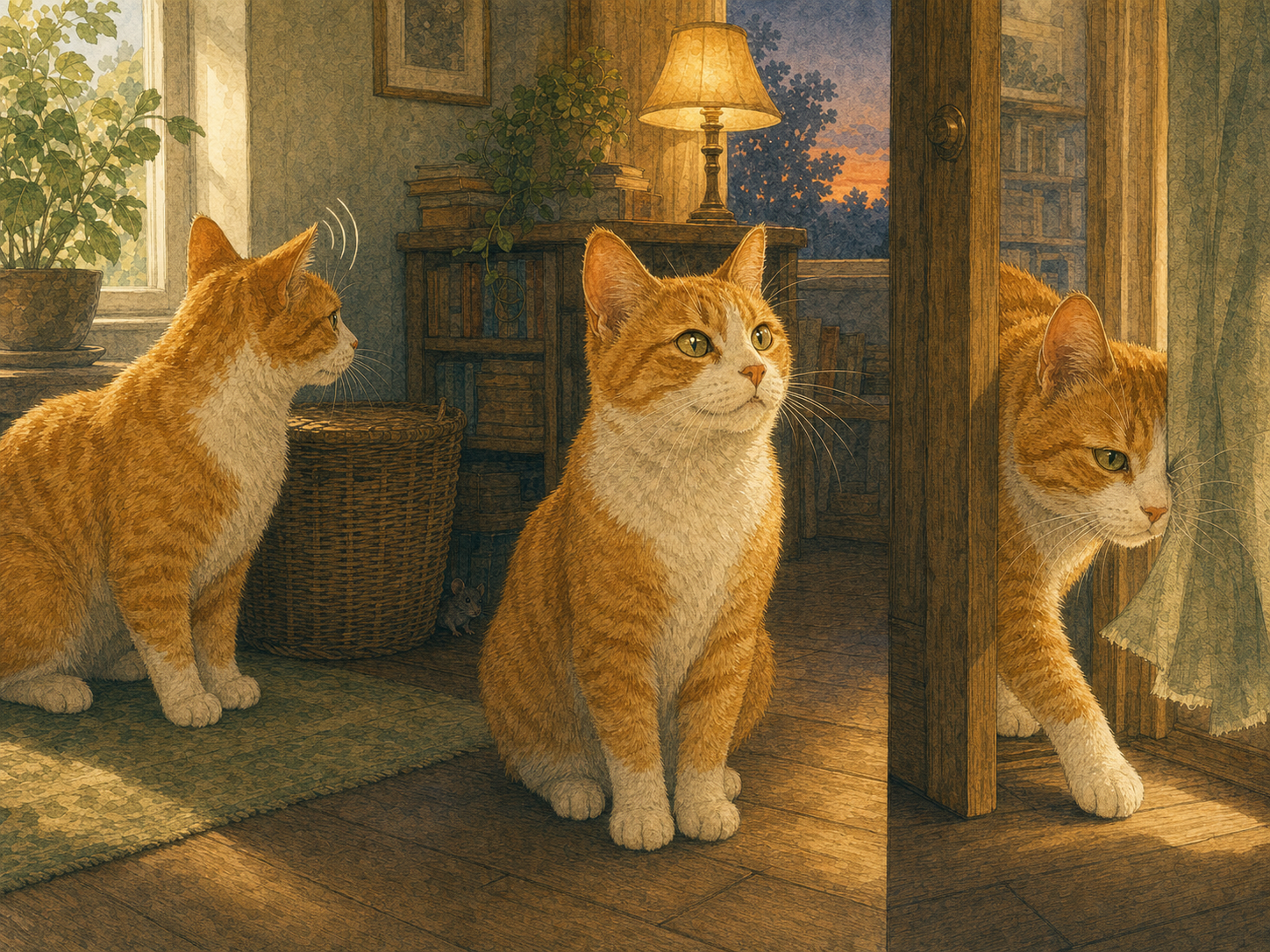 How Cats Sense the World
Reading
How Cats Sense the World
Typing practice
Type the text exactly. Timer starts with your first key.
Text to type: Cats use their ears, eyes, and whiskers to learn about the world. Hearing: Cats hear very high sounds that people may not hear, such as a mouse's squeak. Their ears can turn toward a sound and help them find it. Low-light vision: A cat's eye has a special layer called the tapetum lucidum. It reflects light inside the eye. This helps cats see in very low light, but cats cannot see in complete darkness. Whiskers: Whiskers give a cat touch information. They help the cat notice nearby objects, judge spaces, and keep its balance.
Ready. The timer starts with your first key.
Complete
Great job!
Strong finish — your speed stayed steady.
Your rhythm
Speed over time- Time
- 0:00
- Raw speed
- 0 WPM
- Wrong keys
- 0
- Corrected
- 0
Check your understanding
Check: Cat Senses
1. What does the tapetum lucidum do?
Sample answer
It reflects light back through the eye a second time. This lets a cat see in near-darkness.
Reading
What Your Cat's Body Is Saying
Typing practice
Type the text exactly. Timer starts with your first key.
Text to type: Cat body language shows how a cat feels. Look at the ears, eyes, whiskers, tail, and whole body together. Relaxed cat: The ears point forward. The eyes are soft or half closed. The whiskers rest near the face. The body is loose, and the tail may stand upright. This cat feels safe. Curious cat: The ears and whiskers point forward. The eyes are open. The cat may move toward something new. Its tail may stand up. Stressed cat: The ears turn sideways or lie flat. The eyes are wide. The body may crouch, and the cat may hide. Together, these signs are a stress signal that the cat needs quiet space.
Ready. The timer starts with your first key.
Complete
Great job!
Strong finish — your speed stayed steady.
Your rhythm
Speed over time- Time
- 0:00
- Raw speed
- 0 WPM
- Wrong keys
- 0
- Corrected
- 0
Check your understanding
Check: Body Language
1. A cat's ears are flat and its tail is puffed up. Is this cat relaxed, curious, or stressed?
Sample answer
The cat is stressed. Flat ears and a puffed tail are clear stress signals. The best response is to give the cat quiet space.
Reading
Daily Care for a Happy Cat
Typing practice
Type the text exactly. Timer starts with your first key.
Text to type: Simple daily care helps a cat stay comfortable. Fresh water: Give fresh, clean water at all times. Wash and refill the water bowl every day. A water fountain is optional; a clean bowl also works. Safe interactive play: Give the cat interactive toys. A wand toy lets the cat follow a moving toy while your hands stay away from its claws. Scratching: Cats need to scratch. Scratching removes the old outer cover from their claws. Give the cat a sturdy scratching post that does not wobble. Clean litter: Put the litter box in a quiet place that the cat can reach. Scoop solid waste from it at least once a day. A quiet sleep place: Give the cat a clean, dry place to rest. A soft, warm blanket or towel makes a simple bed. Wash the bedding often. Veterinary care: A cat should see a veterinarian at least once a year, and at once if it is sick or hurt. A veterinarian can give advice for the cat's age and health.
Ready. The timer starts with your first key.
Complete
Great job!
Strong finish — your speed stayed steady.
Your rhythm
Speed over time- Time
- 0:00
- Raw speed
- 0 WPM
- Wrong keys
- 0
- Corrected
- 0
Check your understanding
Check: Daily Care
1. Name two things you should do every day to care for a cat.
Sample answer
Any two of these are correct: give fresh water, play with the cat using a safe toy, clean the litter box, and make sure the cat has a quiet place to sleep.
What you can do now
Final Reflection
You see a cat with wide eyes, forward whiskers, and a tall tail with a curled tip. What is the cat doing? What would you do next?
A friend wants to get their first cat. What is the most important care habit you would tell them about, and why?
Learning cards
My cards
Cats: Senses, Signals, and Daily Care
0 due · 14 new · about 3 min
Learn the sense first · then retrieve it
Focused Reading Mode is open.
Listening
Lesson audio
Listen from the beginning, or choose “Play this part” as you read along.
Reading
How Cats Sense the World
Reading
What Your Cat's Body Is Saying
Reading
Daily Care for a Happy Cat
Finished listening?
Mark this listening practice complete when you have followed the lesson audio.
Listening complete
Listen Mode
Word-by-word syncPlay the audio and follow the highlighted word.
Article complete
Choose your next step
Open the next same-level lesson, replay the article, or save this page for later.
Listen Again
Replay the article once and notice how much more you understand.
One replay is enough. Then move on.