Manga: From Old Picture Scrolls to New Global Hits
Quality checked lesson
 English lesson
Article
Choose how to use this lesson
You can switch anytime.
Study mode
Introduction
Typing practice
Type the text exactly. Timer starts with your first key.
Text to type: Japanese comics called manga are read by millions of people around the world. They began hundreds of years ago and changed a lot over time. You will learn where manga started, how it grew, who reads it, and how you can read it today.
Ready. The timer starts with your first key.
Complete
Great job!
Strong finish — your speed stayed steady.
Your rhythm
Speed over time- Time
- 0:00
- Raw speed
- 0 WPM
- Wrong keys
- 0
- Corrected
- 0
Before You Begin
Think about these questions before you read.
Have you ever seen a manga or a comic book? What did it look like?
Need a starting line?
- Why do you think people enjoy reading stories with pictures?
Reading
Early Illustrated Roots
Typing practice
Type the text exactly. Timer starts with your first key.
Text to type: These old works are manga's early illustrated roots. Manga has very old roots in Japan. Around the year 1200, artists drew funny animal pictures on long paper scrolls. These scrolls are called Chōjū-giga, which means 'animal caricatures.' Frogs and rabbits wrestle and play like humans. Many people call Chōjū-giga the oldest manga. About 600 years later, an artist named Katsushika Hokusai used the word 'manga' for the first time. In 1814, he published a book of sketches called Hokusai Manga. The book showed people, animals, plants, and landscapes. Hokusai drew over 3,000 pictures across 15 volumes. His work showed that a series of pictures could tell many ideas together.
Ready. The timer starts with your first key.
Complete
Great job!
Strong finish — your speed stayed steady.
Your rhythm
Speed over time- Time
- 0:00
- Raw speed
- 0 WPM
- Wrong keys
- 0
- Corrected
- 0
Check your understanding
Check: Early Illustrated Roots
1. What are two things that Chōjū-giga and Hokusai Manga have in common?
Sample answer
Chōjū-giga used animal pictures on scrolls around 1200, and Hokusai Manga used thousands of sketches in 1814. Both showed that pictures could carry ideas and stories.
Think one step further
Which of these two works surprises you more? Why?
Reading
Modern Manga Development
Typing practice
Type the text exactly. Timer starts with your first key.
Text to type: This modern manga development changed picture stories in Japan. Modern manga began after World War Two. American comic books came to Japan, and Japanese artists saw a new way to tell stories. One young artist changed everything. Osamu Tezuka published New Treasure Island in 1947. This comic book told an adventure story with fast camera-like angles, close-up faces, and action scenes. Young readers loved it. About 400,000 copies sold quickly. Many other artists copied Tezuka's style. He later created Astro Boy, a story about a robot boy, which also became a famous anime. Tezuka is often called 'the God of Manga.' His work set the visual style that most people think of as manga today.
Ready. The timer starts with your first key.
Complete
Great job!
Strong finish — your speed stayed steady.
Your rhythm
Speed over time- Time
- 0:00
- Raw speed
- 0 WPM
- Wrong keys
- 0
- Corrected
- 0
Check your understanding
Check: Modern Manga Development
1. Why was New Treasure Island important for manga?
Sample answer
Before Tezuka, manga did not use cinematic techniques. New Treasure Island changed what manga looked like and how popular it could be.
Think one step further
Can you think of a book, film, or game that changed something big in its field?
Reading
Wide Manga Audiences
Typing practice
Type the text exactly. Timer starts with your first key.
Text to type: New kinds of stories helped manga reach wide manga audiences. Not everyone wants the same story. Manga publishers learned this and made different types for different readers. In the 1950s and 1960s, some artists wanted more serious stories for adults. They created a style called gekiga, which means 'dramatic pictures.' Gekiga stories showed real life problems, crime, and social issues. At the same time, publishers started making manga for girls. This type is called shōjo manga. Shōjo stories focused on feelings, friendships, and romance. The pictures used large expressive eyes and soft lines. Today, there is manga for children, teenagers, men, women, and older adults. Each type has its own name and its own magazine. This is one reason why manga became so popular — almost everyone can find a story made for them.
Ready. The timer starts with your first key.
Complete
Great job!
Strong finish — your speed stayed steady.
Your rhythm
Speed over time- Time
- 0:00
- Raw speed
- 0 WPM
- Wrong keys
- 0
- Corrected
- 0
Check your understanding
Check: Wide Manga Audiences
1. How are gekiga and shōjo manga different from each other?
Sample answer
Both types came from publishers wanting to reach new audiences, but they went in opposite directions in tone and art style.
Think one step further
Which type of story do you prefer — serious drama or emotional relationships? Why?
Reading
Global Digital Reach
Typing practice
Type the text exactly. Timer starts with your first key.
Text to type: Official online services now give manga global digital reach. Manga moved from Japan to the whole world, first through anime and then through digital technology. When Astro Boy became a TV anime in 1963, international audiences discovered Tezuka's characters. Other manga titles followed. Later, publishers began translating manga into English, French, Spanish, and many other languages. Now readers can use digital platforms to read manga online. Some publishers release new chapters at the same time in Japan and in other countries. This is called a simultaneous release. KADOKAWA, one of Japan's biggest manga publishers, offers simultaneous English digital chapter releases through its services. Readers anywhere in the world can follow their favourite story the same week it comes out in Japan.
Ready. The timer starts with your first key.
Complete
Great job!
Strong finish — your speed stayed steady.
Your rhythm
Speed over time- Time
- 0:00
- Raw speed
- 0 WPM
- Wrong keys
- 0
- Corrected
- 0
Check your understanding
Check: Global Digital Reach
1. What does 'simultaneous release' mean, and why is it good for international readers?
Sample answer
Before digital simultaneous releases, fans outside Japan often waited a long time and sometimes read unofficial copies. Official simultaneous releases changed that.
Think one step further
Do you use any app or website to read or watch content from other countries?
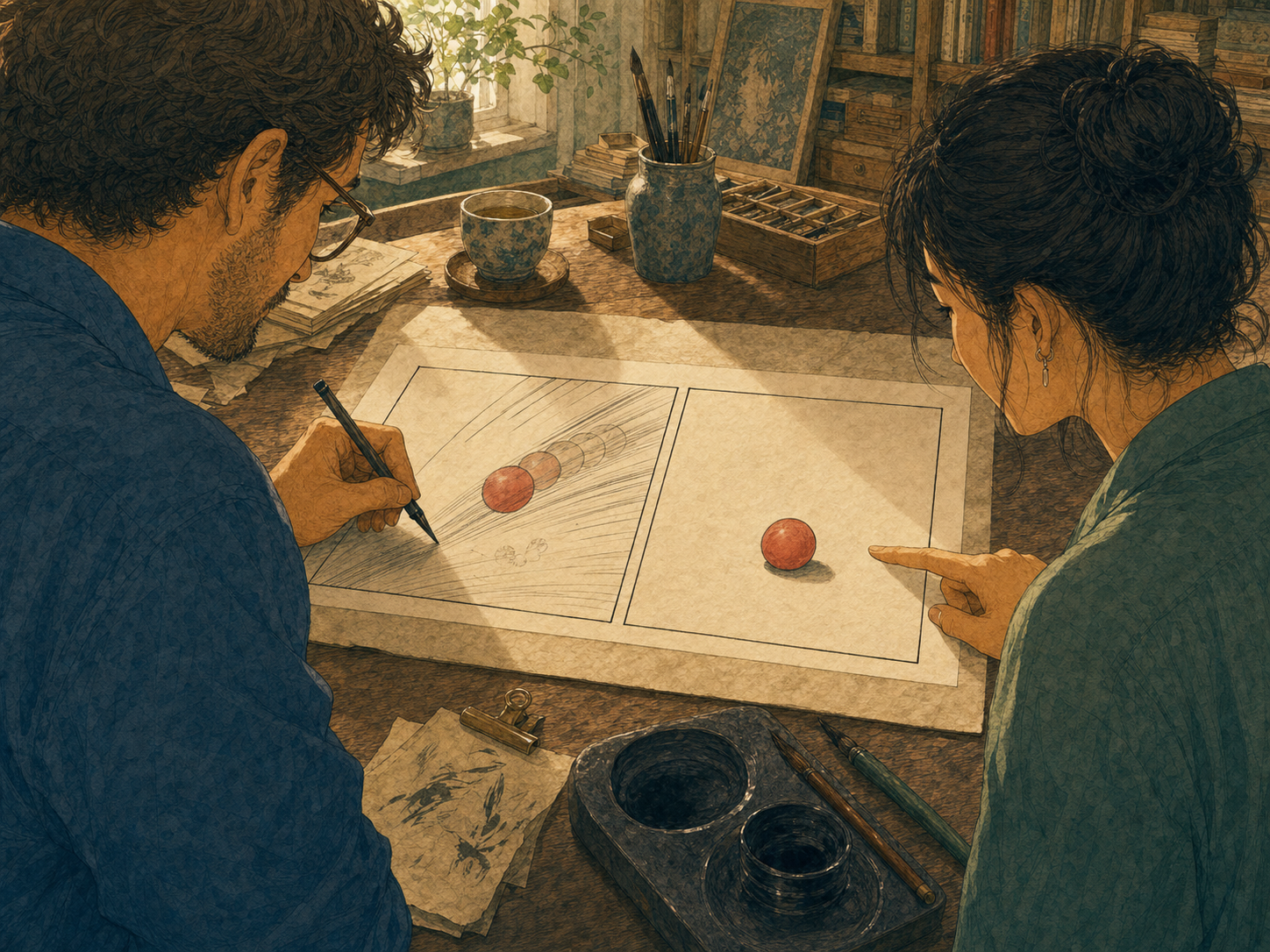 Manga Publishing and Visual Language
Reading
Manga Publishing and Visual Language
Typing practice
Type the text exactly. Timer starts with your first key.
Text to type: Manga publishing with visual language keeps a story moving. Manga uses special pictures and publishing tools to keep readers excited. One important visual tool is speed lines. These are thin lines drawn around a moving object or a character's face. Researchers studied speed lines and found that they make readers feel movement and direction, even in a still picture. A punch with speed lines feels fast. A running character feels real. Manga also uses written sound effects called onomatopoeia directly on the page. A loud bang might appear as a large bold word inside the panel. To keep readers buying, manga stories are published in chapters inside weekly or monthly magazines. After enough chapters are printed, they are collected into a book called a tankōbon. A cliffhanger ending — a moment where something exciting happens right before the chapter stops — makes readers come back for the next issue. These tools work together to make manga a habit, not just a hobby.
Ready. The timer starts with your first key.
Complete
Great job!
Strong finish — your speed stayed steady.
Your rhythm
Speed over time- Time
- 0:00
- Raw speed
- 0 WPM
- Wrong keys
- 0
- Corrected
- 0
Check your understanding
Check: Manga Publishing and Visual Language
1. Name two tools manga artists use to make stories feel exciting. What does each one do?
Sample answer
These tools work at different levels — speed lines work inside a single panel, while cliffhangers work across whole chapters and issues.
Think one step further
Can you think of a story you read or watched that had a strong cliffhanger? What happened?
What you can do now
Final Reflection
Think about everything you read and answer in your own words.
You have read about manga from ancient scrolls to digital chapters today. Which part of manga history do you think is most important? Why?
Need a starting line?
There is no single correct answer. Strong answers pick one moment or idea and give a clear reason connected to facts from the article.
- Is there something about manga you want to explore more after reading this?
Learning cards
My cards
Manga: From Old Picture Scrolls to New Global Hits
0 due · 11 new · about 3 min
Learn the sense first · then retrieve it
Focused Reading Mode is open.
Listening
Lesson audio
Listen from the beginning, or choose “Play this part” as you read along.
Reading
Early Illustrated Roots
Reading
Modern Manga Development
Reading
Wide Manga Audiences
Reading
Global Digital Reach
Reading
Manga Publishing and Visual Language
Finished listening?
Mark this listening practice complete when you have followed the lesson audio.
Listening complete
Listen Mode
Word-by-word syncPlay the audio and follow the highlighted word.
Article complete
Choose your next step
Open the next same-level lesson, replay the article, or save this page for later.
Listen Again
Replay the article once and notice how much more you understand.
One replay is enough. Then move on.