The History of Wedding Food
Quality checked lesson
 English lesson
Article
Choose how to use this lesson
You can switch anytime.
Study mode
Introduction
Wedding Food Through the Ages
Typing practice
Type the text exactly. Timer starts with your first key.
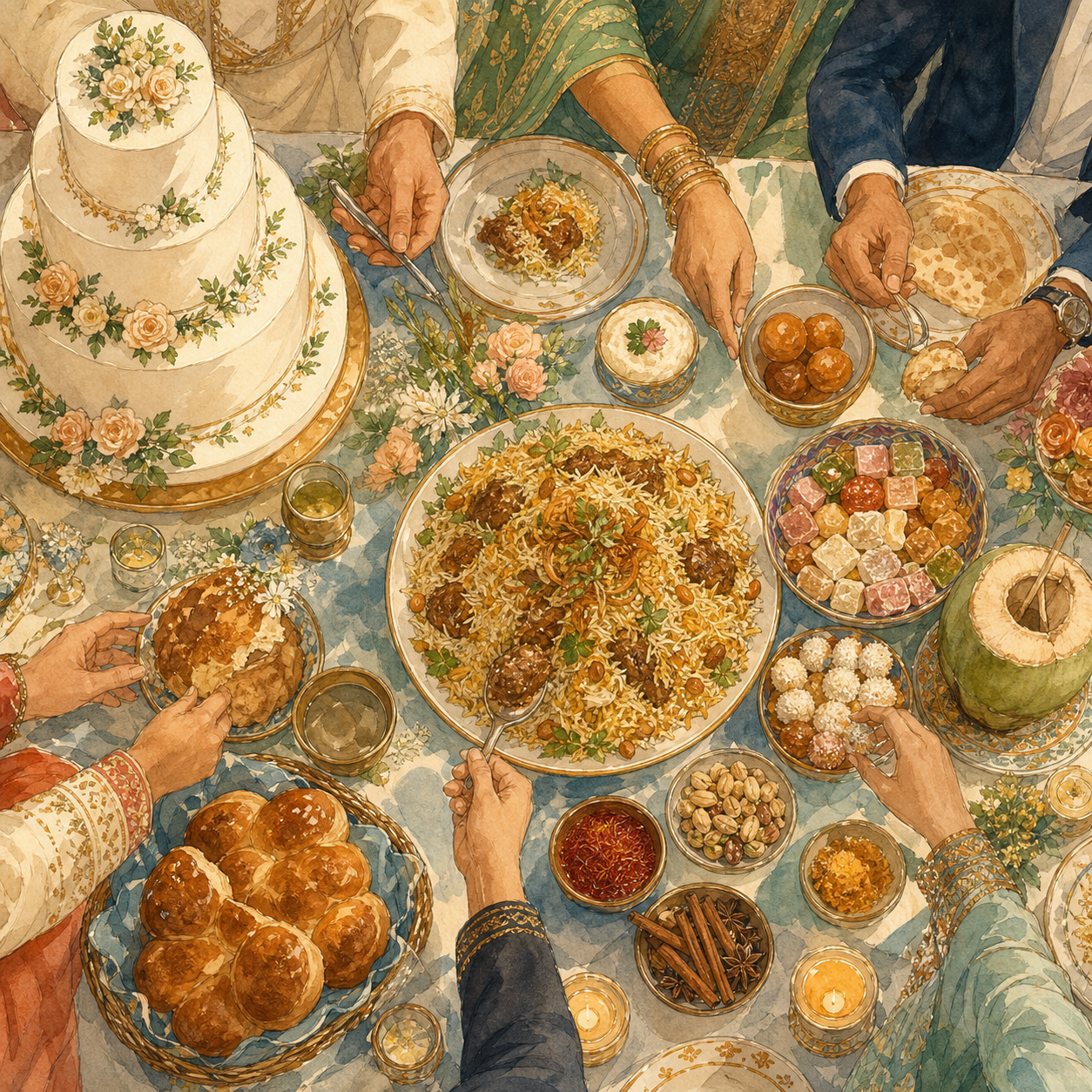
Text to type: Wedding meals have always done more than feed guests. The food on the table signals who the family is, what they believe, and how much they want to celebrate. Across centuries and cultures, wedding food has carried meaning far beyond taste.
Ready. The timer starts with your first key.
Complete
Great job!
Strong finish — your speed stayed steady.
Your rhythm
Speed over time- Time
- 0:00
- Raw speed
- 0 WPM
- Wrong keys
- 0
- Corrected
- 0
Before you begin
Warm-Up Questions
What food do people often serve at weddings where you live?
Why might a family choose a traditional dish for a wedding?
How can wedding food show money or social status?
Reading
Food and Status — Part 1: Ancient Rome
Typing practice
Type the text exactly. Timer starts with your first key.
Text to type: Wedding food can show social rank as well as celebration. In ancient Rome, confarreatio, which literally meant "with spelt," was a patrician form of marriage. The bride and groom shared spelt cake and bread during the ceremony. Because patricians belonged to Rome's upper class, this simple grain food carried legal, religious, and social meaning.
Ready. The timer starts with your first key.
Complete
Great job!
Strong finish — your speed stayed steady.
Your rhythm
Speed over time- Time
- 0:00
- Raw speed
- 0 WPM
- Wrong keys
- 0
- Corrected
- 0
Check your understanding
Check Before Part 2
1. Why did shared spelt cake and bread have more than a simple food meaning in ancient Rome?
Sample answer
They were part of confarreatio, a patrician marriage ceremony. The food carried legal, religious, and upper-class social meaning.
Think one step further
What simple food has a special meaning in a ceremony you know?
 Food and Status — Part 2: Medieval Feasts
Reading
Food and Status — Part 2: Medieval Feasts
Typing practice
Type the text exactly. Timer starts with your first key.
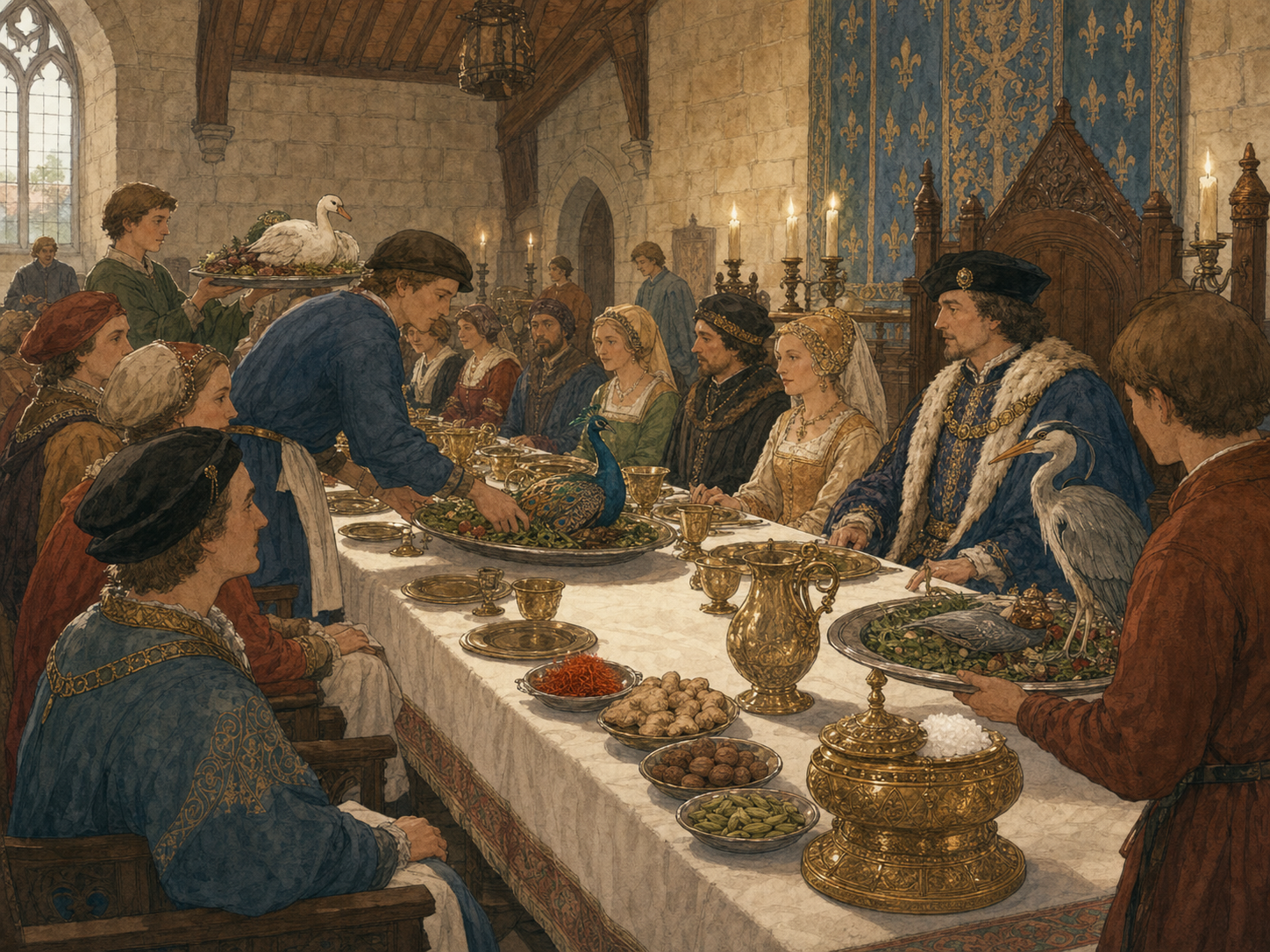
Text to type: Records of medieval French feasts help us understand how a noble wedding banquet could make status visible. Aristocratic tables might offer peacock, heron, or swan. Imported spices such as saffron, ginger, nutmeg, cardamom, and cinnamon came from far-off places. They were rare and valuable, so serving them showed a host's wealth and trade connections. Even the seating could show rank: the most important guest sat nearest the large salt container. Wedding food was not only a meal; ingredients and presentation helped families show their place in society.
Ready. The timer starts with your first key.
Complete
Great job!
Strong finish — your speed stayed steady.
Your rhythm
Speed over time- Time
- 0:00
- Raw speed
- 0 WPM
- Wrong keys
- 0
- Corrected
- 0
Check Your Understanding
1. Why were imported spices important at wealthy medieval European feasts?
Sample answer
Imported spices such as saffron, ginger, and cinnamon came from far-off places and were rare and valuable. Serving them showed that the host had money and trade connections.
Think one step further
Can you think of a costly or rare food that people serve at celebrations today?
 Religion and Symbolism — Part 1: A Hindu Wedding
Reading
Religion and Symbolism — Part 1: A Hindu Wedding
Typing practice
Type the text exactly. Timer starts with your first key.
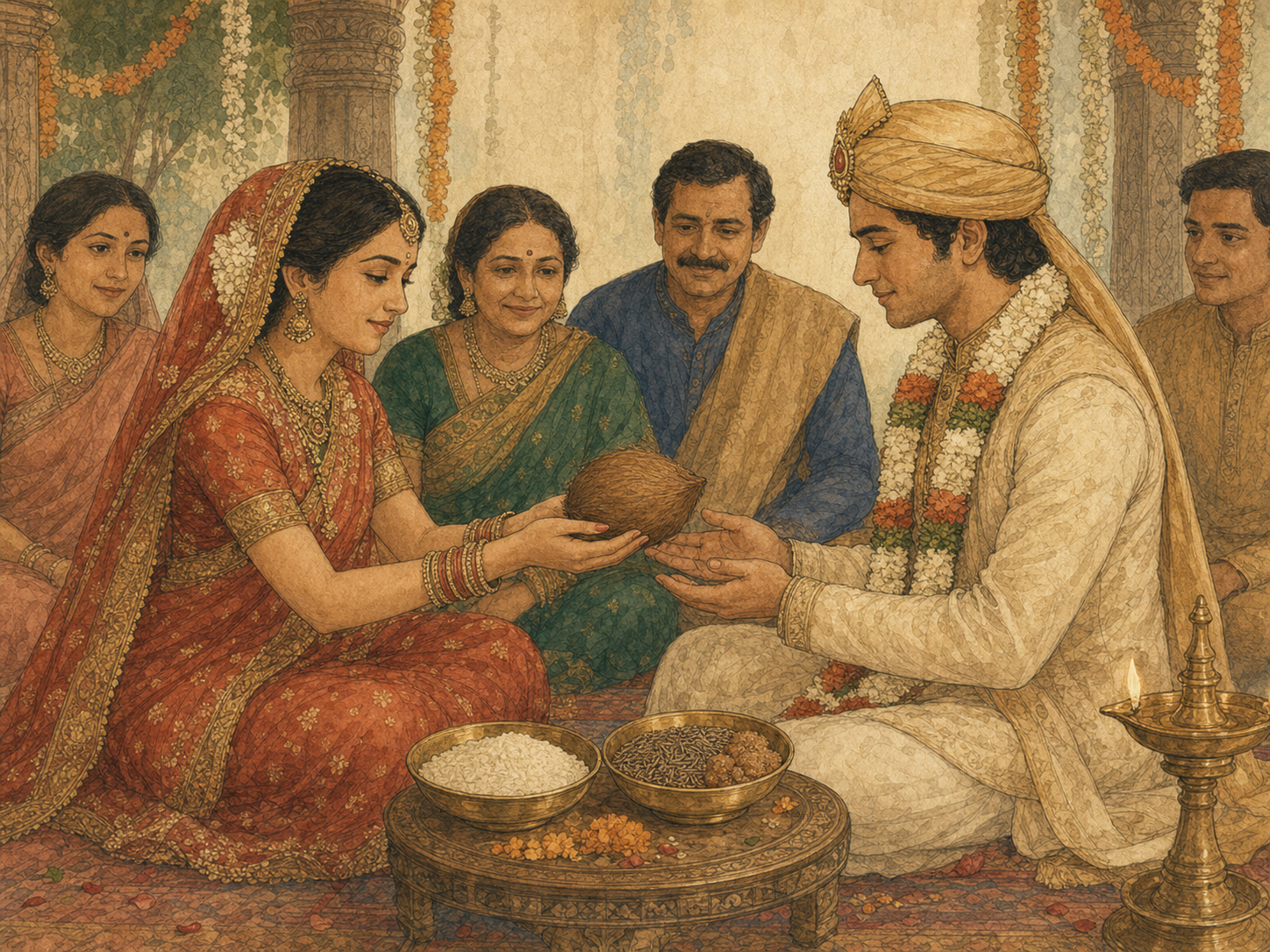
Text to type: Religious wedding food does not follow one universal menu. It changes by region, community, and family. At one Hindu wedding described by Smithsonian, the bride received a coconut, which the couple then gave to the groom. The coconut was a divine offering for a blessed marriage and a symbol of prosperity. A paste of cumin seeds and brown sugar represented the bitter and sweet parts of life. Rice also appeared as a symbol of sustenance and as an offering.
Ready. The timer starts with your first key.
Complete
Great job!
Strong finish — your speed stayed steady.
Your rhythm
Speed over time- Time
- 0:00
- Raw speed
- 0 WPM
- Wrong keys
- 0
- Corrected
- 0
Check your understanding
Check Before Part 2
1. What did one food represent at the Hindu wedding described in this part?
Sample answer
The coconut was a divine offering for a blessed marriage and a symbol of prosperity. The cumin-and-sugar paste represented the bitter and sweet parts of life, while rice represented sustenance and offering.
Think one step further
Which food in your culture has a symbolic meaning at a celebration?
Reading
Religion and Symbolism — Part 2: A Jewish Wedding
Typing practice
Type the text exactly. Timer starts with your first key.
Text to type: Jewish weddings offer another example. Blessings over wine are part of the ceremony, and the couple drinks from a cup after the seven blessings. The feast afterwards is called a seudat mitzvah, a religiously important meal with food, dancing, and singing. Guests are encouraged to help the couple rejoice. The exact dishes vary, but the shared meal has a clear purpose. In both traditions, food turns belief into something families and guests can see, taste, and take part in.
Ready. The timer starts with your first key.
Complete
Great job!
Strong finish — your speed stayed steady.
Your rhythm
Speed over time- Time
- 0:00
- Raw speed
- 0 WPM
- Wrong keys
- 0
- Corrected
- 0
Check Your Understanding
1. What gives food and drink a religious purpose at the Jewish wedding described here?
Sample answer
Wine is used for blessings during the ceremony, and the seudat mitzvah is a religiously important shared feast where guests help the couple rejoice.
Think one step further
Why can taking part in a shared meal feel different from only watching a ceremony?
Reading
Changing Traditions — Part 1: Wedding Cake
Typing practice
Type the text exactly. Timer starts with your first key.
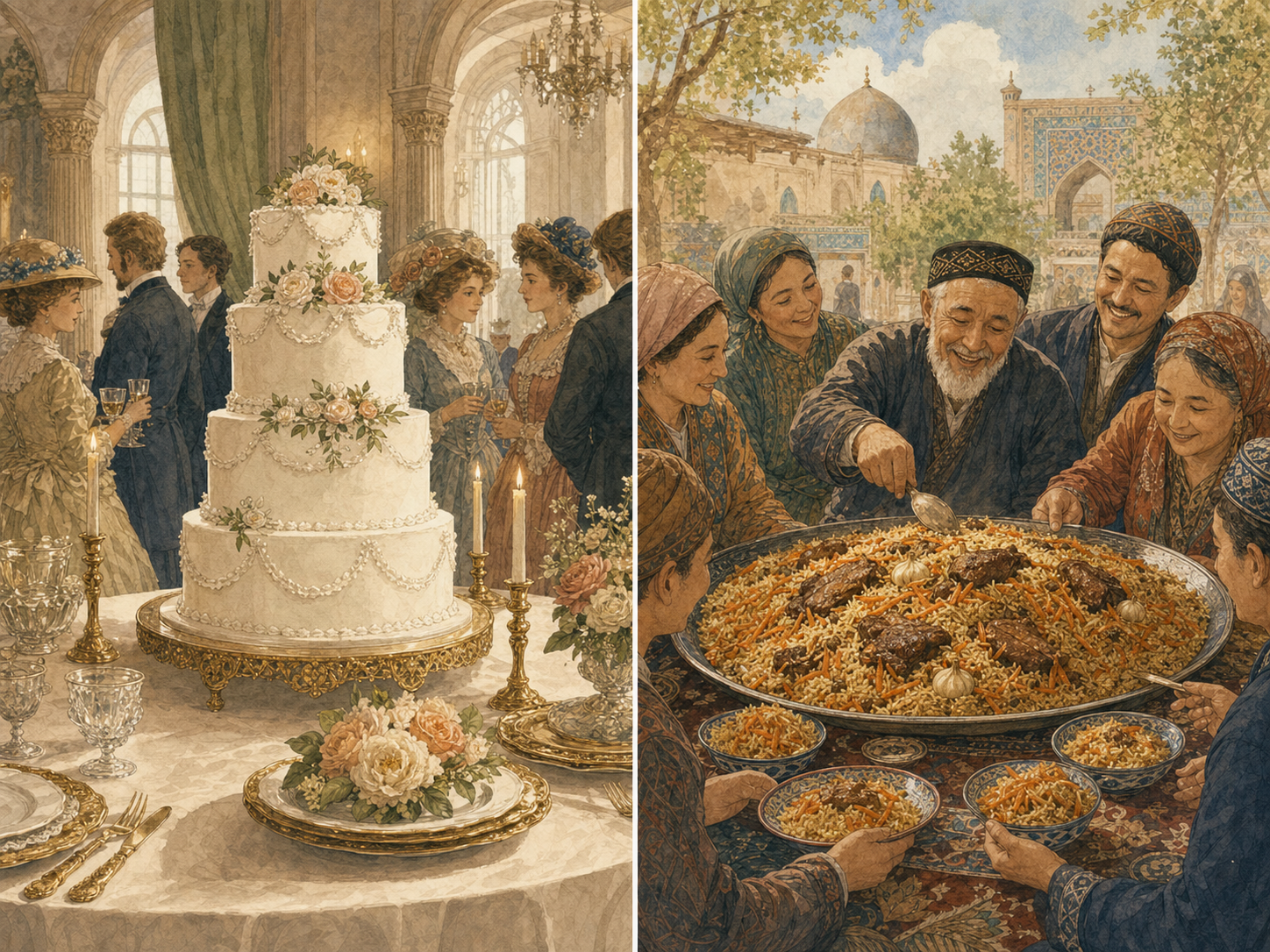
Text to type: The wedding cake changed over many centuries. In seventeenth-century England, a bride cake was closer to sweet bread with fruit and spices. By the eighteenth century, fruit cakes were often covered with sugar icing. Whiter icing required better, more expensive sugar, so its color became a sign of money. At Queen Victoria and Prince Albert's wedding in 1840, the cake weighed 136 kilograms, measured about 2.7 metres around, and had detailed figures on top. It made royal extravagance easy to see. Later royal cakes became taller and more complex, and smaller, cheaper versions reached more families near the end of Victoria's reign.
Ready. The timer starts with your first key.
Complete
Great job!
Strong finish — your speed stayed steady.
Your rhythm
Speed over time- Time
- 0:00
- Raw speed
- 0 WPM
- Wrong keys
- 0
- Corrected
- 0
Check your understanding
Check Before Part 2
1. What did Queen Victoria’s 1840 wedding cake show about wealth and fashion?
Sample answer
The cake was enormous, covered in costly white icing, and decorated with detailed figures. It made royal wealth easy to see. Later royal cakes became taller and more complex, while cheaper versions gradually became available to more families.
Think one step further
Why might people copy wedding fashions used by famous or royal figures?
 Changing Traditions — Part 2: Uzbek Plov
Reading
Changing Traditions — Part 2: Uzbek Plov
Typing practice
Type the text exactly. Timer starts with your first key.
Text to type: Tradition does not always mean cake. In Uzbekistan, plov is a national rice-and-meat dish served at weddings, births, funerals, and holidays. Wedding plov may include extra chickpeas, raisins, and garlic. A skilled cook can prepare one huge pot for hundreds of guests. Plov shows family memory, hospitality, and community. Together, the white cake and communal plov show two paths: wedding food can display wealth, or it can make an old shared dish feel especially joyful.
Ready. The timer starts with your first key.
Complete
Great job!
Strong finish — your speed stayed steady.
Your rhythm
Speed over time- Time
- 0:00
- Raw speed
- 0 WPM
- Wrong keys
- 0
- Corrected
- 0
Check Your Understanding
1. What does wedding plov show besides the family’s ability to feed many guests?
Sample answer
Wedding plov shows family memory, hospitality, community, and Uzbek cultural identity. A shared traditional dish can make a large celebration feel connected.
Think one step further
Would you rather share one large traditional dish or a formal wedding cake? Why?
What you can do now
Final Reflection
Wedding food has carried meaning related to wealth, religion, family, and identity across very different cultures and centuries. Which of these forces do you think shapes wedding food most strongly today, and has that changed compared to the past?
Learning cards
My cards
The History of Wedding Food
0 due · 8 new · about 3 min
Learn the sense first · then retrieve it
Focused Reading Mode is open.
Listening
Lesson audio
Listen from the beginning, or choose “Play this part” as you read along.
Reading
Food and Status — Part 1: Ancient Rome
Reading
Food and Status — Part 2: Medieval Feasts
Reading
Religion and Symbolism — Part 1: A Hindu Wedding
Reading
Religion and Symbolism — Part 2: A Jewish Wedding
Reading
Changing Traditions — Part 1: Wedding Cake
Reading
Changing Traditions — Part 2: Uzbek Plov
Finished listening?
Mark this listening practice complete when you have followed the lesson audio.
Listening complete
Listen Mode
Word-by-word syncPlay the audio and follow the highlighted word.
Article complete
Choose your next step
Open the next same-level lesson, replay the article, or save this page for later.
Listen Again
Replay the article once and notice how much more you understand.
One replay is enough. Then move on.