A1: Beginner Grammar Ladder 1: My First English Check
Beginner A1 grammar lesson with explanations, checks, results, and retry review.
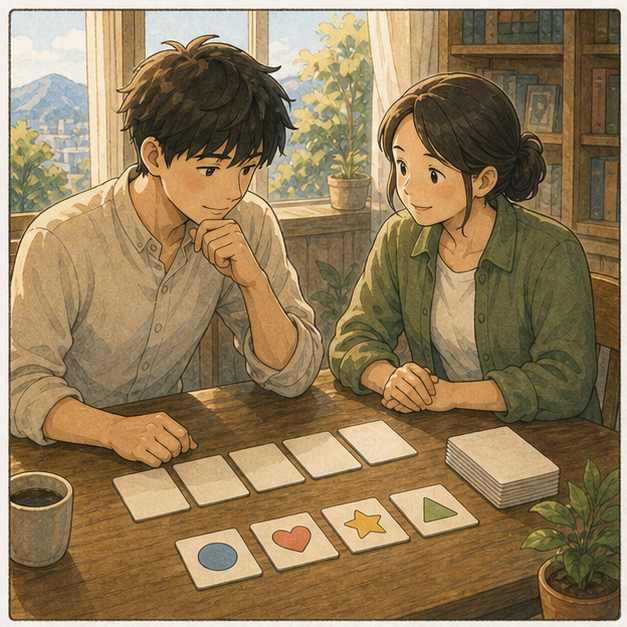
Transcript
Choose how to use this lesson
You can switch anytime.
Today's path
One clear way through the lesson
Start with Read core, then move forward when you feel ready.
- 1 Read core
- 2 Grammar review
Current mode
Study mode: full transcript with word help and inline checks.
Study Layout
Experience
OPENING
with you them, the what to on
NEWS STORY
Part 1 am, is, and are. I am She is They are Use be to a or
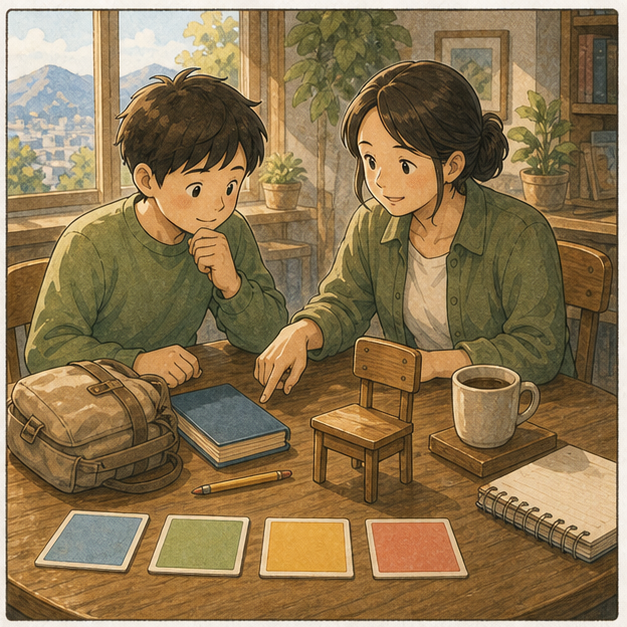
Pattern noticing with real classroom objects
Pattern noticing with real classroom objects
Part 2 my, your, his, her, and our. These my your his her our
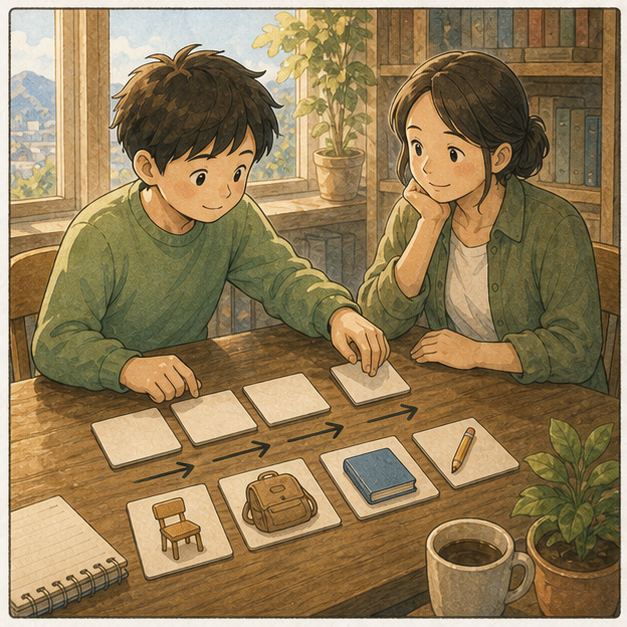
Grammar check with blank word tiles
Grammar check with blank word tiles
Part 3 What for a Where for a Who for a for a Do
Part 4 In On on a Under to
PRACTICE
Answer the the then the
CLOSING
Finish by your your and
Study Mode
Beginner Grammar Ladder
Start with a mini diagnostic, notice the pattern, answer checks, review results, and say your own sentences.
Start
Mini diagnosticNotice
Short examplesCheck
Grammar questionsReview
Results and retrySpeak
Own sentencesGrammar Focus
Choose one target when you want to focus the cards and highlights.
All grammar targets are visible.
Mini Diagnostic
Answer these first. The focus appears after the diagnostic is complete.
Choose
I ___ Saki.
Use am with I when you say your name or identity.
Show answer
am
Also okay: am
Tip: subject + am/is/are + complement
Use am with I when you say your name or identity.
- Use be for identity, place, feelings, and descriptions, not actions.
- Questions move be before the subject: Are you ready?
Choose
They ___ students.
Use are with they and plural people.
Show answer
are
Also okay: are
Tip: subject + am/is/are + complement
Use are with they and plural people.
- Use be for identity, place, feelings, and descriptions, not actions.
- Questions move be before the subject: Are you ready?
Choose
This is ___ bag. (I)
Use my before a noun when something belongs to the speaker.
Show answer
my
Also okay: my
Tip: my/your/his/her + noun
Use my before a noun when something belongs to the speaker.
- My points to the speaker; your points to the listener.
- His and her depend on the person you are talking about, not on the object.
Choose
___ is your name?
Use what to ask for a thing, word, or name.
Show answer
What
Also okay: What
Tip: question word + auxiliary/be + subject + main idea
Use what to ask for a thing, word, or name.
- Question words ask for information; yes/no questions ask for confirmation.
- With be, move be before the subject. With many action verbs, use do, does, or did.
Choose
The book is ___ the table.
Use on when something touches the top or surface of a place.
Show answer
on
Also okay: on
Tip: preposition + noun phrase: in the bag, on the chair, under the table, next to the door
Use on when something touches the top or surface of a place.
- Use in for inside; use on for a surface; use under for below; use next to for beside.
- For buildings, on often fits floors, while in often fits rooms or areas.
Choose
___ is the station?
Use where to ask about a place.
Show answer
Where
Also okay: Where
Tip: question word + auxiliary/be + subject + main idea
Use where to ask about a place.
- Question words ask for information; yes/no questions ask for confirmation.
- With be, move be before the subject. With many action verbs, use do, does, or did.
Present Simple: Be
Use am with I, is with he/she/it or one thing, and are with you/we/they or more than one thing.
am | is | are
"I am ready."
Use am with I.
Jump to transcriptChoose
I ___ ready.
Use am with I.
Show answer
am
Also okay: am
Tip: subject + am/is/are + complement
Use am with I.
- Use be for identity, place, feelings, and descriptions, not actions.
- Questions move be before the subject: Are you ready?
Choose
Mina ___ at school.
Use is with one person.
Show answer
is
Also okay: is
Tip: subject + am/is/are + complement
Use is with one person.
- Use be for identity, place, feelings, and descriptions, not actions.
- Questions move be before the subject: Are you ready?
Fill in
We ___ friends.
Use are with we.
Show answer
are
Also okay: are
Tip: subject + am/is/are + complement
Use are with we.
- Use be for identity, place, feelings, and descriptions, not actions.
- Questions move be before the subject: Are you ready?
Rebuild
Rebuild: is / She / happy
Use this pattern to put the subject first, then is, then the description.
Show answer
She is happy.
Also okay: She is happy | She is happy. | She is happy
Tip: subject + am/is/are + complement
Use this pattern to put the subject first, then is, then the description.
- Use be for identity, place, feelings, and descriptions, not actions.
- Questions move be before the subject: Are you ready?
Choose
___ you from Japan?
In this question, are comes before you.
Show answer
Are
Also okay: Are
Tip: subject + am/is/are + complement
In this question, are comes before you.
- Use be for identity, place, feelings, and descriptions, not actions.
- Questions move be before the subject: Are you ready?
Fill in
This ___ my desk.
Use is with this and one thing.
Show answer
is
Also okay: is
Tip: subject + am/is/are + complement
Use is with this and one thing.
- Use be for identity, place, feelings, and descriptions, not actions.
- Questions move be before the subject: Are you ready?
Possessive Adjectives
Use my, your, his, and her before a noun: my bag, your phone, his sister, her ticket.
my | your | his | her
"This is my pencil."
Use my before a noun for something connected to the speaker.
Jump to transcriptChoose
This is ___ pencil. (I)
Use my before a noun for something connected to the speaker.
Show answer
my
Also okay: my
Tip: my/your/his/her + noun
Use my before a noun for something connected to the speaker.
- My points to the speaker; your points to the listener.
- His and her depend on the person you are talking about, not on the object.
Choose
Ken has a bag. It is ___ bag.
Use his before a noun for something connected to a boy or man.
Show answer
his
Also okay: his
Tip: my/your/his/her + noun
Use his before a noun for something connected to a boy or man.
- My points to the speaker; your points to the listener.
- His and her depend on the person you are talking about, not on the object.
Choose
Aya has a notebook. It is ___ notebook.
Use her before a noun for something connected to a girl or woman.
Show answer
her
Also okay: her
Tip: my/your/his/her + noun
Use her before a noun for something connected to a girl or woman.
- My points to the speaker; your points to the listener.
- His and her depend on the person you are talking about, not on the object.
Fill in
Is this ___ ticket?
Use your when you ask another person about something connected to them.
Show answer
your
Also okay: your
Tip: my/your/his/her + noun
Use your when you ask another person about something connected to them.
- My points to the speaker; your points to the listener.
- His and her depend on the person you are talking about, not on the object.
Rebuild
Rebuild: my / This / is / book
Put my before the noun book.
Show answer
This is my book.
Also okay: This is my book | This is my book. | This is my book
Tip: my/your/his/her + noun
Put my before the noun book.
- My points to the speaker; your points to the listener.
- His and her depend on the person you are talking about, not on the object.
Choose
We are students. This is ___ classroom.
Use our before a noun for something connected to we.
Show answer
our
Also okay: our
Tip: my/your/his/her + noun
Use our before a noun for something connected to we.
- My points to the speaker; your points to the listener.
- His and her depend on the person you are talking about, not on the object.
Question Forms
Use question words for missing information. Use do/does/did or be before the subject for many simple questions.
what | where | when | who | why | how | do | does
"What is your name?"
Use what to ask for a name or thing.
Jump to transcriptChoose
___ is your name?
Use what to ask for a name or thing.
Show answer
What
Also okay: What
Tip: question word + auxiliary/be + subject + main idea
Use what to ask for a name or thing.
- Question words ask for information; yes/no questions ask for confirmation.
- With be, move be before the subject. With many action verbs, use do, does, or did.
Choose
___ are you from?
Use where to ask about a place.
Show answer
Where
Also okay: Where
Tip: question word + auxiliary/be + subject + main idea
Use where to ask about a place.
- Question words ask for information; yes/no questions ask for confirmation.
- With be, move be before the subject. With many action verbs, use do, does, or did.
Choose
___ is she? She is my sister.
Use who to ask about a person.
Show answer
Who
Also okay: Who
Tip: question word + auxiliary/be + subject + main idea
Use who to ask about a person.
- Question words ask for information; yes/no questions ask for confirmation.
- With be, move be before the subject. With many action verbs, use do, does, or did.
Fill in
___ do you spell your name?
Use how to ask about the way to do something.
Show answer
How
Also okay: How
Tip: question word + auxiliary/be + subject + main idea
Use how to ask about the way to do something.
- Question words ask for information; yes/no questions ask for confirmation.
- With be, move be before the subject. With many action verbs, use do, does, or did.
Rebuild
Rebuild the question: Where / are / you / from / ?
Start with the question word, then are before you.
Show answer
Where are you from?
Also okay: Where are you from | Where are you from? | Where are you from
Tip: question word + auxiliary/be + subject + main idea
Start with the question word, then are before you.
- Question words ask for information; yes/no questions ask for confirmation.
- With be, move be before the subject. With many action verbs, use do, does, or did.
Choose
___ you like tea?
Use do to make a present simple question with like.
Show answer
Do
Also okay: Do
Tip: question word + auxiliary/be + subject + main idea
Use do to make a present simple question with like.
- Question words ask for information; yes/no questions ask for confirmation.
- With be, move be before the subject. With many action verbs, use do, does, or did.
Prepositions of Place
Use in for inside a place, on for a surface or floor, under for below something, and next to for beside something.
in | on | under | next to
"The pen is in the bag."
Use in when something is inside a place or container.
Jump to transcriptChoose
The pen is ___ the bag.
Use in when something is inside a place or container.
Show answer
in
Also okay: in
Tip: preposition + noun phrase: in the bag, on the chair, under the table, next to the door
Use in when something is inside a place or container.
- Use in for inside; use on for a surface; use under for below; use next to for beside.
- For buildings, on often fits floors, while in often fits rooms or areas.
Choose
The phone is ___ the table.
Use on when something touches a surface.
Show answer
on
Also okay: on
Tip: preposition + noun phrase: in the bag, on the chair, under the table, next to the door
Use on when something touches a surface.
- Use in for inside; use on for a surface; use under for below; use next to for beside.
- For buildings, on often fits floors, while in often fits rooms or areas.
Choose
The shoes are ___ the bed.
Use under when something is below another thing.
Show answer
under
Also okay: under
Tip: preposition + noun phrase: in the bag, on the chair, under the table, next to the door
Use under when something is below another thing.
- Use in for inside; use on for a surface; use under for below; use next to for beside.
- For buildings, on often fits floors, while in often fits rooms or areas.
Choose
The cafe is ___ the station.
Use next to when something is beside another place.
Show answer
next to
Also okay: next to
Tip: preposition + noun phrase: in the bag, on the chair, under the table, next to the door
Use next to when something is beside another place.
- Use in for inside; use on for a surface; use under for below; use next to for beside.
- For buildings, on often fits floors, while in often fits rooms or areas.
Fill in
The poster is ___ the wall.
Use on when something touches a surface like a wall.
Show answer
on
Also okay: on
Tip: preposition + noun phrase: in the bag, on the chair, under the table, next to the door
Use on when something touches a surface like a wall.
- Use in for inside; use on for a surface; use under for below; use next to for beside.
- For buildings, on often fits floors, while in often fits rooms or areas.
Rebuild
Rebuild: bag / is / the / in / It
Use in before the place when something is inside it.
Show answer
It is in the bag.
Also okay: It is in the bag | It is in the bag. | It is in the bag
Tip: preposition + noun phrase: in the bag, on the chair, under the table, next to the door
Use in before the place when something is inside it.
- Use in for inside; use on for a surface; use under for below; use next to for beside.
- For buildings, on often fits floors, while in often fits rooms or areas.
Say It Yourself
- Say three sentences with am, is, or are.
- Say two sentences with phrases like my bag, your book, his pencil, her desk, or our classroom.
- Ask two simple questions with what, where, who, how, or do.
- Say where three classroom things are: in the bag, on the desk, under the chair, or next to the door.
Lesson summary
Beginner A1 grammar lesson with explanations, checks, results, and retry review.
Simple Meaning
Word
This word has no saved lesson sentence yet.
Simple Meaning
Preparing word help...
In this sentence
No context meaning available yet.
Simple version
Example sentence
Language assist
Loading assist...
Extra language help is not ready for this word yet.
Lesson vocabulary
Vocabulary
Save words from this lesson, then use flashcards and quiz here.
Practice your saved words. We'll bring back the ones you need to review.
Flashcards
No saved words yet
Tap words in the transcript to start your lesson vocabulary.
Quick feedback
If something felt confusing, broken, or especially helpful, send one short note before you move on.