B2: Sending Video Across Deep Space With Lasers
Quality checked lesson
Explain how laser data links can move more information through deep space and why pointing, weather, and distance make the work hard.

Article
Choose how to use this lesson
You can switch anytime.
Today's path
One clear way through the lesson
Start with Read core, then move forward when you feel ready.
- 1 Read core
- 2 Check understanding
- 3 Concept review
Selected
Study mode: article with word help and quick checks.
B2 extension
Energy system extension
Use these cards to connect the technical parts of the lesson without making the main reading too heavy.
B2 pre-reading primer
Energy system extension
Use these cards to connect the technical parts of the lesson without making the main reading too heavy.
Optical communication
Sending data with light
It can move high data volumes through narrow laser beams.
Transceiver
A device that sends and receives
The spacecraft needs one unit to handle the optical link.
Beacon
A guiding signal
It helps the spacecraft and ground station point correctly.
Hybrid network
Two systems used together
Radio and optical links can cover different mission needs.
Step
What Happens
Risk Or Limit
Encode
Mission data is prepared for optical transmission.
Data must be protected from loss and errors.
Point
The spacecraft aims a narrow laser toward Earth.
Tiny pointing errors can miss the receiver.
Receive
Ground telescopes collect the light signal.
Weather and atmosphere can interfere.
Decode
The received signal becomes usable mission data.
Weak signals require careful processing.
B2 analysis prompts
- Explain why high bandwidth is not the same as guaranteed communication.
- Compare radio and optical links using one strength and one weakness for each.
- Describe a mission where optical communication would change the science plan.
Study Layout
Experience
Listen and follow the highlighted text.
Introduction
Explain how laser data links can move more information through deep space and why pointing, weather, and distance make the work hard.
Why do spacecraft need to send more data than before?
What could go wrong if a laser beam must hit a receiver millions of miles away?
When is a faster communication system worth extra complexity?
Reading
For decades, spacecraft have mostly talked to Earth by radio. Radio is reliable and forgiving, but missions can produce far more data than older systems were designed to send. spectrometers, and radar instruments can collect rich information faster than a narrow communication link can return it.
Check your understanding
What problem does laser communication try to solve?
You can start like this: I think...
NASA Deep Space is a for deep space links. A is a test built to prove that an engineering idea can work in real mission conditions. The mission team tested a different idea: use for high data capacity links across deep space.
The concept sounds simple: point a beam of light from a spacecraft to Earth. The engineering is not simple at all. The spacecraft is moving, Earth is rotating, the distance is huge, and the light has to arrive at a that can separate a signal from background noise.
A beam uses optical A is the distance between repeating parts of a wave, and optical are much shorter than radio Shorter can data in a very narrow beam. That narrowness is one reason light-based links can offer much higher data rates with equipment of comparable size and power.
Check your understanding
Why can optical communication offer higher data rates?
You can start like this: Because...
NASA reports that the test demonstrated data rates at least ten times higher than state-of-the-art radio systems of similar size and power. For a mission, that could mean better images, more scientific measurements, or less waiting.
Think about a future probe flying past an icy moon. With a link, the team may have to only a few or remove many details before sending them. With a faster link, the team could return more frames, more colors, and more measurements from the same short flyby. The science plan changes because the communication limit changes.
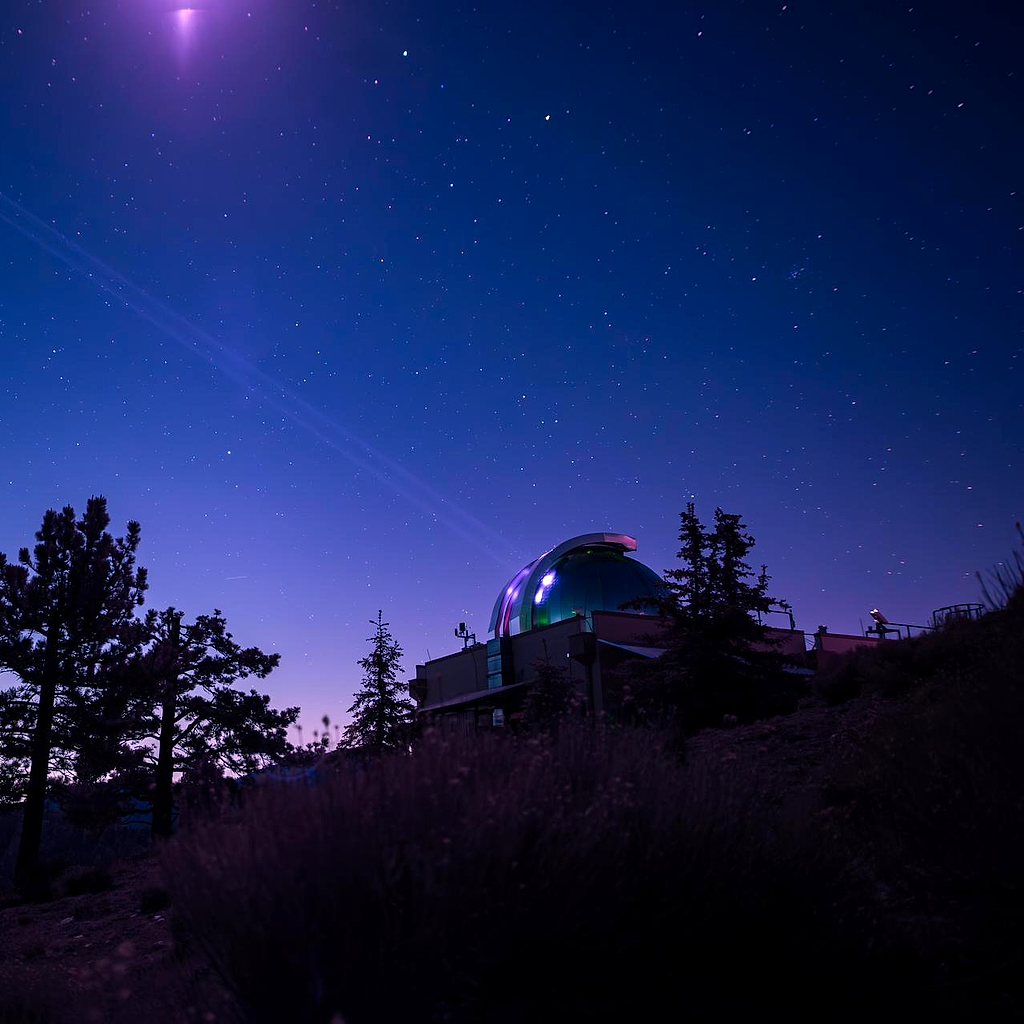
Laser communication precision
This closing image shows the main idea: deep-space communication depends on precise light, not magic.
Source: NASA/JPL-Caltech
A narrow beam is powerful, but it is also demanding. If a radio signal is like a wide flashlight, a deep space is closer to a pencil-thin beam aimed across a continent while both target and sender are moving.
The test needed a flight a ground transmitter, and ground A is a device that can send and receive signals. The system also used meaning guiding light signals, and precise pointing so the spacecraft and Earth could find each other across enormous distances.
This is why high data capacity is not the same as communication. The beam must be aimed, received, read by and checked. If clouds block a ground telescope or the pointing is slightly wrong, a link on paper can become a practical problem.
Check your understanding
Why is precise pointing central to the laser link?
You can start like this: Because...
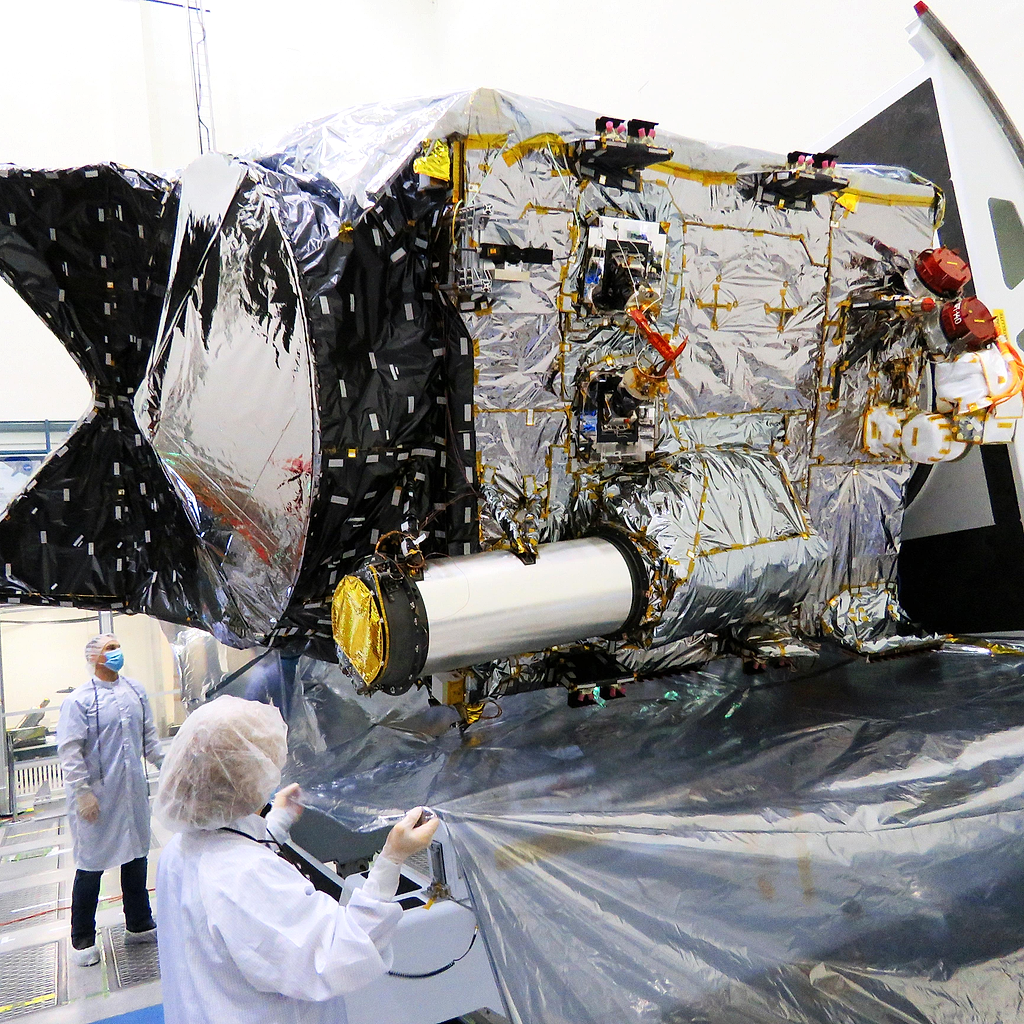
DSOC flight laser transceiver
This shows laser communication hardware that must point a narrow light beam very accurately across deep space.
Source: NASA/JPL-Caltech
In December 2023, the test streamed an ultra-high-definition video from over 19 million miles away. The playful public was because video makes to understand. If a system can send video from deep space, it can also send heavy scientific data.
Check your understanding
Why was streaming video a meaningful demonstration?
You can start like this: Because...
Later, the demonstration downlinked spacecraft data from a much greater distance. is the spacecraft that carried the experiment while traveling toward an asteroid. The achievement was not just a stunt. It was a test of whether optical links can remain as distance grows.
The video example also helped non-specialists see the point. A number such as megabits per second can feel abstract. A moving makes the data rate visible: many frames, many colors, and many details arriving after a long through space.
communications are not a simple replacement for radio. Earth clouds, availability, pointing demands, and mission risk all matter. Radio remains because it is proven and
A realistic future is Spacecraft may use radio for reliable command and safety, while optical systems large science files when conditions are right. The future communication may look less like one magic pipe and more like a layered system.
Check your understanding
Why is a hybrid future more realistic than replacing radio completely?
You can start like this: Because...
That mixed design is familiar from life. A person may use a wired connection for stability, Wi-Fi for convenience, and mobile data when moving. Space missions face harder physics, but the logic is similar: use the strongest channel for the job, and keep a backup when the mission cannot risk silence.
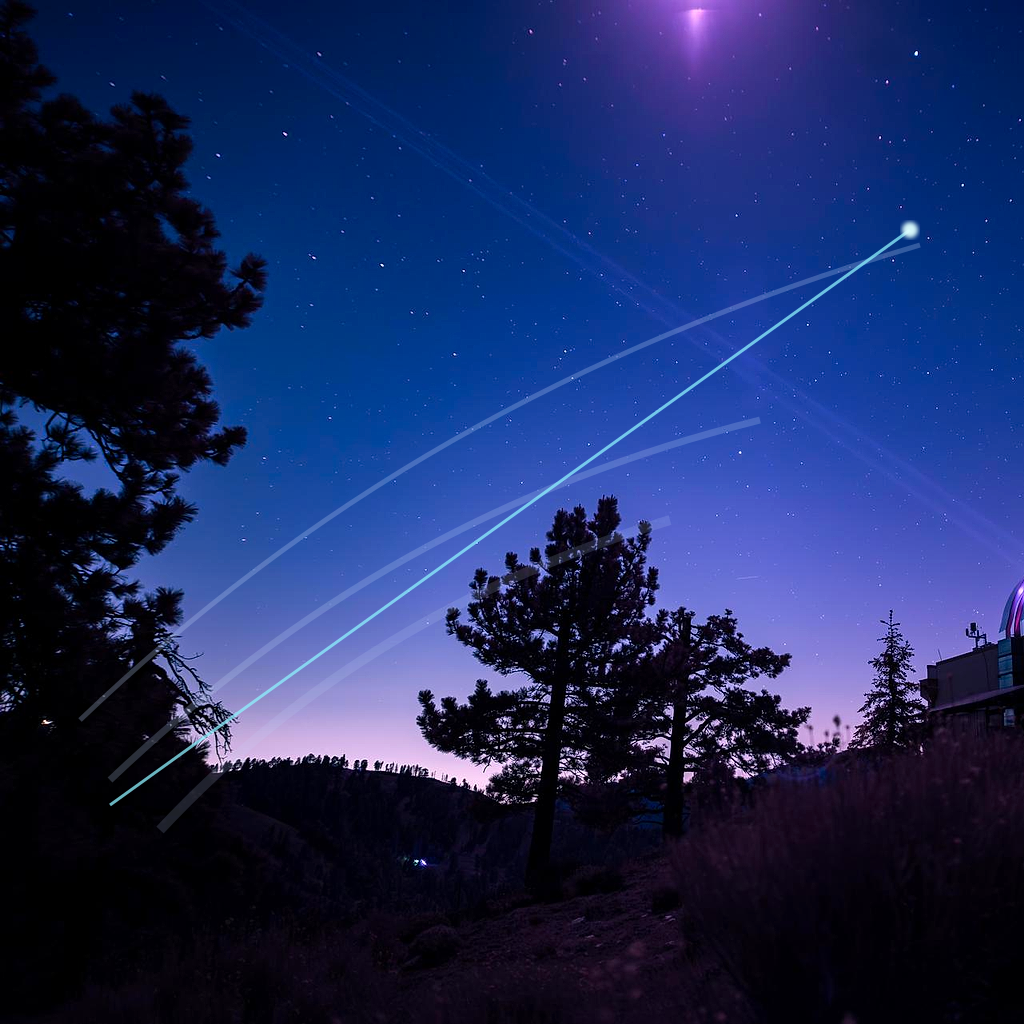
Optical and radio communication comparison
This compares the laser-link idea with older radio-style space communication, which is still useful but slower for large data.
Source: NASA/JPL-Caltech
1. What is the clearest of a data link?
2. What is the biggest engineering risk?
3. Why should radio remain part of the system?
4. How would you explain this technology to a nontechnical friend?
Practice
What problem does laser communication try to solve?
It tries to send larger amounts of spacecraft data back to Earth faster than comparable radio systems.
What kind of space data would be worth sending at higher speed?
Why can optical communication offer higher data rates?
It uses narrow laser beams at optical wavelengths, which can carry more data efficiently.
What would a mission team do differently if bandwidth were less limited?
Why is precise pointing central to the laser link?
Because a narrow laser beam must hit the right receiver across very large distances.
How does a strength become a weakness in this system?
Why was streaming video a meaningful demonstration?
It showed that high-bandwidth data could be sent from deep space in a way people can understand.
Why do technology demonstrations sometimes use playful public examples?
Why is a hybrid future more realistic than replacing radio completely?
Because radio is robust while optical links offer high bandwidth when conditions and pointing are good.
Where else do you see old and new technology working together?
Summary
Deep space lasers feel advanced because they turn communication into precision choreography.
The spacecraft, the ground station, and the light beam all have to cooperate across impossible distances.
The biggest idea is not that lasers are magic.
It is that future missions may need communication systems as ambitious as their instruments.
Step: Concept review
Technical Concepts
Start with the core ideas before opening the full concept map.
Optical communication
Sending data with light
It can move high data volumes through narrow laser beams.
Transceiver
A device that sends and receives
The spacecraft needs one unit to handle the optical link.
Beacon
A guiding signal
It helps the spacecraft and ground station point correctly.
Hybrid network
Two systems used together
Radio and optical links can cover different mission needs.
Final Reflection
Deep space feel advanced because they turn communication into precision choreography. The spacecraft, the ground and the light beam all have to cooperate across impossible distances.
The biggest idea is not that are magic. It is that future missions may need communication systems as ambitious as their instruments.
Simple Meaning
Word
This word has no saved lesson sentence yet.
Simple Meaning
Preparing word help...
In this sentence
No context meaning available yet.
Simple version
Example sentence
Language assist
Loading assist...
Extra language help is not ready for this word yet.
Question
Lesson vocabulary
Vocabulary
Save words from this lesson, then use flashcards and quiz here.
Practice your saved words. We'll bring back the ones you need to review.
Flashcards
No saved words yet
Tap words in the transcript to start your lesson vocabulary.
Article complete
Choose your next step
Open the next same-level lesson, replay the article, or save this page for later.
Listen Again
Replay the lesson once after studying and notice how much more you understand.
One replay is enough. Then move on.
Save, rate, or report an issue
Quick issue note
Mark one confusing or broken spot on the page, then send a short note.
Resources
Save, share, or contact support from one place.