Why Villains Are Interesting
Quality checked lesson
Discover four research-backed reasons that villains hold attention: threat, curiosity, safe fear, and mixed motives.
 English lesson
Article
Choose how to use this lesson
You can switch anytime.
Study mode
Introduction
Typing practice
Type the text exactly. Timer starts with your first key.
Text to type: Some villains are easy to hate and hard to ignore. That is not a contradiction. Stories can use the mind's attention to danger, curiosity about missing information, safe excitement, and uncertainty about motives. Four research studies help explain why a bad character can be an excellent engine for a story.
Ready. The timer starts with your first key.
Complete
Great job!
Strong finish — your speed stayed steady.
Your rhythm
Speed over time- Time
- 0:00
- Raw speed
- 0 WPM
- Wrong keys
- 0
- Corrected
- 0
Before you begin
Warm-Up
Which villain do you remember most clearly? What made that character difficult to ignore?
Why can a frightening story be enjoyable when real danger is not?
Reading
Dislike Is Not the Same as Boredom
Typing practice
Type the text exactly. Timer starts with your first key.
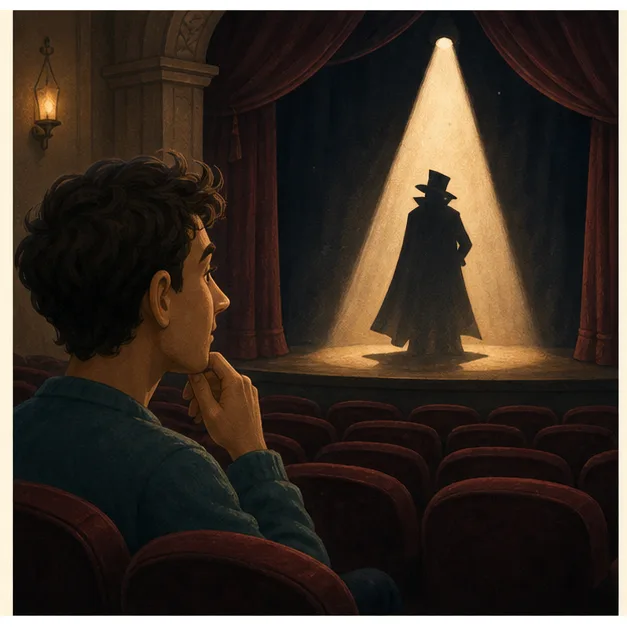
Text to type: K. Maja Krakowiak and Mary Beth Oliver compared stories with good, bad, or morally mixed characters. The bad characters were liked the least. However, their stories were just as suspenseful and mentally engaging as the others. This gives us the first answer: liking a character and paying attention to a character are different. A villain can be unpleasant and still make a story difficult to leave.
Ready. The timer starts with your first key.
Complete
Great job!
Strong finish — your speed stayed steady.
Your rhythm
Speed over time- Time
- 0:00
- Raw speed
- 0 WPM
- Wrong keys
- 0
- Corrected
- 0
Check your understanding
1. What did the 313-person character study show?
Liking a character and paying attention to a character are different reactions.
 Across five experiments, people found threatening faces faster and more accurately.
Reading
1. Danger Gets Priority
Typing practice
Type the text exactly. Timer starts with your first key.
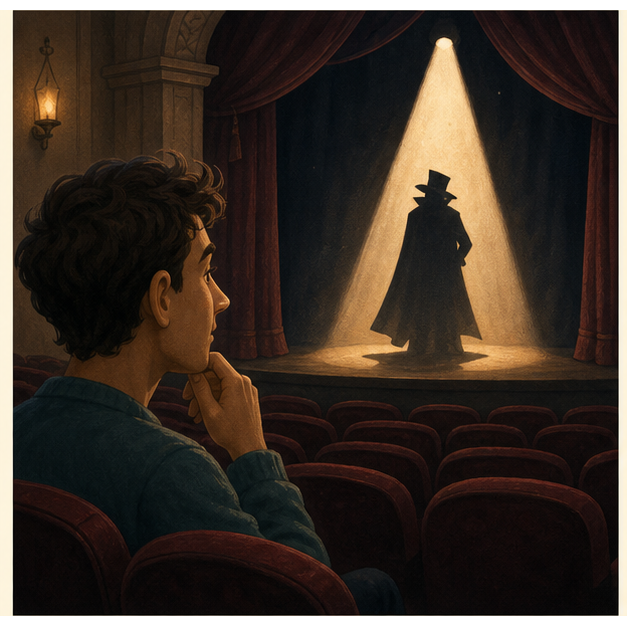
Text to type: Psychologist Arne Öhman and his team asked people to find one different face in a grid. Across five experiments, people found threatening faces faster and more accurately than friendly faces. This was not a study of villains, so it is only one part of the answer. It shows a useful part of attention: possible danger can get priority. A fictional villain adds plans and choices, so we keep watching for what that person might do next.
Ready. The timer starts with your first key.
Complete
Great job!
Strong finish — your speed stayed steady.
Your rhythm
Speed over time- Time
- 0:00
- Raw speed
- 0 WPM
- Wrong keys
- 0
- Corrected
- 0
Check your understanding
1. What happened in the face-grid experiments?
Possible danger received attention quickly in these experiments.
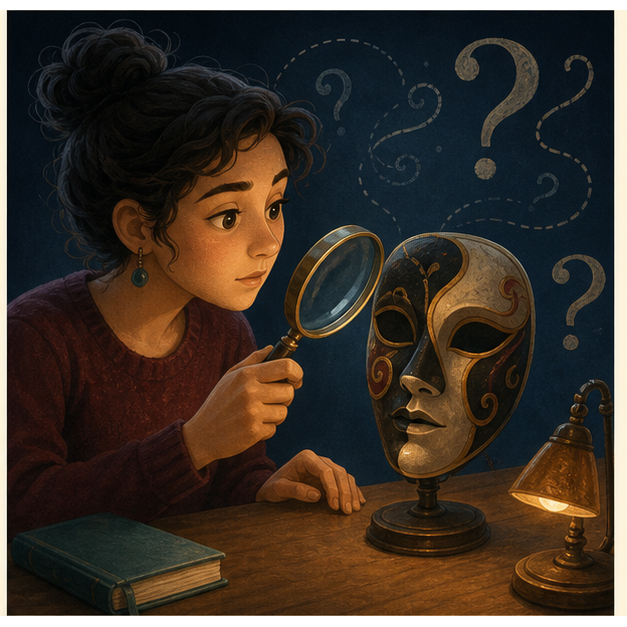 Morbid curiosity can turn a dangerous fictional mind into a question.
Reading
2. Curiosity Turns Danger Into a Question
Typing practice
Type the text exactly. Timer starts with your first key.
Text to type: Psychologist Coltan Scrivner developed a 24-question Morbid Curiosity Scale. It measures interest in four areas: dangerous minds, violence between people, injured bodies, and paranormal danger. In the final experiment, people chose between dark and neutral pictures or descriptions. People with higher scores were more likely to choose the dark information. Villains fit one area especially well: the minds of dangerous people. We want to know the motive, plan, or hidden history.
Ready. The timer starts with your first key.
Complete
Great job!
Strong finish — your speed stayed steady.
Your rhythm
Speed over time- Time
- 0:00
- Raw speed
- 0 WPM
- Wrong keys
- 0
- Corrected
- 0
Check your understanding
1. What is one part of the Morbid Curiosity Scale?
Dangerous minds are one of the scale's four areas.
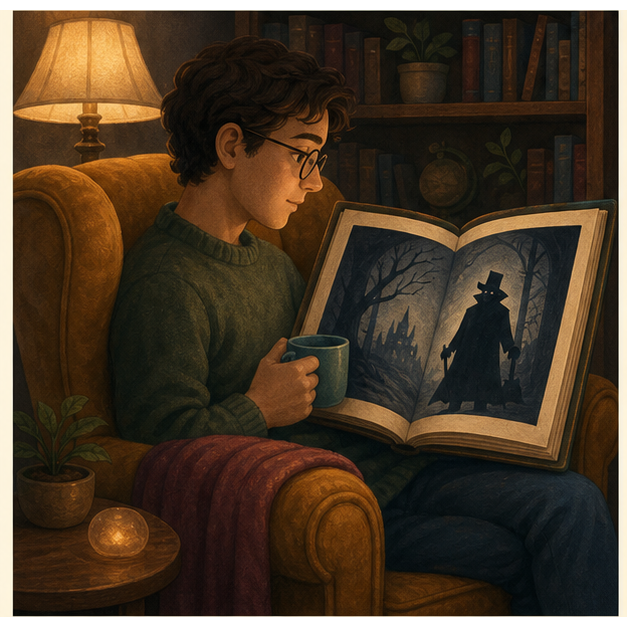 A frightening story can feel strong while the reader remains safe.
Reading
3. Safe Fear Can Feel Good
Typing practice
Type the text exactly. Timer starts with your first key.
Text to type: Paul Rozin and his team studied 29 experiences that usually feel unpleasant, including fear, sadness, pain, strong tastes, and physical exhaustion. Many people said they enjoyed some of them when the experience was safe. The researchers called this benign masochism. A frightening story can work in a similar way. Your body reacts, but your mind knows you can pause the film or close the book. The danger feels real enough to be exciting, but not real enough to hurt you.
Ready. The timer starts with your first key.
Complete
Great job!
Strong finish — your speed stayed steady.
Your rhythm
Speed over time- Time
- 0:00
- Raw speed
- 0 WPM
- Wrong keys
- 0
- Corrected
- 0
Check your understanding
1. Why can a frightening story feel enjoyable?
A strong feeling can be exciting when the person still knows they are safe.
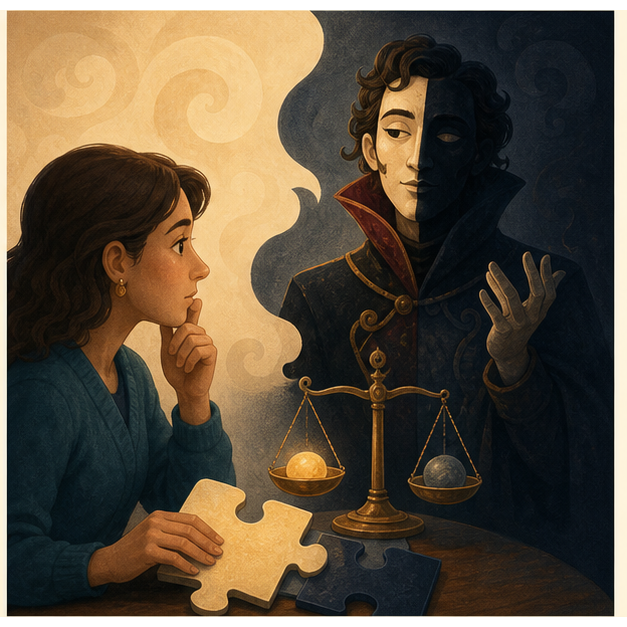 Moral ambiguity makes the next choice harder to predict.
Reading
4. Mixed Motives Make Prediction Hard
Typing practice
Type the text exactly. Timer starts with your first key.
Text to type: Some villains are not simply cruel. They may love one person, protect a group, or regret one choice while continuing to cause harm. This creates moral ambiguity: we can understand part of the character without approving of the action. In Krakowiak and Oliver's study, morally mixed characters were liked less than good characters, yet their stories were equally suspenseful, engaging, and enjoyable. When several motives are possible, the audience keeps testing predictions: Will the villain change, repeat the harm, or surprise us? This uncertainty creates suspense.
Ready. The timer starts with your first key.
Complete
Great job!
Strong finish — your speed stayed steady.
Your rhythm
Speed over time- Time
- 0:00
- Raw speed
- 0 WPM
- Wrong keys
- 0
- Corrected
- 0
Check your understanding
1. Why can mixed motives hold attention?
Several possible motives make the next decision uncertain.
Reading
Use the Four-Lens Test
Typing practice
Type the text exactly. Timer starts with your first key.
Text to type: Different villains use different combinations. Darth Vader brings threat, but his past also creates a question about change. Iago in Othello tells the audience about his plan, so suspense comes from waiting to see who will understand the trap. Frankenstein's creature causes harm but also describes rejection and loneliness, which creates moral ambiguity. Fun fact: Mary Shelley never gives the creature a personal name; Frankenstein is the creator. When a villain stays in your mind, ask four questions: What is the threat? What information is missing? Why does the story feel safe? Which motive is difficult to predict?
Ready. The timer starts with your first key.
Complete
Great job!
Strong finish — your speed stayed steady.
Your rhythm
Speed over time- Time
- 0:00
- Raw speed
- 0 WPM
- Wrong keys
- 0
- Corrected
- 0
Check your understanding
1. Which villain creates suspense by telling the audience about his plan?
Sample answer
The audience knows Iago's plan and waits to see who will understand the trap.
Think one step further
Choose one villain you know. Explain which two forces are strongest: threat, curiosity, safe excitement, or mixed motives. Give one moment from the story as evidence. Speak for about one minute.
What you can do now
Final Reflection
Learning cards
My cards
Why Villains Are Interesting
0 due · 8 new · about 3 min
Learn the sense first · then retrieve it
Focused Reading Mode is open.
Listening
Lesson audio
Listen from the beginning, or choose “Play this part” as you read along.
Reading
Dislike Is Not the Same as Boredom
Reading
1. Danger Gets Priority
Reading
2. Curiosity Turns Danger Into a Question
Reading
3. Safe Fear Can Feel Good
Reading
4. Mixed Motives Make Prediction Hard
Reading
Use the Four-Lens Test
Finished listening?
Mark this listening practice complete when you have followed the lesson audio.
Listening complete
Listen Mode
Word-by-word syncPlay the audio and follow the highlighted word.
Article complete
Choose your next step
Open the next same-level lesson, replay the article, or save this page for later.
Listen Again
Replay the article once and notice how much more you understand.
One replay is enough. Then move on.