 English lesson
Article
Choose how to use this lesson
You can switch anytime.
Study mode
Introduction
Typing practice
Type the text exactly. Timer starts with your first key.
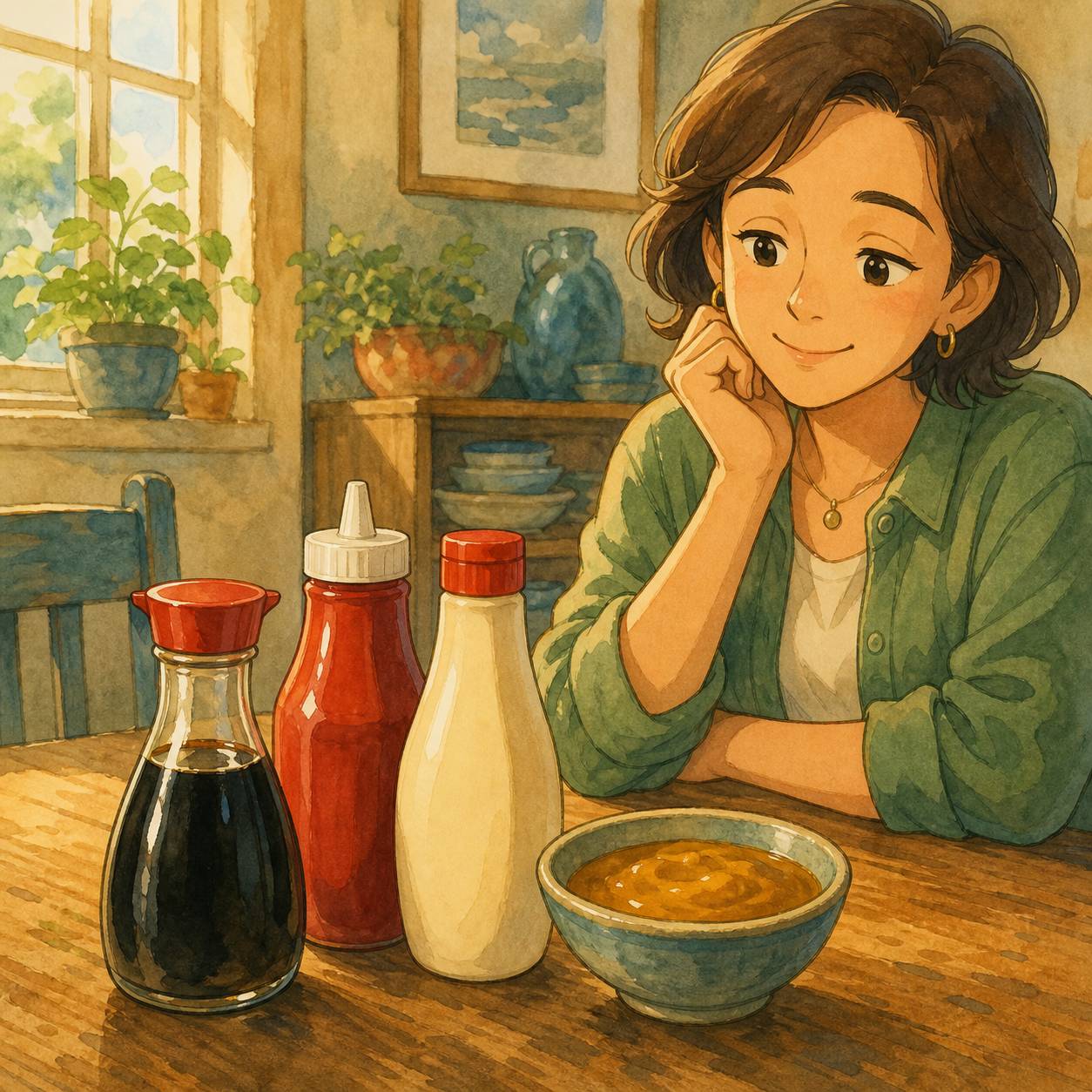
Text to type: A bottle of soy sauce sits on millions of tables. A squeeze of ketchup lands on plates from Tokyo to São Paulo. These sauces seem simple, but each one carries history, careful science, and the memory of food moving between cultures. Sauce balances taste, connects places, and can turn everyday ingredients into food people remember.
Ready. The timer starts with your first key.
Complete
Great job!
Strong finish — your speed stayed steady.
Your rhythm
Speed over time- Time
- 0:00
- Raw speed
- 0 WPM
- Wrong keys
- 0
- Corrected
- 0
Before you begin
Warm-Up Questions
Which sauce do you use most often at home? What do you put it on?
Can you think of a sauce that originally came from another country? What do you know about it?
Think about the last meal you added sauce to. Did the sauce change the taste a little, or completely?
 Part 1 — How Fermentation Builds Flavor
Reading
Part 1 — How Fermentation Builds Flavor
Typing practice
Type the text exactly. Timer starts with your first key.
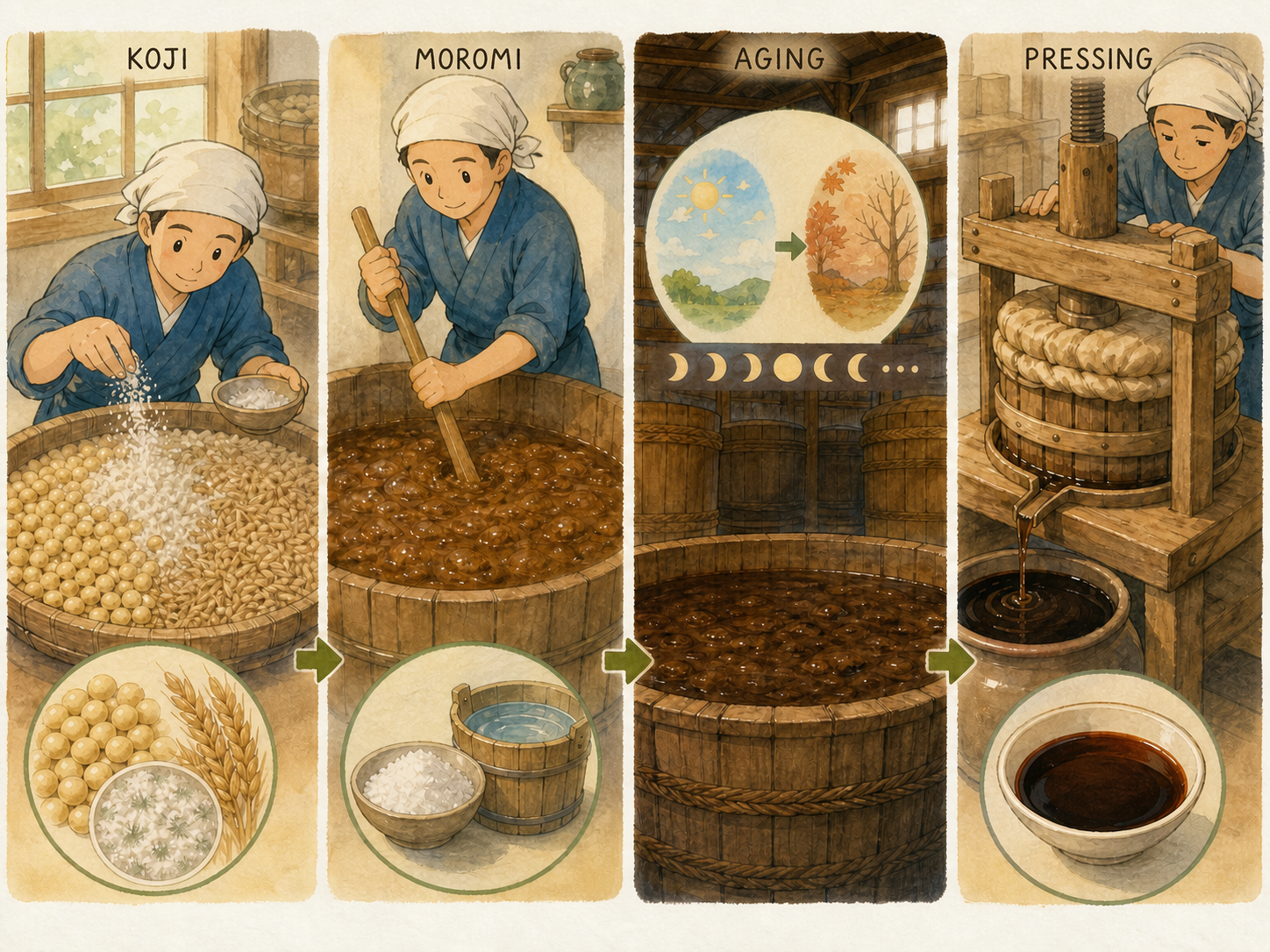
Text to type: Some of the world's most important sauces get their depth from fermentation — a slow, natural process in which microbes transform ingredients and create new flavors. Fermentation can preserve food, but it can also build tastes that ordinary cooking does not produce. Kikkoman soy sauce is a clear example. Soybeans and roasted wheat are combined with koji mold. The koji supplies enzymes that begin breaking down proteins and starches. Salt water is then added to form a mash called moromi. Over several months, microorganisms continue changing this mixture as it ferments and ages. The liquid develops a rich brown color, a salty taste, and a complex aroma. This patient transformation explains why fermented soy sauce tastes like more than salt. Kikkoman describes how fermentation creates the sauce's flavor, aroma, and color together. The result includes umami: the deep savory quality that can make plain rice, tofu, or vegetables feel more satisfying.
Ready. The timer starts with your first key.
Complete
Great job!
Strong finish — your speed stayed steady.
Your rhythm
Speed over time- Time
- 0:00
- Raw speed
- 0 WPM
- Wrong keys
- 0
- Corrected
- 0
Check your understanding
Check — Part 1
1. In Kikkoman soy sauce, what role does koji play, and why does the process take months?
Sample answer
Koji supplies enzymes that begin breaking down proteins and starches in the soybeans and wheat. After salt water forms the moromi mash, microorganisms need months to keep transforming it, building the sauce's flavor, aroma, and deep color.
 Part 2 — Ketchup: A Sauce That Traveled the World
Reading
Part 2 — Ketchup: A Sauce That Traveled the World
Typing practice
Type the text exactly. Timer starts with your first key.
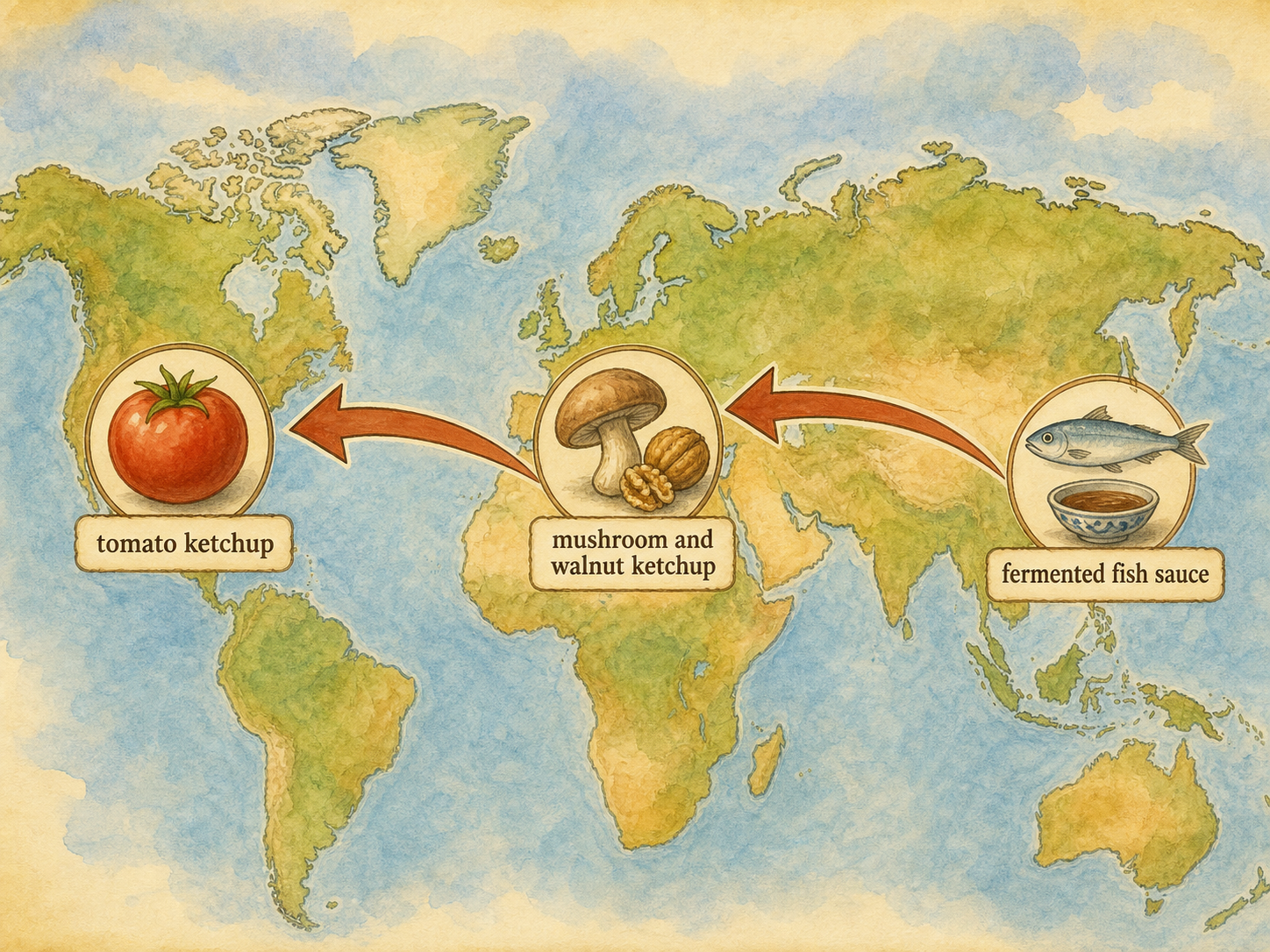
Text to type: Not all sauces are born where we expect them. Ketchup is a good example of how a sauce can travel through several cultures and change completely along the way. The story begins in Asia. Early versions were fermented fish sauces used to add depth to food. British sailors encountered related sauces through Chinese and Indonesian traders and carried the idea home. British cooks then experimented with ingredients they could find locally, including mushrooms and walnuts. Their ketchups were dark, thin, and strongly savory. In the nineteenth century, tomato ketchup grew popular in the United States. Producers made it thicker and added vinegar, sugar, and spices, creating the sweet, sour sauce many people recognize today. This version later influenced tomato farming, factory processing, and even debates about food safety. Ketchup's journey shows that a sauce is not fixed. It adapts to local ingredients, tastes, and needs. The familiar red bottle is therefore not the beginning of the story; it is one stop on a much longer route.
Ready. The timer starts with your first key.
Complete
Great job!
Strong finish — your speed stayed steady.
Your rhythm
Speed over time- Time
- 0:00
- Raw speed
- 0 WPM
- Wrong keys
- 0
- Corrected
- 0
Check your understanding
Check — Part 2
1. What is one way ketchup changed as it traveled from Asia to Britain to America?
Sample answer
One key change is the main ingredient: the Asian original was made from fermented fish, British versions used mushrooms or walnuts, and the American version settled on tomatoes. The taste changed too — American ketchup became sweeter and thicker than earlier forms.
Reading
Part 3 — How Japan Made Foreign Sauces Its Own
Typing practice
Type the text exactly. Timer starts with your first key.
Text to type: Japan has a remarkable history of adopting foreign food ideas and reshaping them until they feel familiar. Curry sauce and mayonnaise show two different paths. One theory recorded by Japan's Ministry of Agriculture, Forestry and Fisheries links Japanese curry rice to a curry-flavored stew used in the British Royal Navy and later the Japanese Navy during the Meiji era. In Japan, the thick sauce was served over rice with meat and vegetables. Retired sailors helped spread this style to other parts of the country, and curry rice became everyday comfort food. The regional dish known as Yokosuka navy curry keeps that naval connection visible. The words “one theory” matter: food histories often have several routes, not one simple invention story. Mayonnaise followed another path. Kewpie's founder encountered mayonnaise abroad and launched Japan's first Japanese-made mayonnaise in 1925. He chose a rich egg-yolk type, and the product gradually became part of everyday Japanese food culture. In both cases, adoption was not passive copying. A foreign idea succeeded because local cooks and diners found their own uses, tastes, and meanings for it.
Ready. The timer starts with your first key.
Complete
Great job!
Strong finish — your speed stayed steady.
Your rhythm
Speed over time- Time
- 0:00
- Raw speed
- 0 WPM
- Wrong keys
- 0
- Corrected
- 0
Check your understanding
Check — Part 3
1. Choose either Yokosuka navy curry or Kewpie mayonnaise and explain how Japan changed the original foreign version.
Sample answer
For curry sauce: one theory links it to a British naval stew that Japan served as a thick sauce over rice with meat and vegetables; retired sailors later helped spread it. For mayonnaise: Kewpie's founder encountered it abroad, then launched a Japanese-made egg-yolk type in 1925. Both became familiar because Japan adapted the ideas to local food culture.
 Part 4 — The Art of Supporting, Not Hiding
Reading
Part 4 — The Art of Supporting, Not Hiding
Typing practice
Type the text exactly. Timer starts with your first key.
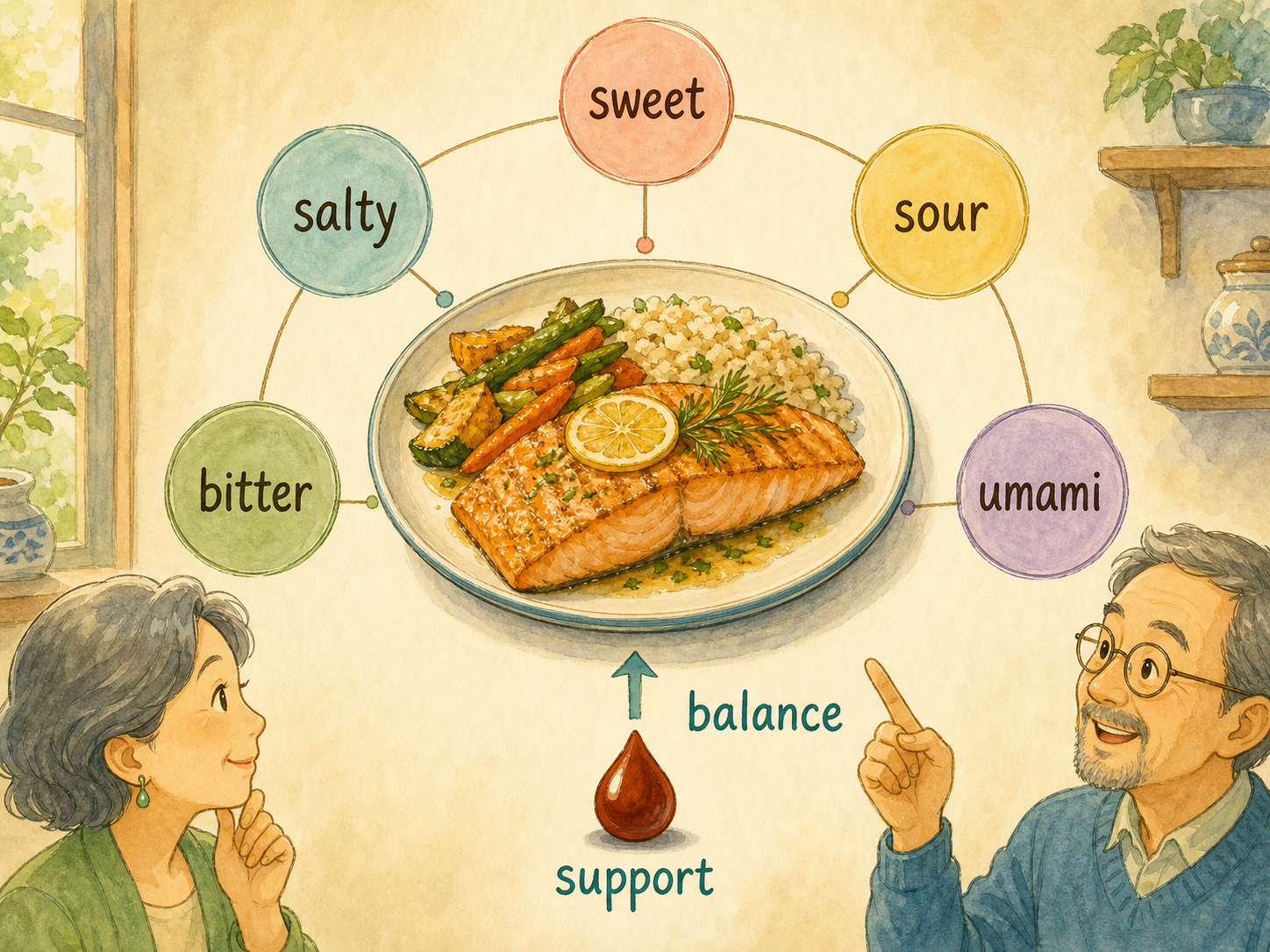
Text to type: The best sauces do not simply cover food — they complete it. This idea sounds simple, but using sauce well takes judgment. People often describe five basic taste qualities: sweet, salty, sour, bitter, and umami. A sauce can add or balance several of them while leaving the food underneath recognizable. Soy sauce gives grilled vegetables or tofu salt and umami. Ketchup gives fried potatoes sweetness and acidity. Mayonnaise adds richness to a dry sandwich or roasted vegetables. Amount matters as much as flavor. A little soy sauce can make the delicate taste of sashimi clearer; too much can make every bite taste only of salt. Good cooks therefore ask what the main ingredient needs. Sometimes the answer is a strong sauce. Sometimes it is a quiet spoonful or no sauce at all. Sauce also carries taste memory. A family's slightly sweeter curry or sharper dressing can make inexpensive rice, noodles, potatoes, or beans taste like home. The ingredients may be ordinary, but the repeated balance becomes part of identity. Sauce adds value not by pretending simple food is luxurious, but by making careful use of what is already there.
Ready. The timer starts with your first key.
Complete
Great job!
Strong finish — your speed stayed steady.
Your rhythm
Speed over time- Time
- 0:00
- Raw speed
- 0 WPM
- Wrong keys
- 0
- Corrected
- 0
Check your understanding
Check — Part 4
1. The lesson says the best sauces 'support' food rather than 'hide' it. What does this mean in practice?
Sample answer
It means a sauce should add balance or richness without overpowering the main ingredient. A small amount of soy sauce can make sashimi clearer and more savory, while too much would hide the fish under salt. The right amount completes the food instead of replacing its character.
What you can do now
Final Reflection
Think about a sauce you use regularly. Based on what you have learned, can you describe what it adds to the food — and whether it supports or hides the main ingredient?
Learning cards
My cards
The Secret Life of Sauce
0 due · 11 new · about 3 min
Learn the sense first · then retrieve it
Focused Reading Mode is open.
Listening
Lesson audio
Listen from the beginning, or choose “Play this part” as you read along.
Reading
Part 1 — How Fermentation Builds Flavor
Reading
Part 2 — Ketchup: A Sauce That Traveled the World
Reading
Part 3 — How Japan Made Foreign Sauces Its Own
Reading
Part 4 — The Art of Supporting, Not Hiding
Finished listening?
Mark this listening practice complete when you have followed the lesson audio.
Listening complete
Listen Mode
Word-by-word syncPlay the audio and follow the highlighted word.
Article complete
Choose your next step
Open the next same-level lesson, replay the article, or save this page for later.
Listen Again
Replay the article once and notice how much more you understand.
One replay is enough. Then move on.