Lunch, Cars and Boxes: Daily Life in France, the USA and Japan
Quality checked lesson
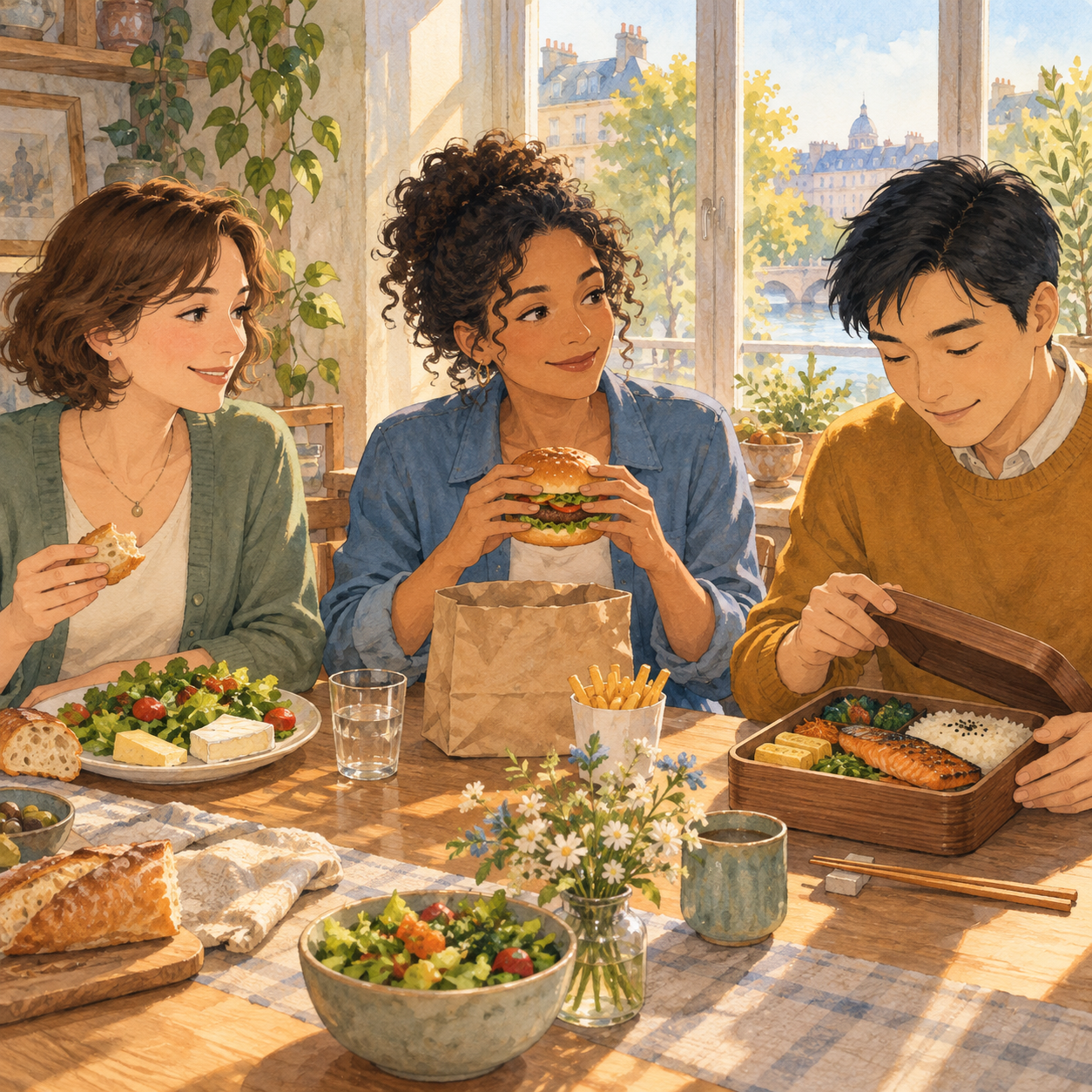
A French worker must get a break after 6 hours, many Americans buy food without leaving their car, and Japanese workers have carried packed lunches for about 300 years. Each habit comes from real conditions such as laws, distances, workdays and the land.
 English lesson
Article
Choose how to use this lesson
You can switch anytime.
Study mode
Introduction
Typing practice
Type the text exactly. Timer starts with your first key.
Text to type: A French worker must get a break after 6 hours, many Americans buy food without leaving their car, and Japanese workers have carried packed lunches for about 300 years. Each habit comes from real conditions such as laws, distances, workdays and the land.
Ready. The timer starts with your first key.
Complete
Great job!
Strong finish — your speed stayed steady.
Your rhythm
Speed over time- Time
- 0:00
- Raw speed
- 0 WPM
- Wrong keys
- 0
- Corrected
- 0
Before you begin
Warm-up
What did you eat for lunch yesterday, and where did you eat it?
How do you usually travel to work or school, and how long does it take?
Do you think people in your country eat fast or slowly? Why?
 Part 1: France: a lunch break shaped by law
Reading
Part 1: France: a lunch break shaped by law
Typing practice
Type the text exactly. Timer starts with your first key.
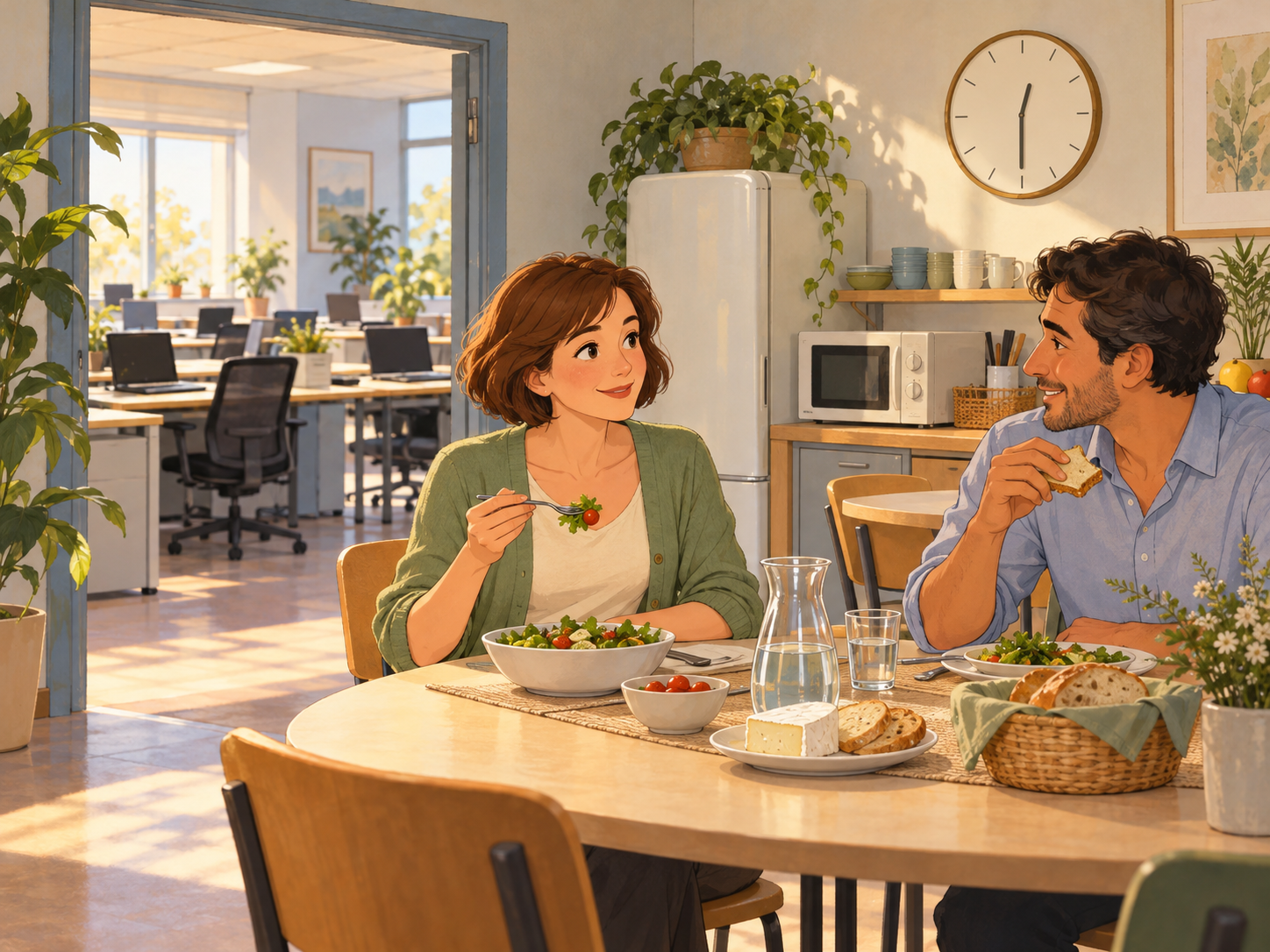
Text to type: Imagine it is 12:30 in a French office. People stand up, close their computers and leave their desks. A visitor might think, "The French just love to relax." But much of this comes from rules. In France, a full-time work week is 35 hours. If people work more, the extra hours count as overtime. There is also a rule about breaks. After 6 hours of work in a row, a worker must get a break of at least 20 minutes. Lunch can be this break. In practice, lunch is often longer, around 45 minutes. This time is usually unpaid, because the boss does not direct workers during lunch. So the lunch break really belongs to the worker. Big companies must also help. If a company has 50 or more workers, it must give them a room for eating. The room needs places to keep and heat food, and seats. The morning looks very different. A typical French breakfast is quick: bread with butter or jam, and a café au lait. So the day has a fast start and a protected middle. But the French day is not always short. The usual limit is 10 hours of work in one day. In special cases, such as a very busy period, it can go up to 12 hours. So the 35-hour week is a starting point, not a promise of easy days. Life is changing, too. Fast food and American eating habits put pressure on French food, especially for young people. Many French people still protect their food traditions through education and laws.
Ready. The timer starts with your first key.
Complete
Great job!
Strong finish — your speed stayed steady.
Your rhythm
Speed over time- Time
- 0:00
- Raw speed
- 0 WPM
- Wrong keys
- 0
- Corrected
- 0
Check your understanding
Check: Part 1: France: a lunch break shaped by law
1. Why is a French lunch break usually unpaid?
Sample answer
It is usually unpaid because it does not count as working time. The employer does not direct the workers during lunch, so the time belongs to them.
Think one step further
Would you prefer a longer unpaid lunch break or a shorter workday? Why?
 Part 2: The USA: when food comes to the car
Reading
Part 2: The USA: when food comes to the car
Typing practice
Type the text exactly. Timer starts with your first key.
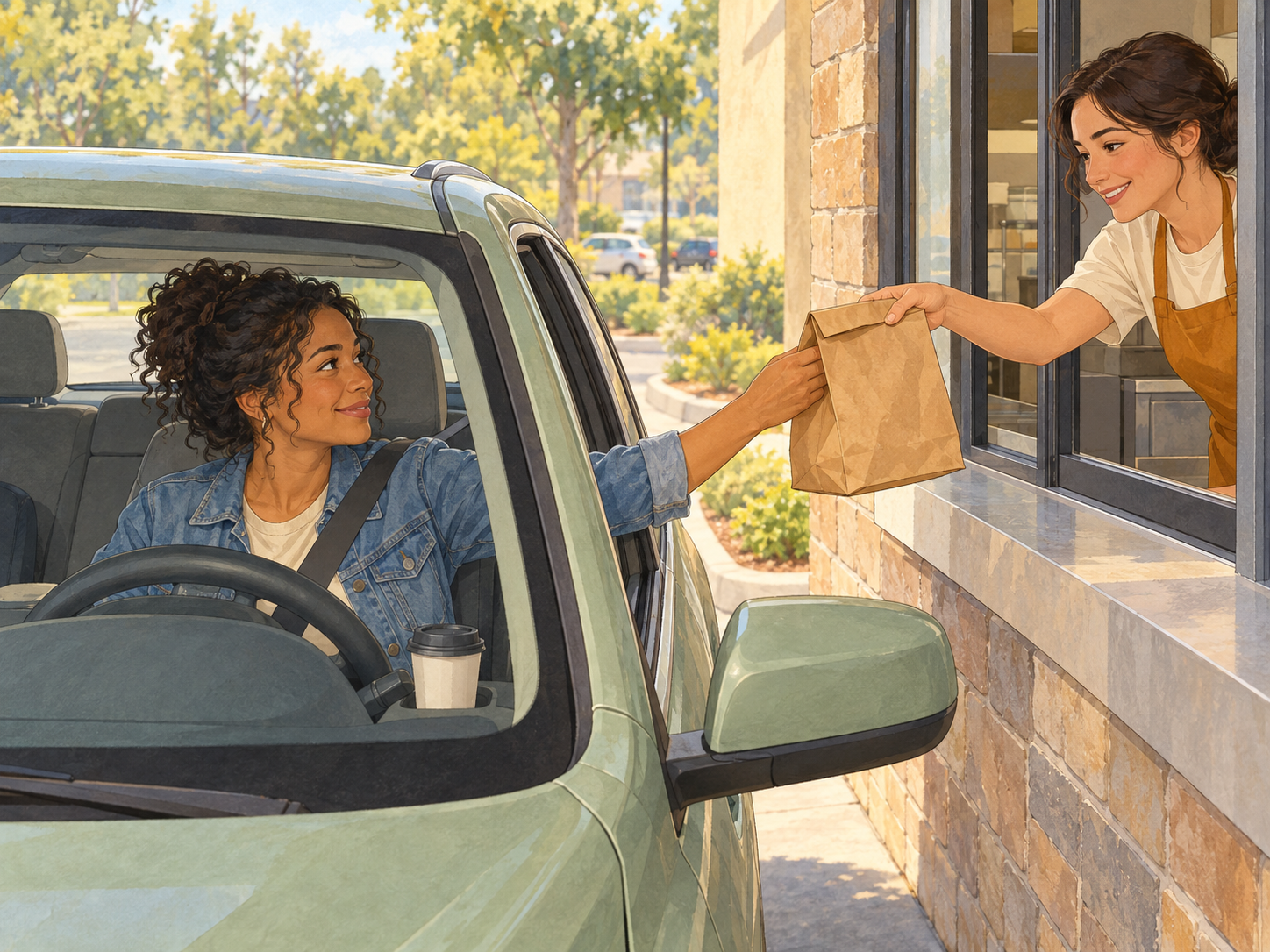
Text to type: Now imagine a morning in an American town. A woman gets into her car. She drives to work, stops at a window, orders coffee and food, and keeps driving. She never leaves her seat. This habit did not appear by chance. In the United States, many people use cars every day. Because so many people drove, drive-in and drive-through restaurants became popular. These restaurants changed daily eating habits. In 2014, the average American adult took 26.8 minutes to travel to work. That is a lot of time inside a car, and food fits easily into that time. Today, American food culture gives a big place to fast food and take-out meals. These meals come from many different cultures. Think of burgers, pizza, hot dogs, fried food, milkshakes, barbecue and Tex-Mex dishes. Many of these foods are easy to eat with your hands, even in a car. So the drive-through is not only about Americans "loving to hurry". It is a smart answer to a simple fact: many people spend their day moving by car. If people come by car, the restaurant comes to the car window.
Ready. The timer starts with your first key.
Complete
Great job!
Strong finish — your speed stayed steady.
Your rhythm
Speed over time- Time
- 0:00
- Raw speed
- 0 WPM
- Wrong keys
- 0
- Corrected
- 0
Check your understanding
Check: Part 2: The USA: when food comes to the car
1. How did car use change eating habits in the USA?
Sample answer
Because many people drove every day, drive-in and drive-through restaurants became popular. People could buy food without leaving their car, and this changed daily eating habits.
Reading
Part 3: Japan: the bento and the long workday
Typing practice
Type the text exactly. Timer starts with your first key.
Text to type: In Japan, many people take a different path. In Tokyo, people usually travel to work by train, not by car. At lunch, someone may open a small box. Inside, there are several sections: rice, some fish or meat, and vegetables. This is a bento. A bento is a packed meal for one person, usually for lunch. It often has rice or noodles, fish or meat, and pickled or cooked vegetables. It looks like a small version of a traditional Japanese meal. That meal centers on rice and miso soup, with fish, pickled vegetables and cooked vegetables. These meals also follow the seasons. Why did people start carrying lunch? Long ago, lunch was not a normal meal in Japan. It became common only in the early 18th century. Kerosene lamps let people stay awake and active for longer. Days grew longer, so people needed food in the middle. Workers started bringing bentos to work. Farmers had a practical problem. They worked far from home, so their food had to stay good when cold. They used wooden boxes called menpa. They filled them with barley rice and pickled plums. The wood kept the food fresh, even when it was cold. On very long days, like rice-planting days, villagers shared large wooden buckets of rice balls and side dishes. Bentos were also part of fun, not only work. Makunouchi bentos were served during breaks at the theater. They had grilled rice balls, fish cakes and simmered dishes. This style is still common today. So the bento is not just about being neat. It grew from longer days, distance from home and food that works cold.
Ready. The timer starts with your first key.
Complete
Great job!
Strong finish — your speed stayed steady.
Your rhythm
Speed over time- Time
- 0:00
- Raw speed
- 0 WPM
- Wrong keys
- 0
- Corrected
- 0
Check your understanding
Check: Part 3: Japan: the bento and the long workday
1. Why did lunch become common in Japan in the early 18th century?
Sample answer
Kerosene lamps let people stay active for longer, so their days became longer. Workers needed a meal in the middle of the day, and they started bringing bentos to work.
Think one step further
The American drive-through and the Japanese bento both solve a problem about eating away from home. How are their answers different?
 Part 4: Geography shapes food, but not alone
Reading
Part 4: Geography shapes food, but not alone
Typing practice
Type the text exactly. Timer starts with your first key.
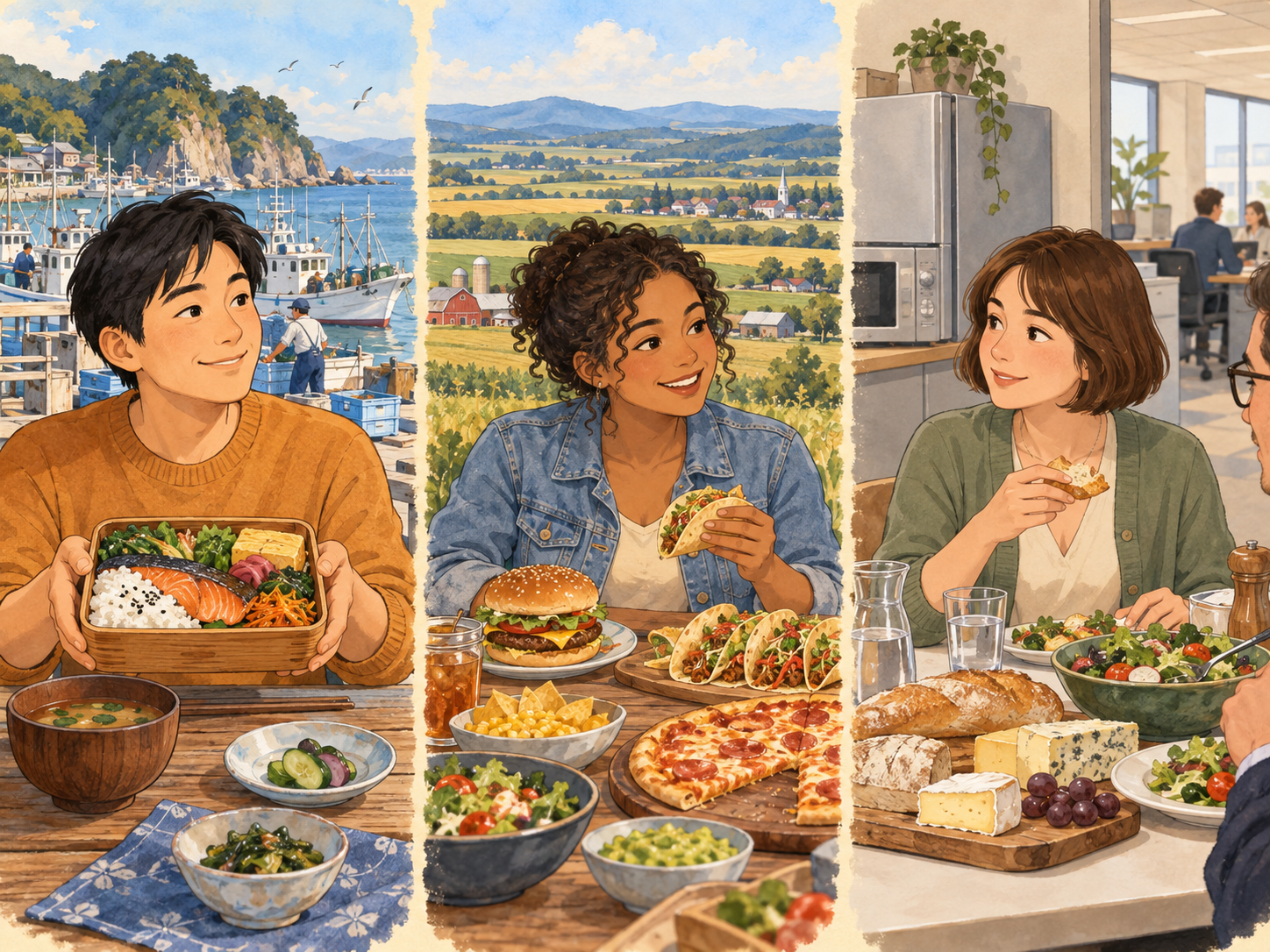
Text to type: The land also changes what goes on the plate. Japan is a group of islands, and the sea is close to many people. This is why seafood is so important in Japanese food. Fish in a bento is not an accident. It reflects the sea around the country. The United States is very large. Because of this size, food and eating habits change from region to region. American food also grew more varied in the 20th century. Technology, wars, science and immigration all played a part. So "American food" is really many foods, not one. France shows the limits of this idea. French food has a long history, going back to the 14th century. Cheese and wine are big parts of it. The French place great value on enjoying food. Here, tradition, education and laws shape food as much as the land does. Even the lunch break comes from work rules, not from mountains or seas. So geography is a strong force, but it is one force among several. Laws, cars, lamps, distance and history all have a part.
Ready. The timer starts with your first key.
Complete
Great job!
Strong finish — your speed stayed steady.
Your rhythm
Speed over time- Time
- 0:00
- Raw speed
- 0 WPM
- Wrong keys
- 0
- Corrected
- 0
Check your understanding
Check: Part 4: Geography shapes food, but not alone
1. Why is seafood so important in Japanese food?
Sample answer
Japan is a group of islands with easy access to the sea, so seafood has a big place in its food.
What you can do now
Final Reflection
At the start, it was easy to think that each country eats the way it does because of its personality. Now we can see the real reasons behind each habit. In France, laws protect the lunch break, but long days are still possible. In the USA, cars brought the restaurant to the window. In Japan, longer days and cold food led to the bento, and the sea filled it with fish. People's tastes matter, but conditions shape those tastes.
Think about one eating habit in your own country. What law, kind of travel, workday or piece of geography might explain it?
Learning cards
My cards
Lunch, Cars and Boxes: Daily Life in France, the USA and Japan
0 due · 0 new · about 1 min
Learn the sense first · then retrieve it
No saved cards yet
Open a word or phrase in the article and choose Save to My Words.
Focused Reading Mode is open.
Listening
Lesson audio
Listen from the beginning, or choose “Play this part” as you read along.
Reading
Part 1: France: a lunch break shaped by law
Reading
Part 2: The USA: when food comes to the car
Reading
Part 3: Japan: the bento and the long workday
Reading
Part 4: Geography shapes food, but not alone
Finished listening?
Mark this listening practice complete when you have followed the lesson audio.
Listening complete
Listen Mode
Word-by-word syncPlay the audio and follow the highlighted word.
Article complete
Choose your next step
Open the next same-level lesson, replay the article, or save this page for later.
Listen Again
Replay the article once and notice how much more you understand.
One replay is enough. Then move on.