Beer in Cologne, Düsseldorf and Dortmund
Quality checked lesson
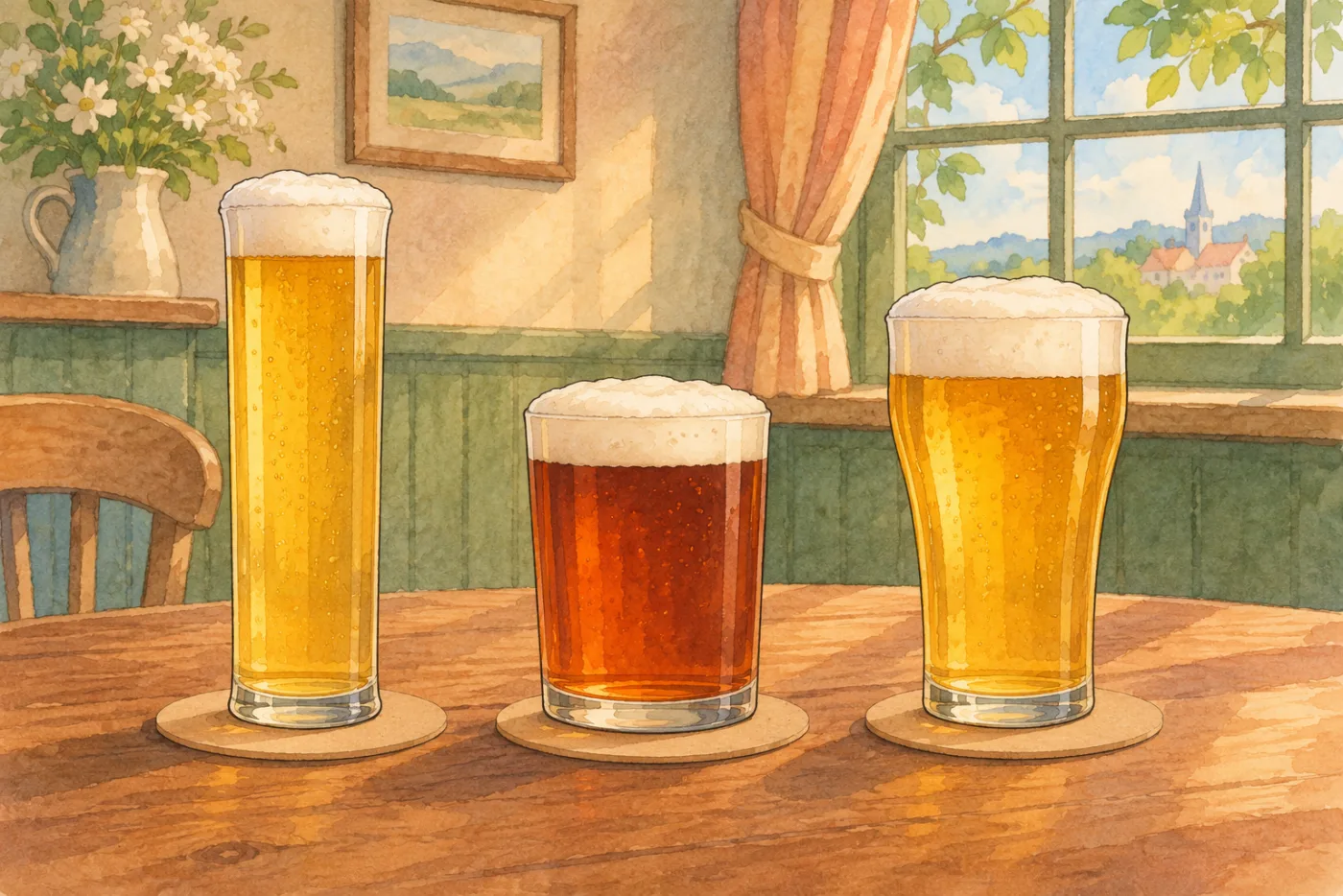
Cologne, Düsseldorf and Dortmund each have their own beer, with its own history, its own glass and its own pub customs, and Cologne and Düsseldorf still enjoy a friendly rivalry over theirs.
 English lesson

Article
Choose how to use this lesson
You can switch anytime.
Study mode
Introduction
Typing practice
Type the text exactly. Timer starts with your first key.
Text to type: Three cities in the west of Germany each have their own beer. In this lesson you will learn about Kölsch, Altbier and Dortmunder Export. You will learn where they come from and why Cologne and Düsseldorf love to tease each other. Then you will step into a brewery pub and see how locals drink today. You will meet the tall, thin glass and a waiter who brings beer until you say stop.
Ready. The timer starts with your first key.
Complete
Great job!
Strong finish — your speed stayed steady.
Your rhythm
Speed over time- Time
- 0:00
- Raw speed
- 0 WPM
- Wrong keys
- 0
- Corrected
- 0
Before you begin
Warm-up
Which drink is famous in your city or region?
Do you prefer light drinks or strong, dark ones?
Would you like a waiter to bring a new drink before you ask? Why or why not?
 Part 1: Kölsch, the Light Beer of Cologne
Reading
Part 1: Kölsch, the Light Beer of Cologne
Typing practice
Type the text exactly. Timer starts with your first key.
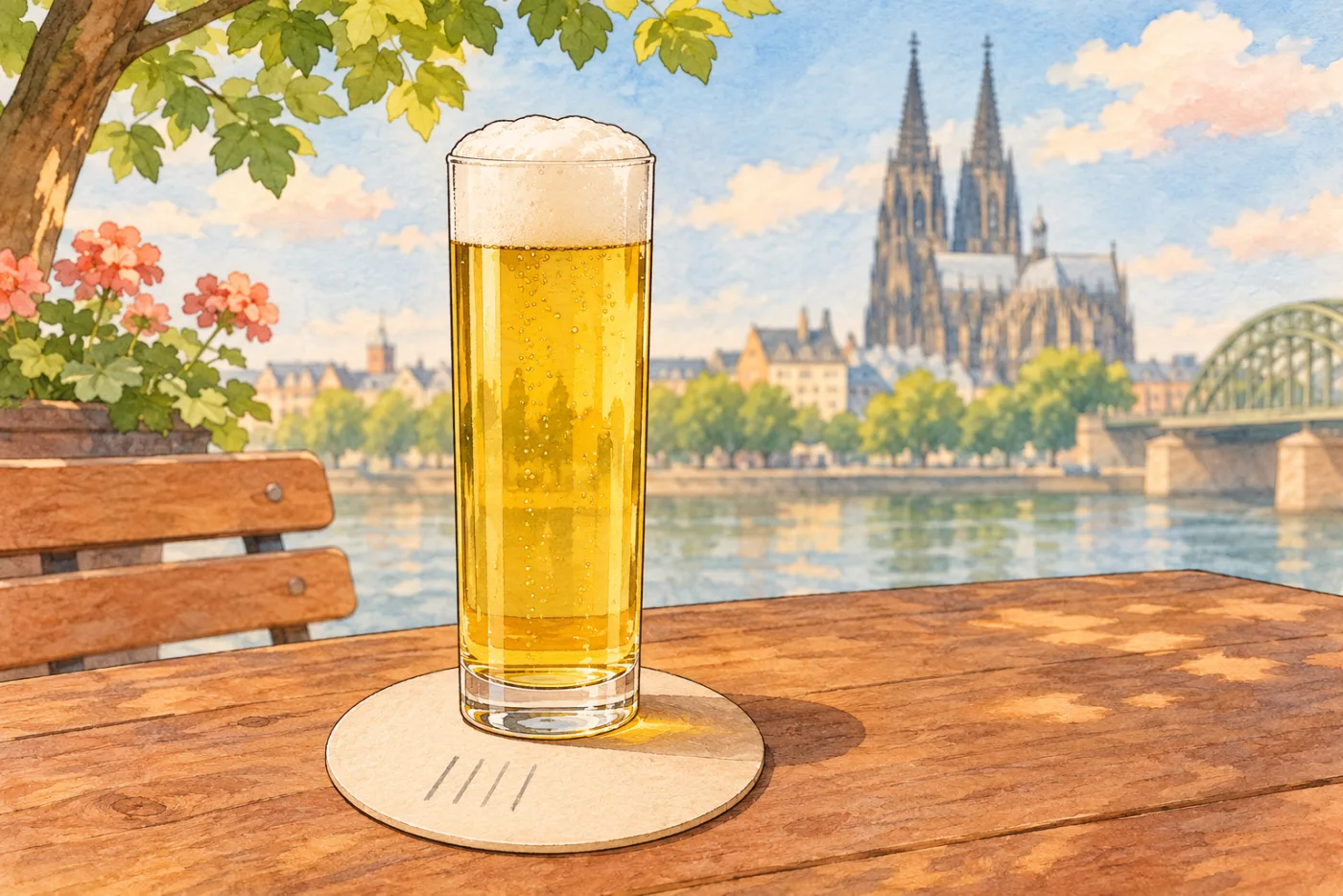
Text to type: Kölsch is a clear, pale gold beer from Cologne. It usually has 4.4 to 5.2 percent alcohol, so it is light and easy to drink. Its secret is the yeast, a tiny living thing that turns sugar into alcohol. In top-fermented beer, the yeast works at the top, at a warm temperature. Kölsch is top-fermented, and this gives it a soft, fruity taste. Then the brewers store the beer cold, like a lager. Lager is beer made with yeast that works at the bottom, at cold temperatures. Kölsch uses both steps, so it tastes a little like fruit but also fresh. Cologne chose the old method on purpose. In 1603 the city council ordered brewers to use top yeast, not bottom yeast. The modern beer came much later. The Sünner brewery started making it in 1906. The name Kölsch was first used in 1918. Kölsch is also the name of the local dialect, the way people speak in the city. So in Cologne, people speak Kölsch and drink Kölsch. The Second World War almost ended the story. Before the war, Cologne had more than 40 breweries. At the end, only two were left. Later, the brewers wanted to protect their beer. In 1986, 24 brewers signed the Kölsch Konvention. This agreement sets the rules for making Kölsch. Only local breweries can use the name. Since 1997 the European Union has protected the name too. So a brewery in another European Union country cannot sell its beer as Kölsch. Famous names today include Früh, Gaffel, Reissdorf, Päffgen and Sünner.
Ready. The timer starts with your first key.
Complete
Great job!
Strong finish — your speed stayed steady.
Your rhythm
Speed over time- Time
- 0:00
- Raw speed
- 0 WPM
- Wrong keys
- 0
- Corrected
- 0
Check your understanding
Check: Part 1: Kölsch, the Light Beer of Cologne
1. Why does Kölsch taste a little like fruit but also fresh?
Sample answer
It is top-fermented at a warm temperature, then stored cold like a lager.
 Part 2: Altbier, the Dark Beer of Düsseldorf
Reading
Part 2: Altbier, the Dark Beer of Düsseldorf
Typing practice
Type the text exactly. Timer starts with your first key.
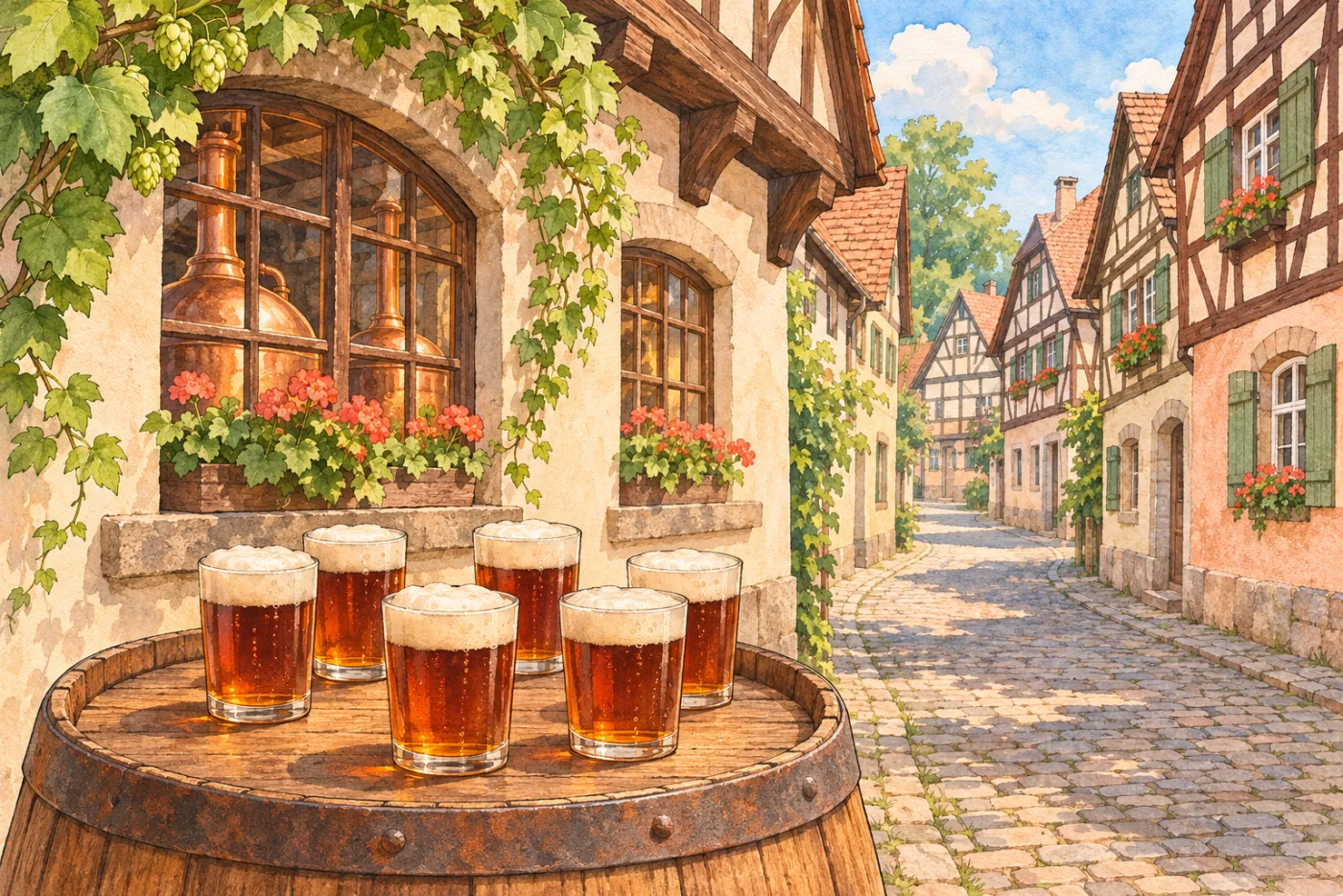
Text to type: Düsseldorf is about 40 kilometres north of Cologne, on the Rhine. There, people drink a very different beer. Altbier is dark red-brown, with more taste of malt. Malt is grain that has started to grow and then been dried. It gives beer its colour and a sweet taste. Altbier usually has 4.3 to 5.5 percent alcohol. Alt is the German word for old, but the beer is not old. The name tells you that it is made the old way. Like Kölsch, it is top-fermented, a method older than lager. Then it rests in the cold. The Schumacher brewery opened in 1838. It was the first to use the name Altbier. Today seven brewery pubs in Düsseldorf still brew their own Alt. They include Füchschen, Kürzer, Schumacher, Schlüssel and Uerige. Each one makes its own, so each Alt tastes a little different. Uerige has the funniest story. In 1862 a brewmaster called Wilhelm Cürten took over the building. He was known for his bad mood. So his guests called him by a local word for a grumpy person. The brewery still has that name today. Uerige also makes Sticke, a stronger Alt. Long ago, brewers kept this beer for themselves. Today it is a special beer that is not served all year. Most of these pubs are in the Altstadt, the old town. Around 260 pubs, restaurants and bars fit into half a square kilometre. So people call the Altstadt the longest bar in the world.
Ready. The timer starts with your first key.
Complete
Great job!
Strong finish — your speed stayed steady.
Your rhythm
Speed over time- Time
- 0:00
- Raw speed
- 0 WPM
- Wrong keys
- 0
- Corrected
- 0
Check your understanding
Check: Part 2: Altbier, the Dark Beer of Düsseldorf
1. Does the name Altbier tell you that the beer is old?
Sample answer
No. It tells you that it is made the old way, with yeast that works at the top.
 Part 3: Dortmunder Export, the Workers' Beer
Reading
Part 3: Dortmunder Export, the Workers' Beer
Typing practice
Type the text exactly. Timer starts with your first key.
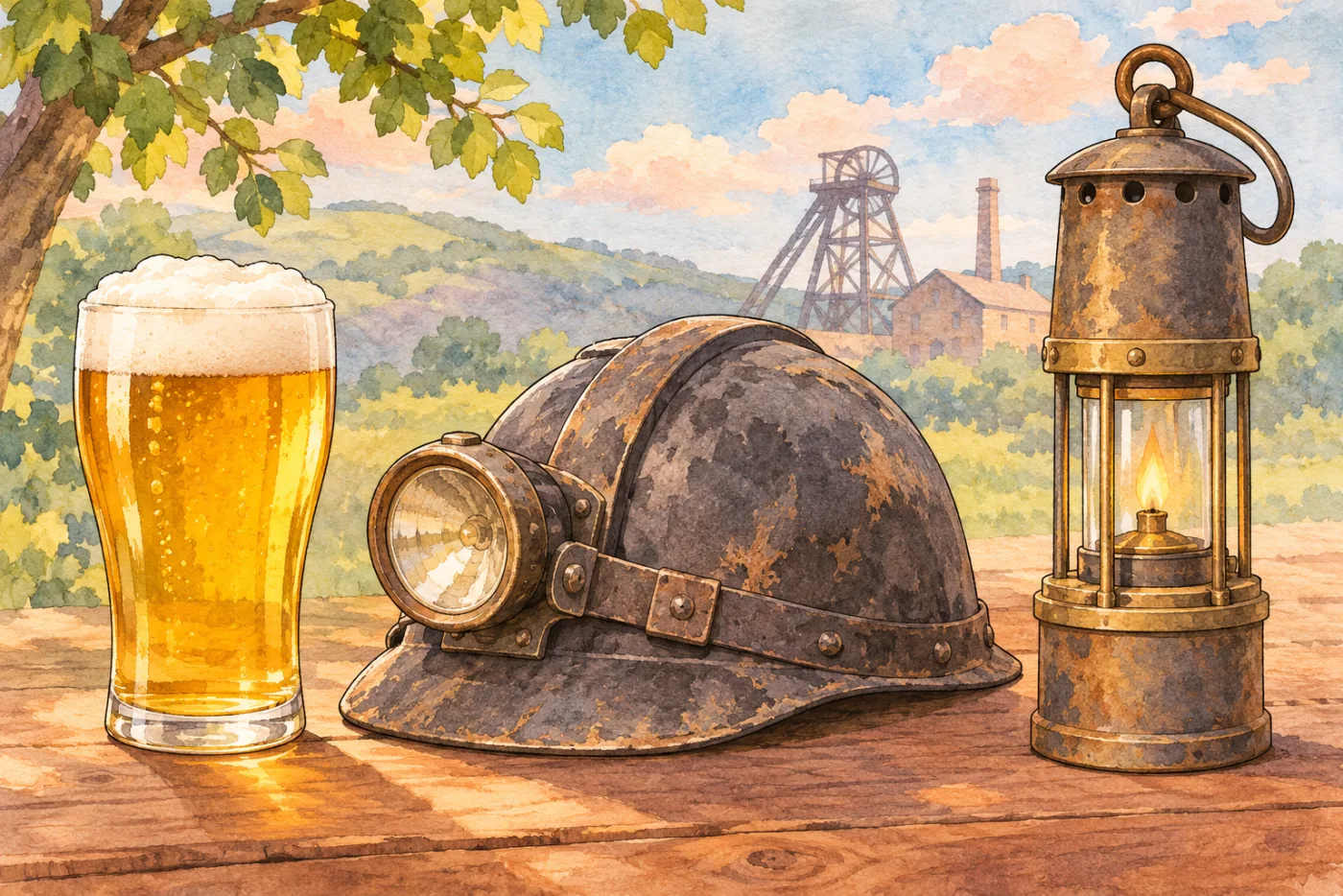
Text to type: Dortmund is east of Düsseldorf, in the Ruhr area. For more than a century, this area lived from coal mines and steel works. Brewing in Dortmund goes back to 1266, but its famous beer is younger. In the 1840s the Kronen brewery brought bottom-fermented lager to the city. In 1873 Dortmunder Union made the first Export. Export is a pale lager. It is soft, with a full taste of malt. It is less bitter than a Pilsner. It has about 5 to 5.5 percent alcohol, a little stronger than a normal beer. Dortmund's hard water, full of minerals, gives it a firm taste. The beer was made for workers: coal miners and steel workers. Their shifts were long and hot, under the ground or next to the furnaces. Furnaces are very hot ovens that melt iron. After work, they wanted a soft, cool beer. Why the name Export? Dortmund sent this beer outside the city, mostly to nearby towns and to the Netherlands. A slightly stronger beer travels better. In Germany, Export is still the name for beer of this strength. For a long time, Dortmund had more breweries than any other German city. In 1956 Dortmunder Union made more than 100 million litres of beer. It was the first German brewery to make so much in one year. After the Second World War, Export was the favourite beer in Germany. Then in 1970, Pils took first place. Pils is short for Pilsner. When the mines and steel works closed, Export lost many of the people who drank it. Dortmunder Union closed in 1994. Today the old brands belong to one group. The main names are DAB and Brinkhoff's. Brinkhoff's is named after Fritz Brinkhoff, the first brewmaster of Dortmunder Union. You can still see this history. The Dortmunder U is a tall building with a giant U on top that lights up at night. It was built in 1926 and 1927 for the Union brewery, to make and store beer. Since 2010 it has been a centre for art, with the Museum Ostwall inside. In the north of the city is the Brauerei-Museum. It tells the story of the city's breweries. It is in the old Hansa brewery buildings, with an engine room from 1912.
Ready. The timer starts with your first key.
Complete
Great job!
Strong finish — your speed stayed steady.
Your rhythm
Speed over time- Time
- 0:00
- Raw speed
- 0 WPM
- Wrong keys
- 0
- Corrected
- 0
Check your understanding
Check: Part 3: Dortmunder Export, the Workers' Beer
1. Who was Dortmunder Export made for?
Sample answer
Coal miners and steel workers in the Ruhr area.
 Part 4: Cologne and Düsseldorf, a Friendly Rivalry
Reading
Part 4: Cologne and Düsseldorf, a Friendly Rivalry
Typing practice
Type the text exactly. Timer starts with your first key.
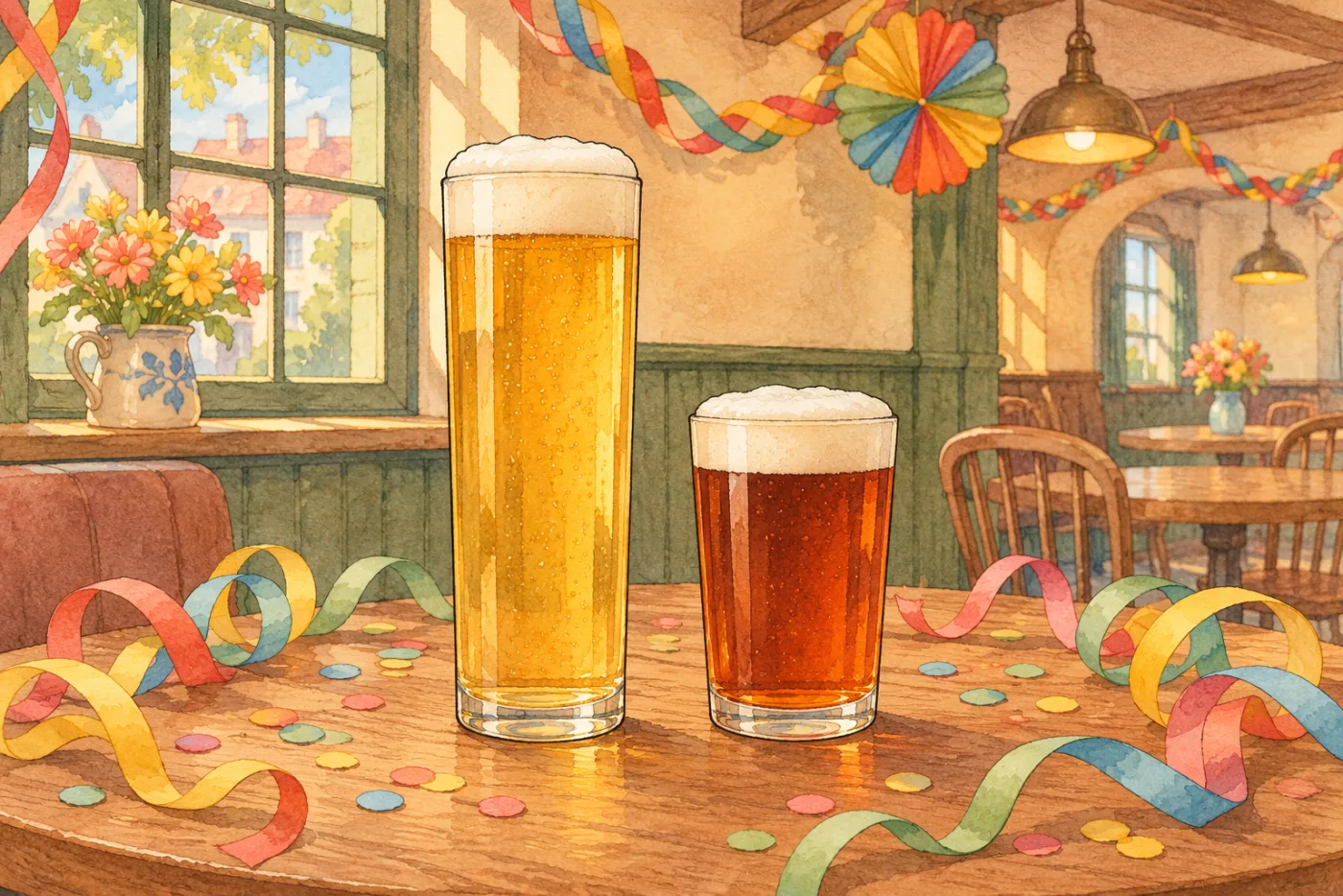
Text to type: Cologne and Düsseldorf love to tease each other. Beer shows it best: Kölsch is light, and Alt is dark. In a Cologne brewery pub, you never order an Alt. Alt belongs to Düsseldorf. The Cologne brewery Früh once had adverts with the slogan Not a bit of Alt. The funny part is that an agency from Düsseldorf wrote them. The usual story says the fight started in 1288. In that year, the Archbishop of Cologne was beaten at the Battle of Worringen. On 14 August 1288, Düsseldorf received its town rights. The story says this was a thank-you for beating Cologne. Historians say this is a legend, an old story that is not true. People from both towns fought on the same side. The town rights had strategic reasons. The real competition is newer. In 1815 both cities became part of Prussia. In the 19th century, Düsseldorf grew fast with industry. In 1946 the British chose Düsseldorf as the capital of the new state of North Rhine-Westphalia. But Cologne was much older. There were two reasons. About 90 percent of Cologne's city centre was destroyed in the war. And Düsseldorf was close to the factories of the Ruhr. Today the rivalry lives on at carnival, the big street party before Lent. Lent is the time of the year just before Easter. In Cologne people shout Alaaf, and in Düsseldorf they shout Helau. The rivalry lives on in sport too. In football, 1. FC Köln plays against Fortuna Düsseldorf. In ice hockey, Kölner Haie play against Düsseldorfer EG. Most of it is friendly fun. In 2005 a Cologne guidebook about Düsseldorf had only empty pages. The joke was that there is nothing to see there. Cologne Zoo invited people from Düsseldorf to come and see the Cologne monkeys.
Ready. The timer starts with your first key.
Complete
Great job!
Strong finish — your speed stayed steady.
Your rhythm
Speed over time- Time
- 0:00
- Raw speed
- 0 WPM
- Wrong keys
- 0
- Corrected
- 0
Check your understanding
Check: Part 4: Cologne and Düsseldorf, a Friendly Rivalry
1. Why did the British choose Düsseldorf as the capital in 1946?
Sample answer
Cologne's city centre was mostly destroyed, and Düsseldorf was close to the Ruhr factories.
 Part 5: Glasses, Waiters and Customs in the Brewery Pub
Reading
Part 5: Glasses, Waiters and Customs in the Brewery Pub
Typing practice
Type the text exactly. Timer starts with your first key.
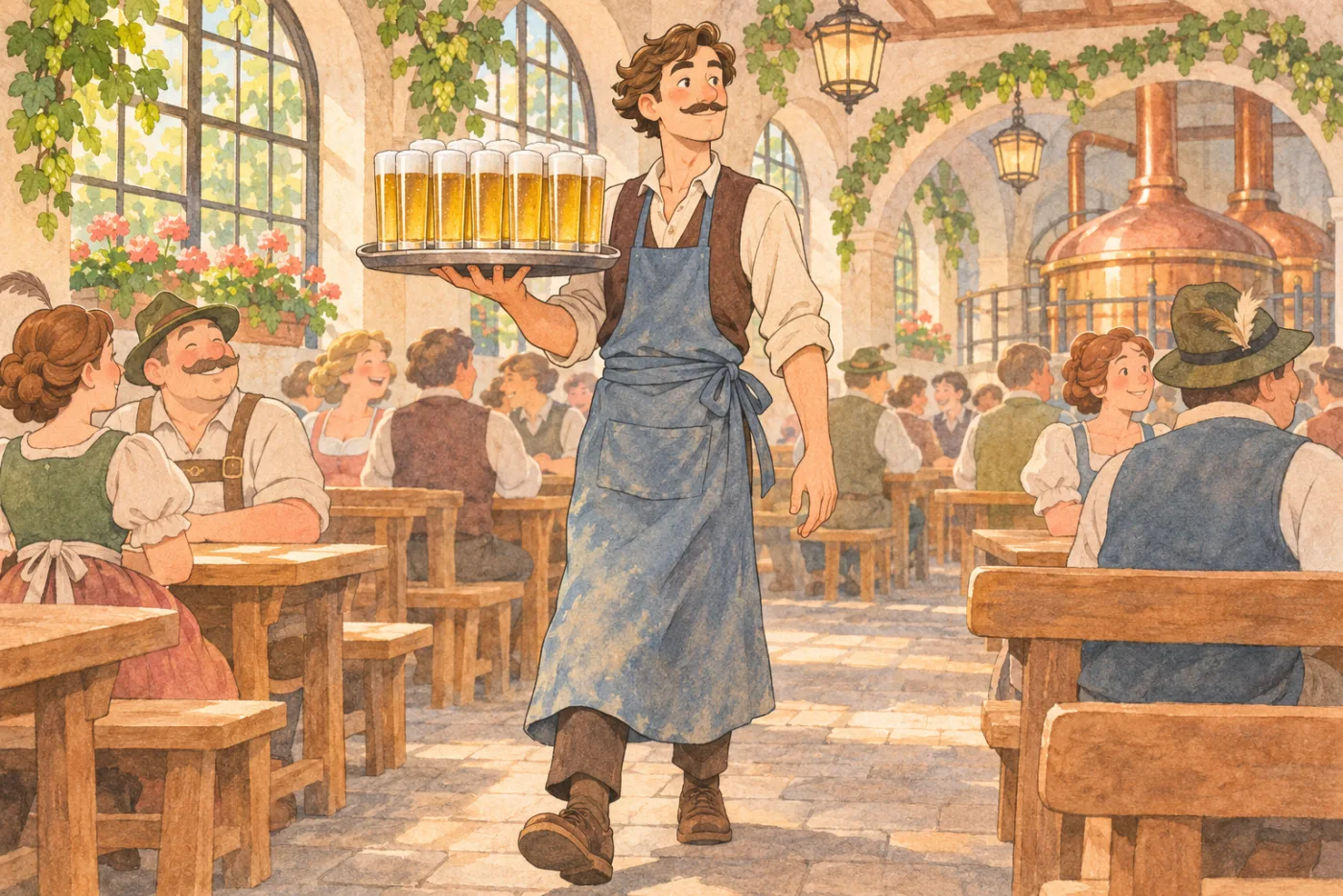
Text to type: In Cologne and Düsseldorf, the best place for beer is a Brauhaus. This is a brewery pub with long wooden tables. You sit wherever there is space, often next to strangers. So the tables become a place where locals and visitors meet. The waiter is a Köbes, and a woman is a Köbine. Köbes is the Cologne form of the name Jakob. A Köbes wears a long blue apron and carries a leather money bag. A Köbes is quick with jokes and sometimes short with guests. But that is part of the show. They see themselves as entertainers who bring beer. Never call one Kellner, the normal German word for waiter. Kölsch comes in a Stange, a tall, thin glass of only 0.2 litres. Alt comes in a straight glass called a Becher, usually 0.25 litres. Why so small? A small glass is empty before the beer gets warm or loses its foam. So the beer tastes fresh until the end. In Cologne the Köbes carries 11 or 12 glasses at once on a round tray. The tray is called a Kranz, the local word for a ring of flowers. Here is the custom that surprises visitors. When your glass is empty, the Köbes brings a full one without asking. Each time, they draw a pencil line on your beer mat. This continues until you put the beer mat on top of your glass. That is the only clear sign for stop. The system is fast. A busy Köbes serves around 200 guests a day, and nobody waits to order. At the end, you pay for the lines on your beer mat. A tip is not required, but people often round up to the next euro. With your beer, try a Röggelchen, a small, dark bread roll. Eat it with cheese or with Mett, which is raw pork cut very small, with onions. In summer, people in Düsseldorf's Altstadt stand outside the pubs with their glasses. At Zum Schlüssel, guests drink at tables outside in any weather. In Dortmund, the Brauerei-Museum has tours that end with a beer tasting. There you can try Export in the city where it began.
Ready. The timer starts with your first key.
Complete
Great job!
Strong finish — your speed stayed steady.
Your rhythm
Speed over time- Time
- 0:00
- Raw speed
- 0 WPM
- Wrong keys
- 0
- Corrected
- 0
Check your understanding
Check: Part 5: Glasses, Waiters and Customs in the Brewery Pub
1. How do you tell a Köbes that you do not want more beer?
Sample answer
Put your beer mat on top of your glass.
What you can do now
Final Reflection
Three cities close together keep three very different beers, and every small glass holds a piece of local history.
Which of the three beers would you like to try first, and why?
Would you enjoy a waiter who jokes and is sometimes short with guests? Why or why not?
Is there a friendly rivalry between two cities or regions you know? What do people joke about?
Why do you think cities protect the names of their local drinks and foods?
Learning cards
My cards
Beer in Cologne, Düsseldorf and Dortmund
0 due · 0 new · about 1 min
Learn the sense first · then retrieve it
No saved cards yet
Open a word or phrase in the article and choose Save to My Words.
Focused Reading Mode is open.
Listening
Lesson audio
Listen from the beginning, or choose “Play this part” as you read along.
Reading
Part 1: Kölsch, the Light Beer of Cologne
Reading
Part 2: Altbier, the Dark Beer of Düsseldorf
Reading
Part 3: Dortmunder Export, the Workers' Beer
Reading
Part 4: Cologne and Düsseldorf, a Friendly Rivalry
Reading
Part 5: Glasses, Waiters and Customs in the Brewery Pub
Finished listening?
Mark this listening practice complete when you have followed the lesson audio.
Listening complete
Listen Mode
Word-by-word syncPlay the audio and follow the highlighted word.
Article complete
Choose your next step
Open the next same-level lesson, replay the article, or save this page for later.
Listen Again
Replay the article once and notice how much more you understand.
One replay is enough. Then move on.