Quantum Computers and What They Can Really Do
Quality checked lesson
Quantum computers are real and improving fast, but they are only useful for special problems, they still need error correction to grow, and today AI helps them much more than they help AI.
 English lesson

Article
Choose how to use this lesson
You can switch anytime.
Study mode
Introduction
Typing practice
Type the text exactly. Timer starts with your first key.
Text to type: Today we will learn what a quantum computer is and why building one is hard. We will see what scientists have done and what these machines can and cannot do now. We will also learn how AI helps them.
Ready. The timer starts with your first key.
Complete
Great job!
Strong finish — your speed stayed steady.
Your rhythm
Speed over time- Time
- 0:00
- Raw speed
- 0 WPM
- Wrong keys
- 0
- Corrected
- 0
Before you begin
Warm-up
Have you read any news about quantum computers? What did it say?
What do you use your computer or phone for every day?
Do you think technology news is sometimes too exciting to be true?
 Part 1: What a Quantum Computer Is
Reading
Part 1: What a Quantum Computer Is
Typing practice
Type the text exactly. Timer starts with your first key.
Text to type: Your computer works with bits. A bit is the smallest piece of information, and it is always either 0 or 1. Every photo, message and game on your computer is a long list of 0s and 1s. A quantum computer uses qubits, short for quantum bits. A qubit is a tiny physical thing, such as a very small electric part or a single atom. A qubit can be in superposition: a mix of 0 and 1 at the same time, until we measure it. Picture a coin spinning on a table. While it spins, it is not heads or tails. When it stops, it becomes one of them. Measuring a qubit is like stopping the coin: the superposition ends, and you get a normal 0 or 1. Qubits can also be linked: this is called entanglement. The result of one qubit is connected to the result of the other, even when they are far apart. Now picture two linked coins. Nobody knows how they will land. In one simple case, every time one lands on heads, the other lands on heads too. Other links are possible, for example one heads and the other tails. Entanglement lets many qubits work as one big system instead of many separate parts. So why can this be faster? Many people think a quantum computer tries every answer at once. That is not true, because at the end you only get one answer. The real trick is interference. The program is made so wrong answers cancel each other out. The right answer grows stronger. Think of waves in water. When two waves meet, they can make one bigger wave, or they can cancel each other out. This trick only works for problems with a special math pattern. That is why a quantum computer is not a faster laptop. For email, videos and games, a normal computer is better. Quantum computers are useful for a small group of problems. They can copy how atoms and molecules behave, and solve some special math problems. One example is the problem behind much of today's encryption.
Ready. The timer starts with your first key.
Complete
Great job!
Strong finish — your speed stayed steady.
Your rhythm
Speed over time- Time
- 0:00
- Raw speed
- 0 WPM
- Wrong keys
- 0
- Corrected
- 0
Check your understanding
Check: Part 1: What a Quantum Computer Is
1. Why is a quantum computer not just a faster normal computer?
Sample answer
It is faster only for special problems, like molecules. For normal jobs, a normal computer is better.
 Part 2: Why It Is So Hard to Build
Reading
Part 2: Why It Is So Hard to Build
Typing practice
Type the text exactly. Timer starts with your first key.
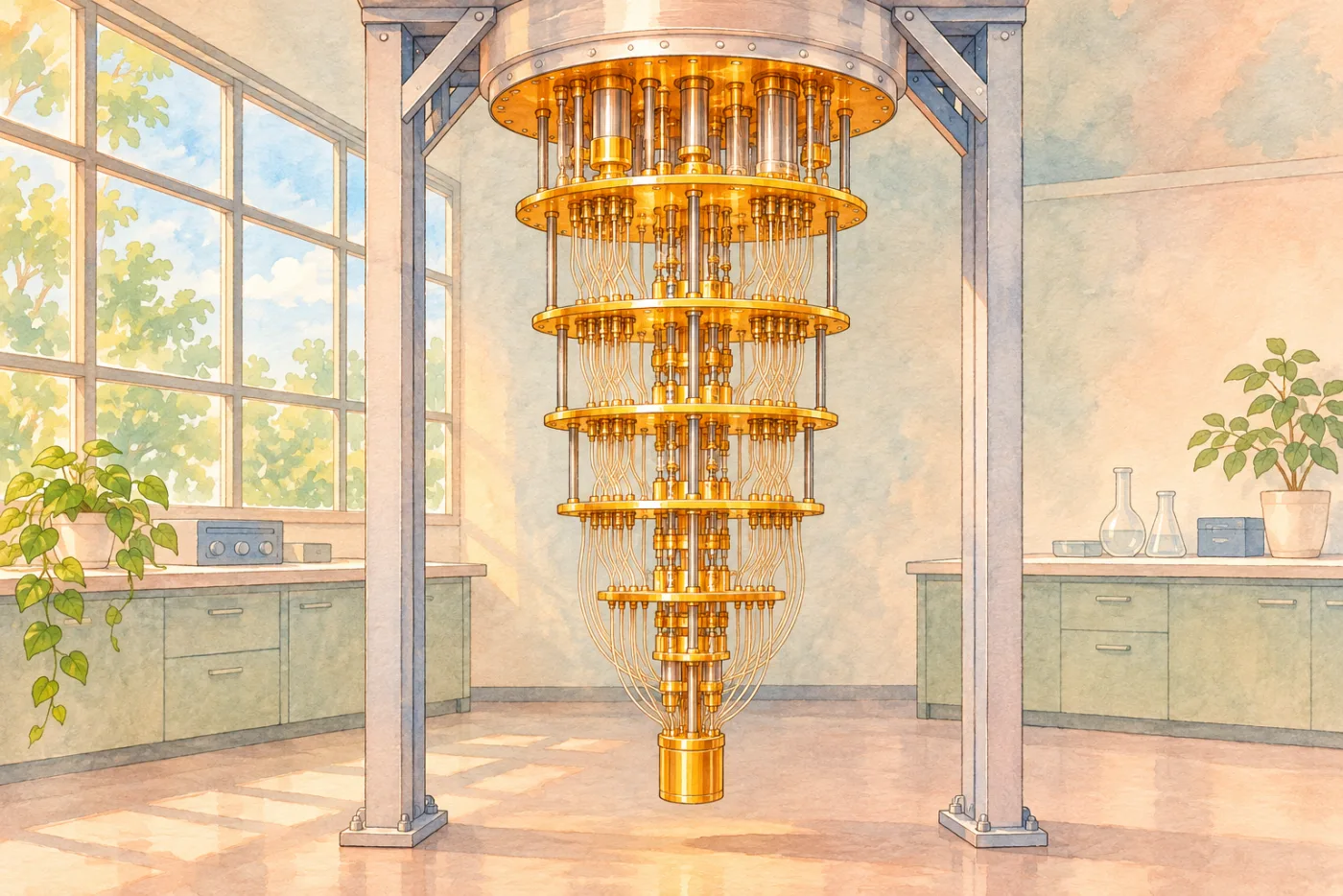
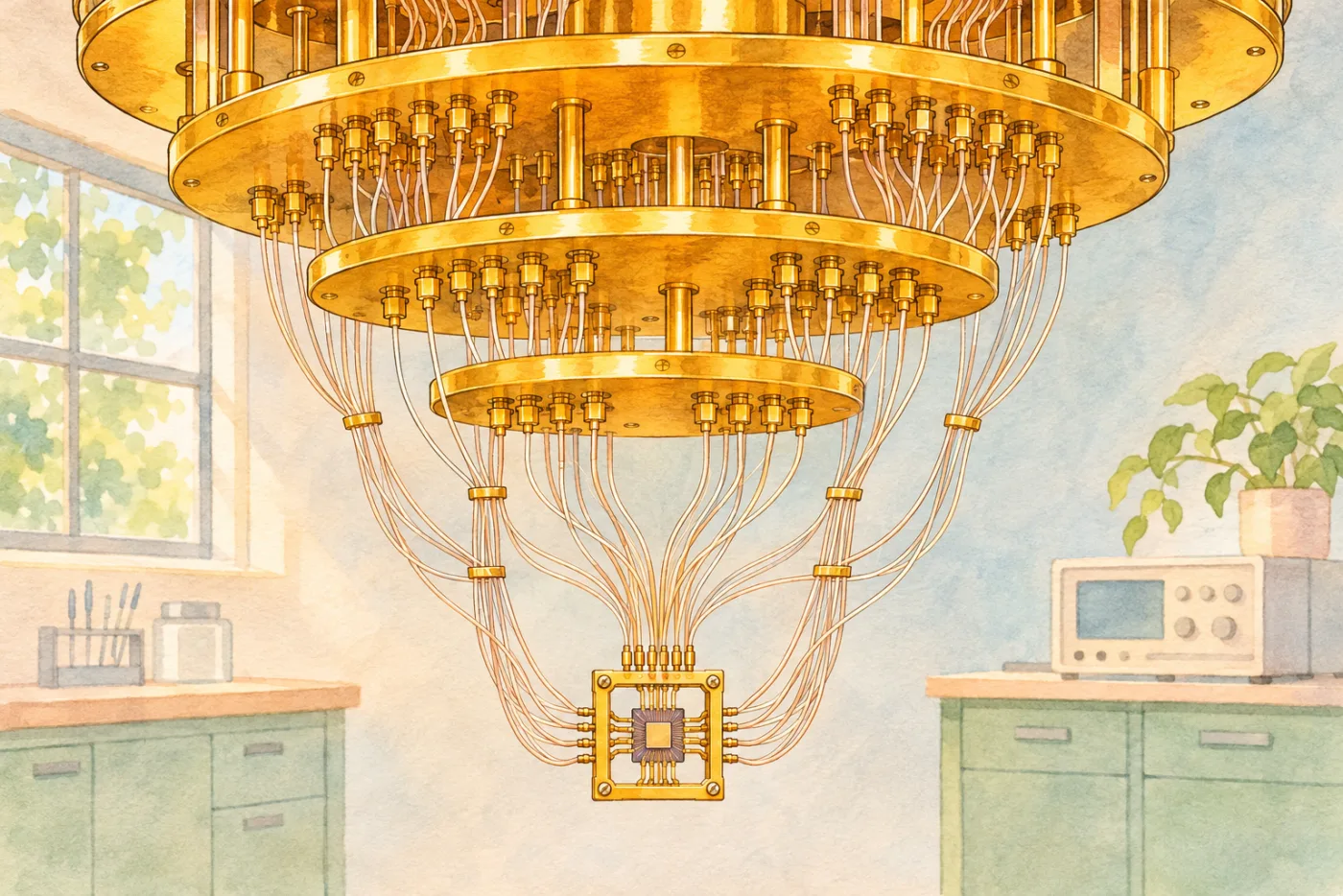
Text to type: The biggest enemy of a qubit is noise: any tiny disturbance from the outside world. A little heat, a small shake or a weak radio signal can push a qubit out of its superposition. Then the information is lost, and the calculation has an error. A qubit in Google's Willow chip keeps its information for only about 100 microseconds. That is a tiny part of one second. On its own, a qubit loses what it holds long before a big calculation could finish. To reduce noise, many quantum computers are kept extremely cold. IBM cools its chips to about minus 273 degrees Celsius. That is colder than outer space, which is about minus 270 degrees Celsius. At this temperature, atoms almost stop, so there is very little heat to disturb the qubits. Even with all this care, qubits make mistakes far more often than normal computers. A normal computer can fix errors by keeping copies. A quantum computer cannot do this: the laws of physics do not allow an unknown qubit to be copied. It also cannot simply look at a qubit, because looking ends the superposition. The solution is error correction: the information of one reliable qubit is spread across many physical qubits. The physical qubits are the real, noisy ones in the machine. Together they make one logical qubit, the reliable one that the program uses. Some extra qubits keep checking whether their neighbors still agree, without reading the information itself. When a check shows a problem, a normal computer works out which qubit went wrong and corrects it. This way, the logical qubit can keep its information longer than any one of its physical qubits. Error correction only helps if the physical qubits are already good enough. If they are too noisy, adding more qubits adds more errors than it fixes. This border is called the threshold. For many years, no machine was clearly on the right side of it.
Ready. The timer starts with your first key.
Complete
Great job!
Strong finish — your speed stayed steady.
Your rhythm
Speed over time- Time
- 0:00
- Raw speed
- 0 WPM
- Wrong keys
- 0
- Corrected
- 0
Check your understanding
Check: Part 2: Why It Is So Hard to Build
1. What is a logical qubit?
Sample answer
One reliable qubit made from many noisy physical qubits that check each other.
 Part 3: What Was Really Achieved Recently
Reading
Part 3: What Was Really Achieved Recently
Typing practice
Type the text exactly. Timer starts with your first key.
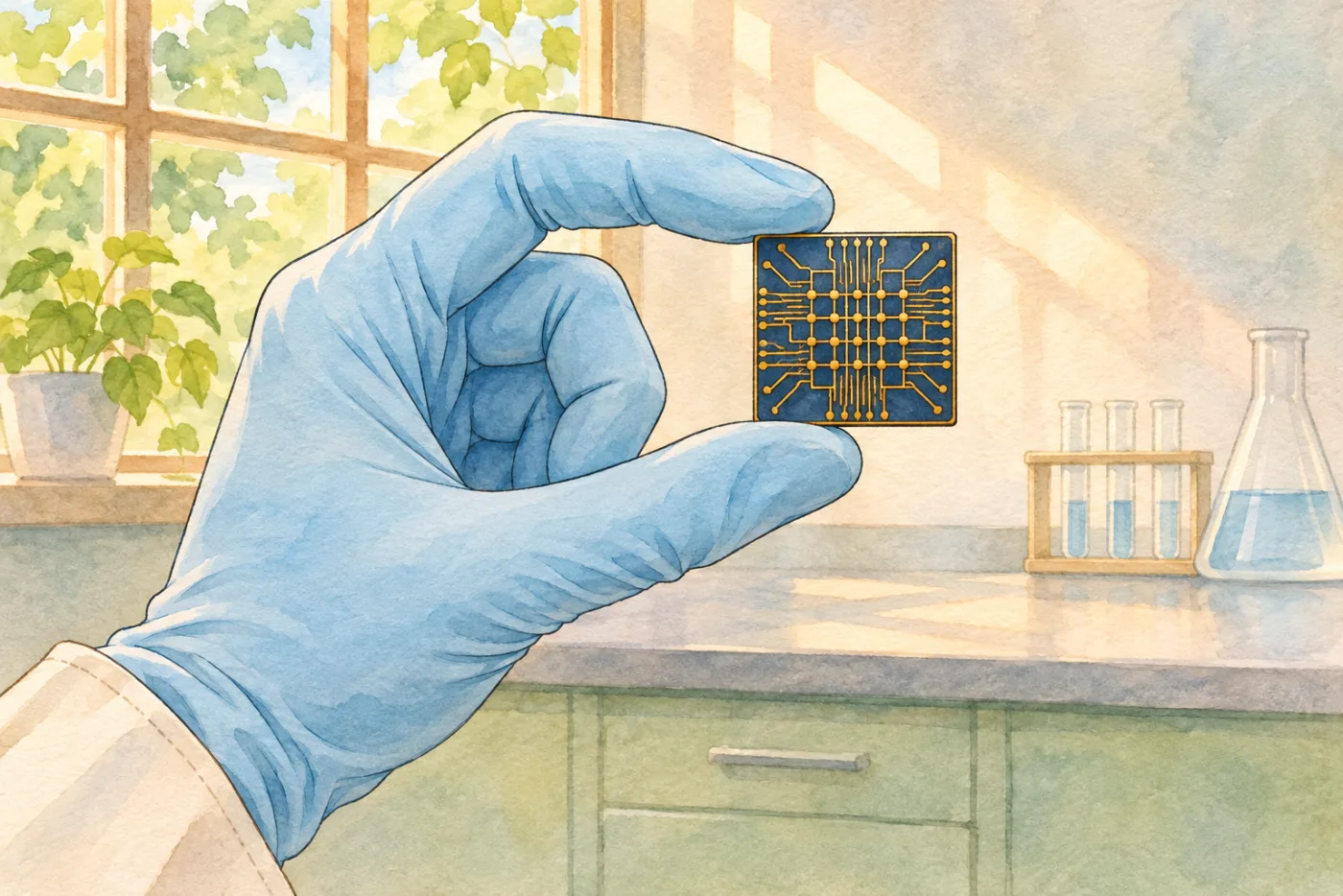
Text to type: In December 2024, Google showed clearly that error correction gets better as the machine grows. On its Willow chip, the team stored one logical qubit on a 3×3 square of qubits that hold the data. Extra qubits between them did the checks. Then they used a 5×5 square, then a 7×7 square. Each time the square grew, the error rate was cut in half. This was the threshold result that scientists had waited for: bigger machines can become more reliable, not less. Earlier speed records had a weakness. They were jobs with no practical use, and nobody could easily check the answers. In October 2025, Google ran a program called Quantum Echoes. Google says it was 13,000 times faster than on one of the world's fastest computers. Its result can be checked. The team ran a series of steps on the qubits. They disturbed one qubit, then ran all the steps again in the opposite order. They measured the signal that came back. It is called an echo, like a shout that comes back in a mountain valley. Google calls this verifiable quantum advantage. A quantum computer does a job much faster than normal computers, and the result can be checked. Normal computers are too slow to check the full calculation. Instead, another quantum computer of the same quality can run it again and should get the same answer. When you read quantum news, ask one question: is it proven, claimed or only planned? Publishing in a journal is only one check. - Proven: Google measured the error rates on its chip directly, and the journal Nature published the data. - Claimed: Quantum Echoes was also published in Nature. But the 13,000 number is Google's estimate of the time a normal computer would need, not a measurement. Also, no other quantum computer has repeated the result yet. - Planned: In November 2026, IBM announced plans for Nighthawk r3, a chip for 2027. It will have 2,034 physical qubits, but programs can use only 520. The others are helper parts that connect and support those 520. These are plans, not finished machines, and even the 520 qubits are physical, not logical.
Ready. The timer starts with your first key.
Complete
Great job!
Strong finish — your speed stayed steady.
Your rhythm
Speed over time- Time
- 0:00
- Raw speed
- 0 WPM
- Wrong keys
- 0
- Corrected
- 0
Check your understanding
Check: Part 3: What Was Really Achieved Recently
1. Why was Google's Willow result important?
Sample answer
Each time the square of qubits grew, the errors fell by half. So bigger machines can be more reliable.
 Part 4: What It Can and Cannot Do Today
Reading
Part 4: What It Can and Cannot Do Today
Typing practice
Type the text exactly. Timer starts with your first key.
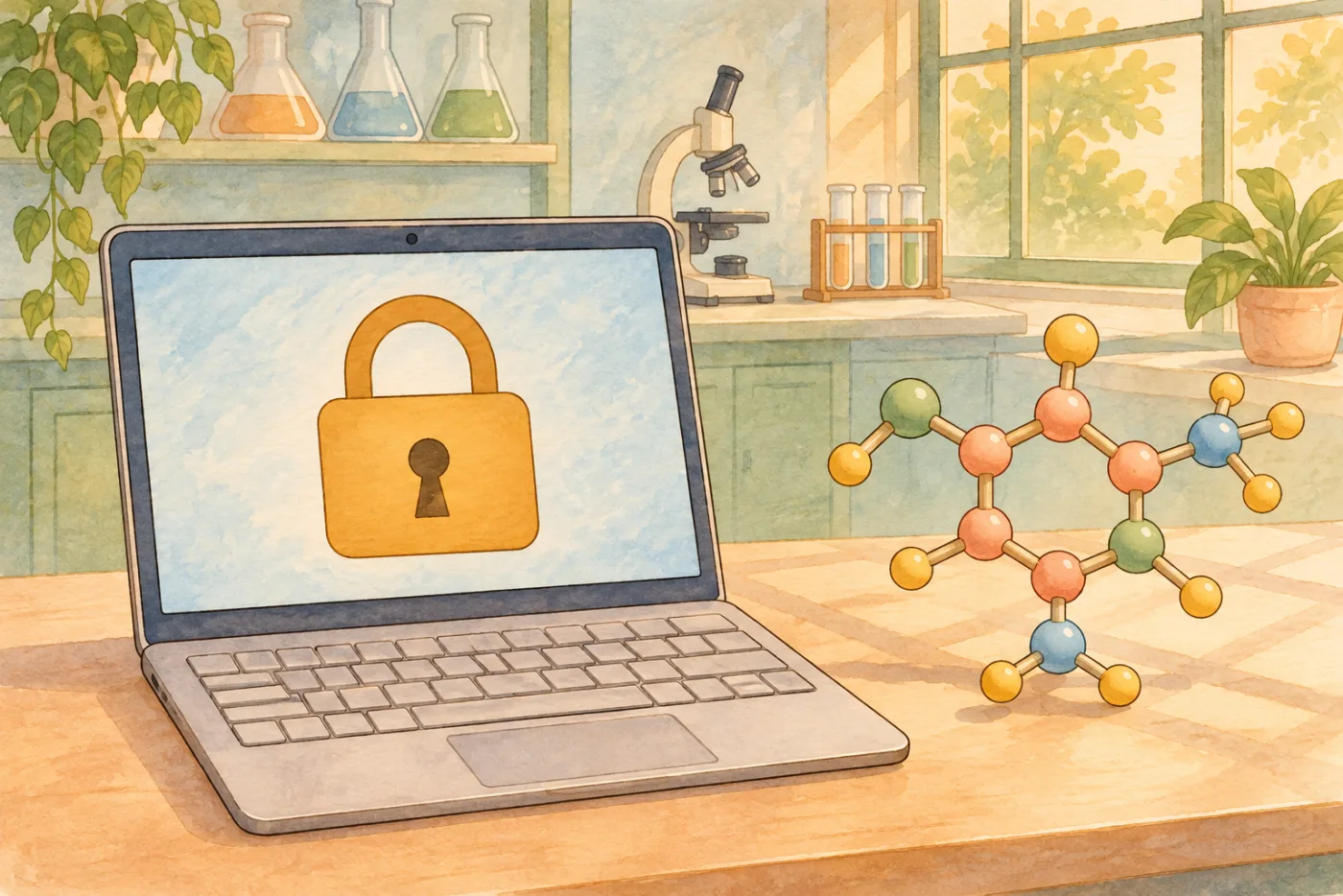
Text to type: Today, quantum computers are tools for science experiments, not for everyday business. The most promising use is studying molecules and materials. Atoms and electrons follow quantum rules. A normal computer needs huge amounts of memory to copy how they behave. A quantum computer follows the same rules naturally. RIKEN, a research center in Japan, worked with IBM. They connected an IBM quantum computer to Fugaku, a very large computer in Japan. They used them to study a molecule with iron atoms in it. The quantum computer did the part it is good at, and Fugaku did the rest of the calculation. This is the realistic picture for the next years: quantum computers and big normal computers working as a team. Two famous promises are still far away: curing diseases and breaking internet encryption. Scientists already design new medicines with other methods, such as lab tests and normal computers. One day, quantum computers might help by copying large molecules from the body in great detail. That would need many logical qubits working without mistakes for a long time. No machine is close to that today. Much of the internet is protected by RSA. RSA is safe because one math problem is very hard for normal computers. Everyone can see a very big public number. It was made by multiplying two secret prime numbers. The hard problem is to find those two prime numbers when you only know the big number. A large quantum computer could solve it. A Google researcher worked out that breaking common RSA would need fewer than one million noisy physical qubits. They would need to run for less than a week. Today's best machines have roughly 100 to 1,000 qubits. In our lesson on computer safety, encryption was the lock that protects information. So why are countries changing their locks now, years before such a machine exists? Attackers can save locked information today and open it when a quantum computer is ready. This is called harvest now, decrypt later. Health records, government secrets and bank information must stay secret for many years, so they need new protection now. The new locks are called post-quantum encryption. They use new math problems that are believed to be hard even for quantum computers. They run on normal computers and phones, so nobody needs a quantum computer to use them. The US standards office NIST has already published the first standards. This year, NIST set its final dates. After 2030, old methods such as RSA become out of date. After 2035, they are no longer allowed under NIST's rules.
Ready. The timer starts with your first key.
Complete
Great job!
Strong finish — your speed stayed steady.
Your rhythm
Speed over time- Time
- 0:00
- Raw speed
- 0 WPM
- Wrong keys
- 0
- Corrected
- 0
Check your understanding
Check: Part 4: What It Can and Cannot Do Today
1. Why are countries switching to post-quantum encryption now?
Sample answer
Locked information saved today could be opened later by a quantum computer.
 Part 5: How AI Really Helps
Reading
Part 5: How AI Really Helps
Typing practice
Type the text exactly. Timer starts with your first key.
Text to type: AI is already helping quantum computers today, in real, published work. It helps with three jobs: finding errors, tuning the machine and designing programs. The first job is finding errors. The extra qubits that do the checks send a stream of messy results. A normal computer must quickly work out which qubit went wrong. This is called decoding. In 2024, Google DeepMind and Google Quantum AI published AlphaQubit. It is an AI decoder. It found errors more accurately than the best earlier methods. The first AlphaQubit was too slow for a real machine. The machine repeats its checks about a million times every second. Later, the team shared a faster one, which the authors say works in real time. The second job is tuning. A quantum computer has many control settings, like the knobs on an old radio. These settings slowly move away from their best values. Today, automatic programs and experts set them. To fix the slow change, the error checks must stop for a new setup. Google researchers built an AI agent that uses reinforcement learning. This means it gets better by trying things and getting a reward. It keeps changing more than a thousand settings while the machine keeps working. So the error checks do not need to stop. It uses the error checks as its score. In their tests, it reduced the logical error rate by about 20 percent more. This was on a machine already set by programs and experts. The third job is design. AI can design better quantum circuits, the step-by-step programs that a quantum computer runs. In an error-corrected machine, one kind of step, the T gate, costs much more than the others. The machine cannot do this step reliably in the normal way. So each T gate needs many extra qubits and extra steps. Google DeepMind and Quantinuum presented AlphaTensor-Quantum. This AI rewrites the circuits so that they need fewer T gates. On some tests, it cut their number by half or more. Fewer expensive steps mean that a machine can do useful work sooner. Will quantum computers make AI better? The answer today is: mostly unknown. In 2025, the bank HSBC and IBM reported better test scores for a machine-learning model. The model learned from trading data that was changed on a real IBM quantum computer. It was one small study, not proof that quantum computers make AI better in general. One big problem is data. AI learns from huge amounts of data, and putting that data into qubits is slow. This can use up the time that a quantum computer saves. So today, the help goes mostly one way. AI helps quantum computers much more than quantum computers help AI.
Ready. The timer starts with your first key.
Complete
Great job!
Strong finish — your speed stayed steady.
Your rhythm
Speed over time- Time
- 0:00
- Raw speed
- 0 WPM
- Wrong keys
- 0
- Corrected
- 0
Check your understanding
Check: Part 5: How AI Really Helps
1. Today, does AI help quantum computers, or do quantum computers help AI?
Sample answer
AI helps quantum computers by finding errors, tuning machines and designing programs. Quantum help for AI is still only research.
What you can do now
Final Reflection
Quantum computers are improving quickly, but most big promises still wait for large machines with error correction.
Which result in this lesson surprised you most, and why?
Next time you read quantum news, what question will you ask first?
Should companies in Japan start switching to post-quantum encryption now? Why or why not?
Learning cards
My cards
Quantum Computers and What They Can Really Do
0 due · 0 new · about 1 min
Learn the sense first · then retrieve it
No saved cards yet
Open a word or phrase in the article and choose Save to My Words.
Focused Reading Mode is open.
Listening
Lesson audio
Listen from the beginning, or choose “Play this part” as you read along.
Reading
Part 1: What a Quantum Computer Is
Reading
Part 2: Why It Is So Hard to Build
Reading
Part 3: What Was Really Achieved Recently
Reading
Part 4: What It Can and Cannot Do Today
Reading
Part 5: How AI Really Helps
Finished listening?
Mark this listening practice complete when you have followed the lesson audio.
Listening complete
Listen Mode
Word-by-word syncPlay the audio and follow the highlighted word.
Article complete
Choose your next step
Open the next same-level lesson, replay the article, or save this page for later.
Listen Again
Replay the article once and notice how much more you understand.
One replay is enough. Then move on.
Lesson resources
Resources
Sources and fact review (18)
- Meet Willow, our state-of-the-art quantum chip (Google, 9 Dec 2024)
Willow: error rate halved from 3×3 to 5×5 to 7×7 grids, below threshold; qubits hold information for about 100 microseconds
- Quantum error correction below the surface code threshold (Nature, 2024)
the grids are data qubits with extra qubits for checks; the logical qubit keeps its information longer than its physical qubits
- Entanglement in quantum computing (Microsoft Learn)
entangled qubits have connected results, not always identical ones
- Our Quantum Echoes algorithm is a big step toward real-world applications for quantum computing (Google, Oct 2025)
Quantum Echoes, 13,000 times faster (Google's claim), result can be checked, echo method; separate molecule test only showed the idea works; Google calls it verifiable quantum advantage
- Quantum 'echoes' reveal the potential of Google's quantum computer (Science News)
outside experts positive but careful; result not yet repeated on another quantum computer
- A verifiable quantum advantage (Google Research)
Quantum Echoes was published in Nature; the 13,000 figure is an estimate of the time a normal computer would need
- IBM Quantum Nighthawk Demonstrates New Levels of Speed and Quality, with Plans to Scale Beyond 1,000 Qubits in 2027 (IBM, 11 Nov 2026)
Nighthawk r3 planned for 2027 with 520 programmable qubits out of 2,034 physical qubits; plan to link two chips in 2027; cooling below 15 millikelvin
- RIKEN and IBM run quantum-centric supercomputing with Fugaku (IBM Quantum blog)
RIKEN connected an IBM quantum processor to Fugaku to study an iron-sulfur molecule
- Step 1: Discovery and Development (US FDA)
new medicines are already found with several other methods, including lab tests and computer work
- Tracking the cost of quantum factoring (Google, 23 May 2025)
RSA estimate of fewer than one million noisy qubits for less than a week; today's machines about 100 to 1,000 qubits; store now, decrypt later
- NIST Releases Final IR 8547 (Quantum Computing Report, 27 Oct 2026)
final NIST timeline: old methods out of date after 2030 and not allowed under NIST standards after 2035; the first post-quantum standards
- Transition to Post-Quantum Cryptography Standards (NIST IR 8547)
deprecation after 2030 and disallowed under NIST standards after 2035; the switch should start before these dates
- AlphaQubit: Google's AI decoder for quantum error correction (Google, Nov 2024)
published in Nature; transformer; trained on simulated and then real data; more accurate than earlier decoders; too slow for real time
- A scalable and real-time neural decoder for topological quantum codes (arXiv 2512.07737)
faster AlphaQubit version that the authors say works in real time
- Reinforcement learning control of quantum error correction (arXiv 2511.08493)
existing setup mixes automatic steps and expert tuning and stops error correction to recalibrate; AI agent keeps adjusting over 1,000 settings while error correction keeps running; about 20% lower logical error rate on a processor already tuned by programs and experts
- Quantinuum and Google DeepMind unveil the reality of the symbiotic relationship between quantum and AI (Quantinuum)
AlphaTensor-Quantum makes circuits with fewer T gates and matches the best human designs
- Quantum Optimization Gets an AI Boost with AlphaTensor-Quantum (The Quantum Insider)
T gates cut by half or more on some circuits
- HSBC and IBM bond-trading study on IBM quantum hardware (arXiv 2509.17715, Sept 2025)
better machine-learning test scores using data changed on real IBM quantum hardware; one limited study