Food in Cologne, Düsseldorf and Dortmund
Quality checked lesson
Each beer city has famous dishes, and each dish has a reason for its name, its taste and its beer.
 English lesson

Article
Choose how to use this lesson
You can switch anytime.
Study mode
Introduction
Typing practice
Type the text exactly. Timer starts with your first key.
Text to type: In the beer lesson, we visited three cities in Germany and drank their beer. Today we eat there. We will learn the famous dishes, the stories behind their names and the best beer for each.
Ready. The timer starts with your first key.
Complete
Great job!
Strong finish — your speed stayed steady.
Your rhythm
Speed over time- Time
- 0:00
- Raw speed
- 0 WPM
- Wrong keys
- 0
- Corrected
- 0
Before you begin
Warm-up
What food do you like to eat with beer?
Have you ever eaten German food? What was it like?
What do you want to eat on a cold winter day?
 Part 1: Funny Food Names in Cologne
Reading
Part 1: Funny Food Names in Cologne
Typing practice
Type the text exactly. Timer starts with your first key.
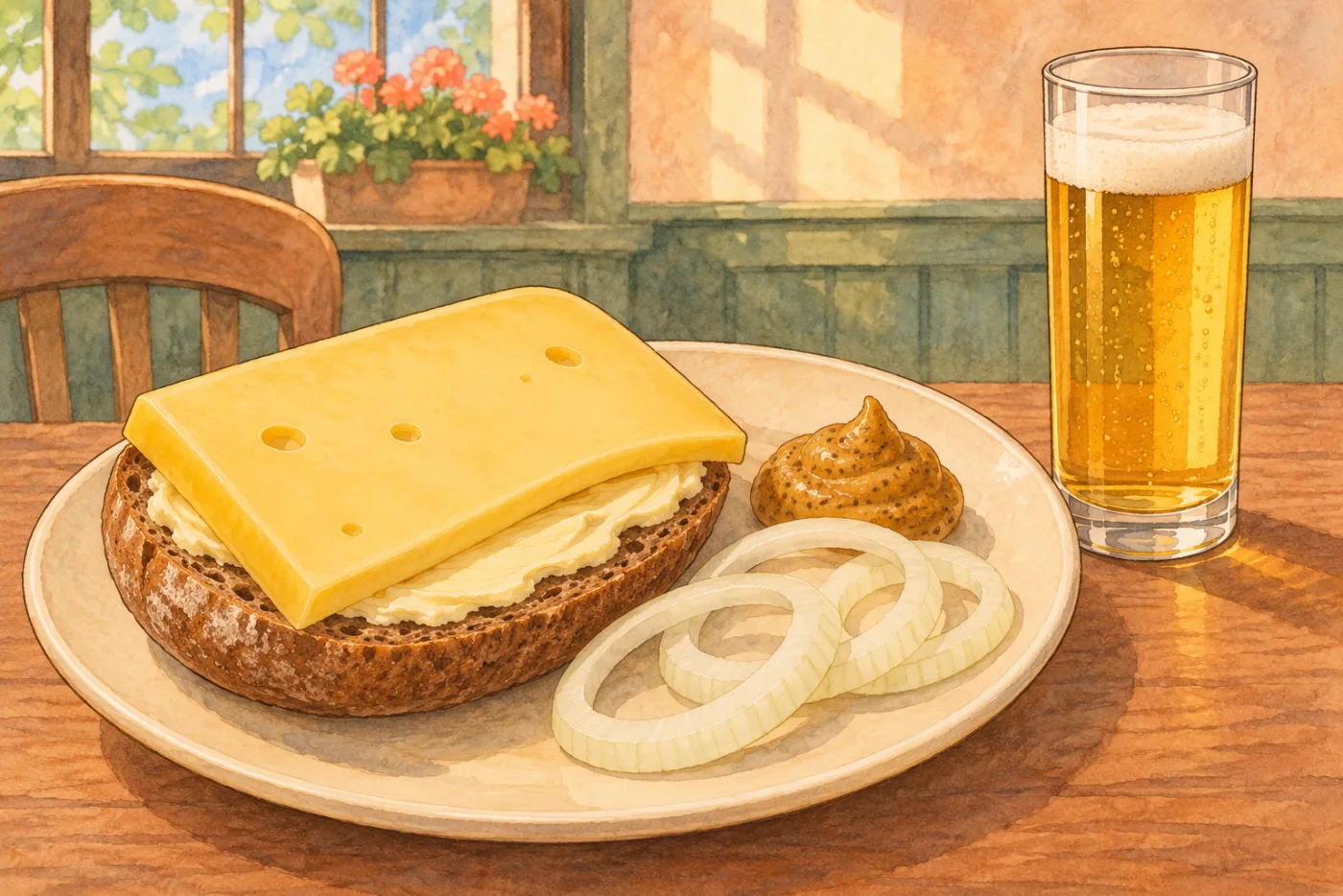
Text to type: Almost every menu in a Cologne brewery pub has a dish called Halve Hahn. In the dialect of Cologne, the local way of speaking, the name says half a rooster. A rooster is a male chicken. But when your plate arrives, there is no chicken on it. A Halve Hahn is half of a Röggelchen, a small, dark rye roll. You met this roll in the beer lesson. Bakers put the rolls in the oven in pairs, so two rolls touch and bake together. Later they break them apart. On your half you get butter, a thick slice of Gouda, strong mustard and rings of raw onion. Gouda is a yellow cheese from the Netherlands. It is soft and a little salty. So why the funny name? Nobody knows for sure, and people in Cologne tell different stories. The best-known story takes place at a birthday party in the late 1800s. As a joke, a man ordered half a rooster for each of his friends. He told the waiter his plan first. The friends waited for roast chicken, but the waiter brought rye rolls with cheese. Everyone laughed, and the joke became the name of the dish. It is a nice story, but nobody can say if it is true. The Halve Hahn is a perfect partner for Kölsch, the light, pale beer of Cologne. The snack is simple and salty, and the mustard and raw onion are sharp. A cold, light beer cleans your mouth after these strong tastes. So you want another bite, and then another small glass. The second funny name in Cologne is Himmel un Ääd, dialect for heaven and earth. It is mashed potatoes mixed with cooked apples. So it is soft, a little sweet and a little sour. With it you usually get fried black pudding, a dark sausage made with pig's blood. You also get fried onions. The name comes from where the food grows. Apples grow high up in trees, near the sky. In German, Himmel is the word for both sky and heaven. Potatoes grow in the ground, in the earth. So one plate holds heaven and earth.
Ready. The timer starts with your first key.
Complete
Great job!
Strong finish — your speed stayed steady.
Your rhythm
Speed over time- Time
- 0:00
- Raw speed
- 0 WPM
- Wrong keys
- 0
- Corrected
- 0
Check your understanding
Check: Part 1: Funny Food Names in Cologne
1. What is a Halve Hahn really made of?
Sample answer
Half a rye roll with butter, Gouda, mustard and raw onion. There is no chicken.
 Part 2: Sauerbraten, a Sweet and Sour Roast
Reading
Part 2: Sauerbraten, a Sweet and Sour Roast
Typing practice
Type the text exactly. Timer starts with your first key.
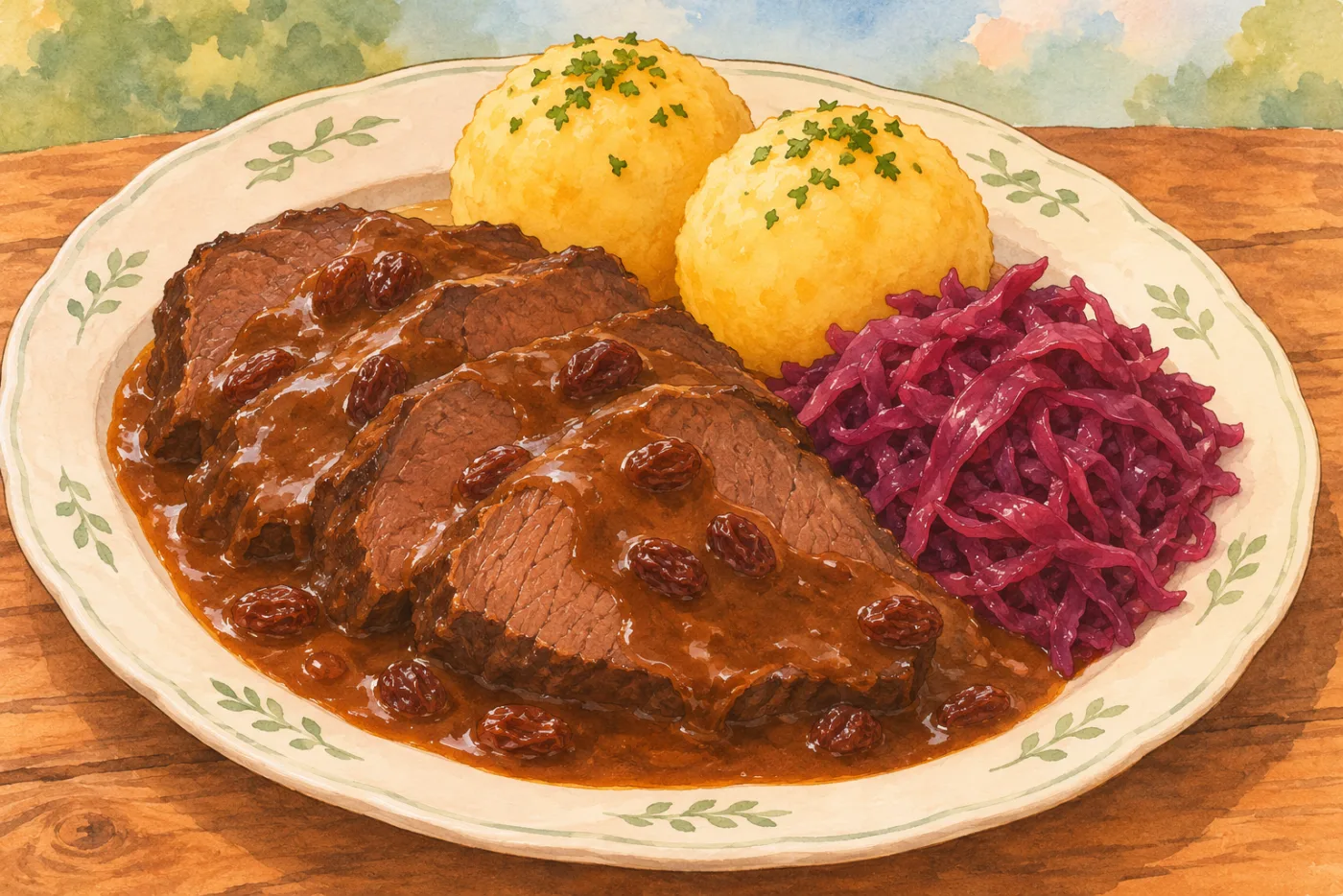
Text to type: Sauerbraten is the famous roast of the Rhineland. This is the region along the river Rhine, where Cologne and Düsseldorf are. You find it in the brewery pubs of both cities. The name is German: sauer is sour, and Braten is roast meat. Before cooking, the beef is marinated: it lies in a liquid for three days or more. This liquid, the marinade, is made of vinegar, wine and spices such as bay leaves and pepper. Then the cook takes the meat out and cooks it slowly for hours. Why so much vinegar? Before people had fridges, meat went bad quickly. Vinegar is sour and strong, and it helped meat stay fresh for longer. It also makes hard meat softer. So a cook could buy a cheaper, harder piece of beef. After days in the marinade and hours of slow cooking, it is very soft. It falls apart under your fork. In the Rhineland, the sauce is not only sour. Cooks add raisins, and sometimes gingerbread or sugar-beet syrup. Gingerbread is a sweet cake made with spices. The syrup is dark and thick, and it is made from sugar beets, a root used for sugar. So the sauce becomes sweet and sour, dark and thick. On the plate you usually find potato dumplings, big soft balls made of potato. Next to them is red cabbage, cooked until it is soft and sweet. Some places also give you apple sauce. There is one more thing to know. In the Rhineland, Sauerbraten was traditionally made with horse meat. Today most pubs use beef, because many guests do not want to eat horse. Only a few traditional places still make it with horse. So read the menu carefully: Pferd is German for horse. If the menu says Sauerbraten vom Pferd, the meat is horse.
Ready. The timer starts with your first key.
Complete
Great job!
Strong finish — your speed stayed steady.
Your rhythm
Speed over time- Time
- 0:00
- Raw speed
- 0 WPM
- Wrong keys
- 0
- Corrected
- 0
Check your understanding
Check: Part 2: Sauerbraten, a Sweet and Sour Roast
1. Why did cooks leave the meat in vinegar for days?
Sample answer
Vinegar kept meat fresh for longer before there were fridges, and it made hard meat soft.
 Part 3: Mustard in Düsseldorf
Reading
Part 3: Mustard in Düsseldorf
Typing practice
Type the text exactly. Timer starts with your first key.
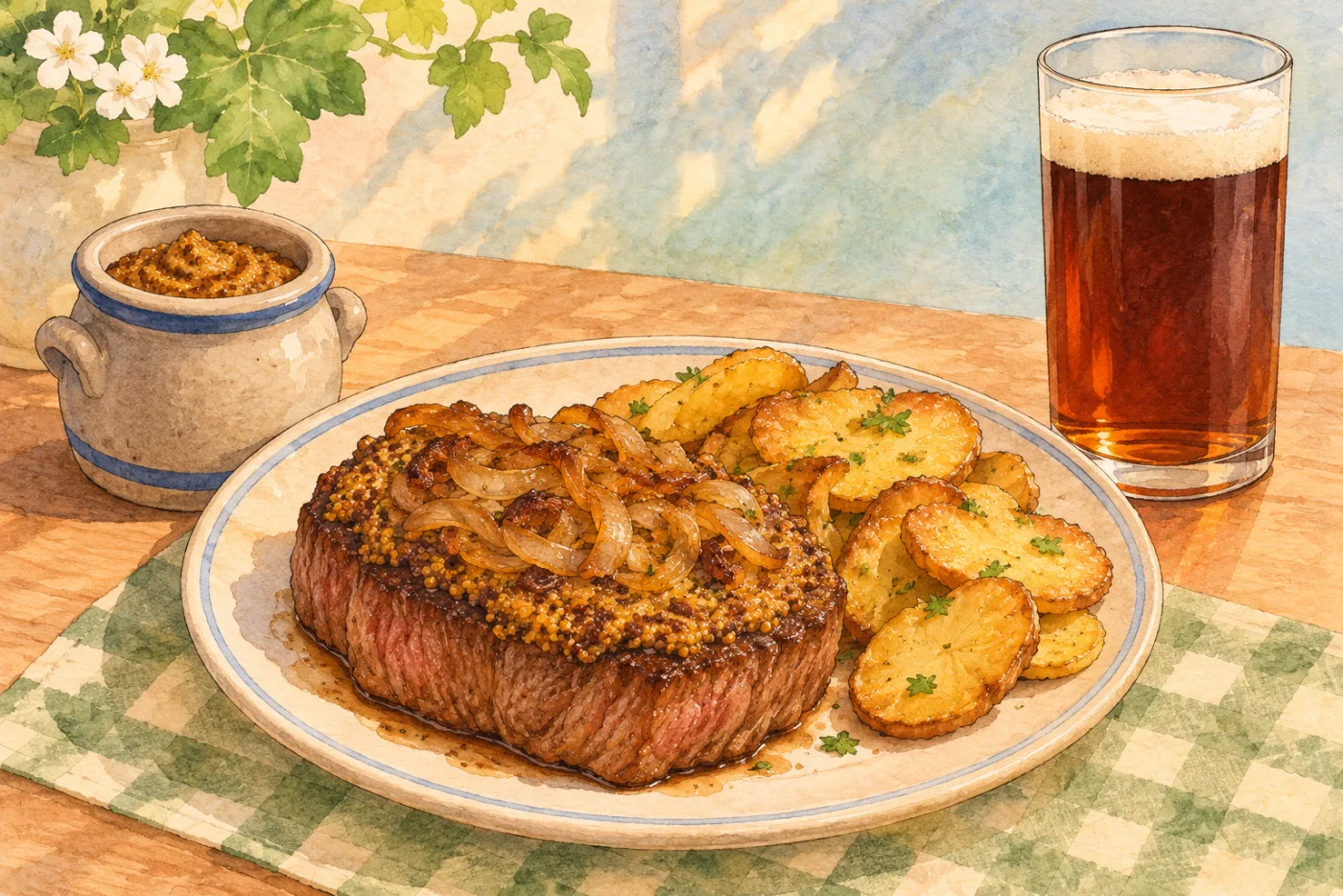
Text to type: In Düsseldorf, the taste of the city is mustard. Locals call it Mostert, an old local word for mustard. It is strong and spicy. If you eat too much at once, you feel it in your nose. Mustard has been made in Düsseldorf since 1726. In that year, the first mustard factory in Germany opened in the city. The brand ABB says its story starts with that factory. Since 2012, Düsseldorfer Mostert has been a protected name in the European Union. Only mustard made in Düsseldorf may use this name. A company in another city can make mustard in the same way. But it cannot call it Düsseldorfer Mostert. Kölsch has a protected name too. In both cases, the name tells you where the product really comes from. The other famous brand is Löwensenf: Löwe is lion, and Senf is mustard. It did not start in Düsseldorf. It began in 1903 in Metz, a city that was part of Germany at that time. After the First World War, Metz became part of France. So the company moved to Düsseldorf. Düsseldorf also has a dish that shows off its mustard: Düsseldorfer Senfrostbraten. Here the Rostbraten is a rump steak, a thick slice of beef from near the cow's tail. The cook fries the steak and covers the top with Düsseldorf mustard and chopped onion. The heat turns this top into a dark, spicy crust, a hard top. People eat it with fried potatoes and Altbier, the dark beer of Düsseldorf. Why does strong mustard go well with this beer? Altbier is dark and malty: it tastes a little like the dark crust of bread. At the end, it is a little bitter. This round, bread-like taste calms the sharp mustard. The bitter taste and the bubbles clean the fat from your mouth. The food is spicy and sharp, the beer is calm, and together they are in balance.
Ready. The timer starts with your first key.
Complete
Great job!
Strong finish — your speed stayed steady.
Your rhythm
Speed over time- Time
- 0:00
- Raw speed
- 0 WPM
- Wrong keys
- 0
- Corrected
- 0
Check your understanding
Check: Part 3: Mustard in Düsseldorf
1. Can a mustard company in Cologne sell its mustard as Düsseldorfer Mostert?
Sample answer
No. Since 2012, only mustard made in Düsseldorf may use that name.
 Part 4: A Pepper Stew in Dortmund
Reading
Part 4: A Pepper Stew in Dortmund
Typing practice
Type the text exactly. Timer starts with your first key.
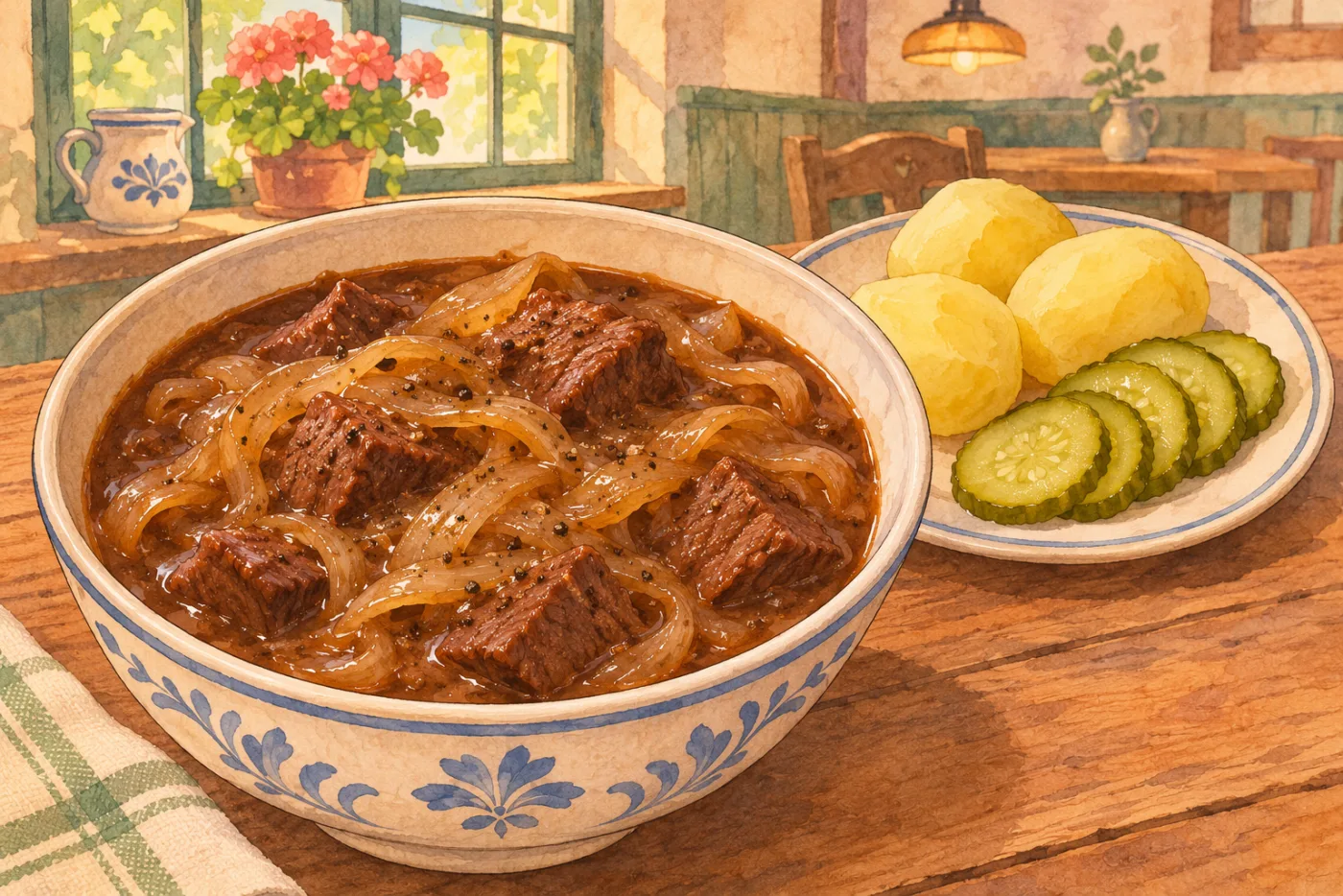
Text to type: The famous dish of Dortmund has a long name: Pfefferpotthast. The name has three parts. Pfeffer is pepper, Pott is pot, and the last part is an old word for a piece of beef. So the name tells you what it is: beef with pepper, cooked in a pot. Pfefferpotthast is a beef stew: meat cooked slowly in liquid until it is very soft. It is an old dish of Westphalia, the region around Dortmund. It was a meal for working people. The cook fries pieces of beef. Then the beef boils slowly in a pot for a long time, with lots of onions. Bay leaves and plenty of black pepper go in too. The onions almost melt and make the stew sweet, and the pepper makes it spicy. The surprise is how the stew becomes thick. Most cooks use flour for this, but Pfefferpotthast uses bread crumbs. The crumbs take in the liquid and make the sauce thick. They also give it a deep bread taste. You eat it with boiled potatoes and gherkins, small sour cucumbers kept in vinegar. Between hot, heavy bites of stew, a cold, sour gherkin is a nice change. The dish also has a legend, linked to Agnes von der Vierbecke and the year 1378. In the story, Agnes worked with enemies who wanted to take Dortmund. She asked the gatekeeper, the man at the city gate, to fetch her a pot of Pfefferpotthast from the market. While he was away, the gate had no guard. That was her plan. It is only a legend: historians have little proof for it. Dortmund celebrates the dish anyway. Every autumn, there is a Pfefferpotthast festival on the Alter Markt, the old market square. To drink, choose a Dortmund Export. It is a golden beer, soft and round, with a light bitter taste at the end. Pepper burns your mouth, and the cold beer calms it. In an Export, the sweet malt and the bitter taste are in balance. So the beer does not fight with the spicy stew.
Ready. The timer starts with your first key.
Complete
Great job!
Strong finish — your speed stayed steady.
Your rhythm
Speed over time- Time
- 0:00
- Raw speed
- 0 WPM
- Wrong keys
- 0
- Corrected
- 0
Check your understanding
Check: Part 4: A Pepper Stew in Dortmund
1. What makes Pfefferpotthast thick?
Sample answer
Bread crumbs, not flour.
 Part 5: Christmas Markets in December
Reading
Part 5: Christmas Markets in December
Typing practice
Type the text exactly. Timer starts with your first key.
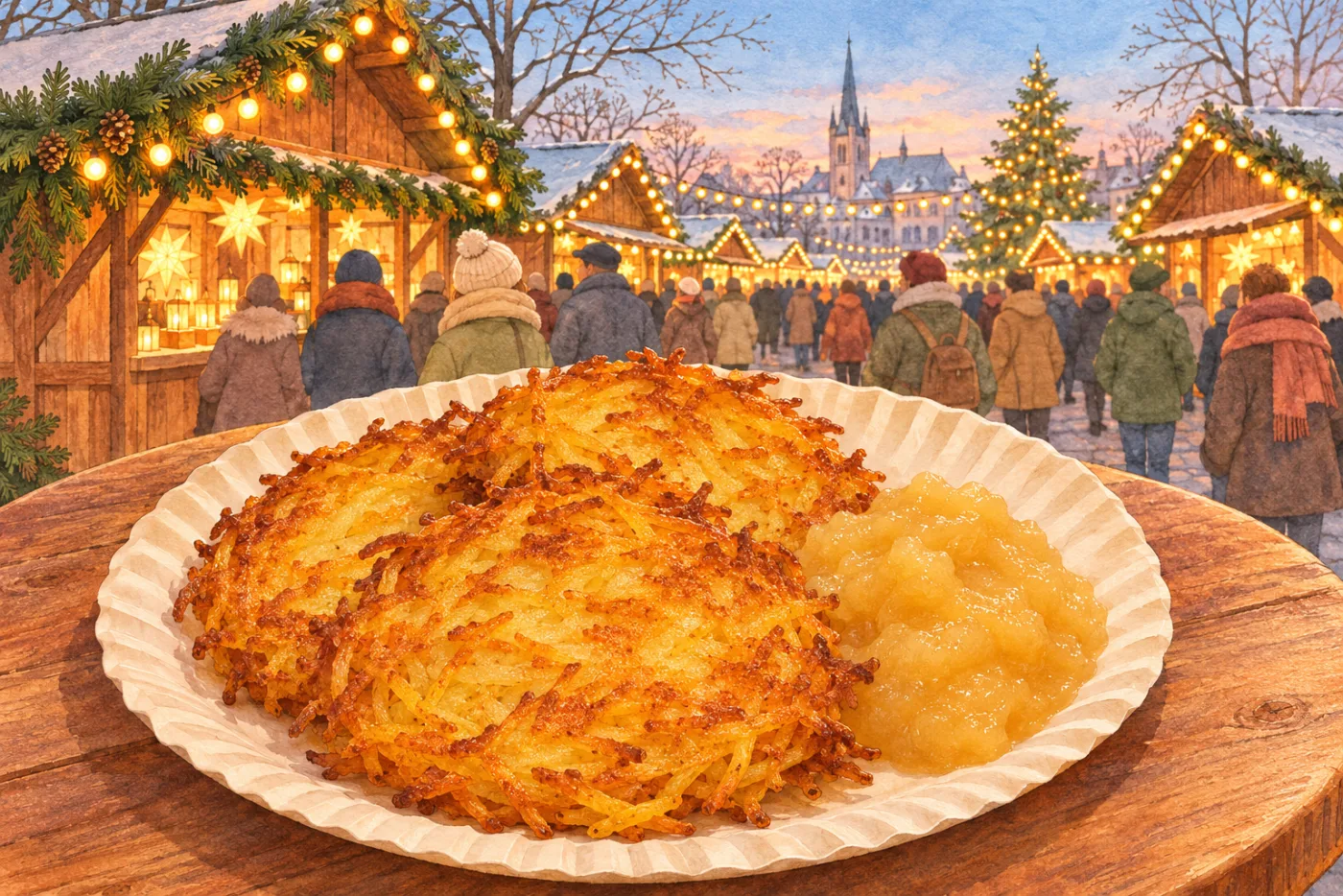
Text to type: In December, the squares of all three cities fill with Christmas markets. Small wooden huts sell hot wine, sweets, gifts and food. The favourite market food in Cologne is Reibekuchen: fried potato pancakes. The cook grates raw potatoes and onions into tiny pieces. Then the cook presses out the water and adds egg, flour and salt. Spoons of this mix go into hot oil. They fry until they are brown, crispy at the edges and soft in the middle. You eat them hot, with apple sauce. In the Rhineland, people also eat them with Rübenkraut, the sugar-beet syrup from the Sauerbraten part. Hot, salty potato with something sweet is a popular mix here. Why is so much market food hot and fried? December is cold, and people walk from hut to hut for hours. Hot food warms you from inside and keeps you full. A hot paper plate also warms cold hands. Frying is fast, too: a pancake is ready in a few minutes. So one stall can sell fresh food to a long line of people. And you can eat it with your hands, with no table. The Christmas market in Dortmund has something huge. The city calls its tree the largest Christmas tree in the world. It is about 45 metres tall, but it is not one tree. For each market, workers build a tall frame and fix more than 1,000 small spruce trees on it. A spruce is a Christmas tree with short, sharp needles. From far away, all the small trees look like one giant tree. Dortmund has built it almost every year since 1996.
Ready. The timer starts with your first key.
Complete
Great job!
Strong finish — your speed stayed steady.
Your rhythm
Speed over time- Time
- 0:00
- Raw speed
- 0 WPM
- Wrong keys
- 0
- Corrected
- 0
Check your understanding
Check: Part 5: Christmas Markets in December
1. Why do Christmas markets sell so much hot, fried food?
Sample answer
People walk outside in the cold for hours. Hot food warms them, and frying is fast.
Scene
Scene: Ordering in a Cologne Brewery Pub
Typing practice
Type the text exactly. Timer starts with your first key.
Text to type: It is a cold December evening. You sit down in a busy brewery pub in Cologne. The waiter, a Köbes in a blue apron, comes over with glasses of Kölsch. Your goal: find out what Halve Hahn is and order it with a Kölsch. Then ask if the Sauerbraten is beef or horse.
Ready. The timer starts with your first key.
Complete
Great job!
Strong finish — your speed stayed steady.
Your rhythm
Speed over time- Time
- 0:00
- Raw speed
- 0 WPM
- Wrong keys
- 0
- Corrected
- 0
Roleplay
Conversation: Ordering in a Cologne Brewery Pub
Köbes
Good evening! A Kölsch?
You
Yes, please. And what is Halve Hahn? Is it chicken?
Köbes
No chicken at all. It's half a rye roll with butter, a thick slice of Gouda, mustard and raw onion.
You
So the name is a joke! How much is it?
Köbes
7.80 euros.
You
I'd like a Halve Hahn, please. Is the mustard very strong?
Köbes
Yes, it's quite strong. That's why it goes so well with a cold Kölsch.
You
Great. And the Sauerbraten: is it beef or horse?
Köbes
Ours is beef. Only a few pubs in Cologne still make it with horse. In those pubs, the menu says Pferd.
You
What does it come with?
Köbes
Potato dumplings and red cabbage. Apple sauce too, if you want it. It's 22.50 euros.
You
Is it very sour?
Köbes
Sweet and sour. The sauce has raisins in it.
You
Then I'll have the Sauerbraten too, after the Halve Hahn.
Köbes
Good choice. Here's your Kölsch. Cheers!
Speak
Speaking
What you can do now
Final Reflection
Every dish on this trip has a reason behind its name, its taste and its beer.
Which of these dishes would you most like to try in December, and why?
Would you order Sauerbraten made with horse meat? Why or why not?
Do you know a food with a name that is a joke, like Halve Hahn?
Learning cards
My cards
Food in Cologne, Düsseldorf and Dortmund
0 due · 0 new · about 1 min
Learn the sense first · then retrieve it
No saved cards yet
Open a word or phrase in the article and choose Save to My Words.
Focused Reading Mode is open.
Listening
Lesson audio
Listen from the beginning, or choose “Play this part” as you read along.
Reading
Part 1: Funny Food Names in Cologne
Reading
Part 2: Sauerbraten, a Sweet and Sour Roast
Reading
Part 3: Mustard in Düsseldorf
Reading
Part 4: A Pepper Stew in Dortmund
Reading
Part 5: Christmas Markets in December
Finished listening?
Mark this listening practice complete when you have followed the lesson audio.
Listening complete
Listen Mode
Word-by-word syncPlay the audio and follow the highlighted word.
Article complete
Choose your next step
Open the next same-level lesson, replay the article, or save this page for later.
Listen Again
Replay the article once and notice how much more you understand.
One replay is enough. Then move on.
Lesson resources
Resources
Sources and fact review (21)
- Halver Hahn (German Wikipedia)
ingredients (half rye roll, Gouda, mustard, onion), the birthday-party joke in the late 19th century planned with the waiter, other stories about the name
- Röggelchen (Kiddle)
rolls baked in pairs and broken apart, eaten with Kölsch
- Himmel und Erde (Wikipedia)
mashed potatoes and apples, blood sausage, fried onions, meaning of the name, Himmel un Ääd spelling
- Sauerbraten (Wikipedia)
marinade of vinegar, wine and spices for days, raisins and sugar-beet syrup, cheaper meat made tender, horse meat in the Rhineland
- Rheinischer Sauerbraten (koeln.de)
traditional horse meat, at least three days in marinade, potato dumplings and apple sauce
- Having Friends for Dinner (Oxford Symposium on Food and Cookery)
horse meat in Rhineland Sauerbraten, sweetened with raisins, gingerbread or beet syrup, mostly beef today, many Germans do not choose to eat horse
- Brauhaus Pütz menu (speisekarte.de)
real Cologne prices: Halve Hahn 7.80 euros, Sauerbraten 22.50 euros with potato dumplings and red cabbage, apple sauce on request
- How to eat like a local in Düsseldorf (Time Out)
spicy local mustard, Senfrostbraten covered in mustard, Altbier as the local beer with brewery-pub food
- 300 Jahre ABB Mostert (Handwerksblatt)
first mustard factory in Germany opened in Düsseldorf in 1726, ABB traces its story to it
- Commission Implementing Regulation (EU) No 754/2012
Düsseldorfer Mostert registered as a protected name in 2012
- Löwensenf (Wikipedia)
founded in Metz in 1903, moved to Düsseldorf after the First World War when Metz became French
- Pfefferpotthast (Wikipedia)
beef, onions, bay leaves, pepper, Westphalian dish, potatoes and gherkins, the 1378 Agnes von der Vierbecke text, autumn festival on the Alter Markt
- Pfefferpotthast (German Wikipedia)
Hast as the piece of beef in the name, thickened with bread crumbs instead of flour, first named in a report about Agnes von der Vierbecke, yearly autumn festival on the Alter Markt in Dortmund
- Kartoffelpuffer / Reibekuchen (German Wikipedia)
grated potatoes and onions, egg, flour, fried in hot fat or oil, apple sauce
- Reibekuchen (Rievkooche) (koeln.de)
Rübenkraut and apple sauce with Cologne potato pancakes
- Weihnachtsstadt Dortmund (City of Dortmund)
45-metre tree made of more than 1,000 spruce trees, called the largest Christmas tree in the world
- The Tree (Weihnachtsstadt Dortmund)
the tree as the largest Christmas tree in the world, built since 1996
- Dortmunder Weihnachtsmarkt (City of Dortmund history)
the tree since 1996, taken down again in 2020
- Agnes von der Vierbecke (Wikipedia)
the 1378 legend: Agnes sent the gatekeeper to fetch a pot of Pfefferpotthast from the market, so the gate had no guard
- So schmeckt Europa: Deutschland (City of Düsseldorf)
Senfrostbraten as rump steak with a crust of mustard and onion
- BJCP Beer Style Guidelines 2021
Dortmunder Export with malt and hop bitterness in balance