Cologne's Cathedral and Perfume
Quality checked lesson
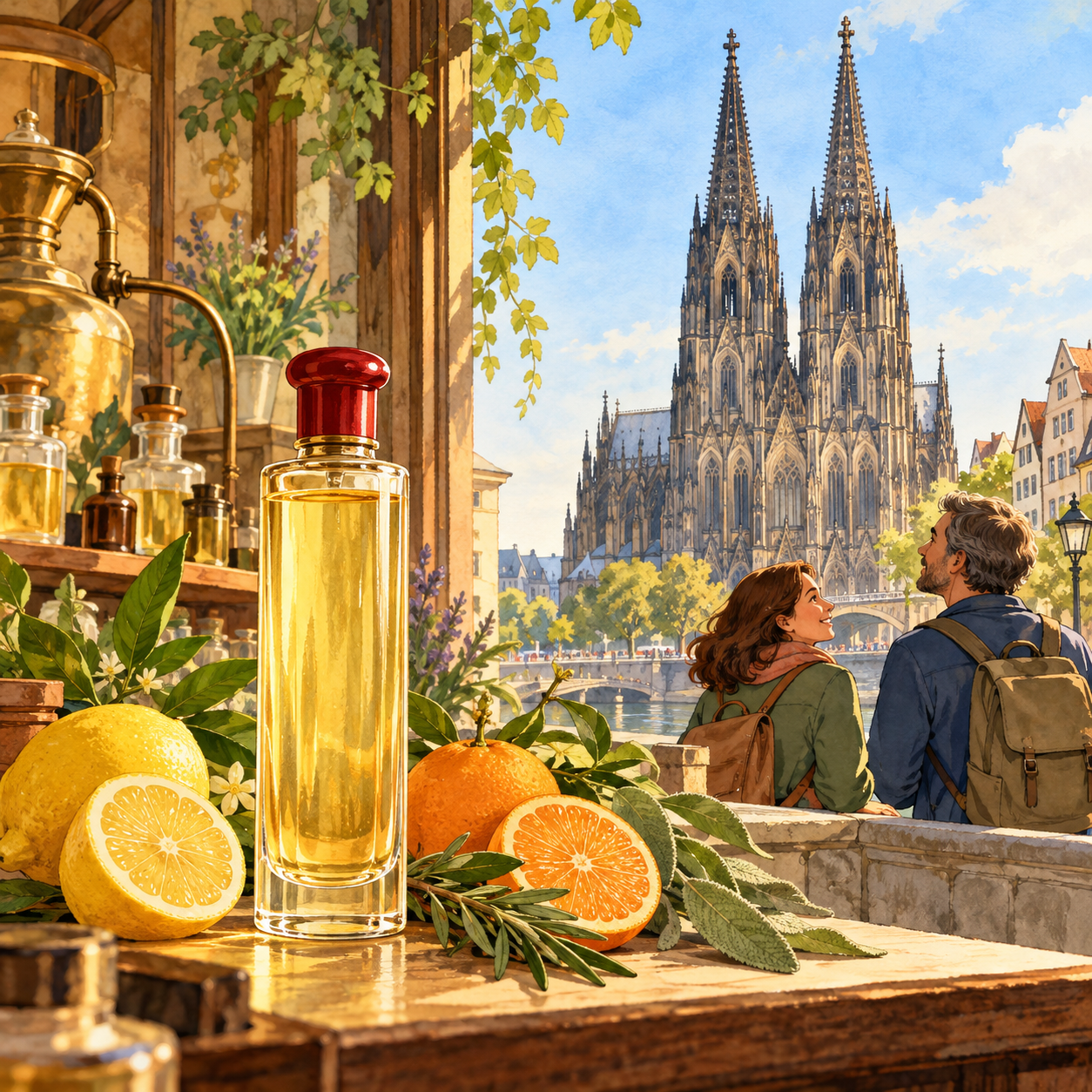
For about 400 years, a medieval crane stood on top of Cologne Cathedral's unfinished south tower. During those same centuries, a perfume created by an Italian in 1709 made the city's name famous across Europe.
 English lesson
Article
Choose how to use this lesson
You can switch anytime.
Study mode
Introduction
Typing practice
Type the text exactly. Timer starts with your first key.
Text to type: For about 400 years, a medieval crane stood on top of Cologne Cathedral's unfinished south tower. During those same centuries, a perfume created by an Italian in 1709 made the city's name famous across Europe.
Ready. The timer starts with your first key.
Complete
Great job!
Strong finish — your speed stayed steady.
Your rhythm
Speed over time- Time
- 0:00
- Raw speed
- 0 WPM
- Wrong keys
- 0
- Corrected
- 0
Before you begin
Warm-up
If a building in your town took hundreds of years to finish, what reasons would you guess first?
Can you think of a product that is named after a place? What does the name make you imagine?
What makes a city famous: its buildings, its products, its people, or something else?
 Part 1: A Cathedral Paid For by Pilgrims
Reading
Part 1: A Cathedral Paid For by Pilgrims
Typing practice
Type the text exactly. Timer starts with your first key.
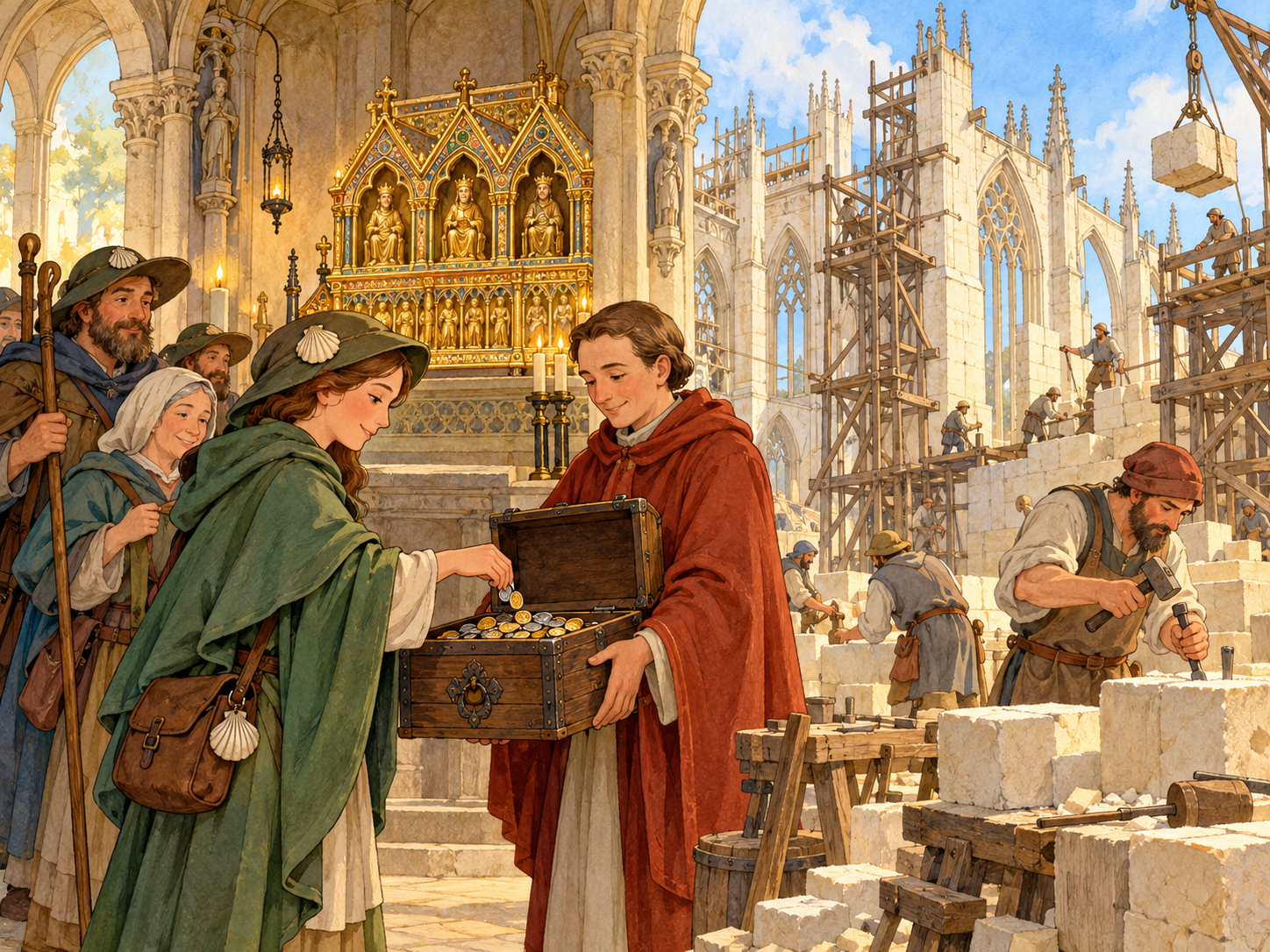
Text to type: Imagine standing in Cologne after building work on the cathedral had stopped. You look up at the cathedral, but it isn't finished. A huge wooden crane sits on one tower. This half-built church raises a simple question: why would anyone start such an enormous building and then leave it? To answer that, we first need to know why it was started. The site was already religious. In the 6th century, after Roman rule ended, Merovingian kings built a church for a bishop there. Centuries later, Cologne's archbishops wanted something much bigger. They built the Gothic cathedral and new city walls together. Their aim was to promote Cologne as a "Holy" city and as the capital of their Electorate, the region they ruled. So the cathedral was about faith, but it was also about power and image. Construction began on 15 August 1248. By 1322, the eastern end, called the choir, was finished and consecrated. That means it was officially made holy and could be used for worship. Much of the early money came from pilgrims. These were travellers who came to visit the Shrine of the Three Kings inside the cathedral. Think of the cathedral like a business that depends on visitors. When many visitors arrive, the work can continue. The key point for the rest of the story is that the building relied on money from outside the city.
Ready. The timer starts with your first key.
Complete
Great job!
Strong finish — your speed stayed steady.
Your rhythm
Speed over time- Time
- 0:00
- Raw speed
- 0 WPM
- Wrong keys
- 0
- Corrected
- 0
Check your understanding
Check: Part 1: A Cathedral Paid For by Pilgrims
1. Why were the archbishops interested in building a huge cathedral, apart from religious reasons?
Sample answer
They wanted to promote Cologne as a "Holy" city and as the capital of their Electorate, so the cathedral also showed their power and the city's importance.
 Part 2: Why the Work Stopped for Centuries
Reading
Part 2: Why the Work Stopped for Centuries
Typing practice
Type the text exactly. Timer starts with your first key.
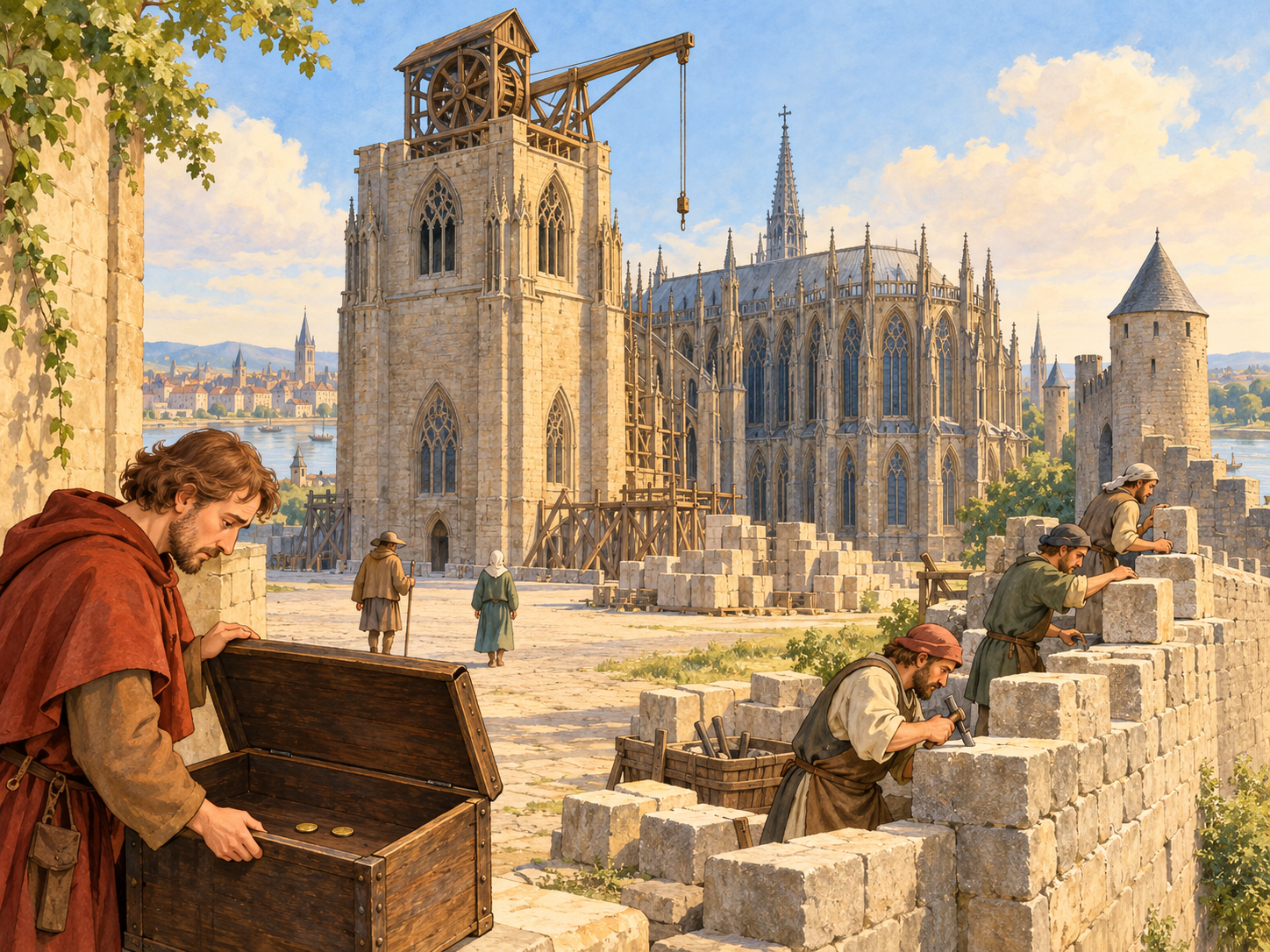
Text to type: Many people assume the cathedral took so long because medieval builders were slow. Look at the dates, though. The choir was finished in about 74 years. The long delay came later, and it had clear causes. The first problem was money. Income from pilgrims declined, and by 1473 the funding had stopped. In 1473, work stopped with the south tower built up to the level of the bells. A large crane was left standing on it, and it stayed there for 400 years. The second problem was war. In 1474, Cologne needed its craftsmen for something more urgent. The city had to strengthen its defences against the Duke of Burgundy. When your city is under threat, walls matter more than towers. The third problem was religious change. The cathedral had also earned money from indulgences. These were payments connected to the forgiveness of sins. The Reformation challenged this practice, and that income was lost. By around 1560, construction had stopped completely. Notice how each cause made the others worse. Fewer pilgrims meant less money, and war took away the workers. After that, the Reformation removed another source of income. The story did not end there. Efforts to restart began around 1814, and work started again in 1823. However, proper funding only arrived in the 1840s. The builders completed the long main hall, the side arms and the towers in the 19th century. They used the medieval plans to do it.
Ready. The timer starts with your first key.
Complete
Great job!
Strong finish — your speed stayed steady.
Your rhythm
Speed over time- Time
- 0:00
- Raw speed
- 0 WPM
- Wrong keys
- 0
- Corrected
- 0
Check your understanding
Check: Part 2: Why the Work Stopped for Centuries
1. Give two reasons why work on the cathedral stopped.
Sample answer
Any two of these are correct: pilgrim income declined, so there was no money by 1473. Craftsmen were needed in 1474 to strengthen the city's defences against the Duke of Burgundy. The Reformation caused the loss of money from indulgences, so construction stopped by around 1560.
Think one step further
The 19th-century builders followed medieval plans instead of designing something new. Why might a city choose to finish an old idea rather than start a fresh one?
Reading
Part 3: A Perfume That Carried the City's Name
Typing practice
Type the text exactly. Timer starts with your first key.
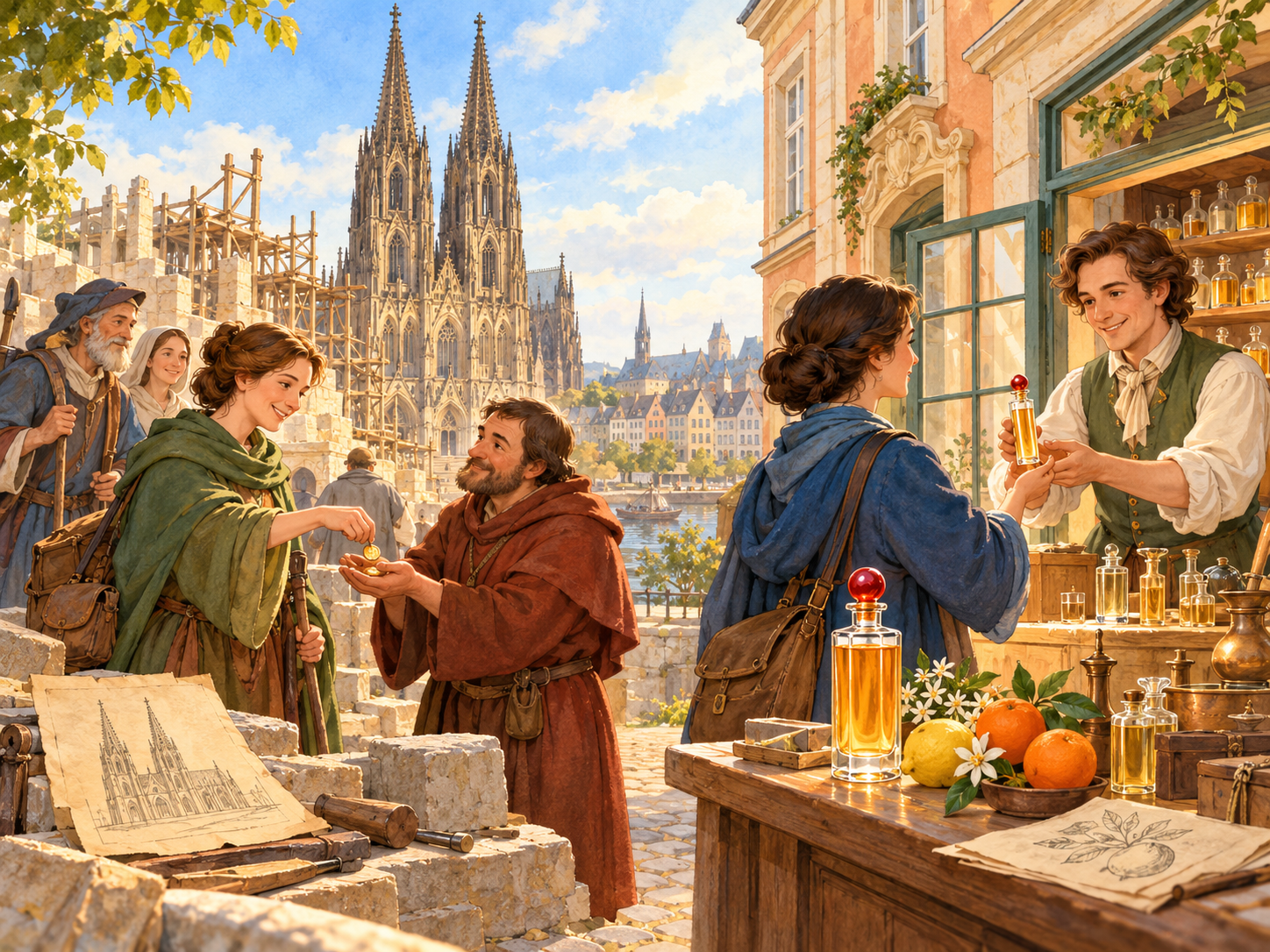
Text to type: Now move forward to 1709. The cathedral was still unfinished, and the old crane was still on the tower. In that year, an Italian named Johann Maria Farina created a new fragrance in Cologne. He made it from citrus oils and alcohol. He was inspired by the memory of an Italian spring morning after rain. This is an interesting twist. One of Cologne's most famous products came from an outsider. Its feeling came from Italy, but its name came from Cologne. Every bottle that travelled abroad carried the city's name with it. Famous customers made this effect much stronger. Napoleon, the writer Goethe, Queen Victoria and Empress Elisabeth all used Farina's Eau de Cologne. Napoleon is said to have used two bottles a day. When powerful and admired people use a product, others want it too. In this way, the perfume made Cologne world-famous.
Ready. The timer starts with your first key.
Complete
Great job!
Strong finish — your speed stayed steady.
Your rhythm
Speed over time- Time
- 0:00
- Raw speed
- 0 WPM
- Wrong keys
- 0
- Corrected
- 0
Check your understanding
Check: Part 3: A Perfume That Carried the City's Name
1. How did Eau de Cologne help make the city famous?
Sample answer
Johann Maria Farina named his perfume after Cologne, and famous users such as Napoleon, Goethe, Queen Victoria and Empress Elisabeth spread its reputation. As the perfume became known, so did the city's name.
 Part 4: Two Symbols, One Pattern
Reading
Part 4: Two Symbols, One Pattern
Typing practice
Type the text exactly. Timer starts with your first key.
Text to type: At first, a cathedral and a perfume seem to have nothing in common. One is made of stone and the other is a scent. But both stories follow a similar pattern. First, both depended on people from outside. Pilgrims' money built the cathedral, and the work stopped when that money stopped. An Italian created the perfume, and famous foreigners spread its name. In both cases, Cologne's fame was built partly by others. Second, both stories are about keeping old work alive. The cathedral was finished with medieval plans, centuries after the first stone was laid. The Farina company was founded in 1709 and is the world's oldest fragrance maker. Farina family descendants still make the original Eau de Cologne in the city today. Since 1723, the company's headquarters has been the Farina House, which is now the Fragrance Museum. So let's return to the old idea that medieval builders were simply slow. They finished the choir in a lifetime. The cathedral waited because pilgrim income declined, craftsmen were needed for the city's defences, and the Reformation cut off money from indulgences. Cologne's story is less about slowness and more about dependence and patience. The city relied on pilgrims and customers, and it kept returning to unfinished work.
Ready. The timer starts with your first key.
Complete
Great job!
Strong finish — your speed stayed steady.
Your rhythm
Speed over time- Time
- 0:00
- Raw speed
- 0 WPM
- Wrong keys
- 0
- Corrected
- 0
Check your understanding
Check: Part 4: Two Symbols, One Pattern
1. What do the cathedral story and the perfume story have in common?
Sample answer
Both depended on people from outside the city. Pilgrims paid for the cathedral, while an Italian created the perfume and famous users spread its fame. Both also show continuity: medieval plans were used to finish the cathedral, and Farina descendants still make the original perfume.
Think one step further
Which do you think did more to make Cologne known around the world, the cathedral or the perfume? Why?
What you can do now
Final Reflection
Discuss: The cathedral waited centuries for money and support before it was finished. Is there a project in your life or community that is "paused" rather than abandoned? What would it need to start again?
Cologne's two famous symbols both relied on outsiders: pilgrims, an Italian perfume maker and famous customers. Thinking about your own city, do you think its identity comes more from the people who live there or from the people who visit and talk about it, and why?
Learning cards
My cards
Cologne's Cathedral and Perfume
0 due · 0 new · about 1 min
Learn the sense first · then retrieve it
No saved cards yet
Open a word or phrase in the article and choose Save to My Words.
Focused Reading Mode is open.
Listening
Lesson audio
Listen from the beginning, or choose “Play this part” as you read along.
Reading
Part 1: A Cathedral Paid For by Pilgrims
Reading
Part 2: Why the Work Stopped for Centuries
Reading
Part 3: A Perfume That Carried the City's Name
Reading
Part 4: Two Symbols, One Pattern
Finished listening?
Mark this listening practice complete when you have followed the lesson audio.
Listening complete
Listen Mode
Word-by-word syncPlay the audio and follow the highlighted word.
Article complete
Choose your next step
Open the next same-level lesson, replay the article, or save this page for later.
Listen Again
Replay the article once and notice how much more you understand.
One replay is enough. Then move on.