Small Table, Big Sport: Training, Clubs and Matches
Quality checked lesson
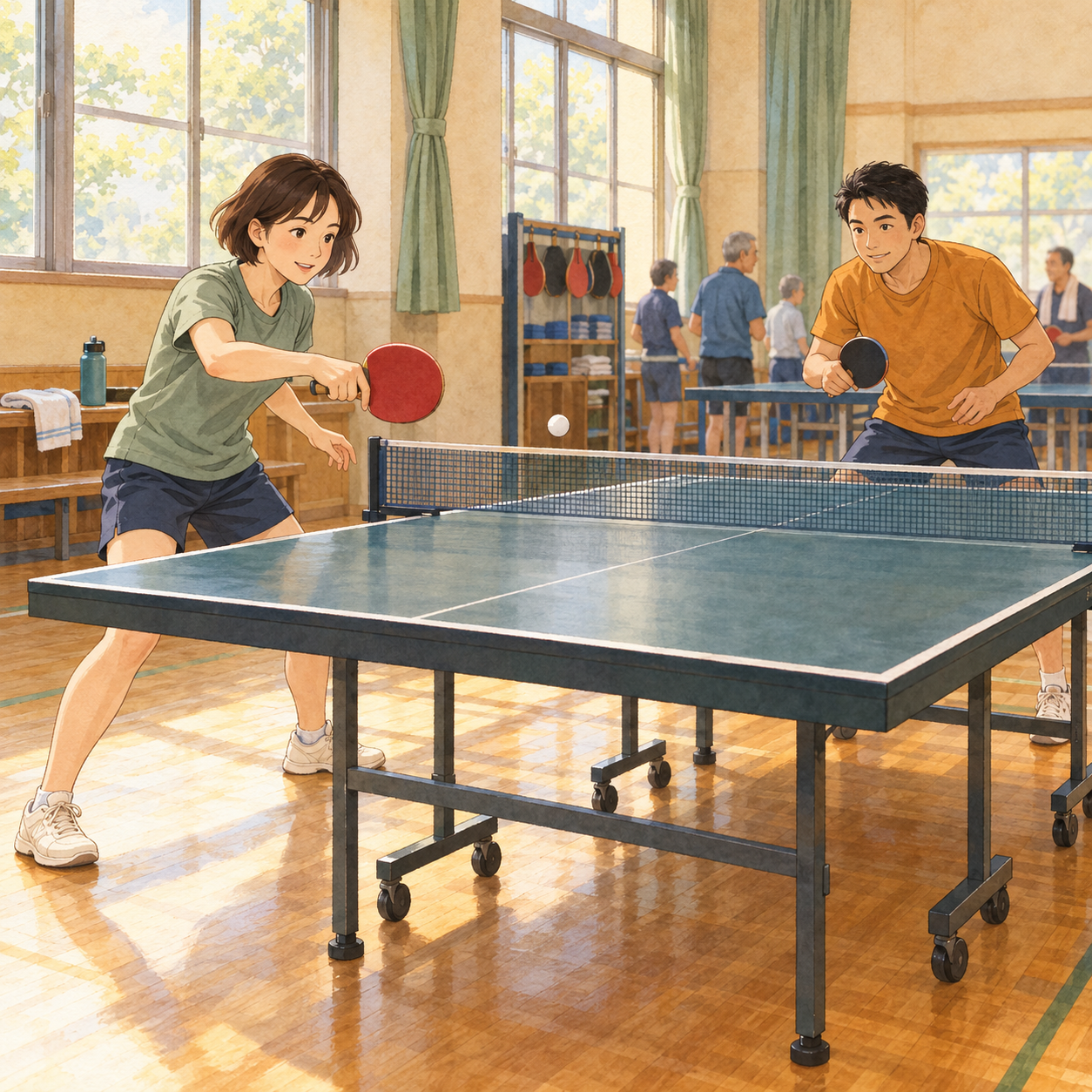
We first look at why a small table makes table tennis a hard sport. Then we see how players train their legs and lungs, and how starting young in Japan has changed from very hard drills toward enjoyment.
 English lesson
Article
Choose how to use this lesson
You can switch anytime.
Study mode
Introduction
Typing practice
Type the text exactly. Timer starts with your first key.
Text to type: We first look at why a small table makes table tennis a hard sport. Then we see how players train their legs and lungs, and how starting young in Japan has changed from very hard drills toward enjoyment. After that, we look at the school players at the heart of Japanese table tennis. Finally, we learn how a match is decided through games and changing ends.
Ready. The timer starts with your first key.
Complete
Great job!
Strong finish — your speed stayed steady.
Your rhythm
Speed over time- Time
- 0:00
- Raw speed
- 0 WPM
- Wrong keys
- 0
- Corrected
- 0
Before you begin
Warm-up
When did you first hold a table tennis racket, and who were you playing with?
Where do you usually play now: at a school, a club, a sports centre, or somewhere else?
After a long practice, which part of your body feels the most tired?
 Part 1: Why a Small Table Makes a Hard Sport
Reading
Part 1: Why a Small Table Makes a Hard Sport
Typing practice
Type the text exactly. Timer starts with your first key.
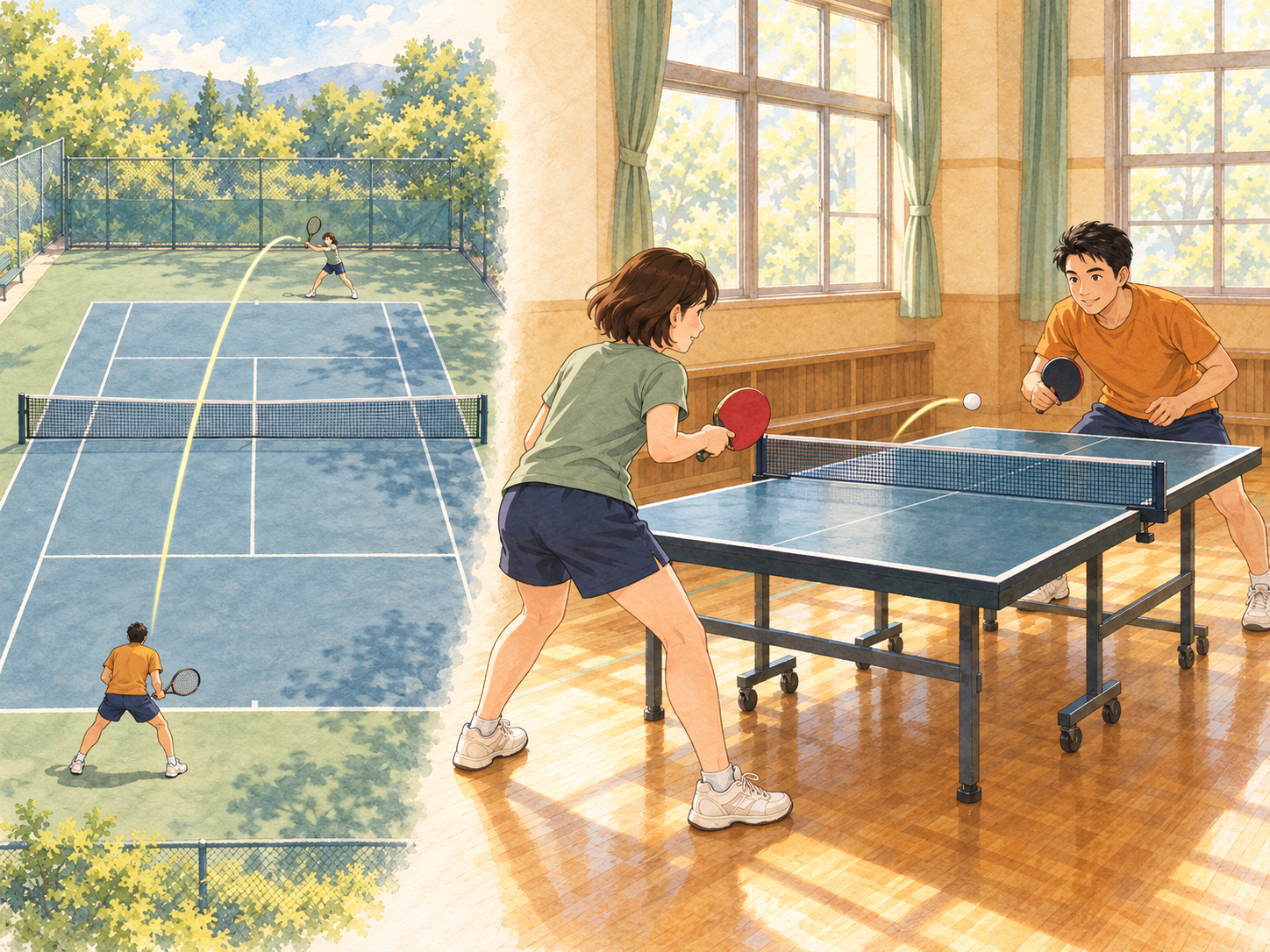
Text to type: Imagine two friends watching a match. One says, "It's just a little game on a table. How hard can it be?" The other friend plays every week, and she smiles. She knows the small table is exactly the problem. The table is 2.74 metres long and 1.525 metres wide. It stands 76 centimetres high, and a net 15.25 centimetres high divides it into two halves. The surface is dark and matte, which means it is not shiny. That helps players see the light-coloured ball clearly. Now think about what that size means. In tennis, players stand far apart on a big court. In table tennis, the players are close, and the ball has a very short trip. So you have very little time between your opponent's hit and your own. This is why the sport needs fast reactions and constant attention. You also have to read the spin, because spin changes the path of the ball. So the small table does not make the game easy. It makes every decision faster. The table is small, but the demand on your eyes, brain and feet is big. Because the game is so fast, many players think carefully about their racket. A racket has two main parts. The blade is the wooden part with the handle. The rubbers are the sheets on each side of the blade. Every player chooses a different mix, and you are the expert on your own racket. When you talk about it, you can explain what your blade is like and why you chose it. You can also compare the rubber on your forehand side with the rubber on your backhand side. Then you can say what you want your racket to help you with, such as spin, speed or control.
Ready. The timer starts with your first key.
Complete
Great job!
Strong finish — your speed stayed steady.
Your rhythm
Speed over time- Time
- 0:00
- Raw speed
- 0 WPM
- Wrong keys
- 0
- Corrected
- 0
Check your understanding
Check: Part 1: Why a Small Table Makes a Hard Sport
1. Why does a short table make table tennis harder, not easier?
Sample answer
Because the players are close together and the ball travels a short distance, they have very little time to react. They must pay attention all the time and read the spin quickly.
Think one step further
Think about your own racket, the blade and the rubbers. How did you choose them, and what do you want them to help you do in this short, fast game?
Reading
Part 2: Training the Legs and the Lungs
Typing practice
Type the text exactly. Timer starts with your first key.
Text to type: Many beginners believe that practising table tennis just means hitting the ball again and again. Hitting matters, of course. But if the ball comes fast and wide, a perfect stroke is useless when your feet are in the wrong place. So serious training also builds the body. Exercises like squats and hinges build general strength. A hinge is a movement where you bend forward from the hips. Unilateral exercises, such as split squats, train one leg at a time. This matters because players often push off from one leg to move sideways. Plyometric exercises are quick, jumping movements. Pogo hops and lateral bounds, which are jumps to the side, improve quick footwork. They also help the split-step, the small hop that gets a player ready to move in any direction. Fitness training copies the rhythm of a match. Players do interval training: short, intense efforts with rest that is not quite long enough. That feels like match play, where you work hard, pause briefly and then work hard again. Players also add some easier aerobic sessions each week, like steady jogging or cycling. These build the endurance that helps the body recover between hard efforts. In other words, the arm hits the ball, but the legs and lungs put the arm in the right place, again and again, until the last point.
Ready. The timer starts with your first key.
Complete
Great job!
Strong finish — your speed stayed steady.
Your rhythm
Speed over time- Time
- 0:00
- Raw speed
- 0 WPM
- Wrong keys
- 0
- Corrected
- 0
Check your understanding
Check: Part 2: Training the Legs and the Lungs
1. Why might a player do interval training instead of only long, slow runs?
Sample answer
Interval training uses short, intense efforts with incomplete rest, which copies the rhythm of match play. Slower aerobic sessions are still useful because they build endurance for recovery.
Think one step further
What does your own training look like? Do you do any footwork or fitness exercises, or mostly rallies at the table?
 Part 3: Starting Young, and the Cost of Hard Training
Reading
Part 3: Starting Young, and the Cost of Hard Training
Typing practice
Type the text exactly. Timer starts with your first key.
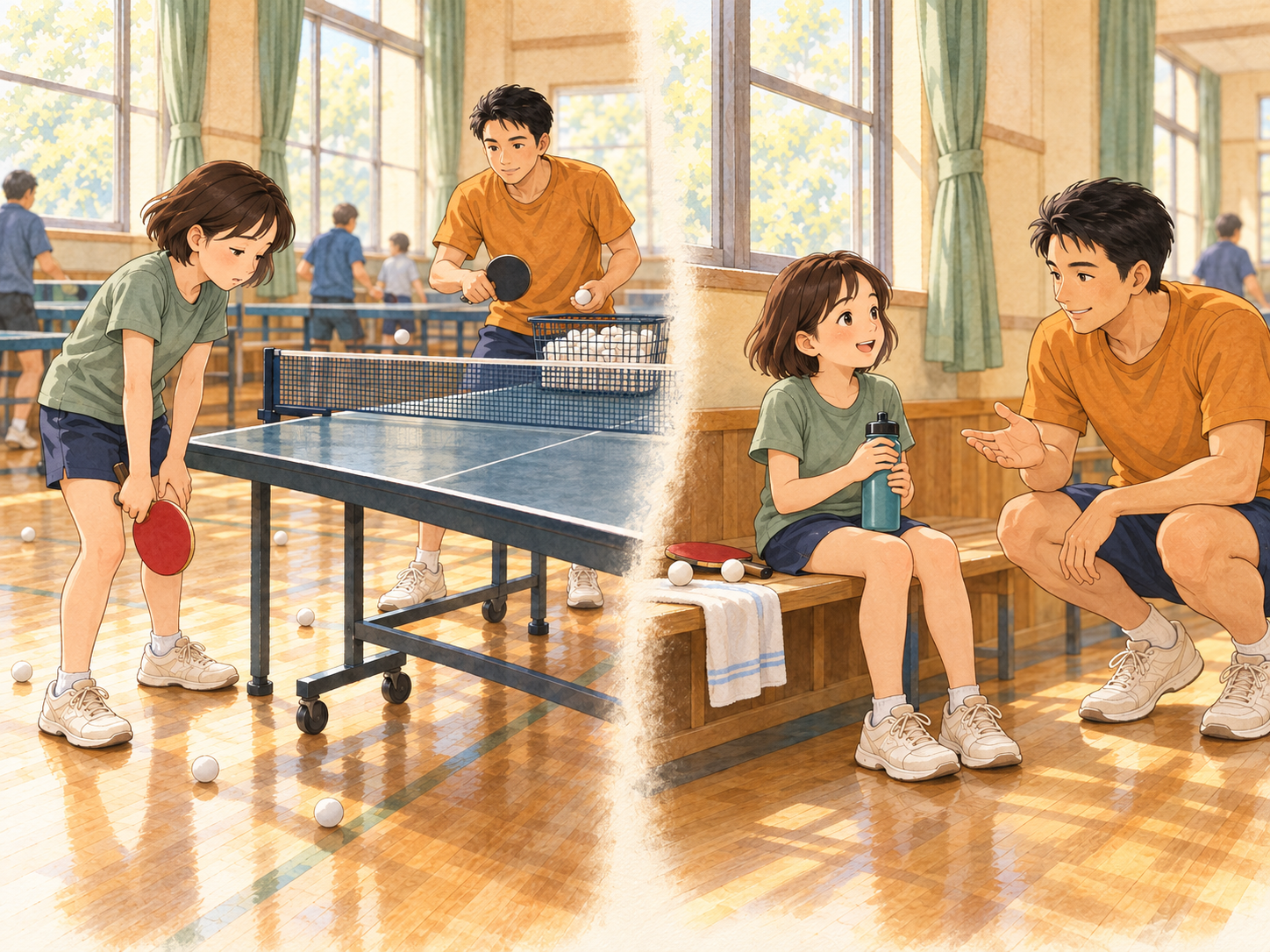
Text to type: Some of Japan's best players started when they were very small children. Ai Fukuhara began playing at age 3, with early coaching from her mother. She practised tough drills, such as rallies of 1,000 shots. Kasumi Ishikawa also started very young. Mima Ito began at age 2. That story seems to give a clear lesson: start early, train hard and you will become a star. These players reached the top level, so the hard work clearly produced great skill. But the story has another side. Today, youth coaching in Japan places enjoyment above intense training. The aim is to avoid burnout, the deep tiredness that makes people lose interest and quit. It also aims to prevent abuse. This is a clear contrast with the past, when very demanding programmes were common. Ito's own early training was one of these. So the lesson is more balanced than "train as hard as possible." Hard drills can build amazing control. But a young player also needs to love the game, or she may not stay in it long enough to grow.
Ready. The timer starts with your first key.
Complete
Great job!
Strong finish — your speed stayed steady.
Your rhythm
Speed over time- Time
- 0:00
- Raw speed
- 0 WPM
- Wrong keys
- 0
- Corrected
- 0
Check your understanding
Check: Part 3: Starting Young, and the Cost of Hard Training
1. How has youth coaching in Japan changed, and why?
Sample answer
Coaching has moved away from very intense training and now puts more weight on enjoyment. The goal is to prevent burnout and abuse.
Think one step further
Was your own training closer to the old hard style or the newer enjoyment-first style? What do you think was good or bad about it?
Reading
Part 4: A Sport Built on School Players
Typing practice
Type the text exactly. Timer starts with your first key.
Text to type: If you want to understand table tennis in Japan, look at its young players. Membership of the Japan Table Tennis Association grew a lot between 2002 and 2016. About half of the members were junior high school students. In other words, the heart of the sport is in school clubs, where many people first train with a team. One reason for the growth was a famous success. Ai Fukuhara's success in 2004 made table tennis more popular in Japan. After that, people worked to raise public awareness of the sport and to aim higher in competition. Here we can see a useful connection. A star inspires children, and children join school clubs. Strong school clubs then produce more players, and some of them may become the next stars. When that happens, the circle starts again. Adult club life is a different story, and every club is different. Some people continue after school. Others stop for years and then come back. Your own experience is the best guide here. When you describe your adult club, you can talk about where and when you play, and who you play with. You can also explain what a normal practice includes. Then you can compare matches in your school club with matches in your adult club, and say how the friendships feel different.
Ready. The timer starts with your first key.
Complete
Great job!
Strong finish — your speed stayed steady.
Your rhythm
Speed over time- Time
- 0:00
- Raw speed
- 0 WPM
- Wrong keys
- 0
- Corrected
- 0
Check your understanding
Check: Part 4: A Sport Built on School Players
1. What shows that school players are central to table tennis in Japan?
Sample answer
About half of the Japan Table Tennis Association's members were junior high school students, during a period when membership grew a lot between 2002 and 2016.
Think one step further
If you played in a school club and an adult club, how were they different in practice, matches and friendships?
 Part 5: How a Match Is Decided
Reading
Part 5: How a Match Is Decided
Typing practice
Type the text exactly. Timer starts with your first key.
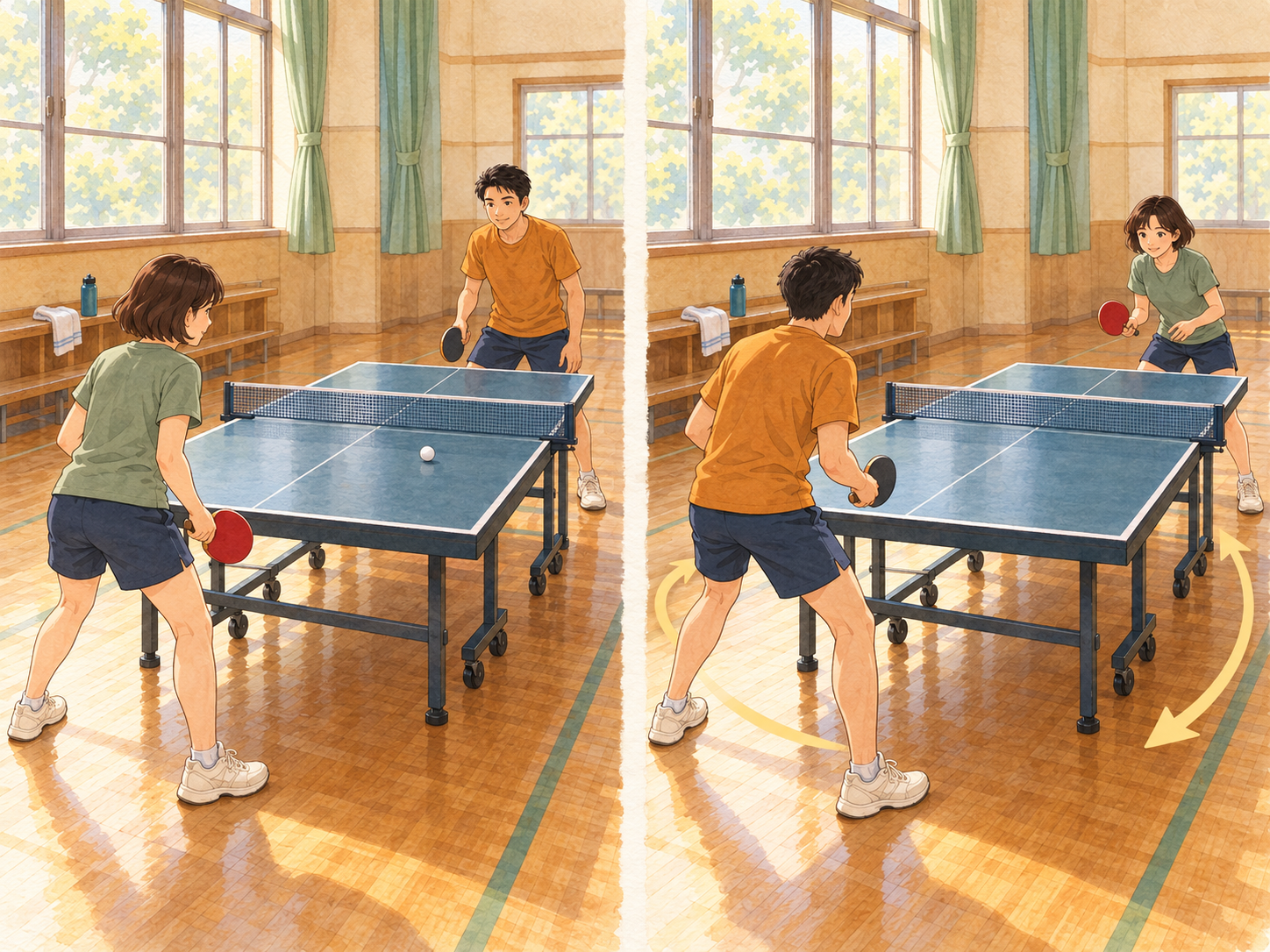
Text to type: A table tennis match is not one long contest. It is made of separate games. Matches are usually best of five or best of seven games. The winner is the first player to win most of the games. In a best-of-five match, that means three games. In a best-of-seven match, it means four. This structure changes how players think. Losing one game is not the end. A player can lose the first game, change her plan and still win the match. So the match tests your ability to adjust, not only your skill. Players also change ends, which means they move to the other side of the table. In the final game, they switch when one player reaches five points. This way, neither player keeps one side for the whole deciding game. Doubles matches mostly follow the singles rules, but there are some exceptions. It helps to keep three words separate. You win points in rallies. Points make up a game. Games make up a match. You know the points part from your own play, so you can explain it in your own words. For example, you can say how many points a player needs to win a game, what happens when the score is very close, and whether your matches are usually best of five or best of seven.
Ready. The timer starts with your first key.
Complete
Great job!
Strong finish — your speed stayed steady.
Your rhythm
Speed over time- Time
- 0:00
- Raw speed
- 0 WPM
- Wrong keys
- 0
- Corrected
- 0
Check your understanding
Check: Part 5: How a Match Is Decided
1. In a best-of-seven match, how many games does a player need to win, and when do players change ends in the final game?
Sample answer
She needs to win four games, which is the majority of seven. In the final game, players change ends when one player reaches five points.
Think one step further
Describe a match you remember well. Was it best of five or seven, and at what point did it change?
What you can do now
Final Reflection
At the start, the friend thought table tennis was "just a little game on a table," but the small table creates very little time, so players need fast reactions, strong legs and good fitness. Japan's stars show what early, hard training can build, and modern coaching shows why enjoyment matters too. Matches are made of games, so a player can learn, adjust and come back.
Tell the story of your table tennis life: how you started, where you trained and why you still play today.
Which famous Japanese player is your favourite, and what do you admire about the way she or he plays?
What blade and rubbers do you use now, and have you ever changed them? What difference did you feel?
What do you love most about table tennis: the speed, the competition, the exercise, the friends, or the feeling of getting better?
What is your next goal as a player, and what kind of training would help you reach it?
Learning cards
My cards
Small Table, Big Sport: Training, Clubs and Matches
0 due · 0 new · about 1 min
Learn the sense first · then retrieve it
No saved cards yet
Open a word or phrase in the article and choose Save to My Words.
Focused Reading Mode is open.
Listening
Lesson audio
Listen from the beginning, or choose “Play this part” as you read along.
Reading
Part 1: Why a Small Table Makes a Hard Sport
Reading
Part 2: Training the Legs and the Lungs
Reading
Part 3: Starting Young, and the Cost of Hard Training
Reading
Part 4: A Sport Built on School Players
Reading
Part 5: How a Match Is Decided
Finished listening?
Mark this listening practice complete when you have followed the lesson audio.
Listening complete
Listen Mode
Word-by-word syncPlay the audio and follow the highlighted word.
Article complete
Choose your next step
Open the next same-level lesson, replay the article, or save this page for later.
Listen Again
Replay the article once and notice how much more you understand.
One replay is enough. Then move on.