Cybersecurity and the Biggest Hacks in History
Quality checked lesson
Six famous hacks show how attackers get in and who is behind them, and most began with simple mistakes.
 English lesson

Article
Choose how to use this lesson
You can switch anytime.
Study mode
Introduction
Typing practice
Type the text exactly. Timer starts with your first key.
Text to type: Today we will learn what cybersecurity is and why it matters to everyone. We will look at six of the biggest hacks in history and who was blamed for them. At the end, we will see what we can learn from them.
Ready. The timer starts with your first key.
Complete
Great job!
Strong finish — your speed stayed steady.
Your rhythm
Speed over time- Time
- 0:00
- Raw speed
- 0 WPM
- Wrong keys
- 0
- Corrected
- 0
Before you begin
Warm-up
How many passwords do you use every day?
Have you ever received a strange email that asked for your password?
Do you install updates on your phone as soon as they appear?
 Part 1: What Cybersecurity Means
Reading
Part 1: What Cybersecurity Means
Typing practice
Type the text exactly. Timer starts with your first key.
Text to type: Cybersecurity means protecting computers, networks and data from attack. A hacker is a person who breaks into a computer system without permission. Any attack on computers or networks is a cyberattack. When hackers steal information from a company, we call it a data breach. Most attacks start through one of three doors. The first is a stolen or weak password. If attackers have your password, the computer thinks they are you. The second is phishing, a fake email or message that tricks you into giving away a password. It can also trick you into opening a dangerous file. The third is a weakness in software, called a vulnerability. Software companies fix these weaknesses with small updates called patches. But a patch only helps if someone installs it. There are also three kinds of attackers. Some are single hackers. Criminal groups attack for money. States, meaning national governments, use hackers to spy on other countries or to damage them. When a government publicly names the group behind an attack, this is called attribution. It is based on evidence, such as the attackers' code and the computers they used. The accused country almost always denies it.
Ready. The timer starts with your first key.
Complete
Great job!
Strong finish — your speed stayed steady.
Your rhythm
Speed over time- Time
- 0:00
- Raw speed
- 0 WPM
- Wrong keys
- 0
- Corrected
- 0
Check your understanding
Check: Part 1: What Cybersecurity Means
1. What are the three common ways attackers get in?
Sample answer
A stolen or weak password, phishing, and a software vulnerability without a patch.
 Part 2: Yahoo: The Biggest Data Breach
Reading
Part 2: Yahoo: The Biggest Data Breach
Typing practice
Type the text exactly. Timer starts with your first key.
Text to type: Yahoo was once one of the biggest email services in the world. In 2013, attackers stole information from all 3 billion Yahoo accounts. It is still the largest data breach in history. Yahoo said it could not find out who did it. We know much more about a second Yahoo breach, in 2014. US officials say it started with one email. A Yahoo employee received a spear-phishing email. This is phishing aimed at one chosen person, so the message looks personal and real. Through that employee's account, the attackers got into Yahoo's network. Then they copied part of Yahoo's user database, with names and phone numbers. Even this part held information from at least 500 million accounts. Next, they did something clever. When you log in to a website, it saves a small file called a cookie in your browser. The cookie tells the website that you have already logged in. The attackers made fake cookies. With them, they could open chosen email accounts without any password. Many of these accounts belonged to officials in Russia and the US. This shows the attack was about spying, not only money. In 2017, the US charged four men with this attack. Two were officers of the FSB, Russia's security service. The other two were criminal hackers who worked with them. So this attack mixed a state and criminals. The Kremlin, Russia's government, denied it. It said it was impossible for any Russian agency, including the FSB, to take part in crimes on the internet.
Ready. The timer starts with your first key.
Complete
Great job!
Strong finish — your speed stayed steady.
Your rhythm
Speed over time- Time
- 0:00
- Raw speed
- 0 WPM
- Wrong keys
- 0
- Corrected
- 0
Check your understanding
Check: Part 2: Yahoo: The Biggest Data Breach
1. How could the attackers open Yahoo accounts without passwords?
Sample answer
They made fake cookies, so Yahoo thought they had already logged in.
 Part 3: Equifax: One Missing Update
Reading
Part 3: Equifax: One Missing Update
Typing practice
Type the text exactly. Timer starts with your first key.
Text to type: Equifax is one of the biggest credit agencies in the US. A credit agency collects information about how people borrow and pay back money. Banks check this information before they give someone a loan or a credit card. So Equifax holds very private data about most adults in the country. In March 2017, a vulnerability was found in Apache Struts. This is free software that many websites are built with. A patch came out the same month. Equifax used Apache Struts on one of its websites, but it did not install the patch. Attackers found the weak website and quietly copied data for weeks before anyone noticed. The attackers took the data of about 147 million people. This included names, birth dates, addresses and Social Security numbers. A Social Security number is the US identity number used for work, banks and taxes. With it, a criminal can borrow money in your name. You can change a stolen password in a minute. But you cannot easily change this number, so the danger lasts for years. In 2020, the US charged four members of China's army with the attack. China denied it. Its government said that China and its army never take part in stealing through the internet.
Ready. The timer starts with your first key.
Complete
Great job!
Strong finish — your speed stayed steady.
Your rhythm
Speed over time- Time
- 0:00
- Raw speed
- 0 WPM
- Wrong keys
- 0
- Corrected
- 0
Check your understanding
Check: Part 3: Equifax: One Missing Update
1. What simple step could have stopped the Equifax attack?
Sample answer
Installing the Apache Struts patch that came out in March 2017.
 Part 4: WannaCry: Ransomware in Hospitals
Reading
Part 4: WannaCry: Ransomware in Hospitals
Typing practice
Type the text exactly. Timer starts with your first key.
Text to type: In May 2017, computers around the world suddenly showed a red screen with a message. It said: your files are locked, so pay in bitcoin to get them back. This was WannaCry, a kind of attack called ransomware. A ransom is money that criminals demand before they give back something they have taken. Ransomware locks your files and asks for that money. But even after paying, people do not always get their files back. WannaCry was also a worm. A worm is a program that copies itself from computer to computer on its own. Nobody needs to click anything. To spread, it attacked a weakness in Microsoft Windows. It used a hacking tool that hackers had stolen from the NSA, the US spy agency. Microsoft had released a patch two months earlier. So WannaCry only hit computers without that update. Within days, WannaCry hit more than 200,000 computers. In the UK, the national health service, the NHS, was hit hard. Many hospitals could not use their computers. NHS England later estimated that more than 19,000 medical appointments were cancelled. A young UK researcher, Marcus Hutchins, stopped it. Before spreading, the worm checked whether a strange web address existed. If the address existed, the worm did not spread. So he registered that address, and the worm stopped. Later in 2017, the US, the UK and other governments said North Korea was responsible. They named a hacker group known as the Lazarus Group. North Korea denied it and called the claim absurd.
Ready. The timer starts with your first key.
Complete
Great job!
Strong finish — your speed stayed steady.
Your rhythm
Speed over time- Time
- 0:00
- Raw speed
- 0 WPM
- Wrong keys
- 0
- Corrected
- 0
Check your understanding
Check: Part 4: WannaCry: Ransomware in Hospitals
1. Why did WannaCry spread so fast?
Sample answer
It was a worm, so it copied itself to computers without the patch, with no clicks needed.
 Part 5: NotPetya: The Most Expensive Attack
Reading
Part 5: NotPetya: The Most Expensive Attack
Typing practice
Type the text exactly. Timer starts with your first key.
Text to type: In June 2017, a new attack began in Ukraine. Many companies in Ukraine used the same tax software. Attackers broke into the company that made it and hid their own code inside its updates. So when companies installed a normal update, they also installed the attack. This attack, NotPetya, looked like ransomware: it locked computers and asked for bitcoin. But there was no real way to get the files back, even after paying. Its true goal was destruction. Because it was also a worm, it spread from Ukraine around the world within hours. The shipping company Maersk, one of the largest in the world, shows the damage best. NotPetya wiped almost all its computers. The company had to rebuild 45,000 computers in ten days. Around the world, the total damage was more than $10 billion. The White House, the office of the US president, called NotPetya the most destructive and expensive cyberattack in history. In 2018, the US, the UK and other governments said Russia's army was responsible. Experts link it to a team inside the GRU, Russia's military intelligence. The attack came during the conflict between Russia and Ukraine. The Kremlin strongly denied it and said the claims had no proof.
Ready. The timer starts with your first key.
Complete
Great job!
Strong finish — your speed stayed steady.
Your rhythm
Speed over time- Time
- 0:00
- Raw speed
- 0 WPM
- Wrong keys
- 0
- Corrected
- 0
Check your understanding
Check: Part 5: NotPetya: The Most Expensive Attack
1. Why do experts say NotPetya was not really ransomware?
Sample answer
The files could not be recovered even after paying; its real goal was destruction.
 Part 6: SolarWinds: Spies in a Software Update
Reading
Part 6: SolarWinds: Spies in a Software Update
Typing practice
Type the text exactly. Timer starts with your first key.
Text to type: SolarWinds is a US company that makes Orion. This software helps IT teams watch and manage their computer networks. Large companies and government offices use it, and it needs deep access to their systems. That made it a perfect target. In 2020, attackers hid secret code in Orion updates. This is called a supply chain attack. Instead of attacking the victim directly, you attack a company the victim trusts. About 18,000 customers installed the poisoned update. The attackers then chose only the most valuable ones. The White House said they went deeper into nine US government agencies and about 100 companies. This shows the difference between criminals and spies. Ransomware criminals, such as DarkSide in the next part, are loud: they want victims to see the attack and pay. The SolarWinds attack was quiet. The goal was to read emails and documents for months without being noticed. In 2021, the US and the UK said Russia's foreign intelligence service, the SVR, was responsible. The US then sent some of Russia's diplomats home and added new sanctions. Sanctions are punishments, such as limits on money and trade. The head of the SVR denied it. He said the claims were like a bad detective novel.
Ready. The timer starts with your first key.
Complete
Great job!
Strong finish — your speed stayed steady.
Your rhythm
Speed over time- Time
- 0:00
- Raw speed
- 0 WPM
- Wrong keys
- 0
- Corrected
- 0
Check your understanding
Check: Part 6: SolarWinds: Spies in a Software Update
1. Why did the attackers break into SolarWinds instead of attacking the government directly?
Sample answer
Many agencies and companies trusted Orion updates, so one break-in opened many doors.
 Part 7: Colonial Pipeline: Ransomware Stops the Fuel
Reading
Part 7: Colonial Pipeline: Ransomware Stops the Fuel
Typing practice
Type the text exactly. Timer starts with your first key.
Text to type: Colonial Pipeline runs a very long pipeline from the south of the US to the East Coast. It carries about 45% of the fuel used on the East Coast. In May 2021, ransomware hit the company's computers. Colonial shut down the whole pipeline to stop the attack from spreading. The attackers got in with just one password. It belonged to an old VPN account that nobody used any more but that still worked. A VPN lets workers connect to the company network from outside. The account had no multi-factor authentication. This asks for a second check after the password, such as a code sent to your phone. The password was later found in a collection of leaked passwords on the dark web. The dark web is a hidden part of the internet where criminals trade stolen data. Investigators are still not sure how the attackers got the password. The pipeline stayed closed for five days. People rushed to buy fuel, many gas stations ran out, and prices went up. Colonial paid a ransom of about $4.4 million in bitcoin. The FBI said the attack came from DarkSide, a criminal ransomware group linked to Russia. After the attack, the group posted a message online. It said that its goal was to make money, not to create problems for society.
Ready. The timer starts with your first key.
Complete
Great job!
Strong finish — your speed stayed steady.
Your rhythm
Speed over time- Time
- 0:00
- Raw speed
- 0 WPM
- Wrong keys
- 0
- Corrected
- 0
Check your understanding
Check: Part 7: Colonial Pipeline: Ransomware Stops the Fuel
1. What security step would have stopped the stolen password from working?
Sample answer
Multi-factor authentication, because the attackers would also need a code from the worker's phone.
 Part 8: What Ordinary People Can Learn
Reading
Part 8: What Ordinary People Can Learn
Typing practice
Type the text exactly. Timer starts with your first key.
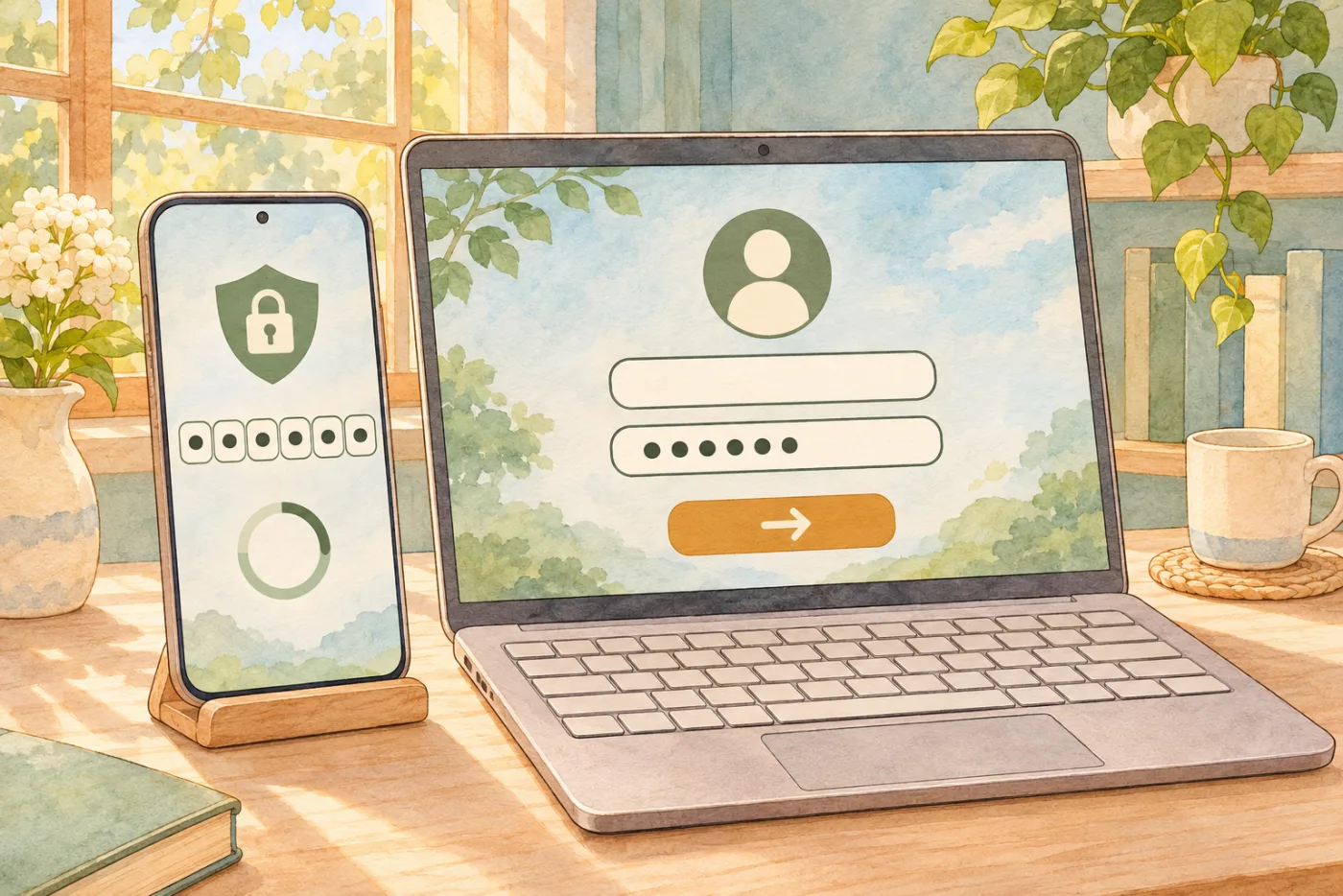
Text to type: These six hacks were huge. But most of them started through the same simple doors that we leave open at home. First, install updates quickly. Equifax and the WannaCry victims were hit through weaknesses that already had a patch. When your phone offers an update, that update often closes exactly this kind of hole. Second, use a different password for every account, and turn on multi-factor authentication. The password that opened Colonial Pipeline's network was later found in a list of leaked passwords. If you use one password everywhere, one breach anywhere can open all your accounts. A password manager is an app that creates and remembers long passwords for you. Third, slow down with emails and messages. The Yahoo attack began with one email to one employee. Be careful when a message asks you to log in, pay or open a file. Be extra careful when it feels urgent. Go to the website yourself instead of using the link. Finally, keep a backup: a copy of your photos and files on a small hard drive or in cloud storage. But ransomware can also lock or delete a backup that is connected to your computer. So after each backup, do not keep the hard drive connected to your computer. Or choose cloud storage that also saves your files from earlier days. Then, when ransomware locks or destroys your files, you can get them back without paying.
Ready. The timer starts with your first key.
Complete
Great job!
Strong finish — your speed stayed steady.
Your rhythm
Speed over time- Time
- 0:00
- Raw speed
- 0 WPM
- Wrong keys
- 0
- Corrected
- 0
Check your understanding
Check: Part 8: What Ordinary People Can Learn
1. Which habit protects your other accounts when one website leaks your password?
Sample answer
Using a different password for every account, with multi-factor authentication.
Speak
Speaking
What you can do now
Final Reflection
The biggest hacks were very different. But most of them began with a small mistake: a missing update, an old password or one click.
Which of the six hacks surprised you most, and why?
When a country denies an attack, how should other countries respond?
Which of the four habits will you start this week?
Learning cards
My cards
Cybersecurity and the Biggest Hacks in History
0 due · 0 new · about 1 min
Learn the sense first · then retrieve it
No saved cards yet
Open a word or phrase in the article and choose Save to My Words.
Focused Reading Mode is open.
Listening
Lesson audio
Listen from the beginning, or choose “Play this part” as you read along.
Reading
Part 1: What Cybersecurity Means
Reading
Part 2: Yahoo: The Biggest Data Breach
Reading
Part 3: Equifax: One Missing Update
Reading
Part 4: WannaCry: Ransomware in Hospitals
Reading
Part 5: NotPetya: The Most Expensive Attack
Reading
Part 6: SolarWinds: Spies in a Software Update
Reading
Part 7: Colonial Pipeline: Ransomware Stops the Fuel
Reading
Part 8: What Ordinary People Can Learn
Finished listening?
Mark this listening practice complete when you have followed the lesson audio.
Listening complete
Listen Mode
Word-by-word syncPlay the audio and follow the highlighted word.
Article complete
Choose your next step
Open the next same-level lesson, replay the article, or save this page for later.
Listen Again
Replay the article once and notice how much more you understand.
One replay is enough. Then move on.
Lesson resources
Resources
Sources and fact review (28)
- Yahoo says 2013 breach affected all 3 billion of its accounts (ABC30)
3 billion accounts in the 2013 breach; Yahoo could not identify the attackers
- Inside the Russian hack of Yahoo: How they did it (CSO Online)
2014 breach began with a spear-phishing email to an employee; user database copied; fake cookies used to open chosen accounts
- US indicts four individuals including two Russian spies for the 2014 hack of 500 million Yahoo accounts (Africanews)
Scale of the 2014 breach: at least 500 million accounts
- U.S. indicts 2 Russian security officials over Yahoo hack (WGBH)
2017 charges against two FSB officers and two criminal hackers; targets included officials in Russia and the US
- Kremlin denies Russian agencies involved in Yahoo cyberattacks (RFE/RL)
Kremlin said official involvement by any Russian agency, including the FSB, was out of the question
- Chinese military personnel charged in Equifax breach (TechTarget)
Apache Struts flaw, patch in March 2017 not installed, 2020 charges against four members of China's army
- China denies involvement in Equifax hack (Infosecurity Magazine)
China's denial
- Equifax to pay up to $700M for data breach damages (Dark Reading)
About 147 million people affected; types of data taken
- Ransomware (FBI)
Ransomware locks files and demands payment; paying does not guarantee getting files back
- Investigation: WannaCry cyber attack and the NHS (National Audit Office)
NHS impact; NHS England estimated over 19,000 cancelled appointments; infected systems were unpatched; a researcher's kill switch stopped the spread
- U.S. blames North Korea for the massive WannaCry ransomware attack (Security Affairs)
2017 attribution to North Korea and the Lazarus Group; stolen NSA tool; more than 200,000 computers
- North Korea denies role in WannaCry ransomware attack (Arab News)
North Korea called the claim absurd
- NotPetya patient zero: Ukrainian accounting software vendor (GovInfoSecurity)
NotPetya spread through poisoned updates of Ukrainian tax software in June 2017
- NotPetya (2017), CCDCOE Cyber Law Toolkit
Losses of more than $10 billion; link to the GRU
- White House: Russia's cyber attack on Ukraine most destructive and costly in history (Free Beacon)
2018 White House statement blaming Russia's military
- Kremlin categorically denies Russia behind NotPetya cyber-attack (Free Malaysia Today)
Kremlin denial; UK attribution
- Maersk reinstalled 45,000 PCs and 4,000 servers after NotPetya attack (Security Affairs)
Maersk rebuilt 45,000 computers in ten days
- UK and US confirm Russian responsibility for SolarWinds attack (Janes)
2021 attribution to the SVR; 18,000 customers; diplomats sent home; sanctions
- White House: 100 companies compromised in SolarWinds hack (TechTarget)
Nine government agencies and about 100 companies
- SVR chief denies Russia was behind SolarWinds cyberattack (RFE/RL)
SVR head's denial, "like a bad detective novel"
- The SolarWinds attack (Belfer Center)
Poisoned Orion updates in 2020; quiet spying for months
- Hackers breached Colonial Pipeline with one compromised password (Al Jazeera)
Old VPN account, no multi-factor authentication, password found in leaked data on the dark web, unclear how attackers got it, $4.4 million ransom
- Colonial Pipeline shutdown may affect US pump prices (Reuters via Marianas Variety)
Pipeline from Texas to the East Coast; about 45% of East Coast fuel
- Fuel shortages after the Colonial shutdown (CNN)
Gas stations running out of fuel
- Colonial Pipeline restarts after hack (NBC Washington)
Restart after about five days
- FBI confirms DarkSide ransomware responsible for Colonial Pipeline hack (Security Affairs)
FBI attribution to DarkSide
- A closer look at the DarkSide ransomware gang (Krebs on Security)
DarkSide's "our goal is to make money" statement
- Protect against ransomware: backups (Microsoft Learn)
Ransomware can encrypt or delete reachable backups, so backups must be kept separate and protected