Lunch Breaks, Drive-Throughs and Bento Boxes: How Daily Life Takes Shape
Quality checked lesson
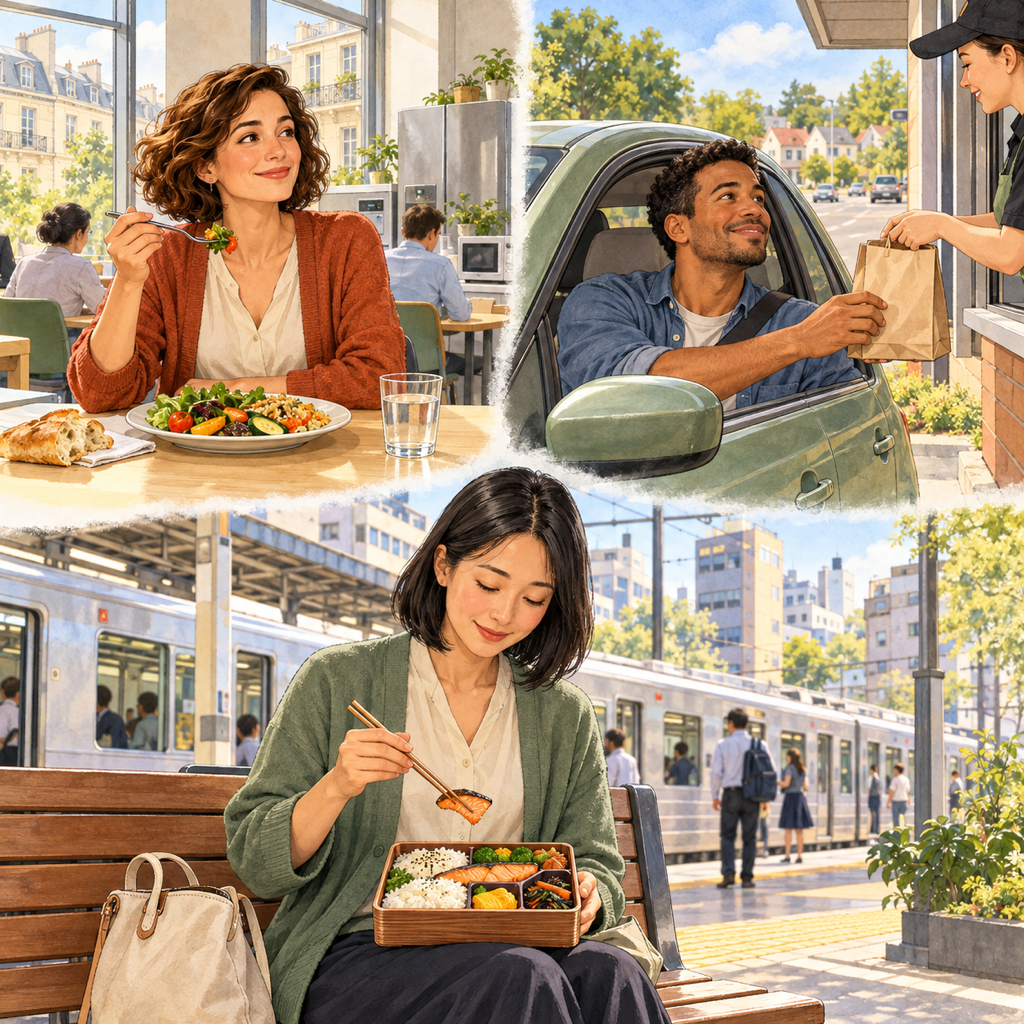
In France, the law guarantees a lunch break and the 35-hour week sets a clear limit on working time. In the USA, the car brought the meal to the driver's seat, and in Japan, longer working days turned a packed box into a daily habit.
 English lesson
Article
Choose how to use this lesson
You can switch anytime.
Study mode
Introduction
Typing practice
Type the text exactly. Timer starts with your first key.
Text to type: In France, the law guarantees a lunch break and the 35-hour week sets a clear limit on working time. In the USA, the car brought the meal to the driver's seat, and in Japan, longer working days turned a packed box into a daily habit.
Ready. The timer starts with your first key.
Complete
Great job!
Strong finish — your speed stayed steady.
Your rhythm
Speed over time- Time
- 0:00
- Raw speed
- 0 WPM
- Wrong keys
- 0
- Corrected
- 0
Before you begin
Warm-up
Where do you usually eat lunch on a working day, and who or what decides how long you have?
How do you get to work or school, and how does that journey affect what and when you eat?
When you think of daily life in France, the USA or Japan, what picture comes to mind first?
 Part 1: France's lunch is built by law, not just by love of food
Reading
Part 1: France's lunch is built by law, not just by love of food
Typing practice
Type the text exactly. Timer starts with your first key.
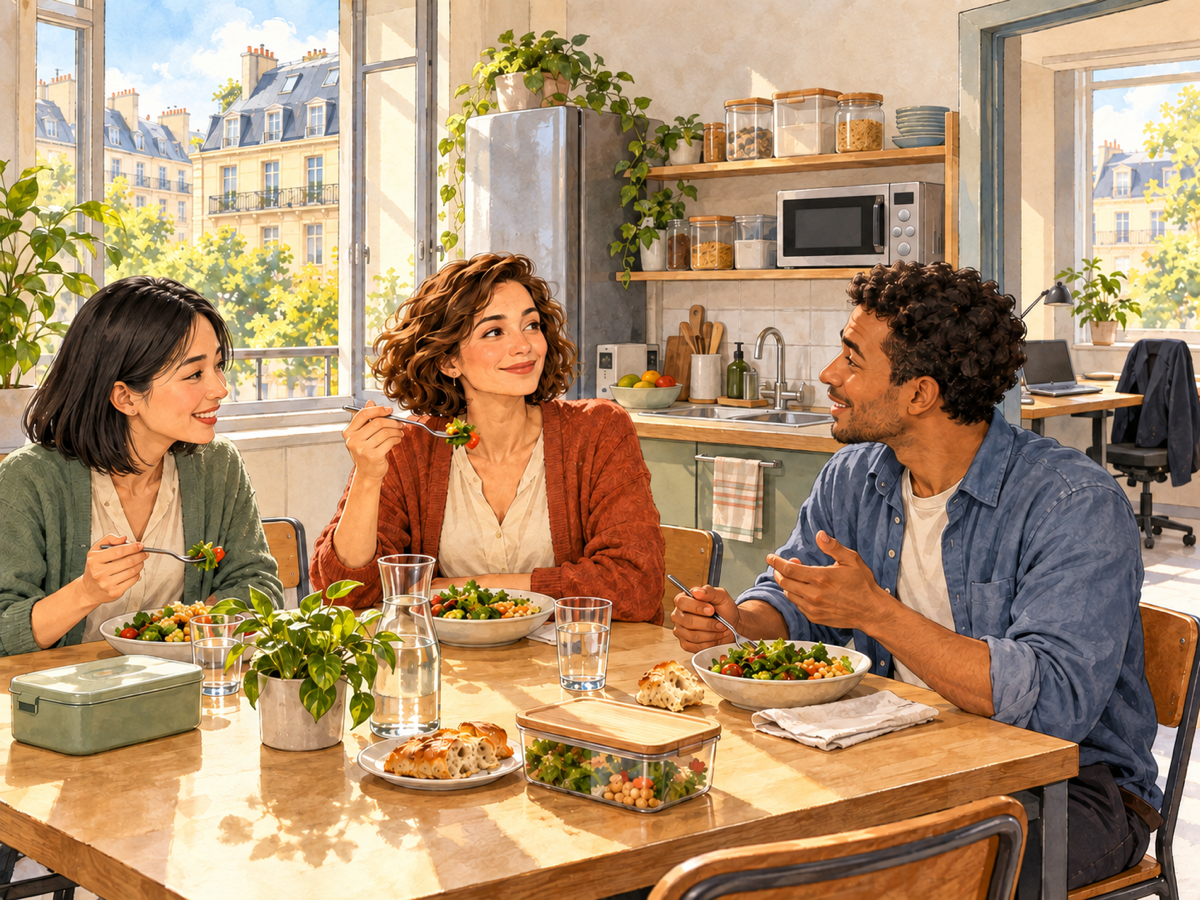
Text to type: Imagine three people at midday. All three are hungry, and all three solve the problem differently. But look closely, and you find rules, roads and history doing much of the work. Start with France. Many people picture the French lunch as long and slow, with wine and several courses. The real rules tell a more ordered story. In France, the legal full-time workweek is 35 hours, and work beyond that counts as overtime. A working day can last up to 10 hours. In special cases, such as a very busy period or the needs of how a company is organised, it can last up to 12 hours. So the 35-hour week does not simply mean short days. It sets a clear limit, and extra hours have a cost. Lunch fits inside this system. After six hours of work in a row, an employee must get a break of at least 20 minutes, and lunch counts as that break. In practice, lunch breaks are often longer, at around 45 minutes. That is real time to sit down and eat, but it is not the two-hour meal of the stereotype. Lunch is also usually unpaid. This is because employees are not under their employer's direction during the break. The time belongs to them, not to the company. The law even shapes the place where people eat. Companies with 50 or more employees must provide a room where staff can store food, heat it and sit down. Think about the message behind this rule. Eating is treated as something that deserves a proper space, not something you do quickly at your desk. This fits a wider French culture that values enjoying food. Still, the picture is not frozen. Fast food and American eating habits put pressure on French food culture, especially among young people. Many French people protect traditional food culture through education and laws.
Ready. The timer starts with your first key.
Complete
Great job!
Strong finish — your speed stayed steady.
Your rhythm
Speed over time- Time
- 0:00
- Raw speed
- 0 WPM
- Wrong keys
- 0
- Corrected
- 0
Check your understanding
Check: Part 1: France's lunch is built by law, not just by love of food
1. Why is the lunch break in France usually unpaid?
Sample answer
Lunch breaks are usually unpaid because employees are not under their employer's direction during that time, so the law does not treat it as working time.
Think one step further
If your workplace had to provide a room for eating, do you think it would change how people take lunch? Why or why not?
 Part 2: In the USA, the meal comes to the car
Reading
Part 2: In the USA, the meal comes to the car
Typing practice
Type the text exactly. Timer starts with your first key.
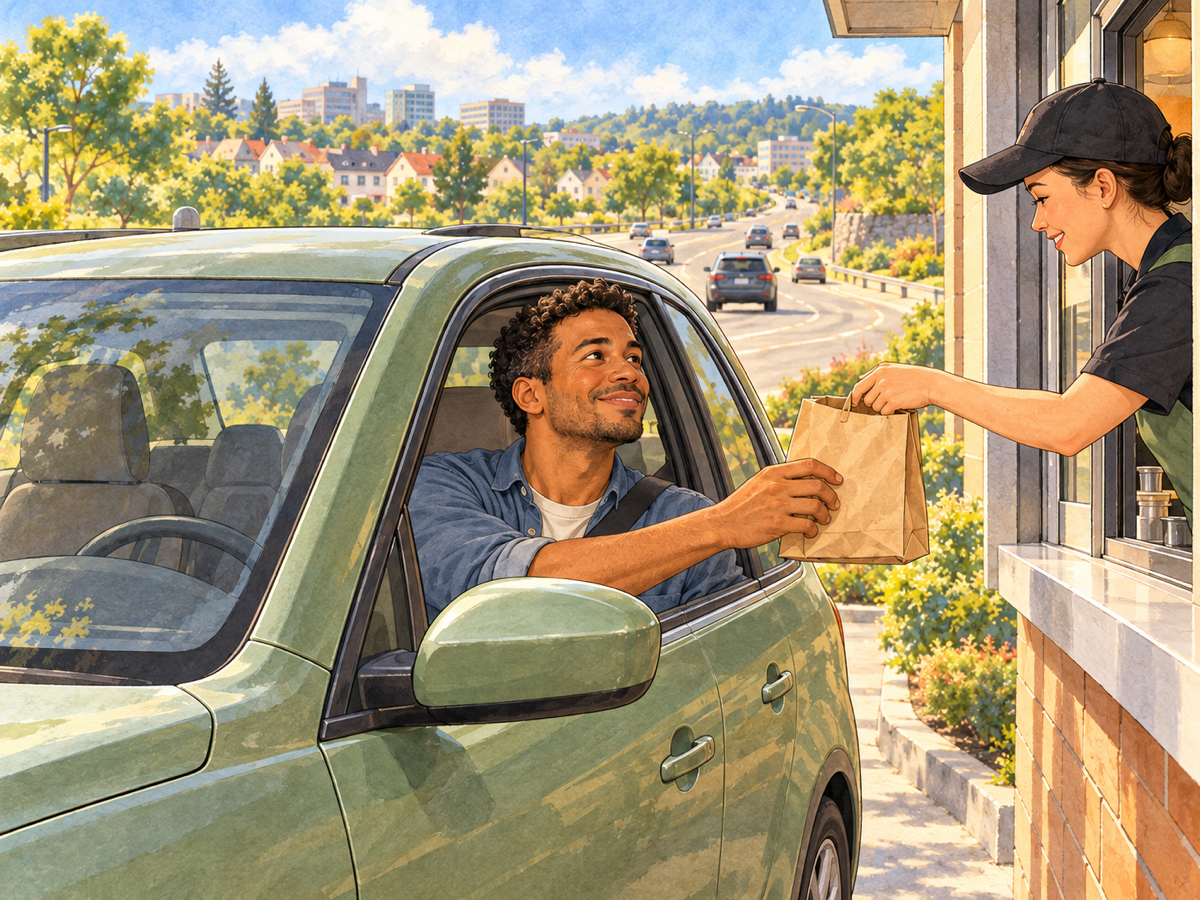
Text to type: In the United States, the average adult commute took 26.8 minutes in 2014. That is one way, so a return trip comes to nearly an hour every working day. Like many countries, the US has morning and evening rush hours, when roads and transport become crowded and slow. Car use is widespread in the United States, and it changed how people eat. It made drive-in and drive-through restaurants popular. At a drive-through, you order, pay and collect your food without leaving your seat. The mechanism is simple. When the car is at the center of daily movement, the meal has to come to the car. Food must be quick to serve and easy to eat on the move. This helps explain why American eating today puts a strong focus on fast food and take-out. Familiar examples include burgers, pizza, hot dogs, fried foods and milkshakes. But this is only half the story. American take-out comes from many different ethnic origins. Food variety in the US grew in the 20th century because of technology, wars, science and immigration. Barbecue and Tex-Mex dishes show how strongly food can belong to one region. The large size of the country contributes to this regional variation. So "American food" is less a single menu than many local menus, connected by long roads.
Ready. The timer starts with your first key.
Complete
Great job!
Strong finish — your speed stayed steady.
Your rhythm
Speed over time- Time
- 0:00
- Raw speed
- 0 WPM
- Wrong keys
- 0
- Corrected
- 0
Check your understanding
Check: Part 2: In the USA, the meal comes to the car
1. How did widespread car use change American eating habits?
Sample answer
It made drive-in and drive-through restaurants popular, so people could get meals without leaving their cars. This helped push daily eating toward fast food and take-out.
Think one step further
Is the "always in a hurry" picture of Americans a fair explanation, or do roads and distances explain more? Give a reason.
Reading
Part 3: Japan packed the meal into a box
Typing practice
Type the text exactly. Timer starts with your first key.
Text to type: Japan offers a third answer to the same question: how do you eat when work keeps you away from home? The answer was to pack the meal. A bento is a single-portion packed meal, usually for lunch. It normally contains rice or noodles, fish or meat, and pickled or cooked vegetables in a box with separate sections. Lunch itself was not always normal in Japan. It became common only from the early 18th century, when kerosene lamps let people stay active for longer. As working days grew longer, workers started bringing bentos to work. The chain of cause is clear here. Light changed the length of the day, and a longer day created a new meal. Farmers had their own version. They carried wooden bento boxes called menpa, filled with barley rice and pickled plums. This food stayed fresh even when it was cold, which mattered when there was nowhere to heat it. On long days such as rice planting, villagers shared large wooden buckets of rice balls and side dishes and ate together. Bentos also went to the theater. Makunouchi bentos, with grilled rice balls, fish cakes and simmered dishes, were served during breaks between acts. The style is still common today. Compare this with the drive-through. In the US, hot food is handed to people who travel by car. In Japan, a balanced meal is packed so it still works at room temperature. In Tokyo, commuting is commonly linked with trains rather than cars. A meal in a box needs no kitchen, no counter and no car, so you can carry it anywhere.
Ready. The timer starts with your first key.
Complete
Great job!
Strong finish — your speed stayed steady.
Your rhythm
Speed over time- Time
- 0:00
- Raw speed
- 0 WPM
- Wrong keys
- 0
- Corrected
- 0
Check your understanding
Check: Part 3: Japan packed the meal into a box
1. What change helped make lunch common in Japan from the early 18th century?
Sample answer
Kerosene lamps let people stay active for longer, so working days became longer. Workers then started bringing bentos to work.
Think one step further
The drive-through and the bento both solve the problem of eating away from home. Which solution would suit your own daily routine better, and why?
 Part 4: Geography shapes the plate, and patterns are not rules
Reading
Part 4: Geography shapes the plate, and patterns are not rules
Typing practice
Type the text exactly. Timer starts with your first key.
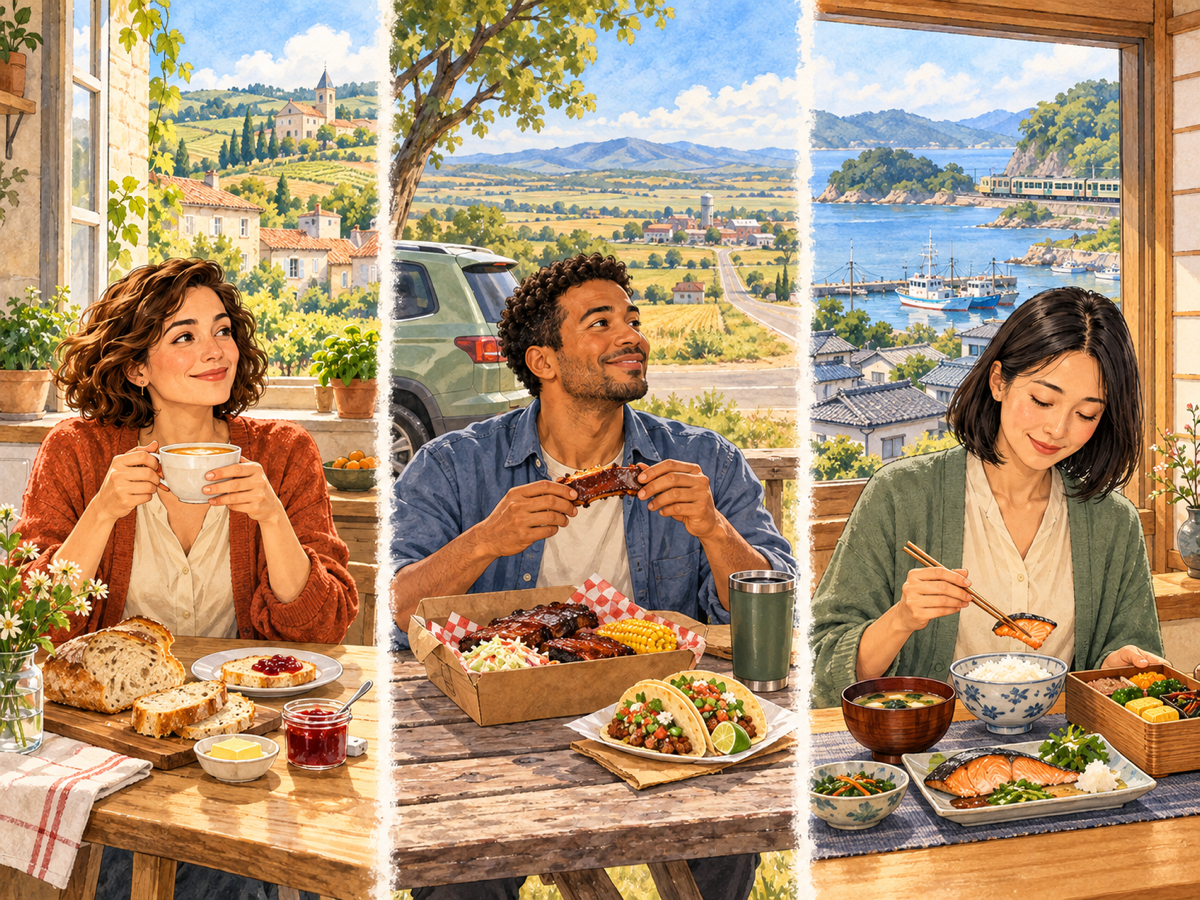
Text to type: Laws and transport shape when and how people eat. Geography helps shape what they eat. Japan is a country of islands with wide access to the sea, and this explains why seafood is so important in its cooking. A traditional Japanese meal centers on rice and miso soup. Side dishes such as fish, pickled vegetables and cooked vegetables are chosen to reflect the season. The United States is the opposite case: a huge continent. Its scale contributes to strong regional differences in food and eating habits. Distance works in two directions here. It lets each region develop its own dishes, and it also makes the car, and so the drive-through, part of everyday life. France's food story is long rather than wide. French cooking goes back to the 14th century, with cheese and wine as major parts. In the 20th century, the chef Escoffier codified modern haute cuisine, which means he set out its rules in an organised way. Yet the everyday start of the day can be very simple. A typical French breakfast is quick: bread with butter or jam, and a café au lait. Each of these images hides a cause. The American meal follows the car across a huge country. The Japanese bento grew from longer working days and a need for food that travels well. These are also patterns, not rules. Young French people feel the pull of fast food, and American food changes from one region to the next. Personality alone did not create these habits. They grew from systems that people built and from landscapes they live in.
Ready. The timer starts with your first key.
Complete
Great job!
Strong finish — your speed stayed steady.
Your rhythm
Speed over time- Time
- 0:00
- Raw speed
- 0 WPM
- Wrong keys
- 0
- Corrected
- 0
Check your understanding
Check: Part 4: Geography shapes the plate, and patterns are not rules
1. Why is seafood so important in Japanese cooking?
Sample answer
Japan is made up of islands with wide access to the sea, and this geography explains the prominence of seafood in its cuisine.
What you can do now
Final Reflection
Think of one daily habit in your own country that people explain with "national character." What law, form of transport or piece of geography might explain it better?
If your working day suddenly became two hours longer, or your commute changed from car to train, how do you think your meals would change?
Learning cards
My cards
Lunch Breaks, Drive-Throughs and Bento Boxes: How Daily Life Takes Shape
0 due · 0 new · about 1 min
Learn the sense first · then retrieve it
No saved cards yet
Open a word or phrase in the article and choose Save to My Words.
Focused Reading Mode is open.
Listening
Lesson audio
Listen from the beginning, or choose “Play this part” as you read along.
Reading
Part 1: France's lunch is built by law, not just by love of food
Reading
Part 2: In the USA, the meal comes to the car
Reading
Part 3: Japan packed the meal into a box
Reading
Part 4: Geography shapes the plate, and patterns are not rules
Finished listening?
Mark this listening practice complete when you have followed the lesson audio.
Listening complete
Listen Mode
Word-by-word syncPlay the audio and follow the highlighted word.
Article complete
Choose your next step
Open the next same-level lesson, replay the article, or save this page for later.
Listen Again
Replay the article once and notice how much more you understand.
One replay is enough. Then move on.