Five Famous World Heritage Sites in Europe
Quality checked lesson
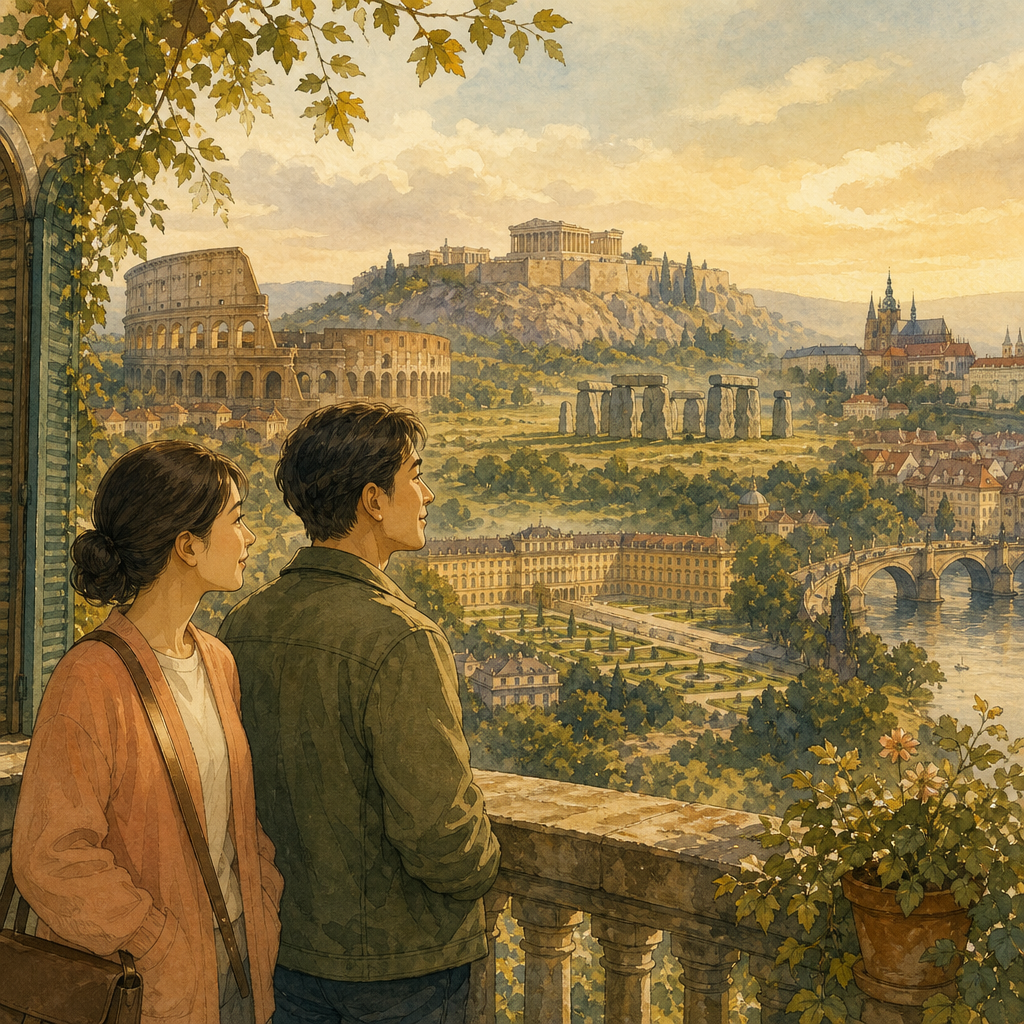
Famous World Heritage sites in Europe, such as the Colosseum, the Acropolis, Stonehenge, the Palace of Versailles, and the Historic Centre of Prague, show why UNESCO protects places that matter to all people.
 English lesson
Article
Choose how to use this lesson
You can switch anytime.
Study mode
Introduction
Typing practice
Type the text exactly. Timer starts with your first key.
Text to type: Famous World Heritage sites in Europe, such as the Colosseum, the Acropolis, Stonehenge, the Palace of Versailles, and the Historic Centre of Prague, show why UNESCO protects places that matter to all people.
Ready. The timer starts with your first key.
Complete
Great job!
Strong finish — your speed stayed steady.
Your rhythm
Speed over time- Time
- 0:00
- Raw speed
- 0 WPM
- Wrong keys
- 0
- Corrected
- 0
Before you begin
Warm-up
Do you know any place in your own country that many tourists travel a long way to see?
What do you think makes an old building worth keeping, when a new building would be cheaper?
Why do some people feel strong emotions when they stand in a very old place?
 Part 1: What UNESCO World Heritage means
Reading
Part 1: What UNESCO World Heritage means
Typing practice
Type the text exactly. Timer starts with your first key.
Text to type: Let us start with the word UNESCO. UNESCO is a part of the United Nations. The full name is the United Nations Educational, Scientific and Cultural Organization, and its office is in Paris. It works on education, science, and culture for the world. In 1972, countries agreed on a plan called the World Heritage Convention. The idea is simple. Some places are so important that they belong to everyone, not only to one country. UNESCO calls this outstanding universal value. When a place has this value, it can be added to the World Heritage List and becomes a World Heritage Site. There are three kinds of sites. Cultural sites are made by people, like temples and old towns. Natural sites are made by nature, like mountains and forests. Mixed sites are both. All five places here are cultural sites. These famous World Heritage sites in Europe show why UNESCO protects special places. For each one, we will ask the same three things: who made it, what it was for, and why it still matters today.
Ready. The timer starts with your first key.
Complete
Great job!
Strong finish — your speed stayed steady.
Your rhythm
Speed over time- Time
- 0:00
- Raw speed
- 0 WPM
- Wrong keys
- 0
- Corrected
- 0
Check your understanding
Check: Part 1: What UNESCO World Heritage means
1. What does UNESCO mean when it says a place has outstanding universal value?
Sample answer
It means the place is so important that it matters to all people in the world, not only to the country where it is, so it can be added to the World Heritage List.
Think one step further
Do you think a natural place, like a mountain, can be as important as a temple or a palace?
Reading
Part 2: The Colosseum in Rome
Typing practice
Type the text exactly. Timer starts with your first key.
Text to type: Our first site is in Rome, the capital of Italy. The Colosseum is an amphitheatre, a big round building with seats all around an open space in the middle. It is a very large ancient amphitheatre, and it stands in the centre of the old city. Building started under Vespasian, the Roman emperor who ruled from 69 to 79 CE, around the year 70 to 72 CE, and it was finished under his son Titus, who opened it in 80 CE. Roman crowds came here to watch gladiator fights, animal hunts, and other big public shows, and tens of thousands of people could sit inside. Earthquakes and stone robbers damaged it over many centuries, but a large part still stands. The Colosseum is protected as part of the World Heritage Site called the Historic Centre of Rome, and it is a place many visitors come to see in Italy.
Ready. The timer starts with your first key.
Complete
Great job!
Strong finish — your speed stayed steady.
Your rhythm
Speed over time- Time
- 0:00
- Raw speed
- 0 WPM
- Wrong keys
- 0
- Corrected
- 0
Check your understanding
Check: Part 2: The Colosseum in Rome
1. Who started the Colosseum and who finished it?
Sample answer
The emperor Vespasian started it around 70 to 72 CE, and his son Titus finished it and opened it in 80 CE.
Think one step further
Do you like to visit very big buildings like a stadium, or do you prefer quiet places?
 Part 3: The Acropolis in Athens
Reading
Part 3: The Acropolis in Athens
Typing practice
Type the text exactly. Timer starts with your first key.
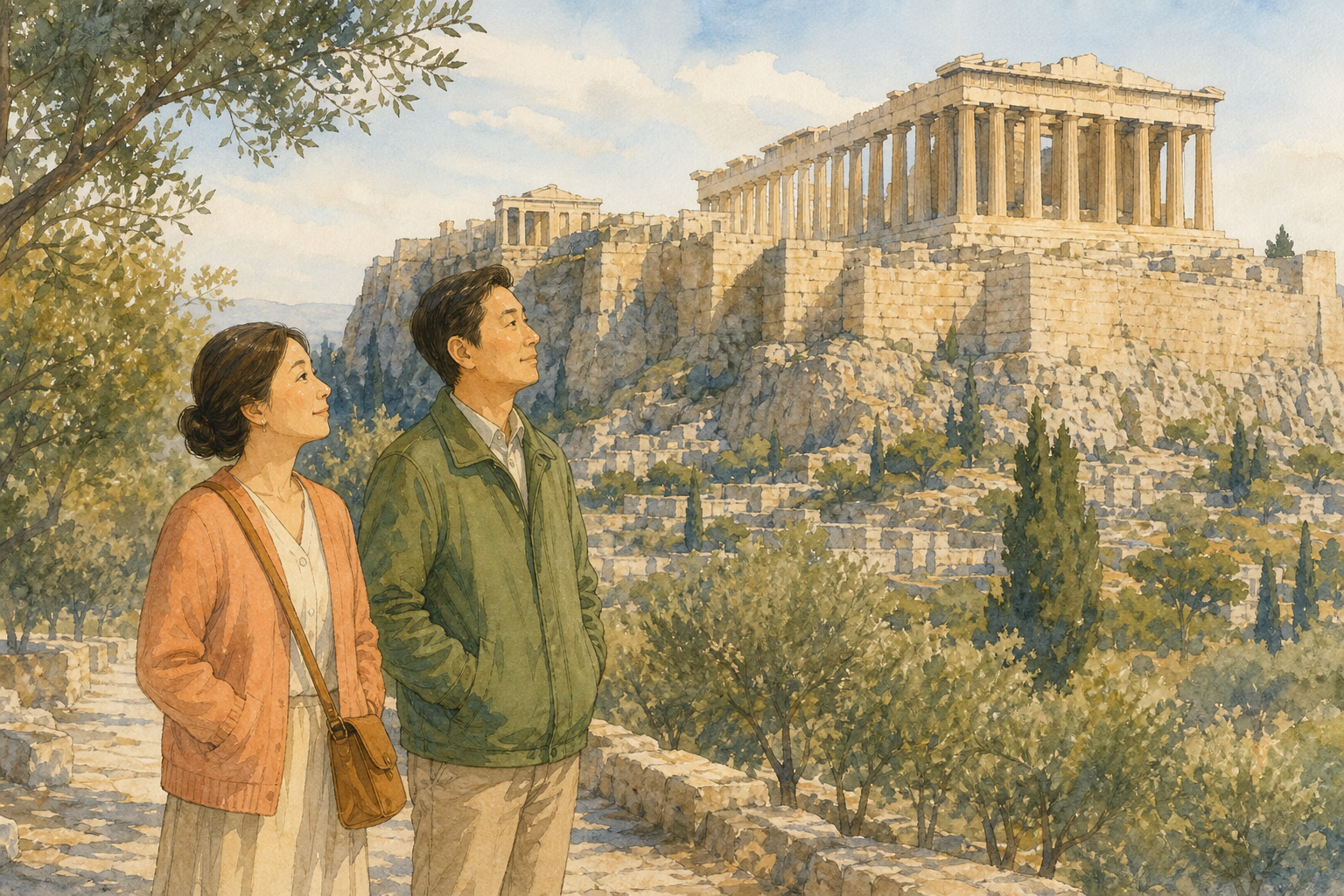
Text to type: The second site is in Athens, the capital of Greece. The word Acropolis means high city. It is a rocky hill that rises above the modern city, and on top of it stand famous temples from classical Athens. The buildings we see today come mostly from the 5th century BCE, the great time of classical Athens, when the city ran a large building programme after wars with Persia. The main temple is the Parthenon, built for the goddess Athena, who gave the city its name, and other buildings on the hill include the Erechtheion and the Propylaea, the grand gate at the entrance. The Acropolis is a symbol of ancient Greek culture, art, and early ideas of public life in the city. UNESCO added the Acropolis of Athens to the World Heritage List in 1987.
Ready. The timer starts with your first key.
Complete
Great job!
Strong finish — your speed stayed steady.
Your rhythm
Speed over time- Time
- 0:00
- Raw speed
- 0 WPM
- Wrong keys
- 0
- Corrected
- 0
Check your understanding
Check: Part 3: The Acropolis in Athens
1. What is the Parthenon, and when was it built?
Sample answer
The Parthenon is the main temple on the Acropolis, built for the goddess Athena during the 5th century BCE, in the time of classical Athens.
Think one step further
Do you know an old temple or shrine on a hill in your own area?
Reading
Part 4: Stonehenge in England
Typing practice
Type the text exactly. Timer starts with your first key.
Text to type: Now we go far back in time, to a place with no writing at all. Stonehenge stands in open fields in Wiltshire, in the south of England. It is a circle of huge standing stones, some with other stones lying across the top. There is no written record from the builders, so we learn from the stones and the ground. Stonehenge was built in several stages over a very long time: the first monument, a large round ditch and bank, was made around 3000 BCE in the Neolithic period, and the big stone circle was put up around 2500 BCE, with work continuing into the Bronze Age for more than a thousand years in total. The stones line up with the sunrise on the longest day of the year and the sunset on the shortest day, and many people were buried nearby, so experts connect it with ceremonies and the dead. English Heritage cares for the site today. Stonehenge is part of a World Heritage Site together with Avebury, another stone landscape nearby, and people still travel from many countries to stand among the stones.
Ready. The timer starts with your first key.
Complete
Great job!
Strong finish — your speed stayed steady.
Your rhythm
Speed over time- Time
- 0:00
- Raw speed
- 0 WPM
- Wrong keys
- 0
- Corrected
- 0
Check your understanding
Check: Part 4: Stonehenge in England
1. About when did people begin Stonehenge, and about when did they raise the big stone circle?
Sample answer
People began the first monument around 3000 BCE, and they raised the big stone circle around 2500 BCE.
Think one step further
Do you like places that keep a mystery, or do you prefer places with a clear written history?
Reading
Part 5: The Palace of Versailles in France
Typing practice
Type the text exactly. Timer starts with your first key.
Text to type: Our fourth site is near Paris, in France. The Palace of Versailles is a huge royal palace with long gardens, fountains, and carefully planned outdoor spaces. For a long time it was the centre of French royal power. The palace grew over time, but the biggest change came in the 17th century under Louis XIV, the French king often called the Sun King, who turned a hunting lodge into a palace that showed the power of the king. The king and his court lived and worked here. Inside, the Hall of Mirrors is a long gallery with many mirrors and windows that face the gardens, and outside the gardens show order, art, and control of nature. Versailles helps people understand royal life, art, and politics in early modern Europe. UNESCO added the Palace and Park of Versailles to the World Heritage List in 1979, and millions of visitors walk through the halls and gardens every year.
Ready. The timer starts with your first key.
Complete
Great job!
Strong finish — your speed stayed steady.
Your rhythm
Speed over time- Time
- 0:00
- Raw speed
- 0 WPM
- Wrong keys
- 0
- Corrected
- 0
Check your understanding
Check: Part 5: The Palace of Versailles in France
1. Which French king made the biggest change to Versailles, and what famous room is inside?
Sample answer
Louis XIV made the biggest change in the 17th century, and the Hall of Mirrors is a famous room inside the palace.
Think one step further
Do you prefer visiting a palace room or a garden, and why?
 Part 6: The Historic Centre of Prague
Reading
Part 6: The Historic Centre of Prague
Typing practice
Type the text exactly. Timer starts with your first key.
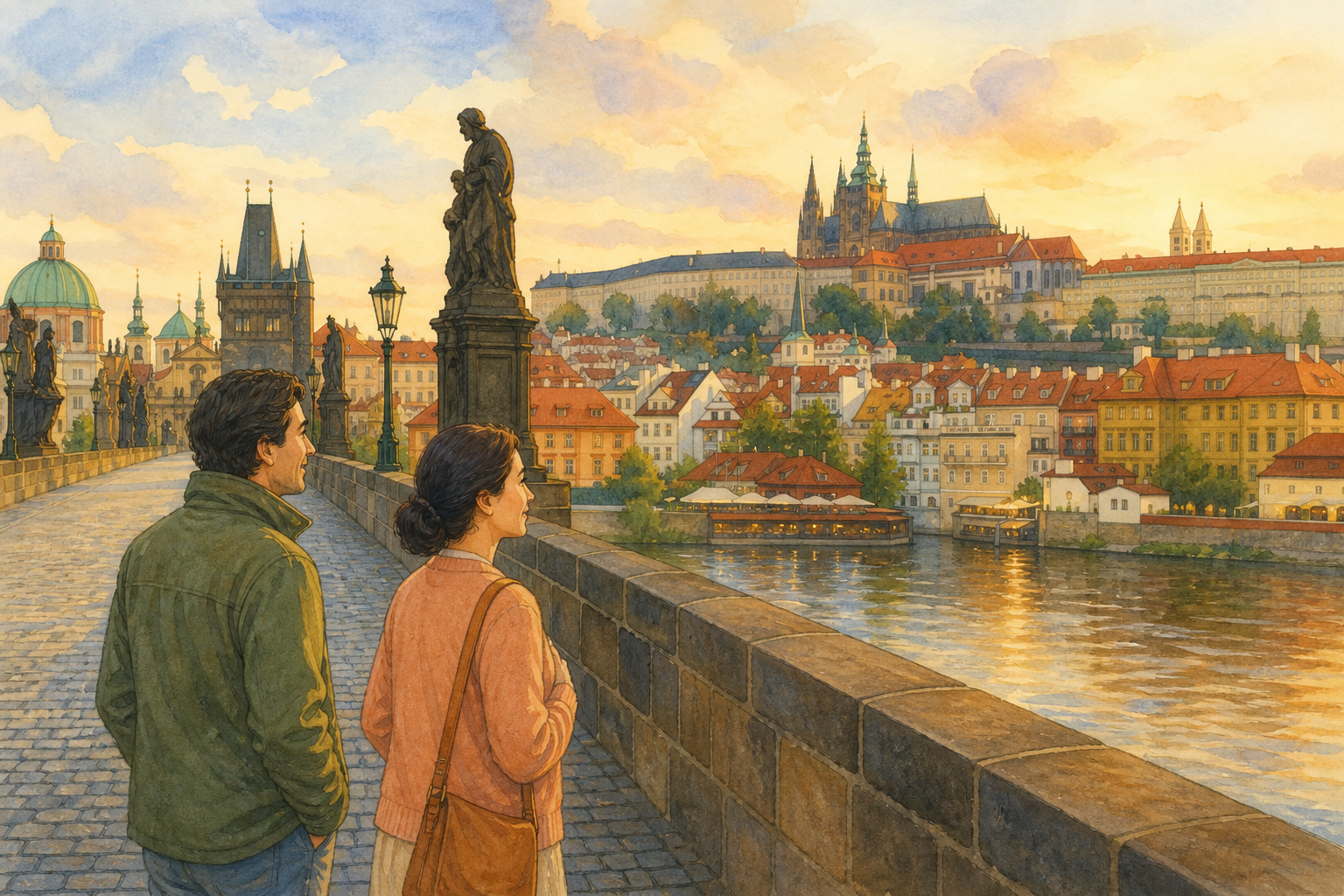
Text to type: Our last site is in Prague, the capital of Czechia, also called the Czech Republic. The Historic Centre of Prague is not one building. It is a whole old city centre with streets, squares, bridges, and castles that grew over many centuries. Builders, traders, kings, and ordinary city people shaped Prague from the Middle Ages onward. The Old Town grew around markets and churches, Prague Castle sits above the river as a long seat of power, and the Charles Bridge crosses the Vltava River and links the old sides of the city. The historic centre was a living city where people traded, prayed, ruled, and walked the same streets that visitors walk today. Prague keeps many layers of European architecture in one walkable place, from medieval lanes to later grand buildings. UNESCO added the Historic Centre of Prague to the World Heritage List in 1992. Together with the Colosseum, the Acropolis, Stonehenge, and Versailles, it shows that World Heritage can protect one famous building or a whole historic city.
Ready. The timer starts with your first key.
Complete
Great job!
Strong finish — your speed stayed steady.
Your rhythm
Speed over time- Time
- 0:00
- Raw speed
- 0 WPM
- Wrong keys
- 0
- Corrected
- 0
Check your understanding
Check: Part 6: The Historic Centre of Prague
1. What kind of place is the Historic Centre of Prague, and when did UNESCO list it?
Sample answer
It is a whole historic city centre with places like the Old Town, Prague Castle, and the Charles Bridge, and UNESCO listed it in 1992.
Think one step further
Do you prefer visiting one famous building or walking through a whole old town?
What you can do now
Final Reflection
If you could visit only one of these five World Heritage sites next year, which one would you choose, and what would you most want to see or feel there?
Learning cards
My cards
Five Famous World Heritage Sites in Europe
0 due · 0 new · about 1 min
Learn the sense first · then retrieve it
No saved cards yet
Open a word or phrase in the article and choose Save to My Words.
Focused Reading Mode is open.
Listening
Lesson audio
Listen from the beginning, or choose “Play this part” as you read along.
Reading
Part 1: What UNESCO World Heritage means
Reading
Part 2: The Colosseum in Rome
Reading
Part 3: The Acropolis in Athens
Reading
Part 4: Stonehenge in England
Reading
Part 5: The Palace of Versailles in France
Reading
Part 6: The Historic Centre of Prague
Finished listening?
Mark this listening practice complete when you have followed the lesson audio.
Listening complete
Listen Mode
Word-by-word syncPlay the audio and follow the highlighted word.
Article complete
Choose your next step
Open the next same-level lesson, replay the article, or save this page for later.
Listen Again
Replay the article once and notice how much more you understand.
One replay is enough. Then move on.