Five Sweets with Surprising Stories
Quality checked lesson
These interesting and more unusual sweets show how history, ingredients, and appearance can turn a dessert into something memorable.
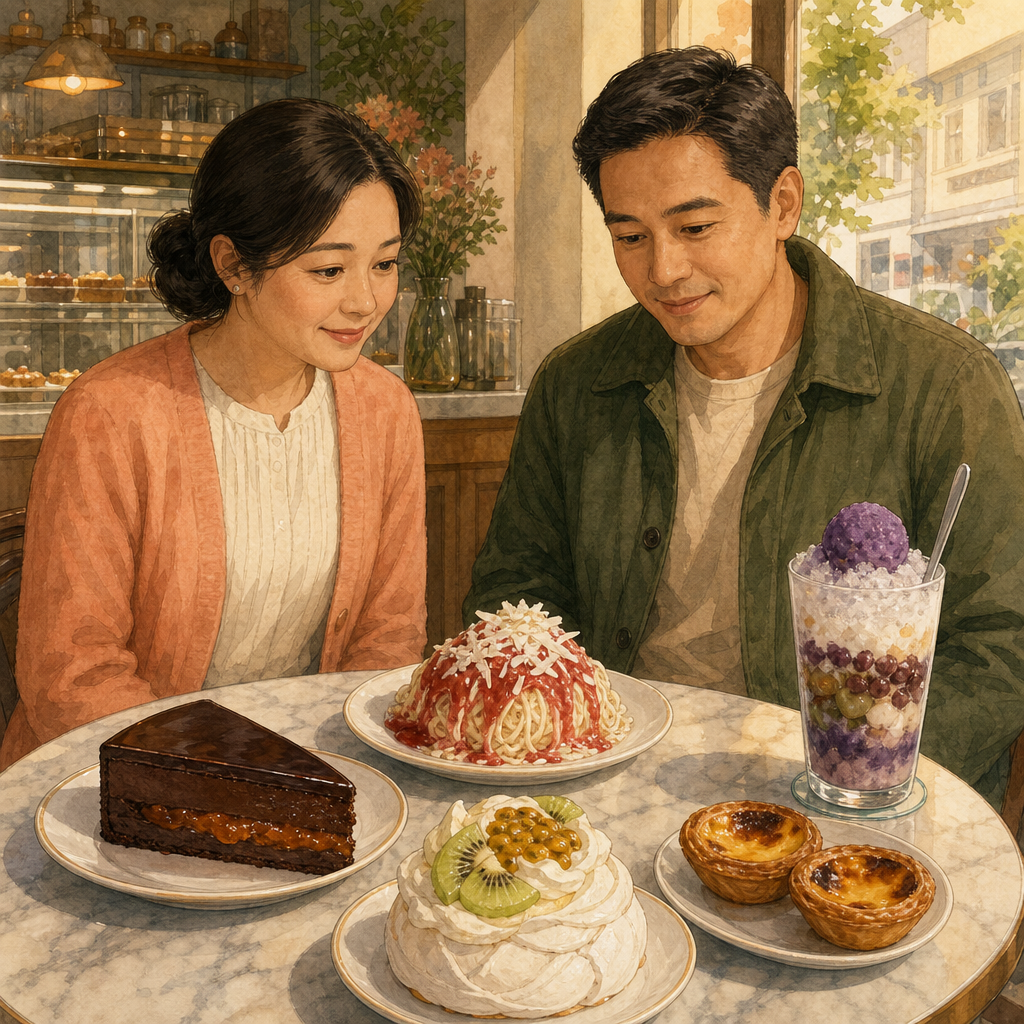 English lesson
Article
Choose how to use this lesson
You can switch anytime.
Study mode
Introduction
Typing practice
Type the text exactly. Timer starts with your first key.
Text to type: These interesting and more unusual sweets show how history, ingredients, and appearance can turn a dessert into something memorable.
Ready. The timer starts with your first key.
Complete
Great job!
Strong finish — your speed stayed steady.
Your rhythm
Speed over time- Time
- 0:00
- Raw speed
- 0 WPM
- Wrong keys
- 0
- Corrected
- 0
Before you begin
Warm-up
Which ingredients do you expect to find in a sweet?
Can a dessert look like a savoury meal?
What sweet is connected to your town or country?
 Part 1: Sachertorte—Chocolate Cake with a Fruit Surprise
Reading
Part 1: Sachertorte—Chocolate Cake with a Fruit Surprise
Typing practice
Type the text exactly. Timer starts with your first key.
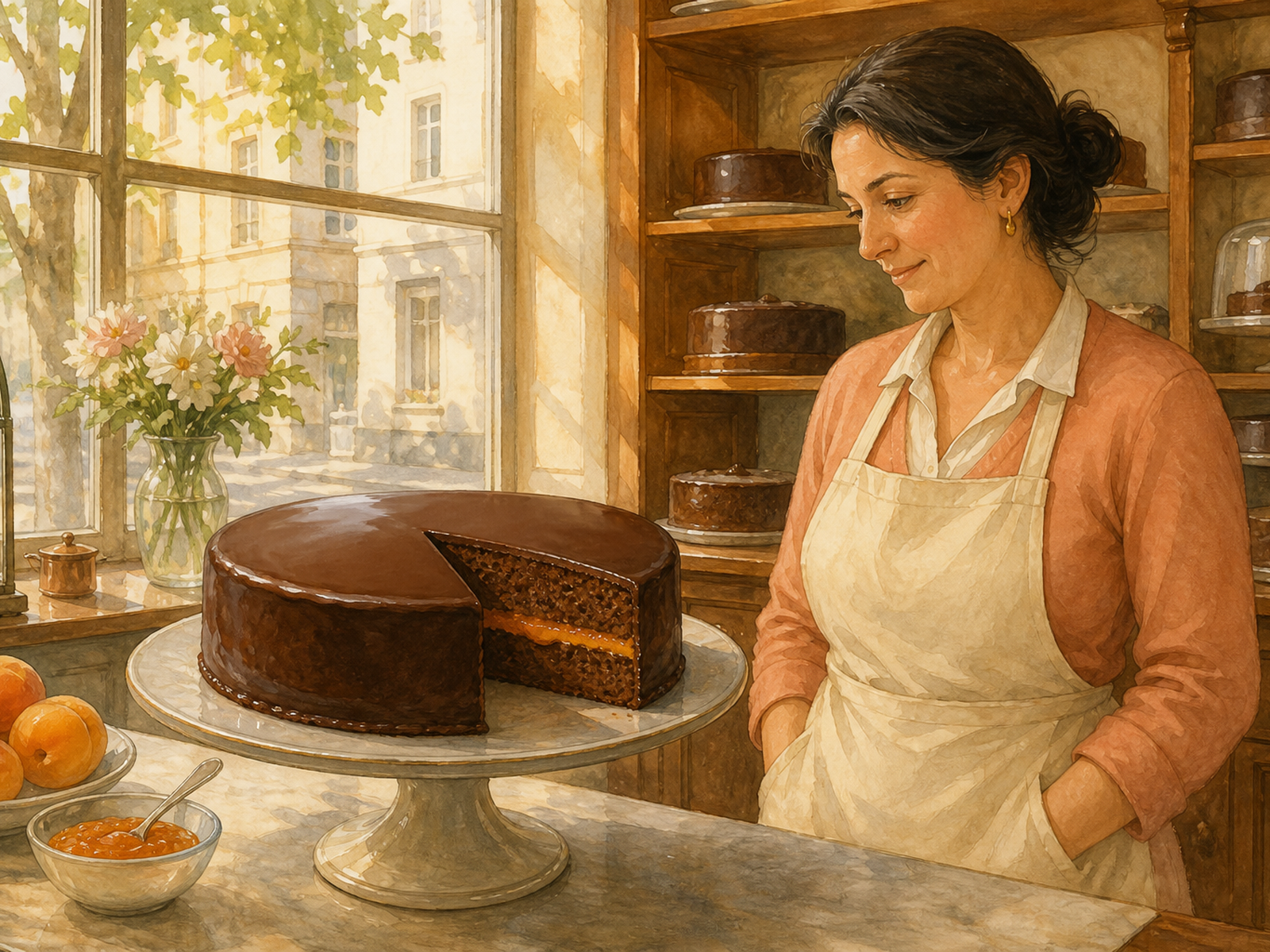
Text to type: A useful way to understand an unusual sweet is to look at three things: its source, the change made to familiar ingredients, and the final result. Sachertorte comes from Vienna. Franz Sacher, a teenage cook, is said to have made it in 1832 for Prince Metternich and his guests. The cake contains butter, chocolate, eggs, flour, and sugar. Apricot jam is placed on the chocolate sponge, and chocolate glaze covers the outside. This fruit-and-chocolate combination is its surprising change. Hotel Sacher makes the cake with two sponge layers, while the Demel pastry shop long used one. The shops even fought in court about the name and layers. The case ended in 1963, but their cakes still have different seals.
Ready. The timer starts with your first key.
Complete
Great job!
Strong finish — your speed stayed steady.
Your rhythm
Speed over time- Time
- 0:00
- Raw speed
- 0 WPM
- Wrong keys
- 0
- Corrected
- 0
Check your understanding
Check: Part 1: Sachertorte—Chocolate Cake with a Fruit Surprise
1. What makes Sachertorte different from a simple chocolate sponge cake?
Sample answer
Sachertorte has apricot jam on its chocolate sponge and a chocolate glaze on the outside.
Reading
Part 2: Spaghettieis—Ice Cream Disguised as Pasta
Typing practice
Type the text exactly. Timer starts with your first key.
Text to type: Spaghettieis comes from Mannheim, Germany. Dario Fontanella created it in 1969 after learning that a chestnut dessert could be pushed through a press. He used a press for making German noodles to turn vanilla ice cream into long, thin strands. These strands sit on whipped cream and look like spaghetti. The visual trick continues with the toppings. Strawberry sauce looks like tomato sauce, while grated white chocolate, coconut, or almonds look like parmesan cheese. Fontanella’s first version used three ice cream colours, but he later chose vanilla, strawberry puree, and grated white chocolate. Some children initially cried because they thought they had received pasta instead of ice cream. Fontanella did not patent his invention, so it spread to many German ice cream shops.
Ready. The timer starts with your first key.
Complete
Great job!
Strong finish — your speed stayed steady.
Your rhythm
Speed over time- Time
- 0:00
- Raw speed
- 0 WPM
- Wrong keys
- 0
- Corrected
- 0
Check your understanding
Check: Part 2: Spaghettieis—Ice Cream Disguised as Pasta
1. How does Spaghettieis create the appearance of a pasta dinner?
Sample answer
Pressed vanilla ice cream looks like spaghetti, strawberry sauce looks like tomato sauce, and grated white chocolate or similar toppings look like cheese.
 Part 3: Pavlova—A Cake Made from Egg-White Foam
Reading
Part 3: Pavlova—A Cake Made from Egg-White Foam
Typing practice
Type the text exactly. Timer starts with your first key.
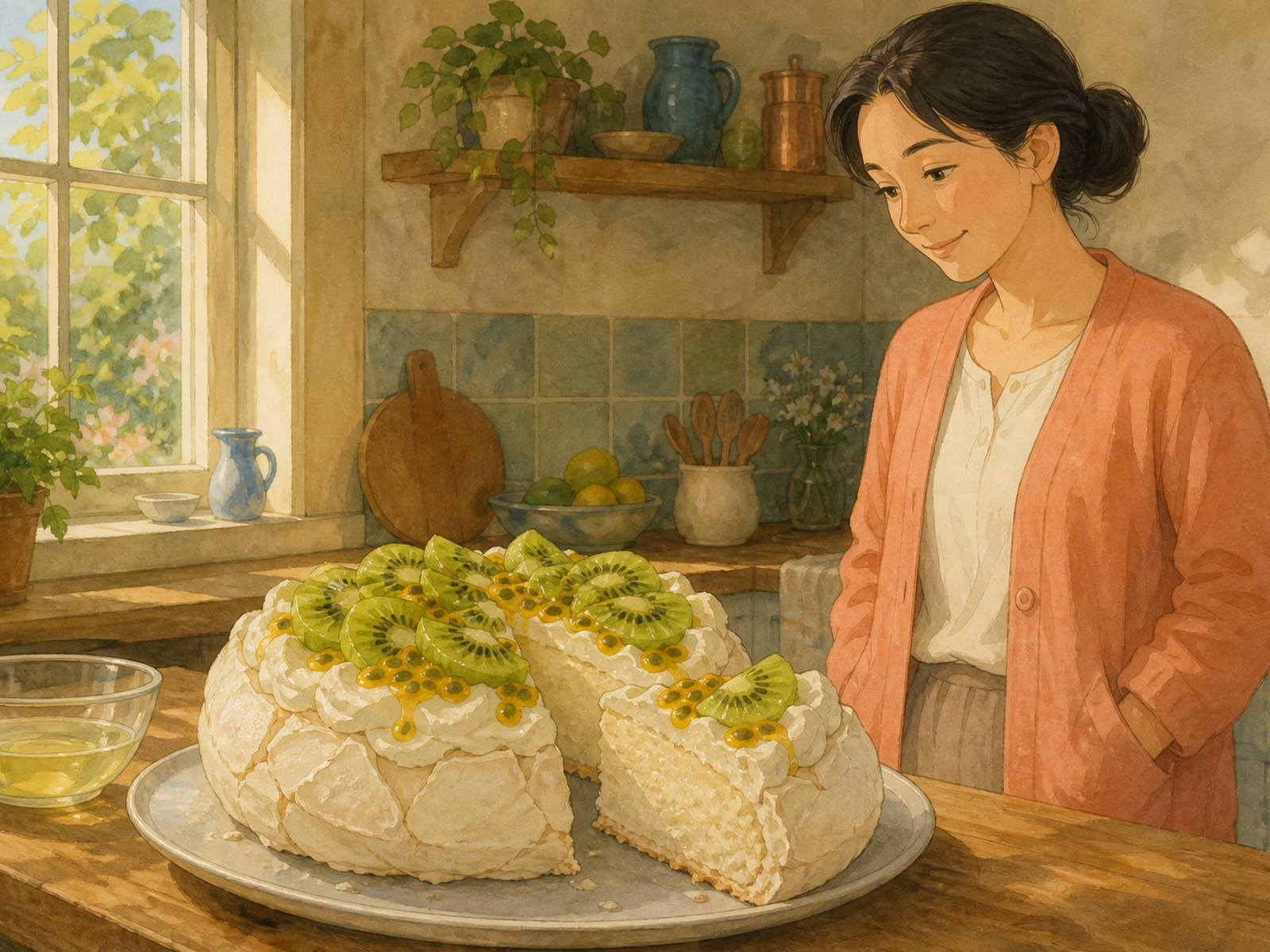
Text to type: Pavlova is named after the Russian dancer Anna Pavlova and is linked to her tours of Australia and New Zealand in the 1920s. Both countries claim the dessert. A New Zealand recipe for pavlova cake was published in 1929, and an Australian story says Bert Sachse made one at a Perth hotel in 1935. Its structure is more unusual than an ordinary flour-based cake. Egg whites and caster sugar are beaten into a foam called meringue. Cooks may add vinegar or lemon juice, cornflour, and vanilla before baking it slowly. The result has a crisp shell but a soft, marshmallow-like centre. Whipped cream and fruit are added on top. Kiwifruit is common in New Zealand versions, while passionfruit is common in Australia. It is also a Christmas dessert there because Christmas comes during summer.
Ready. The timer starts with your first key.
Complete
Great job!
Strong finish — your speed stayed steady.
Your rhythm
Speed over time- Time
- 0:00
- Raw speed
- 0 WPM
- Wrong keys
- 0
- Corrected
- 0
Check your understanding
Check: Part 3: Pavlova—A Cake Made from Egg-White Foam
1. What two different textures does a baked pavlova have?
Sample answer
A baked pavlova is crisp on the outside and soft like marshmallow in the centre.
Reading
Part 4: Pastel de Nata—A Tart Born from Leftover Yolks
Typing practice
Type the text exactly. Timer starts with your first key.
Text to type: Pastel de nata is a Portuguese egg custard tart, often finished with cinnamon and icing sugar. Its story is connected to the Jeronimos Monastery in Belem, Lisbon. Monasteries used large numbers of egg whites to starch clothes, so cooks had yolks left over. They turned those yolks into cakes and custards—a practical source that produced a famous result. After Portugal’s Liberal Revolution of 1820, religious houses were closed. The monks sold tarts at a nearby sugar refinery to raise money. When the monastery closed in 1834, its recipe was sold to the refinery. The owners opened Fabrica de Pasteis de Belem in 1837. Their family still runs the shop near the monastery, and the original recipe is kept in a secret room. The tarts are eaten hot from the oven.
Ready. The timer starts with your first key.
Complete
Great job!
Strong finish — your speed stayed steady.
Your rhythm
Speed over time- Time
- 0:00
- Raw speed
- 0 WPM
- Wrong keys
- 0
- Corrected
- 0
Check your understanding
Check: Part 4: Pastel de Nata—A Tart Born from Leftover Yolks
1. Why did the monastery have extra egg yolks for making sweets?
Sample answer
The monastery used many egg whites to starch clothes, so egg yolks were left over for cakes and custards.
 Part 5: Halo-halo—Many Ingredients in One Glass
Reading
Part 5: Halo-halo—Many Ingredients in One Glass
Typing practice
Type the text exactly. Timer starts with your first key.
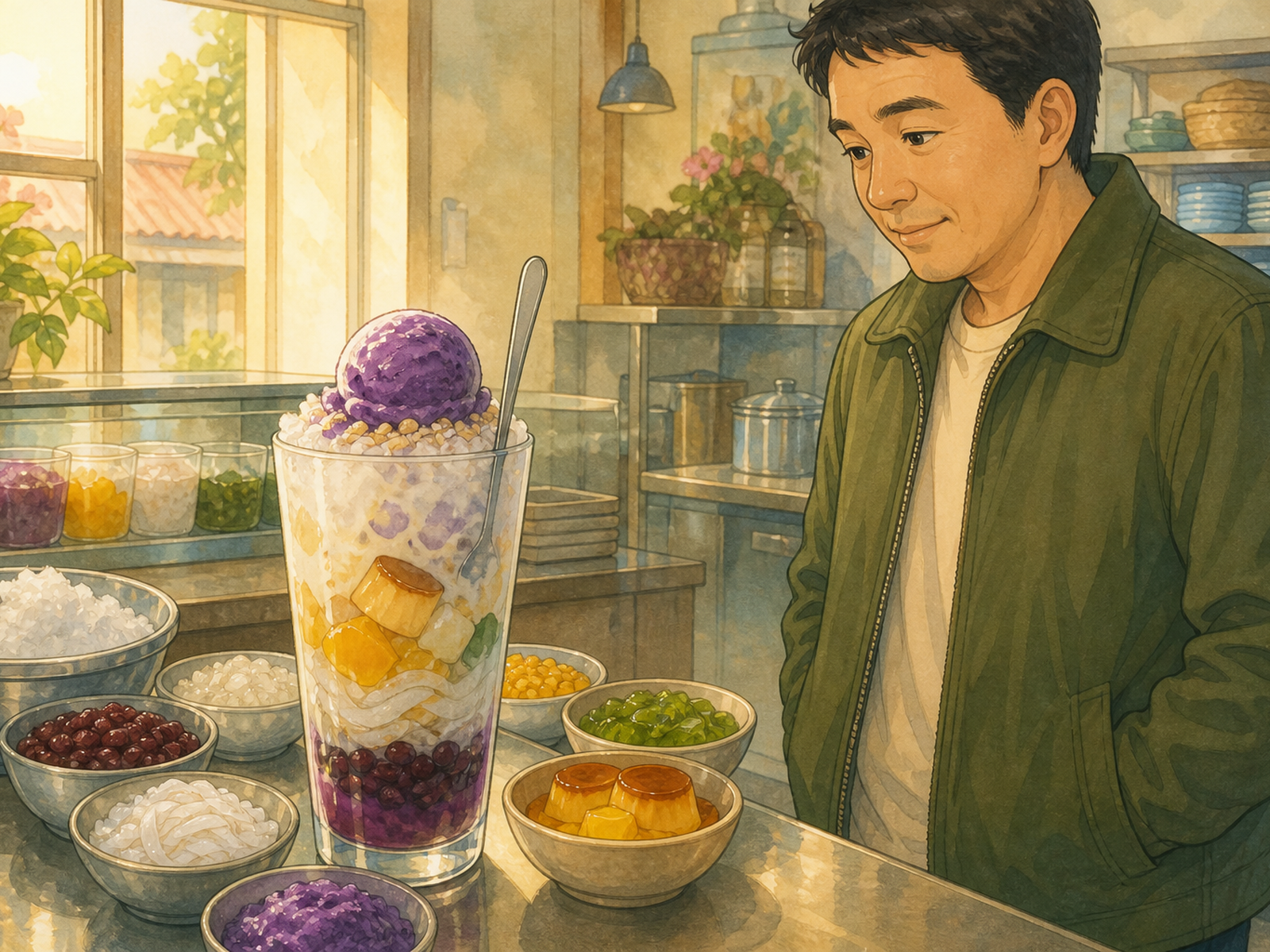
Text to type: Halo-halo is a cold mixed dessert from the Philippines. Its name means “mix-mix,” which explains how it is eaten. Sweet ingredients are placed at the bottom of a tall glass. Crushed or shaved ice goes above them, and evaporated milk or coconut milk is poured on top. The eater then mixes the layers with a long spoon. One glass can contain ube jam made from purple yam, sweetened beans or chickpeas, coconut strips, sago pearls, agar jelly, taro, fruit in syrup, flan, and toasted young rice called pinipig. Some versions also include ube ice cream. An early form used mung beans in syrup with crushed ice, milk, and sugar. Halo-halo is unusual because ingredients that may seem separate—beans, jelly, yam, ice, and milk—become one colourful, cold spoonful.
Ready. The timer starts with your first key.
Complete
Great job!
Strong finish — your speed stayed steady.
Your rhythm
Speed over time- Time
- 0:00
- Raw speed
- 0 WPM
- Wrong keys
- 0
- Corrected
- 0
Check your understanding
Check: Part 5: Halo-halo—Many Ingredients in One Glass
1. What must the eater do before enjoying all the parts of halo-halo together?
Sample answer
The eater must mix the sweet ingredients, ice, and milk together with a long spoon.
What you can do now
Final Reflection
Which of these five sweets would you most like to try, and is your choice mainly based on its ingredients, appearance, texture, or history?
Learning cards
My cards
Five Sweets with Surprising Stories
0 due · 0 new · about 1 min
Learn the sense first · then retrieve it
No saved cards yet
Open a word or phrase in the article and choose Save to My Words.
Focused Reading Mode is open.
Listening
Lesson audio
Listen from the beginning, or choose “Play this part” as you read along.
Reading
Part 1: Sachertorte—Chocolate Cake with a Fruit Surprise
Reading
Part 2: Spaghettieis—Ice Cream Disguised as Pasta
Reading
Part 3: Pavlova—A Cake Made from Egg-White Foam
Reading
Part 4: Pastel de Nata—A Tart Born from Leftover Yolks
Reading
Part 5: Halo-halo—Many Ingredients in One Glass
Finished listening?
Mark this listening practice complete when you have followed the lesson audio.
Listening complete
Listen Mode
Word-by-word syncPlay the audio and follow the highlighted word.
Article complete
Choose your next step
Open the next same-level lesson, replay the article, or save this page for later.
Listen Again
Replay the article once and notice how much more you understand.
One replay is enough. Then move on.