Old Faces, New Meanings: Emoji Around the World
Quality checked lesson
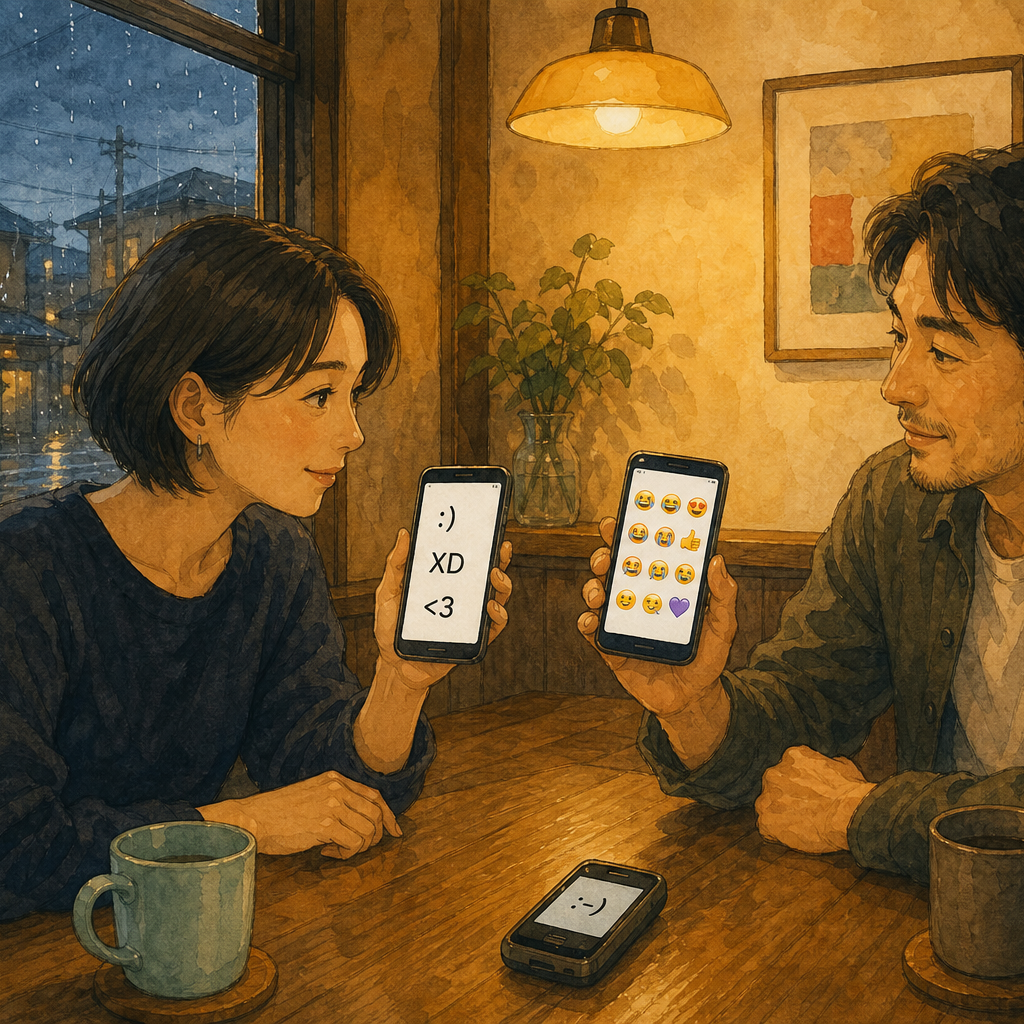
Old emoticons, emoji, text faces, and stickers are still part of everyday messages. Their meanings can change with the country, online community, app, age group, and relationship.
 English lesson
Article
Choose how to use this lesson
You can switch anytime.
Study mode
Introduction
Typing practice
Type the text exactly. Timer starts with your first key.
Text to type: Old emoticons, emoji, text faces, and stickers are still part of everyday messages. Their meanings can change with the country, online community, app, age group, and relationship.
Ready. The timer starts with your first key.
Complete
Great job!
Strong finish — your speed stayed steady.
Your rhythm
Speed over time- Time
- 0:00
- Raw speed
- 0 WPM
- Wrong keys
- 0
- Corrected
- 0
Before you begin
Warm-up
Which emoji do you use most often?
Have you ever misunderstood an emoji or sticker?
Do people of different ages use different faces in messages?
 Part 1: Old Emoticons Are Still Alive
Reading
Part 1: Old Emoticons Are Still Alive
Typing practice
Type the text exactly. Timer starts with your first key.
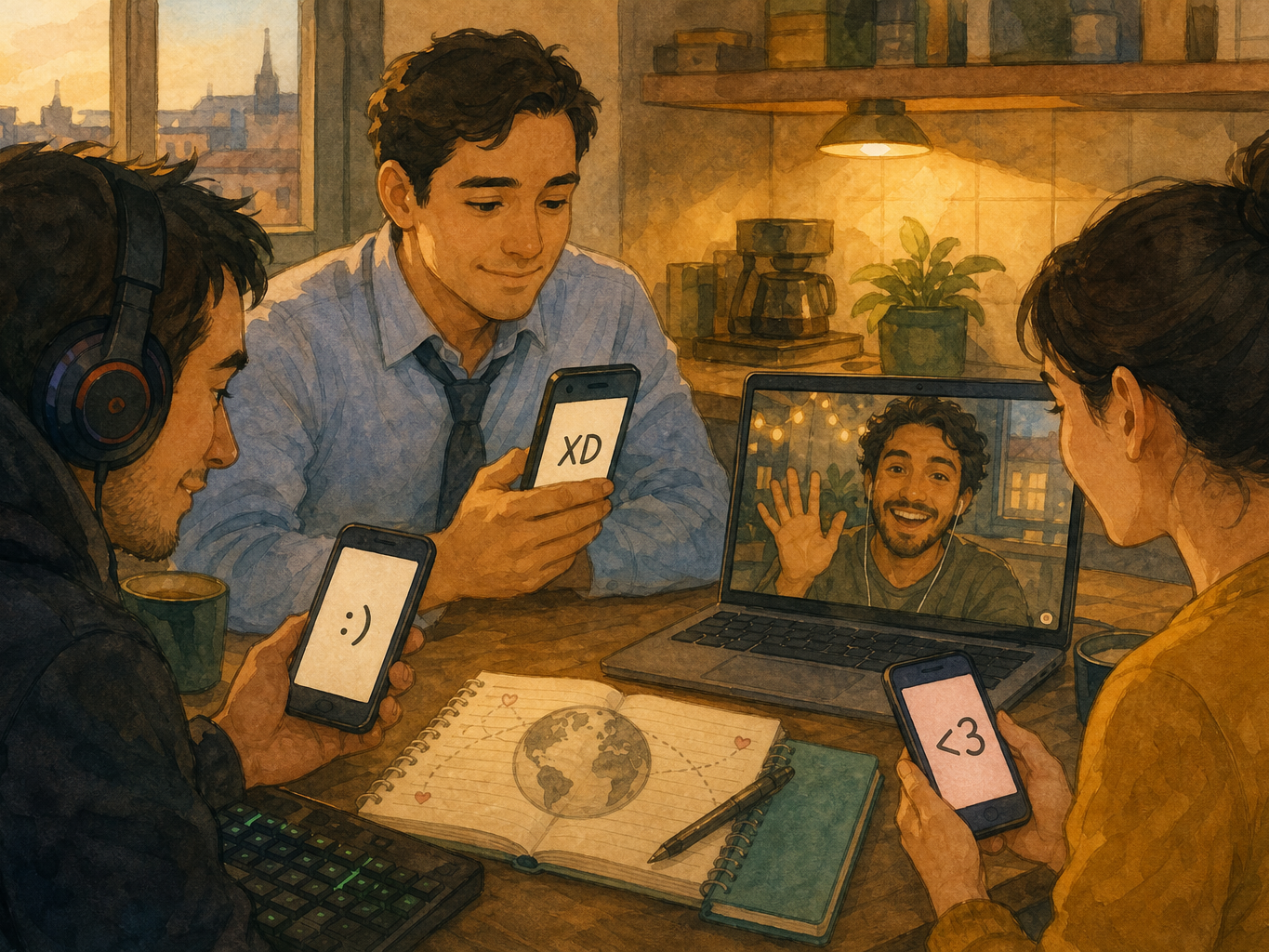
Text to type: Before emoji became common, people made faces from keyboard symbols. These are called emoticons. A face such as :-) is read sideways, while XD shows strong laughter. They became popular in early email, forums, and chat rooms. They may look old now, but they have not disappeared. Emoticons that people still use in other countries include the Russian closing bracket, XD in gaming chats, and <3 in nostalgic messages. Some habits developed in particular online communities. In Russian-language messages, a person may write one closing bracket, ), to show friendliness. Several brackets, ))), can suggest stronger warmth or laughter. In other countries, XD and <3 are still used in gaming communities or nostalgic posts. An old face can feel playful, sincere, or unfashionable, depending on who sends it.
Ready. The timer starts with your first key.
Complete
Great job!
Strong finish — your speed stayed steady.
Your rhythm
Speed over time- Time
- 0:00
- Raw speed
- 0 WPM
- Wrong keys
- 0
- Corrected
- 0
Check your understanding
Check: Part 1: Old Emoticons Are Still Alive
1. Why can an old emoticon have different effects today?
Sample answer
An old emoticon can seem friendly, playful, nostalgic, or unfashionable because different communities and age groups use it differently.
Think one step further
In your experience, which old emoticons or text faces would you still use?
Reading
Part 2: Emoji Meanings Can Travel and Change
Typing practice
Type the text exactly. Timer starts with your first key.
Text to type: Modern emoji grew from Japanese mobile communication. NTT DoCoMo released an influential set in 1999, and international Unicode support later helped emoji spread across devices and countries. However, the pictures travelled more easily than their original meanings. For example, 🙏 can express thanks, a request, or an apology in Japan. Elsewhere, people may understand it mainly as prayer, and some users call it a high five. The face 😤 also shows change. Its steam originally suggested triumph or determination in a Japanese visual tradition, but many international users now read it as anger or frustration. Meaning therefore comes from both the picture’s source and the new setting where people use it.
Ready. The timer starts with your first key.
Complete
Great job!
Strong finish — your speed stayed steady.
Your rhythm
Speed over time- Time
- 0:00
- Raw speed
- 0 WPM
- Wrong keys
- 0
- Corrected
- 0
Check your understanding
Check: Part 2: Emoji Meanings Can Travel and Change
1. How did the meaning of 😤 change as it travelled?
Sample answer
It originally suggested triumph or determination, but many users outside Japan now understand it as anger or frustration.
 Part 3: Text Faces Look in Different Directions
Reading
Part 3: Text Faces Look in Different Directions
Typing practice
Type the text exactly. Timer starts with your first key.
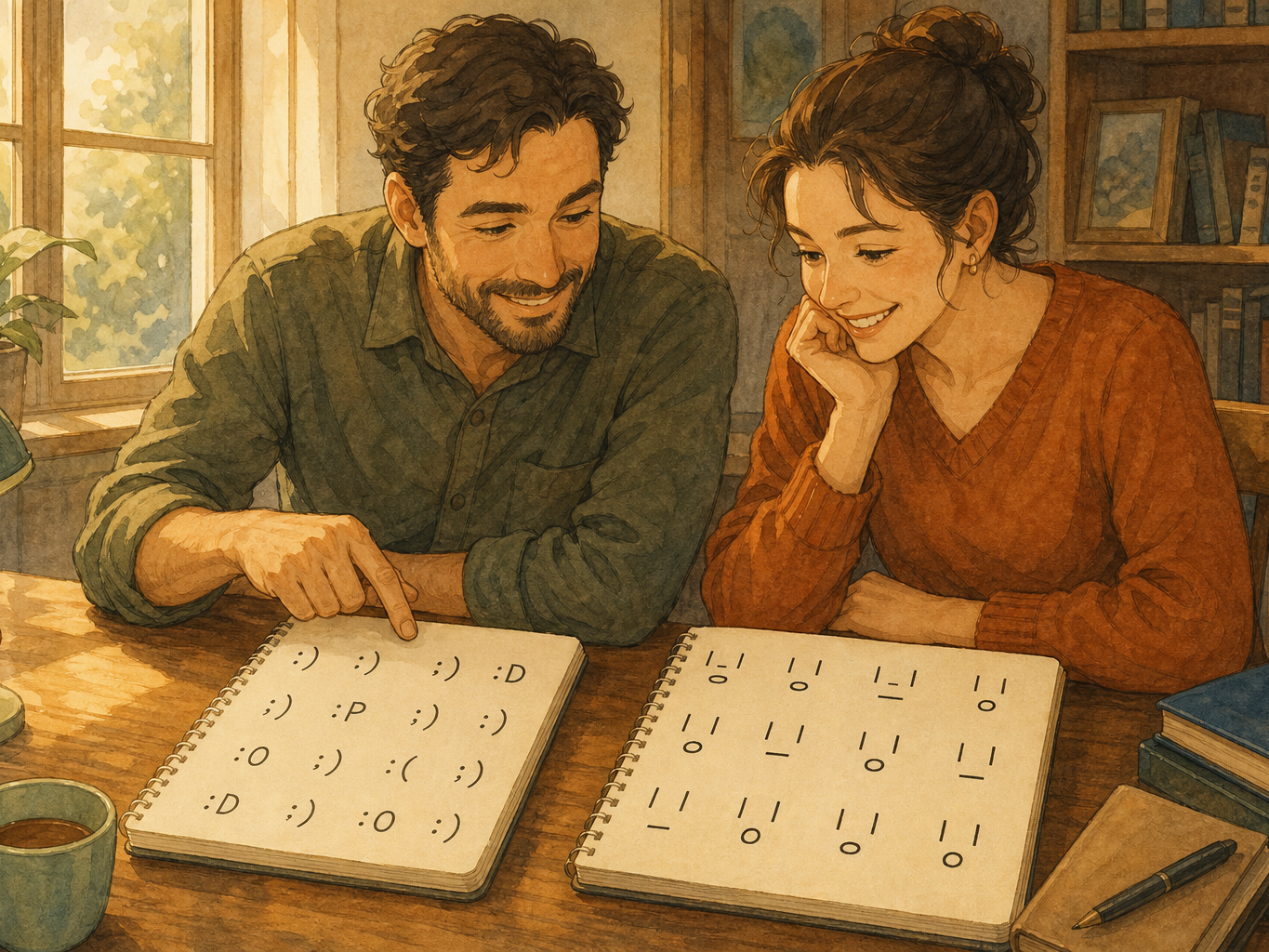
Text to type: A kaomoji is a text face that is usually read upright, not sideways. Examples include (^_^) for happiness, (T_T) for crying, and (¬_¬) for doubt or annoyance. These faces became strongly connected with Japanese online culture, although people now use them internationally. Their design also shows an interesting contrast. In many Western emoticons, the mouth carries the main emotion: compare :-) with :-(. In kaomoji, the eyes often do more of the work. The rest of the face can add arms, tears, or movement. The international shrug is a small text picture made of bars, a round mouth, and raised arms. It carries a simple message: “I do not know” or “What can you do?”
Ready. The timer starts with your first key.
Complete
Great job!
Strong finish — your speed stayed steady.
Your rhythm
Speed over time- Time
- 0:00
- Raw speed
- 0 WPM
- Wrong keys
- 0
- Corrected
- 0
Check your understanding
Check: Part 3: Text Faces Look in Different Directions
1. What visual difference often separates kaomoji from older Western emoticons?
Sample answer
Kaomoji are usually upright and often emphasize the eyes, while older Western emoticons are commonly sideways and emphasize the mouth.
Reading
Part 4: Stickers Create Local Chat Habits
Typing practice
Type the text exactly. Timer starts with your first key.
Text to type: Stickers are larger and more detailed than ordinary emoji. They may show a full character, include words, or move through animation. Because apps sell or provide different sticker collections, local messaging habits can develop around particular characters. LINE stickers are especially familiar in Japan, Thailand, and Taiwan. LINE characters such as Brown and Cony began as messaging stickers and later appeared on many physical products. In South Korea, KakaoTalk has its own popular character stickers, while WeChat users in China often exchange animated images and user-made sticker collections. A sticker can soften a refusal, show thanks, or end a conversation warmly. However, someone outside that app community may not recognize the character or understand the social tone.
Ready. The timer starts with your first key.
Complete
Great job!
Strong finish — your speed stayed steady.
Your rhythm
Speed over time- Time
- 0:00
- Raw speed
- 0 WPM
- Wrong keys
- 0
- Corrected
- 0
Check your understanding
Check: Part 4: Stickers Create Local Chat Habits
1. Why are sticker meanings often connected to particular places or communities?
Sample answer
Sticker meanings are connected to places and communities because different apps, characters, collections, and social habits are popular in different regions.
 Part 5: Read the Person, Platform, and Situation
Reading
Part 5: Read the Person, Platform, and Situation
Typing practice
Type the text exactly. Timer starts with your first key.
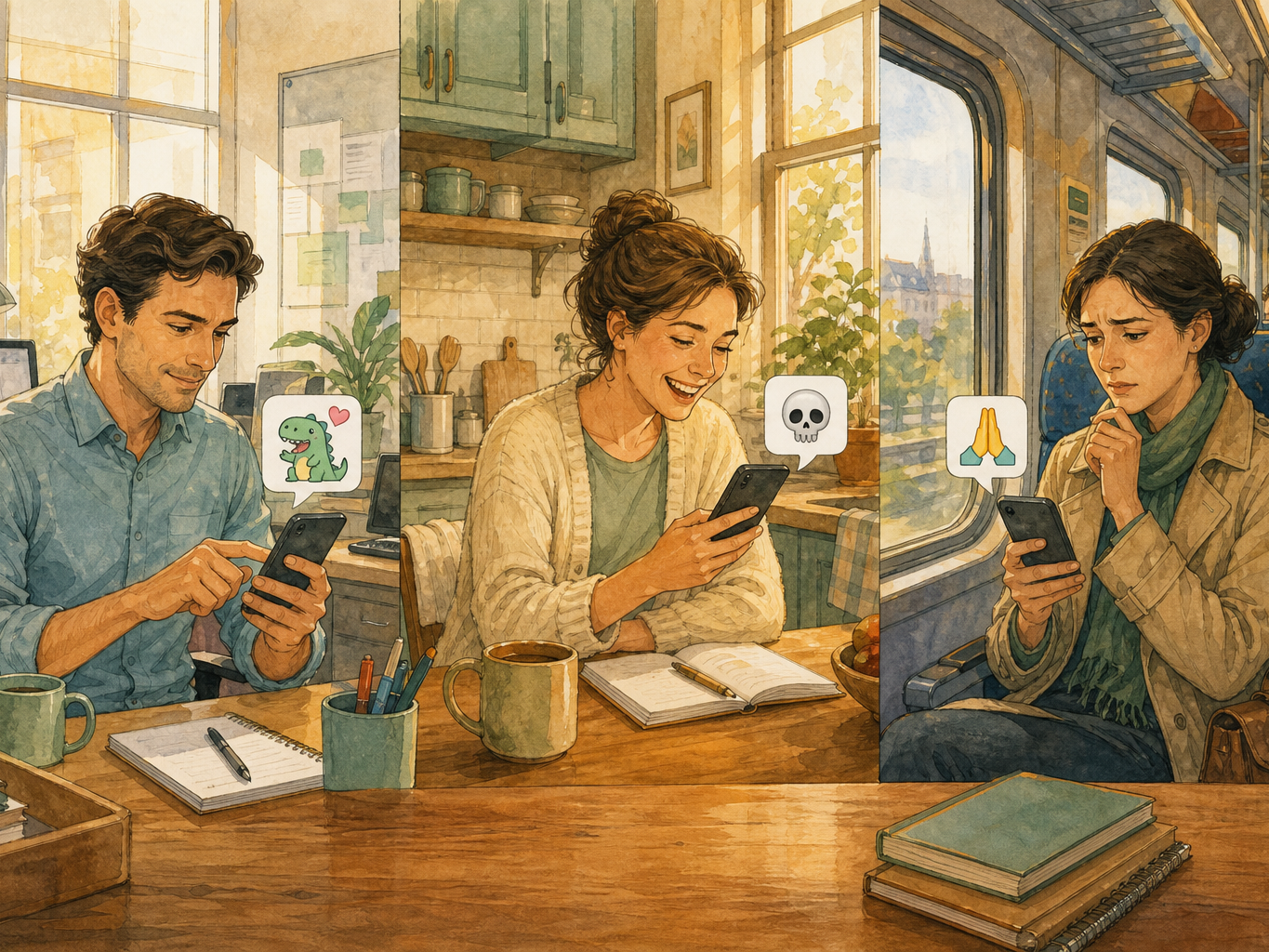
Text to type: There is no perfect international emoji dictionary. A useful method is to consider three things: the person, the platform, and the situation. First, age and relationship matter. A simple 🙂 may seem pleasantly polite to one person but cold or passive-aggressive to another. Second, platforms sometimes display the same emoji with slightly different designs. A small change in the eyes or mouth can change its emotional effect. Finally, online communities create new meanings. In many English-language social media spaces, 💀 can mean “That was so funny I died,” rather than actual danger or death. Old faces can also return as jokes or signs of nostalgia. When meaning is unclear, the surrounding message and the sender’s usual style are often more useful than the symbol alone.
Ready. The timer starts with your first key.
Complete
Great job!
Strong finish — your speed stayed steady.
Your rhythm
Speed over time- Time
- 0:00
- Raw speed
- 0 WPM
- Wrong keys
- 0
- Corrected
- 0
Check your understanding
Check: Part 5: Read the Person, Platform, and Situation
1. What three kinds of context can help you understand an unfamiliar emoji?
Sample answer
You can consider who sent it, how the platform displays it, and what is happening in the conversation.
What you can do now
Final Reflection
What do you think people should do when an emoji from another country or community is unclear?
Learning cards
My cards
Old Faces, New Meanings: Emoji Around the World
0 due · 0 new · about 1 min
Learn the sense first · then retrieve it
No saved cards yet
Open a word or phrase in the article and choose Save to My Words.
Focused Reading Mode is open.
Listening
Lesson audio
Listen from the beginning, or choose “Play this part” as you read along.
Reading
Part 1: Old Emoticons Are Still Alive
Reading
Part 2: Emoji Meanings Can Travel and Change
Reading
Part 3: Text Faces Look in Different Directions
Reading
Part 4: Stickers Create Local Chat Habits
Reading
Part 5: Read the Person, Platform, and Situation
Finished listening?
Mark this listening practice complete when you have followed the lesson audio.
Listening complete
Listen Mode
Word-by-word syncPlay the audio and follow the highlighted word.
Article complete
Choose your next step
Open the next same-level lesson, replay the article, or save this page for later.
Listen Again
Replay the article once and notice how much more you understand.
One replay is enough. Then move on.