Six Strange Traditions from Six Places
Quality checked lesson
This lesson teaches six strange traditions from six places. Each part explains what people do, where they do it, why they do it, and how the day or ceremony works.
 English lesson
Article
Choose how to use this lesson
You can switch anytime.
Study mode
Introduction
Typing practice
Type the text exactly. Timer starts with your first key.
Text to type: This lesson teaches six strange traditions from six places. Each part explains what people do, where they do it, why they do it, and how the day or ceremony works.
Ready. The timer starts with your first key.
Complete
Great job!
Strong finish — your speed stayed steady.
Your rhythm
Speed over time- Time
- 0:00
- Raw speed
- 0 WPM
- Wrong keys
- 0
- Corrected
- 0
Before you begin
Warm-up
Do you know a tradition that surprises visitors?
Have you ever watched a festival in another country?
Why might a town keep a celebration that looks strange at first?
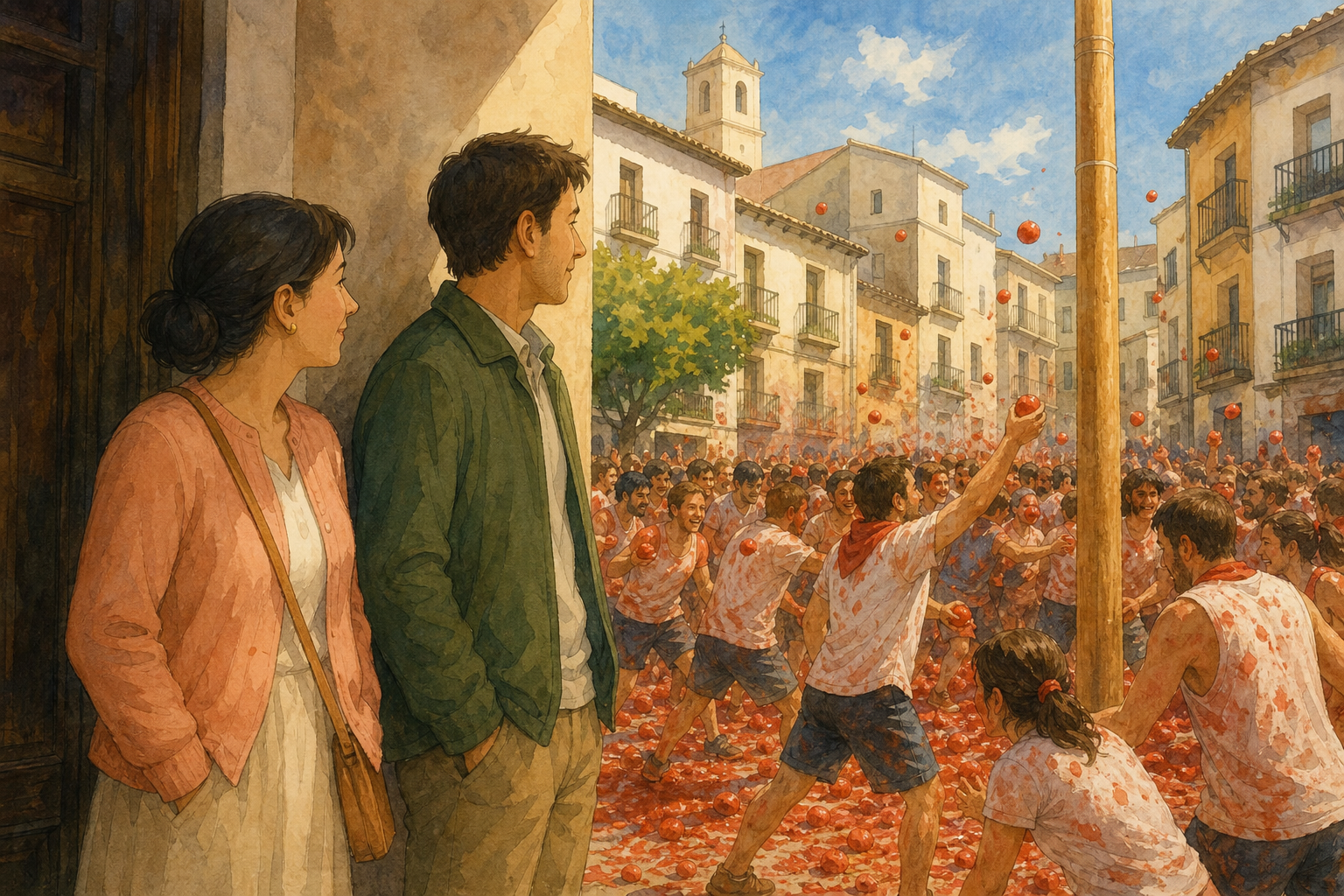 Part 1: La Tomatina in Buñol
Reading
Part 1: La Tomatina in Buñol
Typing practice
Type the text exactly. Timer starts with your first key.
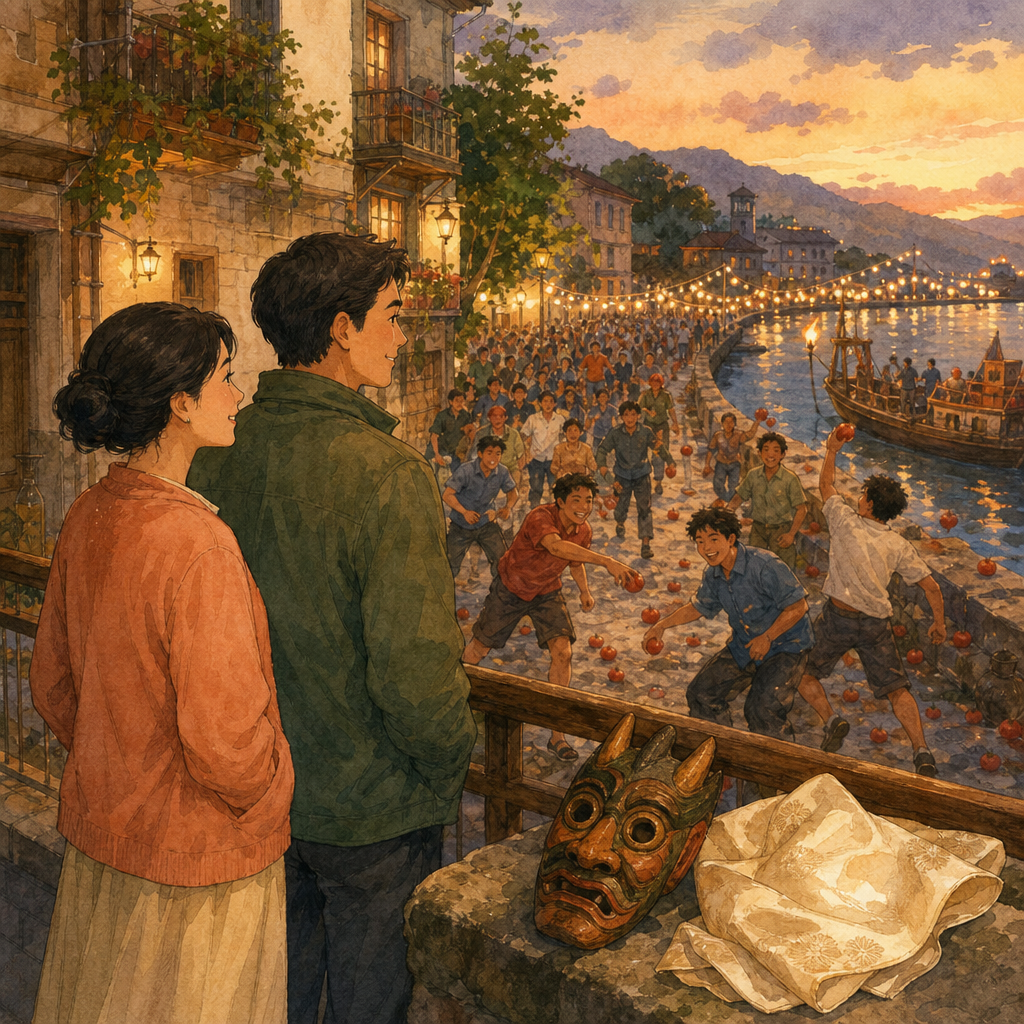
Text to type: La Tomatina is a tomato fight in the town of Buñol, in Spain. It is a street festival, not a meal. The town's own account starts on the last Wednesday of August in 1945. Young people were in the Plaza del Pueblo to watch a parade of giants and big heads. They pushed into the parade. A participant fell and hit a vegetable stall. The crowd threw tomatoes until the police stopped the fight. The next year, people brought tomatoes from home and did it again. In the early 1950s the police banned it, because they did not want it to become a tradition. Some people were even arrested. The town asked for the festival back. It was allowed again and became an official local festival. In 2002 Spain named La Tomatina a Fiesta of International Tourist Interest. The town now runs the day on a clear clock. On the 2025 municipal timetable, the Palo Jabón, a slippery pole, started at 11:00. The tomato festival itself ran from 12:00 to 13:00. At 13:00, cleaning of the route and the nearby streets began. So the famous part is one organized hour in the middle of the day, not an all-day food fight.
Ready. The timer starts with your first key.
Complete
Great job!
Strong finish — your speed stayed steady.
Your rhythm
Speed over time- Time
- 0:00
- Raw speed
- 0 WPM
- Wrong keys
- 0
- Corrected
- 0
Check your understanding
Check: Part 1: La Tomatina in Buñol
1. How does Buñol run La Tomatina day after the morning?
Sample answer
After the Palo Jabón at 11:00, the tomato festival runs from 12:00 to 13:00, and then the town cleans the streets.
Think one step further
Do you think a one-hour tomato fight in Buñol sounds fun?
Reading
Part 2: Up Helly Aa in Shetland
Typing practice
Type the text exactly. Timer starts with your first key.
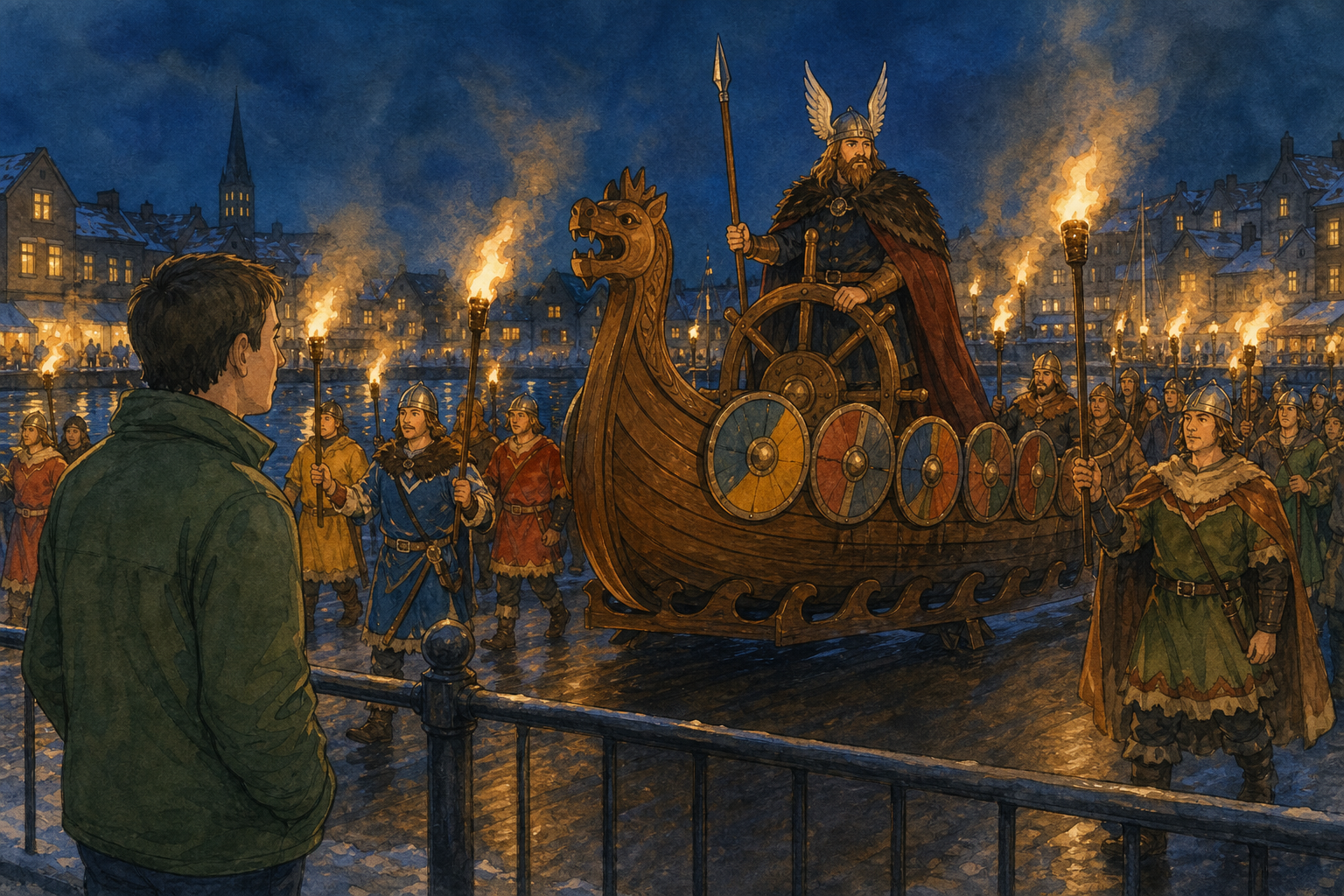
Text to type: Up Helly Aa is the big fire festival in Lerwick, the main town of Shetland, in Scotland. It remembers Shetland's Norse past, but the organized festival people see today grew in Lerwick in the late 1800s. Around 1870, local men gave it the name Up Helly Aa, moved it toward the end of January, and added costumes and torches. A Viking longship, called the galley, joined in the late 1880s. The first galley appeared in 1889. The leader's title, Guizer Jarl, dates from 1906. The festival is on the last Tuesday of January. Volunteers build the galley from late October. The Guizer Jarl chooses its colour, and that colour stays secret until the day. The Guizer Jarl is the chief guizer, the leader of the Jarl Squad. That squad wears Viking dress. The other squads, about forty-five of them, wear fancy-dress suits. Almost a thousand people carry torches. The day is packed. The Jarl Squad marches from the early morning. At the Town Hall, the Guizer Jarl receives the freedom of the town for twenty-four hours. At 19:30 a signal lights more than nine hundred torches. The Jarl stands at the helm of the galley. The procession ends at the burning site on the King George V playing field, and the public stays outside that site. Then the squads visit eleven halls. In each hall they perform a short act and dance with the guests. They often finish near breakfast on Wednesday, and that Wednesday is a public holiday in Shetland.
Ready. The timer starts with your first key.
Complete
Great job!
Strong finish — your speed stayed steady.
Your rhythm
Speed over time- Time
- 0:00
- Raw speed
- 0 WPM
- Wrong keys
- 0
- Corrected
- 0
Check your understanding
Check: Part 2: Up Helly Aa in Shetland
1. What do the squads do after the galley burns?
Sample answer
They visit eleven halls, perform an act in each one, and dance with the guests, often until breakfast.
Think one step further
Do you think you could stay up for the Up Helly Aa halls?
 Part 3: Kukeri and the Surova feast
Reading
Part 3: Kukeri and the Surova feast
Typing practice
Type the text exactly. Timer starts with your first key.
Text to type: In Bulgaria, masked dancers are widely known as kukeri. A workshop at the National Museum of History in Sofia teaches that Kukeri dances drive away evil, and that the costumes are both scary and beautiful. The concrete winter feast on the UNESCO list is in the Pernik region. There the feast is called Surova, and the masked groups are called Survakari. UNESCO inscribed Surova in 2015. Surova is on 13 and 14 January, the New Year on the old calendar. On the first night, men, women, and children put on masks and costumes. They go to the village centre, light fires, and play with the crowd. Some people take special roles: the leader, the newly-weds, the priest, and the bear. Early the next morning they walk through the village and visit houses. They ritually marry young couples. The bear pretends to grab people, and that action is for good health. Hosts wait with a meal and gifts. Later the Survakari share those gifts, often with orphans and poor people. Families collect materials all year, and adults teach children how to make the masks.
Ready. The timer starts with your first key.
Complete
Great job!
Strong finish — your speed stayed steady.
Your rhythm
Speed over time- Time
- 0:00
- Raw speed
- 0 WPM
- Wrong keys
- 0
- Corrected
- 0
Check your understanding
Check: Part 3: Kukeri and the Surova feast
1. What do the Survakari do on the morning of 14 January?
Sample answer
They visit houses, ritually marry young couples, and the bear pretends to grab people for good health.
Think one step further
Do you think the bear in a Surova visit would feel funny or scary?
Reading
Part 4: Land diving on Pentecost Island
Typing practice
Type the text exactly. Timer starts with your first key.
Text to type: Land diving is a ritual on Pentecost Island, in Vanuatu. Men jump from a tall wooden tower made of logs and vines. The Vanuatu Tourism Office says the tower can reach about 30 metres. The divers are held by vines, not ropes. The vines are chosen for strength and flexibility, and each jumper calculates the length so he can land safely. People do this to help bring a good yam harvest. Yams are an important food crop. In some communities the dive is also a step toward adult life. In 2026 the public dives run on Saturdays from April through June, in the yam season. On Pentecost Island the meaning is the harvest, courage, and the community, not a sport show.
Ready. The timer starts with your first key.
Complete
Great job!
Strong finish — your speed stayed steady.
Your rhythm
Speed over time- Time
- 0:00
- Raw speed
- 0 WPM
- Wrong keys
- 0
- Corrected
- 0
Check your understanding
Check: Part 4: Land diving on Pentecost Island
1. How does a land diver reach the ground safely?
Sample answer
Vines, not ropes, are measured so the jumper can land safely.
Think one step further
Do you think you could watch a land dive on Pentecost Island?
Reading
Part 5: Famadihana in Madagascar
Typing practice
Type the text exactly. Timer starts with your first key.
Text to type: Famadihana is a family ceremony in Madagascar. People also call it the turning of the bones. Among the Merina and the Betsileo, in the highlands, it is a celebration of family and of life together. It is not a horror show. Two to three years after a burial, the family takes the ancestor from the tomb. They wrap the ancestor in a new silk lamba, a cloth made for this moment. The family and the community greet the ancestor and dance. Then they return the ancestor to the family tomb. The museum that records this ceremony calls it a joyful occasion, not a time of grief. Fresh cloth, dancing, and coming home to the tomb are signs of continued care.
Ready. The timer starts with your first key.
Complete
Great job!
Strong finish — your speed stayed steady.
Your rhythm
Speed over time- Time
- 0:00
- Raw speed
- 0 WPM
- Wrong keys
- 0
- Corrected
- 0
Check your understanding
Check: Part 5: Famadihana in Madagascar
1. What do families do with the ancestor during Famadihana?
Sample answer
They wrap the ancestor in a new silk lamba, dance together, and return the ancestor to the family tomb.
Think one step further
Do you think dancing fits a family ceremony like Famadihana?
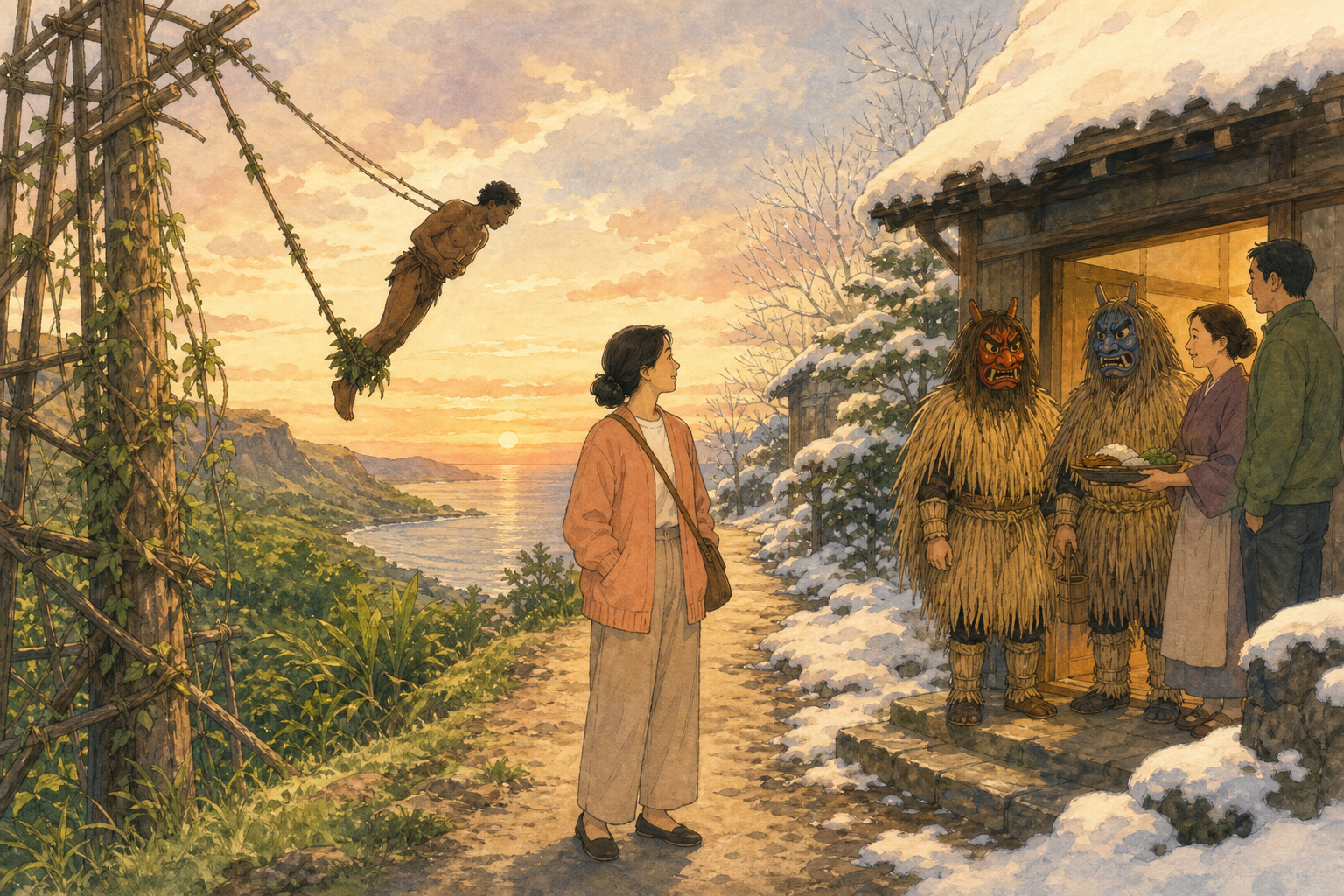 Part 6: Namahage on the Oga Peninsula
Reading
Part 6: Namahage on the Oga Peninsula
Typing practice
Type the text exactly. Timer starts with your first key.
Text to type: On 31 December, young men dressed as Namahage visit houses on the Oga Peninsula, in Akita, Japan. They wear masks and straw coats, with straw guards on their legs and straw boots for the snow. For people in Oga, these visitors are gods who come with the New Year. They warn against laziness. They also bring protection from illness and disaster, hope for a good harvest, and food from the mountains and the sea. At the door they shout questions about crybabies, children who do not listen to their parents, and whether the woman of the house wakes up early. The hosts welcome them with traditional food and sake. Some Namahage carry a large kitchen knife. It is a symbol, not a weapon for harm. People who sit too long by the fire get blisters, called namomi. "Peeling the blisters" is a picture of leaving laziness behind, and that idea became the name Namahage. People in Oga tell more than one old story about where the Namahage come from, so this lesson stays with the meaning of the visit. The visits used to follow the lunar New Year. They are now on 31 December. In 1978, Oga's Namahage became an Important Intangible Cultural Asset. In 2018, UNESCO inscribed Raiho-shin, ritual visits of deities in masks and costumes. Oga City says Oga no Namahage is one of the ten rituals in that inscription. In a Raiho-shin visit, local people in frightening masks scold laziness, teach children, and receive a meal. The scary face is part of a community welcome.
Ready. The timer starts with your first key.
Complete
Great job!
Strong finish — your speed stayed steady.
Your rhythm
Speed over time- Time
- 0:00
- Raw speed
- 0 WPM
- Wrong keys
- 0
- Corrected
- 0
Check your understanding
Check: Part 6: Namahage on the Oga Peninsula
1. What is the Namahage visit for, on the Oga Peninsula?
Sample answer
The visitors warn against laziness and bring protection, a good harvest, and hope for food from the mountains and the sea.
Think one step further
Do you think a Namahage visit would feel scary or kind?
What you can do now
Final Reflection
Which of these six strange traditions would you want to understand more deeply, and what would you ask someone from that place?
Learning cards
My cards
Six Strange Traditions from Six Places
0 due · 0 new · about 1 min
Learn the sense first · then retrieve it
No saved cards yet
Open a word or phrase in the article and choose Save to My Words.
Focused Reading Mode is open.
Listening
Lesson audio
Listen from the beginning, or choose “Play this part” as you read along.
Reading
Part 1: La Tomatina in Buñol
Reading
Part 2: Up Helly Aa in Shetland
Reading
Part 3: Kukeri and the Surova feast
Reading
Part 4: Land diving on Pentecost Island
Reading
Part 5: Famadihana in Madagascar
Reading
Part 6: Namahage on the Oga Peninsula
Finished listening?
Mark this listening practice complete when you have followed the lesson audio.
Listening complete
Listen Mode
Word-by-word syncPlay the audio and follow the highlighted word.
Article complete
Choose your next step
Open the next same-level lesson, replay the article, or save this page for later.
Listen Again
Replay the article once and notice how much more you understand.
One replay is enough. Then move on.