Finland’s Capitals: The Story of Turku and Helsinki
Quality checked lesson
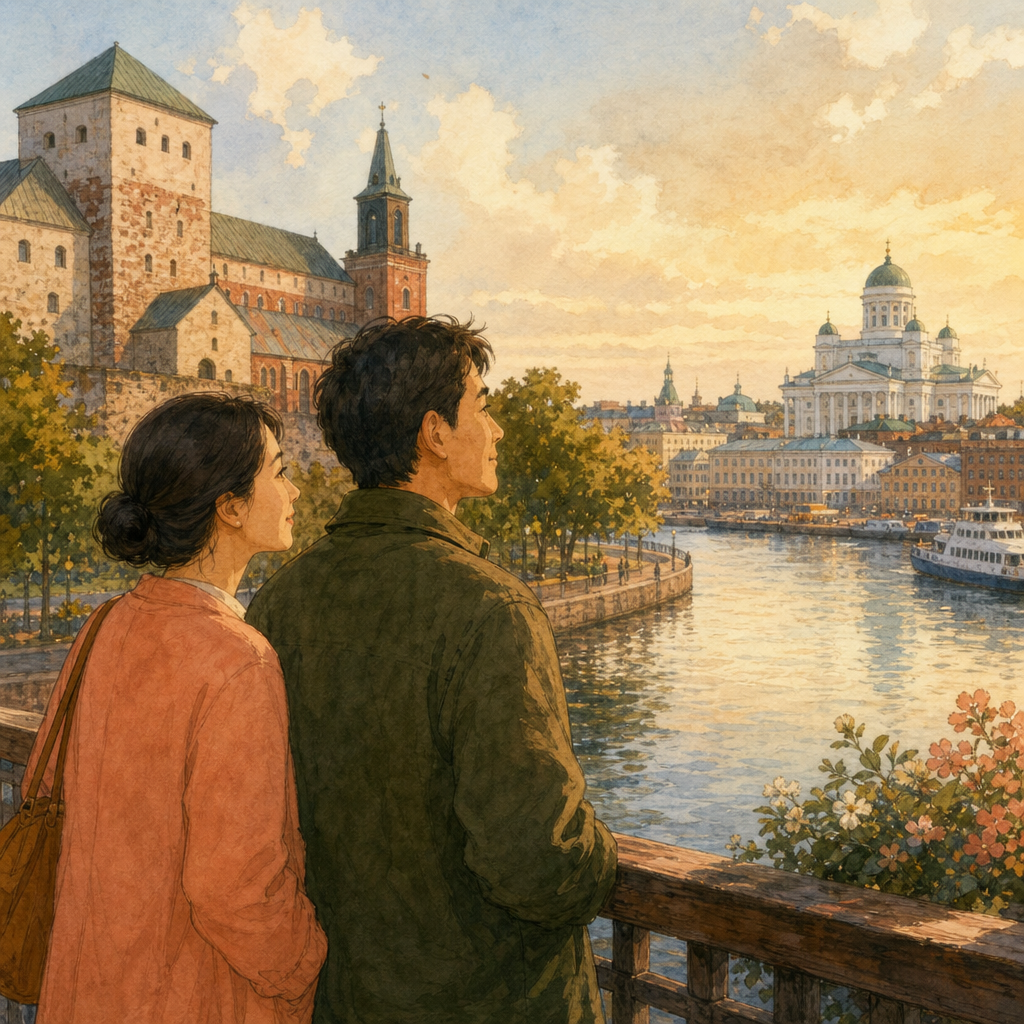
This lesson teaches the history of both cities, Turku and Helsinki, and what makes each city's identity today. Turku is Finland's oldest city and was its main city under Swedish rule, while Helsinki became the capital in 1812 and is the country's political centre today.
 English lesson

Article
Choose how to use this lesson
You can switch anytime.
Study mode
Introduction
Typing practice
Type the text exactly. Timer starts with your first key.
Text to type: This lesson teaches the history of both cities, Turku and Helsinki, and what makes each city's identity today. Turku is Finland's oldest city and was its main city under Swedish rule, while Helsinki became the capital in 1812 and is the country's political centre today.
Ready. The timer starts with your first key.
Complete
Great job!
Strong finish — your speed stayed steady.
Your rhythm
Speed over time- Time
- 0:00
- Raw speed
- 0 WPM
- Wrong keys
- 0
- Corrected
- 0
Before you begin
Warm-up
Do you know any cities in Finland?
What makes your hometown feel different from other towns?
Have you visited an old city and a modern capital in the same country?
 Part 1: Two Cities, Two Roles
Reading
Part 1: Two Cities, Two Roles
Typing practice
Type the text exactly. Timer starts with your first key.
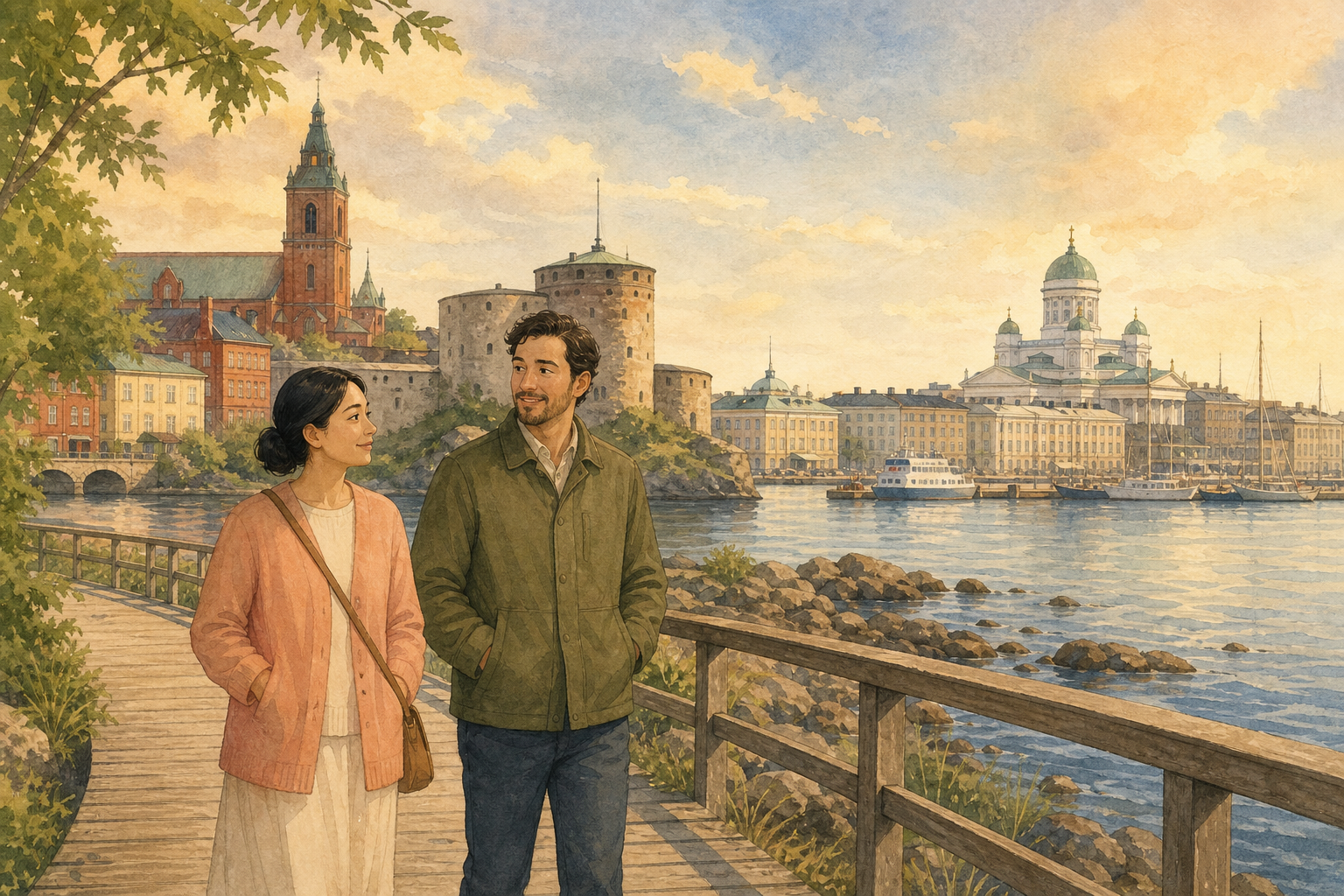
Text to type: Finland has many towns, but two cities tell a big part of its story. The first is Turku, on the southwest coast. The second is Helsinki, on the south coast. Here, "Turku" means the city in Finland, not the country Turkey. The names only sound a little alike. Turku is the older city. For hundreds of years, when Finland was part of the Swedish kingdom, Turku was the most important city in the land. Helsinki is younger. It became the capital in 1812, and in 1917 it became the capital of independent Finland. Some countries in Asia have a similar pattern, with an old capital full of history and a newer capital full of government offices. To understand each city, it helps to look at three things: where it started, the big turning points in its past, and what people feel about it today.
Ready. The timer starts with your first key.
Complete
Great job!
Strong finish — your speed stayed steady.
Your rhythm
Speed over time- Time
- 0:00
- Raw speed
- 0 WPM
- Wrong keys
- 0
- Corrected
- 0
Check your understanding
Check: Part 1: Two Cities, Two Roles
1. Which city is older, and which city is the capital of Finland today?
Sample answer
Turku is the older city and was the most important city under Swedish rule. Helsinki is the capital today. It became the capital in 1812 and stayed the capital when Finland became independent in 1917.
Think one step further
Do you know a country with an old capital and a new capital?
What do you think changes in a city when it stops being the capital?
Why do you think people sometimes mix up the names Turku and Turkey?
Reading
Part 2: Turku's History — Church, Fire, and a Big Move
Typing practice
Type the text exactly. Timer starts with your first key.
Text to type: Turku's story begins with the church. In 1229, a letter from Pope Gregory IX moved the seat of the local bishop to the area around Turku. Many people count this as the start of the city. The bishop's great church, Turku Cathedral, was probably consecrated on 17 June 1300. "Consecrated" means it was officially made a holy place. In Swedish, the city is called Åbo, and both names are still used. In 1809, Sweden lost Finland to Russia. For a short time, Turku was the capital of the new Grand Duchy of Finland. Then in 1812, Emperor Alexander I moved the capital to Helsinki, because Turku was too close to Sweden. In 1827 the Great Fire of Turku began on 4 September and destroyed about 75 percent of the city. The Great Fire of Turku left 11,000 people homeless, and 27 deaths were recorded. The fire damaged Turku Cathedral and the main building of the Imperial Academy of Turku, also called the Royal Academy of Turku, which had been founded in 1640. After the fire, the Academy moved to Helsinki. Today it is the University of Helsinki. The architect Carl Ludvig Engel then drew a new plan for Turku with wider streets.
Ready. The timer starts with your first key.
Complete
Great job!
Strong finish — your speed stayed steady.
Your rhythm
Speed over time- Time
- 0:00
- Raw speed
- 0 WPM
- Wrong keys
- 0
- Corrected
- 0
Check your understanding
Check: Part 2: Turku's History — Church, Fire, and a Big Move
1. What two important things did Turku lose to Helsinki in the early 1800s?
Sample answer
Turku lost its role as capital in 1812, when Emperor Alexander I moved the capital to Helsinki. After the Great Fire of 1827, it also lost its university, the Royal Academy of Turku, which moved to Helsinki and became the University of Helsinki.
Think one step further
Do you know a city that was rebuilt after a big fire or disaster?
Why do you think the university moved after the fire and not before?
What do you think people in Turku felt after losing the capital and then the university?
 Part 3: What Makes Turku, Turku
Reading
Part 3: What Makes Turku, Turku
Typing practice
Type the text exactly. Timer starts with your first key.
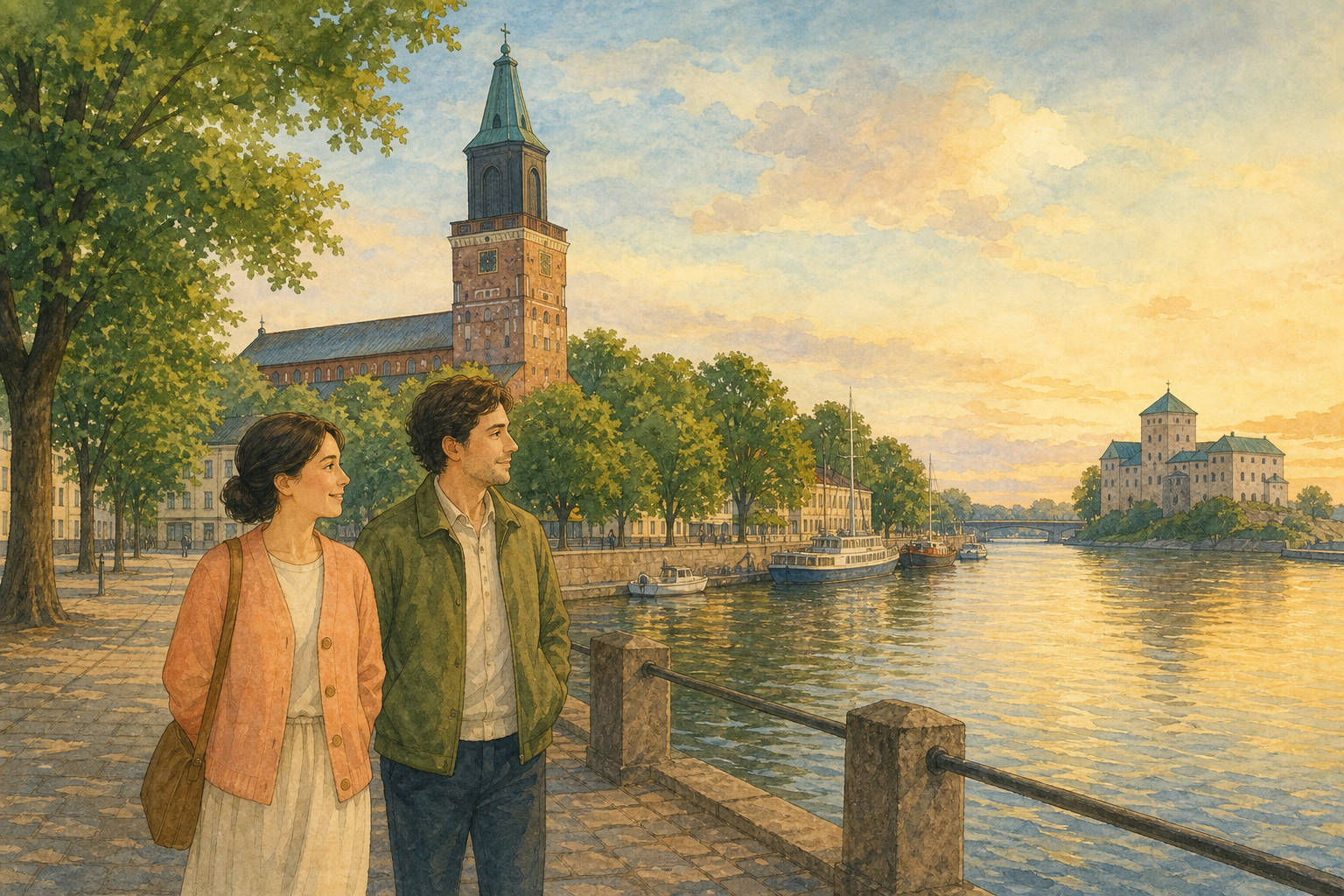
Text to type: The heart of Turku is the Aura River. The river runs through the middle of the city and meets the sea on the southwest coast. The City of Turku calls the river and its waterfront the city's most attractive place. People walk, meet friends, and sit by the water there. Some say the river is Turku's living room. Two old buildings stand like bookends along the river. At one end is Turku Cathedral, more than 700 years old. Near the river mouth is Turku Castle, which dates from the 13th century and is one of Finland's most important heritage sites and museums. The area between them is called the Cultural Waterfront. Turku is also officially bilingual, which means Finnish and Swedish are both official languages. This comes from its long Swedish past. Finally, Turku is a gateway to the sea. Ferries leave from Turku for the Åland Islands and Stockholm, and the city sits next to the Archipelago Sea, which has thousands of small islands.
Ready. The timer starts with your first key.
Complete
Great job!
Strong finish — your speed stayed steady.
Your rhythm
Speed over time- Time
- 0:00
- Raw speed
- 0 WPM
- Wrong keys
- 0
- Corrected
- 0
Check your understanding
Check: Part 3: What Makes Turku, Turku
1. Why is the Aura River so important to Turku's identity?
Sample answer
The Aura River runs through the centre of Turku and links its most famous places, from Turku Cathedral to Turku Castle near the river mouth. The riverside is the city's most attractive area and a place where people spend free time, so it feels like the city's living room.
Think one step further
Do you have a river or a waterfront in your town where people like to spend time?
What old building would you choose to show a visitor in your city?
Why do you think a city keeps two official languages?
Reading
Part 4: Helsinki's History — From Trading Town to Capital
Typing practice
Type the text exactly. Timer starts with your first key.
Text to type: Helsinki also began under Swedish rule. In 1550, King Gustav Vasa founded Helsinki as a trading town. He wanted it to compete with the strong Hanseatic merchants, who controlled much of the trade on the Baltic Sea. For a long time, Helsinki stayed fairly small. In 1748, Sweden began building a sea fortress on islands just outside the harbour. It was called Sveaborg. In 1808, the fortress surrendered to Russia, and from 1809 Finland was under Russian rule. The big turning point came in 1812, when Helsinki became the capital. After that, the city grew quickly, and much of it was planned. A new centre was designed around Senate Square, with the government palace, the main Lutheran church, and the university around it. In 1917, Finland became independent, and Helsinki became the capital of the new country.
Ready. The timer starts with your first key.
Complete
Great job!
Strong finish — your speed stayed steady.
Your rhythm
Speed over time- Time
- 0:00
- Raw speed
- 0 WPM
- Wrong keys
- 0
- Corrected
- 0
Check your understanding
Check: Part 4: Helsinki's History — From Trading Town to Capital
1. What changed for Helsinki after 1812?
Sample answer
In 1812, Helsinki became the capital of Finland under Russian rule. After that, it grew quickly, and a new planned centre was built around Senate Square, with important government, church, and university buildings.
Think one step further
Do you know why your country's capital is in its present place?
What do you think is good about a city centre that was planned from the start?
Why do you think a king wanted a new trading town by the sea?
Reading
Part 5: What Makes Helsinki, Helsinki
Typing practice
Type the text exactly. Timer starts with your first key.
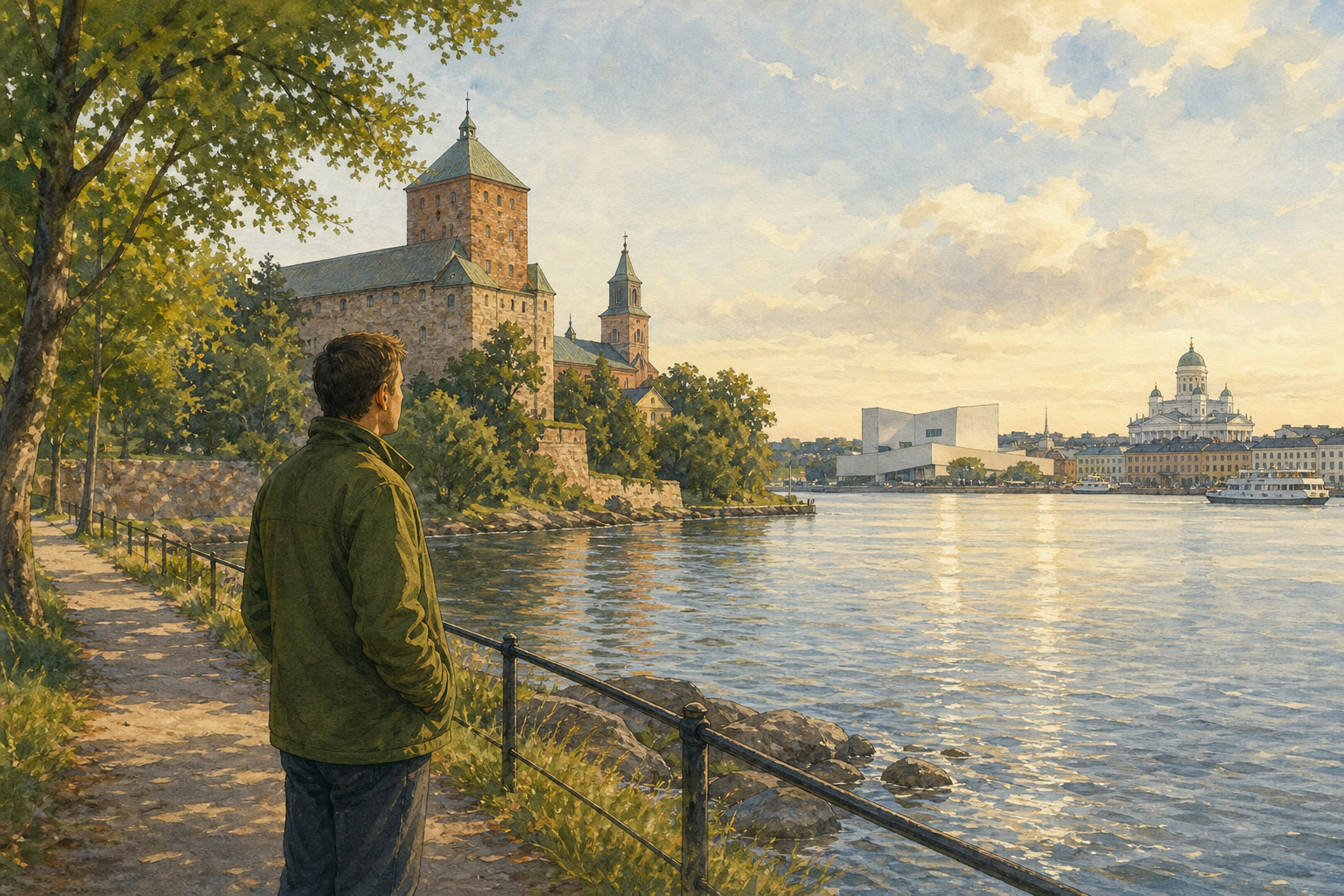
Text to type: Much of Helsinki's identity comes from design and architecture. Senate Square was designed by Carl Ludvig Engel, a German-born architect who had worked in St. Petersburg. His buildings are neoclassical, which means they are white, calm, and ordered, with columns like old Greek temples. Over a century later, the Finnish architect Alvar Aalto made a very different mark. His Finlandia Hall, a concert and congress hall by Töölö Bay, was finished in 1971. It is covered in white Carrara marble and black granite. It was meant to balance Engel's Senate Square and to celebrate Finnish independence. In 1975, it hosted a famous international meeting that led to the Helsinki Accords. In 2012, Helsinki was named World Design Capital. Sauna culture and the sea are also part of Helsinki's everyday identity. The sea is half of the city's character. The old fortress of Sveaborg was renamed Suomenlinna, meaning "Castle of Finland," in 1918. It joined the UNESCO World Heritage List in 1991. About 800 people still live on its islands today.
Ready. The timer starts with your first key.
Complete
Great job!
Strong finish — your speed stayed steady.
Your rhythm
Speed over time- Time
- 0:00
- Raw speed
- 0 WPM
- Wrong keys
- 0
- Corrected
- 0
Check your understanding
Check: Part 5: What Makes Helsinki, Helsinki
1. How are Senate Square and Finlandia Hall different?
Sample answer
Senate Square is a neoclassical centre designed by Carl Ludvig Engel in the 1800s, when Finland was under Russian rule. Finlandia Hall is a modern building by Alvar Aalto, finished in 1971. It was meant to balance Engel's square and to celebrate Finnish independence.
Think one step further
Do you prefer old classical buildings or modern buildings?
What building in your country do you think shows its identity best?
Have you ever visited an island fortress or a castle by the sea?
 Part 6: Two Different Cities, One Shared Story
What you can do now
Final Reflection
If you planned a two-day trip to Finland, which places in Turku and Helsinki would you choose, and why?
Which city in your own country plays a role like Turku, and which plays a role like Helsinki?
Learning cards
My cards
Finland’s Capitals: The Story of Turku and Helsinki
0 due · 0 new · about 1 min
Learn the sense first · then retrieve it
No saved cards yet
Open a word or phrase in the article and choose Save to My Words.
Focused Reading Mode is open.
Listening
Lesson audio
Listen from the beginning, or choose “Play this part” as you read along.
Reading
Part 1: Two Cities, Two Roles
Reading
Part 2: Turku's History — Church, Fire, and a Big Move
Reading
Part 3: What Makes Turku, Turku
Reading
Part 4: Helsinki's History — From Trading Town to Capital
Reading
Part 5: What Makes Helsinki, Helsinki
Finished listening?
Mark this listening practice complete when you have followed the lesson audio.
Listening complete
Listen Mode
Word-by-word syncPlay the audio and follow the highlighted word.
Article complete
Choose your next step
Open the next same-level lesson, replay the article, or save this page for later.
Listen Again
Replay the article once and notice how much more you understand.
One replay is enough. Then move on.