Fly Agaric Is Not a Magic Mushroom
Quality checked lesson
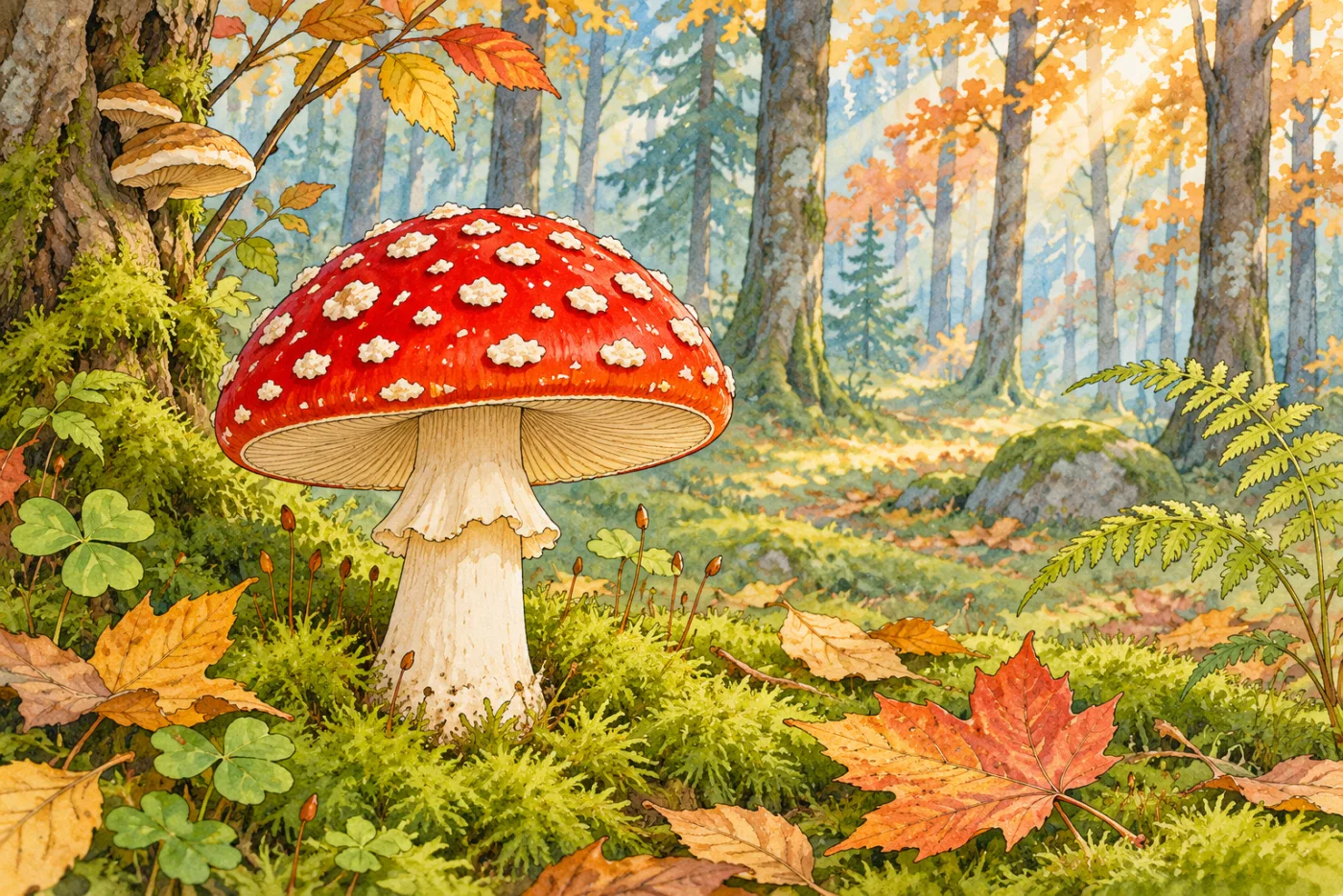
The fly agaric was used against flies in Europe and eaten as a ritual mushroom in Siberia, and its chemicals, ibotenic acid and muscimol, work very differently from the psilocybin in magic mushrooms.
 English lesson

Article
Choose how to use this lesson
You can switch anytime.
Study mode
Introduction
Typing practice
Type the text exactly. Timer starts with your first key.
Text to type: Today we will learn about the red mushroom with white spots from fairy tales. We will look at its history, the chemicals inside it and how people use it now. At the end, we will ask if it is right to call it a magic mushroom.
Ready. The timer starts with your first key.
Complete
Great job!
Strong finish — your speed stayed steady.
Your rhythm
Speed over time- Time
- 0:00
- Raw speed
- 0 WPM
- Wrong keys
- 0
- Corrected
- 0
Before you begin
Warm-up
Have you ever seen a red mushroom with white spots, in a forest or in a picture?
Why do you think some mushrooms are poisonous?
What have you heard about magic mushrooms?
 Part 1: A Fly Poison in Europe
Reading
Part 1: A Fly Poison in Europe
Typing practice
Type the text exactly. Timer starts with your first key.
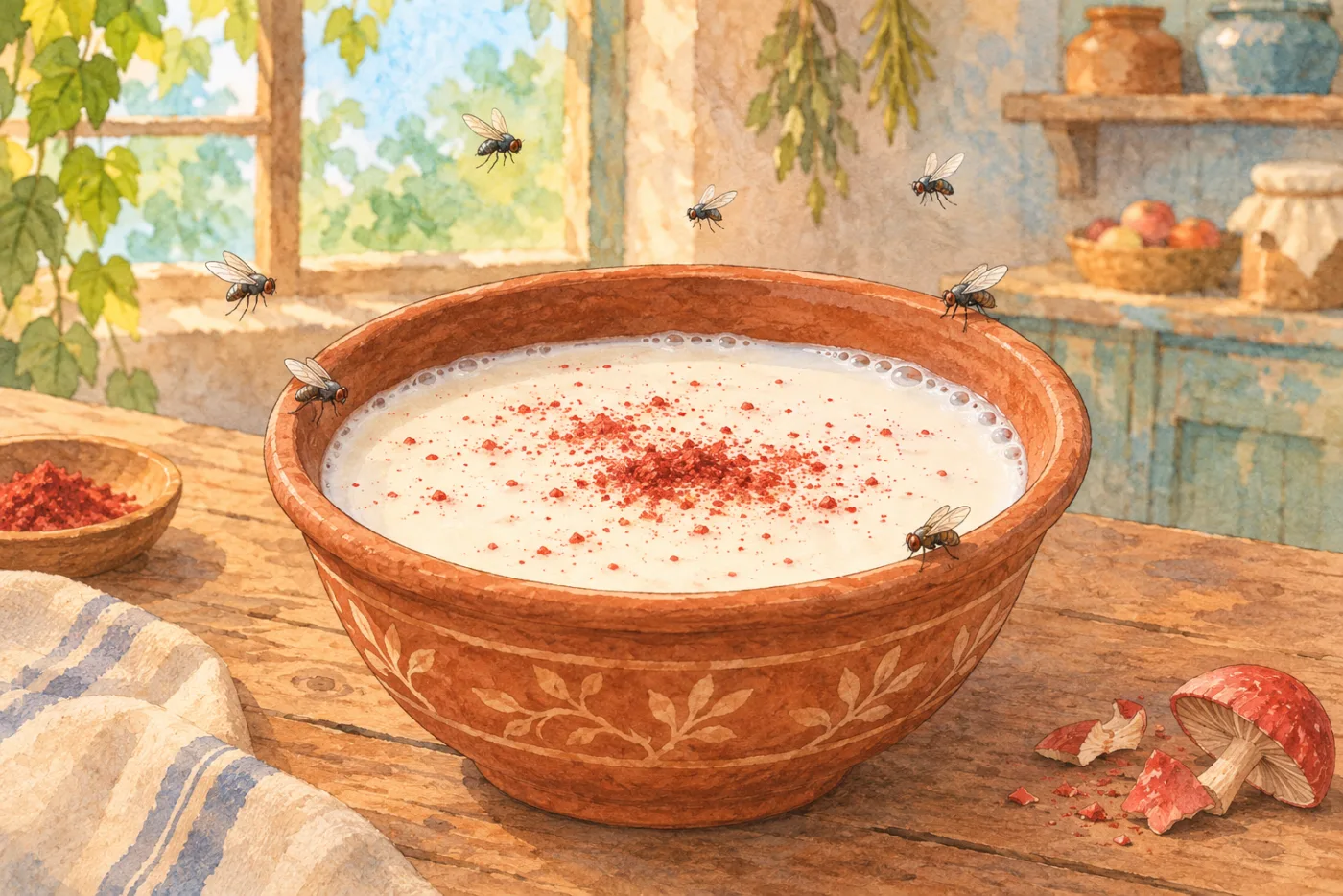
Text to type: The fly agaric grows in cool forests across Europe, Asia and North America. Its English name comes from an old way of using it against flies. Before 1256, the German scholar Albertus Magnus wrote that people crushed it and put it in milk to kill flies. That is why people called it the fly mushroom. In 1753, the Swedish scientist Carl Linnaeus gave the mushroom the Latin name Agaricus muscarius. It comes from musca, the Latin word for fly. Its scientific name today is Amanita muscaria, and muscaria still comes from the word for fly. For a long time, nobody knew if or why the trick worked. Scientists in Japan found part of the answer in 1964. They took a chemical out of the ibotengutake, a Japanese mushroom from the same family. In their tests, it killed flies, so they named it ibotenic acid, after the mushroom. The fly agaric contains the same chemical, but it is still not proven that the mushroom kills flies. In some later tests, the flies only became sleepy for a while and did not die.
Ready. The timer starts with your first key.
Complete
Great job!
Strong finish — your speed stayed steady.
Your rhythm
Speed over time- Time
- 0:00
- Raw speed
- 0 WPM
- Wrong keys
- 0
- Corrected
- 0
Check your understanding
Check: Part 1: A Fly Poison in Europe
1. Is it proven that the fly agaric kills flies?
Sample answer
No. It contains ibotenic acid, which killed flies in Japanese tests, but in some tests the flies only became sleepy.
 Part 2: Who Ate It, and Why
Reading
Part 2: Who Ate It, and Why
Typing practice
Type the text exactly. Timer starts with your first key.
Text to type: The best-known people who ate fly agaric for its effects lived far to the east, in Siberia. Some people in Europe also ate it as food, but only after boiling it, which removes part of the poison. Europeans learned about the Siberian use from Philip Johan von Strahlenberg, a Swedish army officer. He spent about ten years in Siberia as a prisoner of the Russian army. In 1730, he published a book about what he saw there. It described the Koryak people of Kamchatka, in the far east of Russia, and how they used the mushroom. For the Koryak, the mushroom was part of their beliefs. In one of their myths, the hero Big Raven cannot lift a bag of food. A whale needs it for its journey home to the sea. Then he eats fly agaric, becomes strong enough and lifts the bag. Shamans, people who were believed to speak with spirits, ate it to enter a dream-like state. Many other people in Siberia ate it simply for fun, the way people in other places drink alcohol. One report says that poor Koryak people drank the urine of rich people, who could buy the mushrooms. This worked because a large part of the active chemicals leaves the body in urine. A much more famous story has no evidence. You may read that Viking warriors called berserkers ate fly agaric before battle and then fought wildly. This idea comes from a Swedish professor in 1784, more than 700 years after the Viking age. He knew the reports about Siberian shamans and guessed that the Vikings did the same. But no writer from the Viking age mentions the mushroom. So historians treat the story as a guess, not a fact. The difference is clear. Visitors saw the Siberian use and wrote it down, but nobody in the Viking age wrote that Vikings ate it.
Ready. The timer starts with your first key.
Complete
Great job!
Strong finish — your speed stayed steady.
Your rhythm
Speed over time- Time
- 0:00
- Raw speed
- 0 WPM
- Wrong keys
- 0
- Corrected
- 0
Check your understanding
Check: Part 2: Who Ate It, and Why
1. Why do historians believe the Siberian reports but not the berserker story?
Sample answer
Visitors saw and described the Siberian use, but no writer from the Viking age mentions the mushroom.
 Part 3: What Is Inside the Red Cap
Reading
Part 3: What Is Inside the Red Cap
Typing practice
Type the text exactly. Timer starts with your first key.
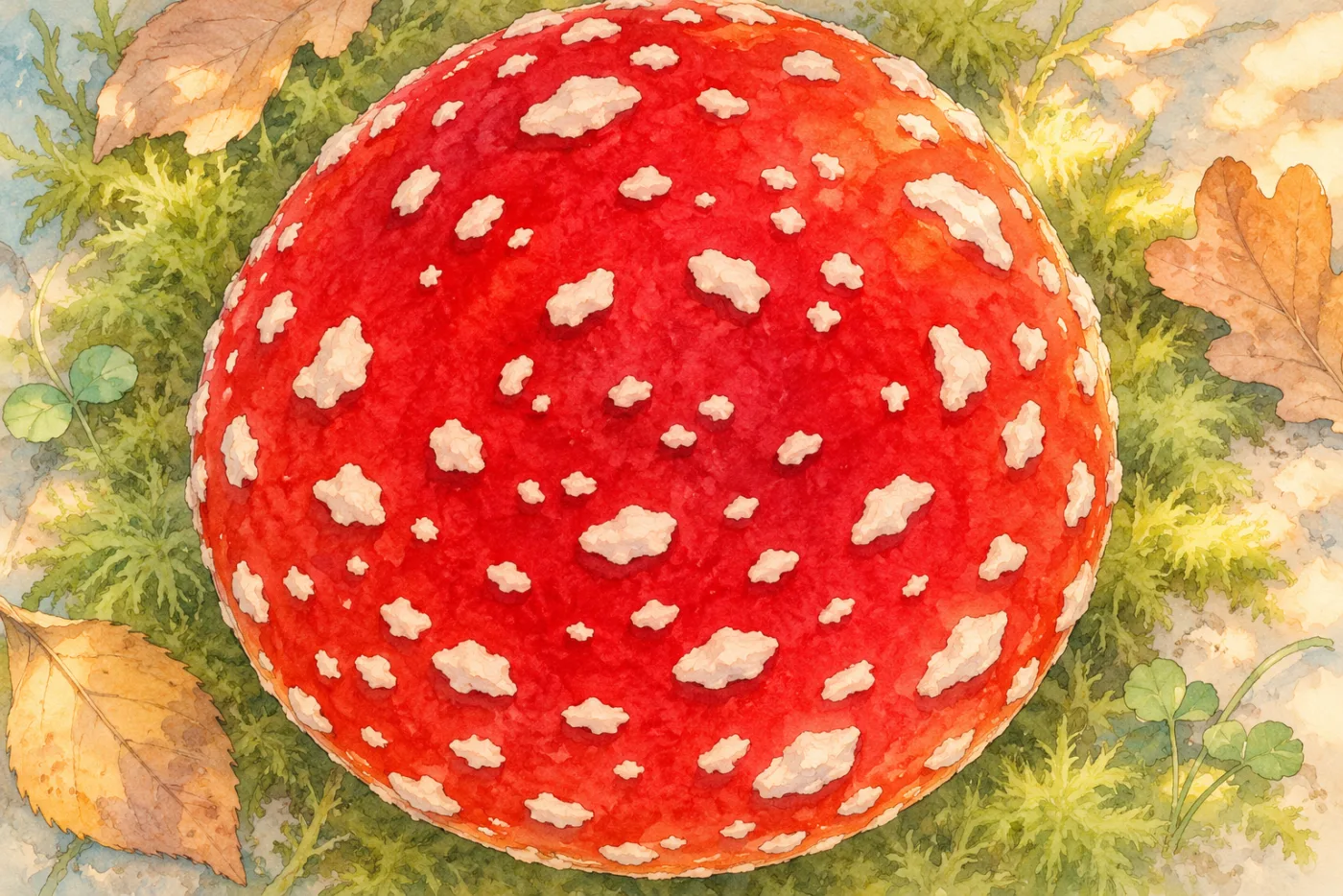
Text to type: In 1869, two German scientists found a poison in the fly agaric and named it muscarine, after the mushroom. For many years, people thought muscarine caused the effects. Later tests showed that the fly agaric has only tiny amounts of it, far too little to matter. Two other chemicals cause the real effects. The first is ibotenic acid, the fly killer. Its shape is similar to glutamate, the chemical that makes brain cells more active. Ibotenic acid can lose a small group of atoms and become the second chemical, muscimol. This happens in the body, and also when the mushroom dries. Muscimol has a shape similar to GABA, the brain's main brake, which tells brain cells to slow down. So muscimol works a little like calming drugs such as Valium. This explains the effects. After 30 to 90 minutes, people feel sleepy and confused. The strength is hard to predict because it changes with the season. Mushrooms picked in spring and summer can contain up to ten times more of these chemicals than autumn ones. Scientists use both chemicals in the lab. In large amounts, ibotenic acid kills brain cells. Researchers use it to destroy tiny areas in the brains of rats. This shows them what those areas do. Nobody knows yet if eating the mushroom can cause damage like this in people. In a Japanese study, scientists gave young mice ibotenic acid by mouth, only once. When the mice grew up, they had memory problems and changes in the brain. Deaths from fly agaric are very rare. Most people who are poisoned have stomach problems and feel confused.
Ready. The timer starts with your first key.
Complete
Great job!
Strong finish — your speed stayed steady.
Your rhythm
Speed over time- Time
- 0:00
- Raw speed
- 0 WPM
- Wrong keys
- 0
- Corrected
- 0
Check your understanding
Check: Part 3: What Is Inside the Red Cap
1. Which chemical in the fly agaric acts like the brain's brake?
Sample answer
Muscimol, because its shape is similar to GABA.
 Part 4: Fly Agaric and Magic Mushrooms
Reading
Part 4: Fly Agaric and Magic Mushrooms
Typing practice
Type the text exactly. Timer starts with your first key.
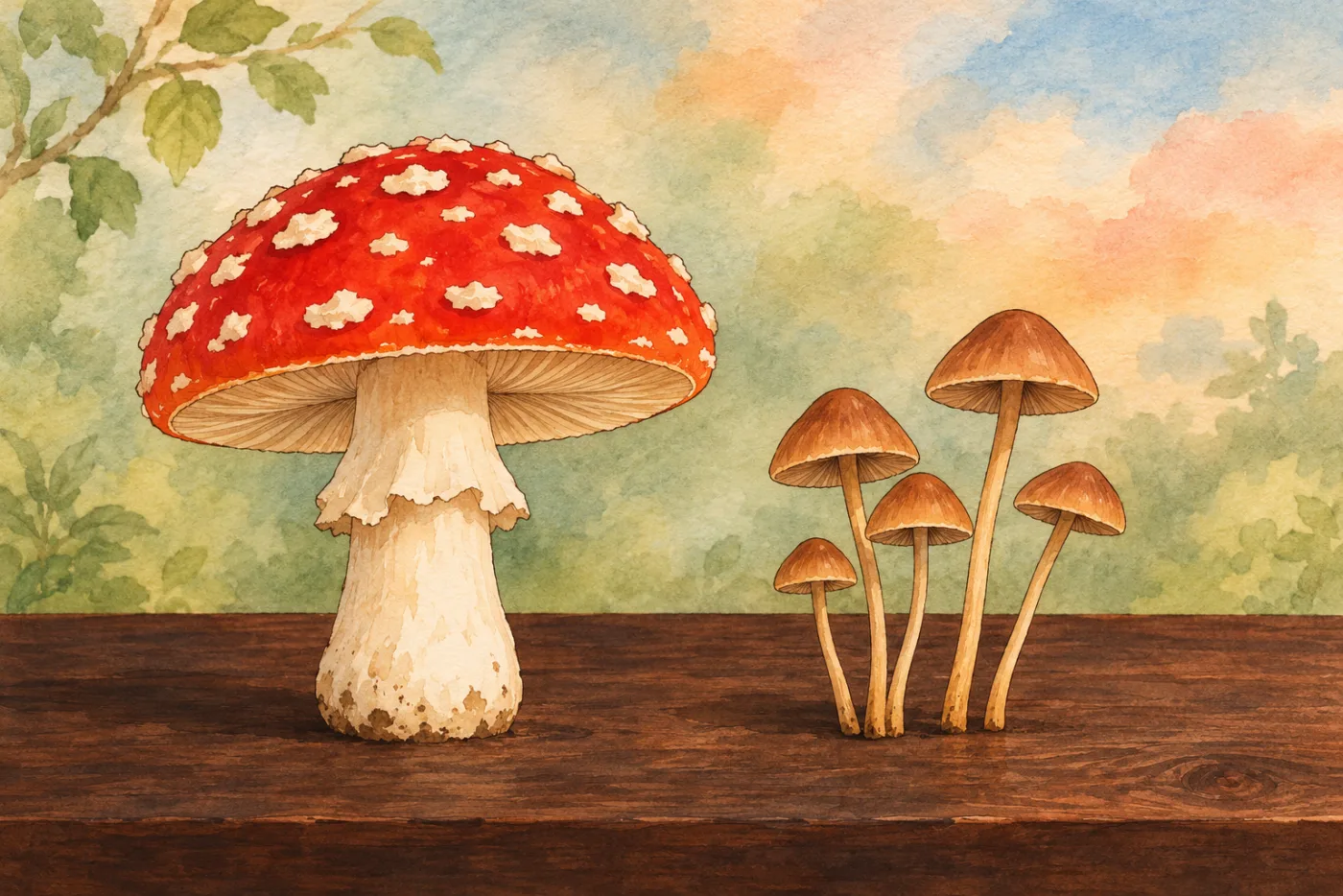
Text to type: Magic mushrooms contain a different chemical, psilocybin. The body turns it into psilocin. Psilocin acts on a serotonin receptor. A receptor is like a lock on a brain cell. Each chemical is a key that fits certain locks. Psilocin fits a serotonin lock, while muscimol fits a GABA lock. Different locks lead to different effects, and muscimol mainly slows the brain down. Medicine shows the gap clearly. Psilocybin has gone through many tests on people. Large reviews of these tests find that it helps against depression. Fly agaric has no evidence like this. So does the connection make sense? Only in a loose way: both are mushrooms that change how people feel and think. In chemistry, they are not relatives. The link today comes mainly from shops. In July 2005, the UK made fresh magic mushrooms illegal. Dried ones were already illegal. The fly agaric was still legal, so its sales went up. Many shops now use psilocybin's medical results to advertise a completely different mushroom.
Ready. The timer starts with your first key.
Complete
Great job!
Strong finish — your speed stayed steady.
Your rhythm
Speed over time- Time
- 0:00
- Raw speed
- 0 WPM
- Wrong keys
- 0
- Corrected
- 0
Check your understanding
Check: Part 4: Fly Agaric and Magic Mushrooms
1. Why does it make little sense to connect fly agaric with magic mushrooms?
Sample answer
Their chemicals are different and act on different receptors in the brain.
 Part 5: Fly Agaric Today
Reading
Part 5: Fly Agaric Today
Typing practice
Type the text exactly. Timer starts with your first key.
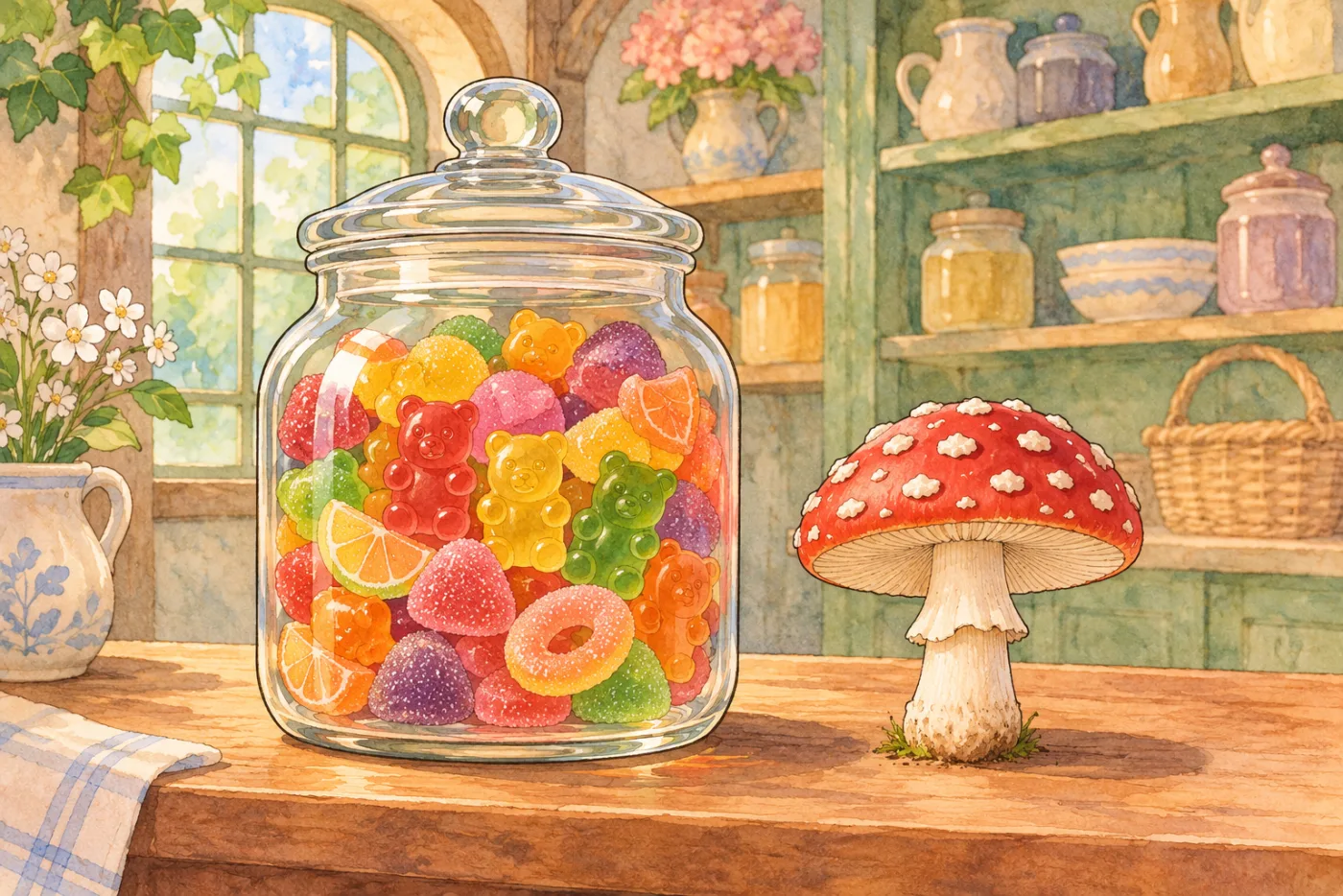
Text to type: The fly agaric is popular again. A study from the University of California San Diego looked at Google searches for it. They rose by 114% from 2022 to 2023. Online shops sell it as gummies, capsules and tinctures. A tincture is a liquid made by soaking a plant or mushroom in alcohol mixed with water. In most countries, the fly agaric is not a controlled drug, so drug laws do not stop the sales. But food has its own laws. Food safety offices say these products do not belong in food. In June 2024, mushroom chocolates and gummies made people ill in the United States. In December 2024, the US Food and Drug Administration (FDA) made a decision about the mushroom. The fly agaric and its chemicals muscimol, ibotenic acid and muscarine are not allowed in normal food. Their reasons come from the chemistry in this lesson. Muscimol and ibotenic acid act directly on the brain. The amount in each mushroom changes a lot, as you saw with the seasons. So one sweet can be much stronger than another. The person who buys it usually has no way to know. No study has shown that these chemicals are safe to eat. Children are most at risk, because they can mistake the sweets for normal candy.
Ready. The timer starts with your first key.
Complete
Great job!
Strong finish — your speed stayed steady.
Your rhythm
Speed over time- Time
- 0:00
- Raw speed
- 0 WPM
- Wrong keys
- 0
- Corrected
- 0
Check your understanding
Check: Part 5: Fly Agaric Today
1. Why do food safety offices say fly agaric does not belong in food?
Sample answer
Its chemicals act on the brain, their strength is hard to predict, and nobody has shown that they are safe.
What you can do now
Final Reflection
People have used the fly agaric against flies, Siberian shamans have eaten it, and today it is an online product. Its chemistry has never changed, and it is still not a magic mushroom.
Why do you think stories like the berserker one stay popular without evidence?
Should shops be allowed to sell mushroom products when nobody knows if they are safe?
Which fact about the fly agaric surprised you most, and why?
Learning cards
My cards
Fly Agaric Is Not a Magic Mushroom
0 due · 0 new · about 1 min
Learn the sense first · then retrieve it
No saved cards yet
Open a word or phrase in the article and choose Save to My Words.
Focused Reading Mode is open.
Listening
Lesson audio
Listen from the beginning, or choose “Play this part” as you read along.
Reading
Part 1: A Fly Poison in Europe
Reading
Part 2: Who Ate It, and Why
Reading
Part 3: What Is Inside the Red Cap
Reading
Part 4: Fly Agaric and Magic Mushrooms
Reading
Part 5: Fly Agaric Today
Finished listening?
Mark this listening practice complete when you have followed the lesson audio.
Listening complete
Listen Mode
Word-by-word syncPlay the audio and follow the highlighted word.
Article complete
Choose your next step
Open the next same-level lesson, replay the article, or save this page for later.
Listen Again
Replay the article once and notice how much more you understand.
One replay is enough. Then move on.
Lesson resources
Resources
Sources and fact review (13)
- Amanita muscaria (Wikipedia)
Albertus Magnus before 1256: powdered in milk to kill flies; Bulliard could not repeat the fly-killing; detoxified mushrooms eaten in some parts of Europe; boiling at least partly removes the water-soluble poisons; Linnaeus 1753, Agaricus muscarius from musca; Ödmann 1784 berserker idea, based on reports about Siberian shamans, with no sources from the time; report of poor Koryak drinking the urine of the wealthy who could buy the mushrooms; use for fun; muscarine in tiny amounts; up to ten times more in spring and summer; effects in 30–90 minutes; deaths very rare; rising sales after the UK banned magic mushrooms; children at particular risk from muscimol sweets
- A Study of Cultural Bias in Field Guide Determinations of Mushroom Edibility Using the Iconic Mushroom, Amanita muscaria, as an Example (Rubel and Arora, Economic Botany 2008)
The mushroom was once eaten as food after boiling
- Harmfulness and potential health benefits of the fly agaric (Amanita muscaria): a literature review (Health Problems of Civilization, 2025)
It was used as a fly poison, but flies became lethargic rather than dying
- Philip Johan von Strahlenberg (Wikipedia)
Prisoner of the Russian army in Siberia 1711–1721, book published in 1730, described fly agaric use
- Interest grows in fly agaric, but here's why you shouldn't confuse it with magic mushrooms (The Conversation)
Muscimol on GABA-A, like benzodiazepines; ibotenic acid like glutamate; psilocin on a serotonin receptor (5-HT2A); ibotenic acid used to destroy brain areas in rodents; poisonings mostly stomach upset; psilocybin reviews on depression; 114% rise in searches 2022–2023 (UC San Diego); gummies, tinctures, capsules; not controlled in most countries
- FDA Alerts Industry and Consumers About Use of Amanita muscaria or its Constituents in Food
18 December 2024 decision; muscimol, ibotenic acid, muscarine not allowed in normal food; do not meet the safety (GRAS) standard; products look like candy; decision followed illness reports, linked to the June 2024 investigation
- FDA, CDC identify Amanita muscaria as a toxin in food (FoodNavigator)
Mushroom chocolates and gummies made people ill in June 2024
- 1964 ibotenic acid paper, Yakugaku Zasshi vol. 84 no. 12 (J-STAGE)
Ibotenic acid isolated in Japan in 1964, named after ibotengutake, kills flies
- Pharmacological review of Amanita muscaria (PubMed)
Ibotenic acid and muscimol are the main active chemicals; ibotenic acid becomes muscimol in the body and when dried; muscimol is a research tool
- Tanemura and Kanno 2011, delayed central toxicity after ibotenic acid in young male mice, Japanese Journal of Animal Psychology 61(1) (J-STAGE)
A single oral dose of ibotenic acid given to young male mice led later to memory problems, changed behaviour and changes in the hippocampus
- The Koryak, Waldemar Jochelson (Jesup North Pacific Expedition)
Big Raven myth: he cannot lift the bag of travelling provisions so the whale can go home to the sea; after eating fly agaric he lifts it and sends the whale home
- Drugs Act 2005 commencement, Written Statements (UK Parliament, 23 June 2005)
Fresh magic mushrooms became Class A drugs on 18 July 2005; prepared mushrooms were already controlled
- Botanical Dietary Supplements: Background Information (NIH Office of Dietary Supplements)
A tincture is made by soaking a plant in alcohol and water