Greek Gods and Why People Needed Them
Quality checked lesson
The ancient Greeks believed in gods who acted like people, and each main god explained or protected something they needed.
 English lesson

Article
Choose how to use this lesson
You can switch anytime.
Study mode
Introduction
Typing practice
Type the text exactly. Timer starts with your first key.
Text to type: In this lesson, you will learn who the ancient Greek gods were and how people kept them happy. You will read old stories about the most important gods and find out why people needed them. Finally, you will see where these gods still appear today.
Ready. The timer starts with your first key.
Complete
Great job!
Strong finish — your speed stayed steady.
Your rhythm
Speed over time- Time
- 0:00
- Raw speed
- 0 WPM
- Wrong keys
- 0
- Corrected
- 0
Before you begin
Warm-up
Do you know the name of any Greek god? What do you know about them?
Why do you think people long ago told stories about gods?
Have you ever visited a very old temple? What did people do there?
 Part 1: Who the Greek Gods Were
Reading
Part 1: Who the Greek Gods Were
Typing practice
Type the text exactly. Timer starts with your first key.
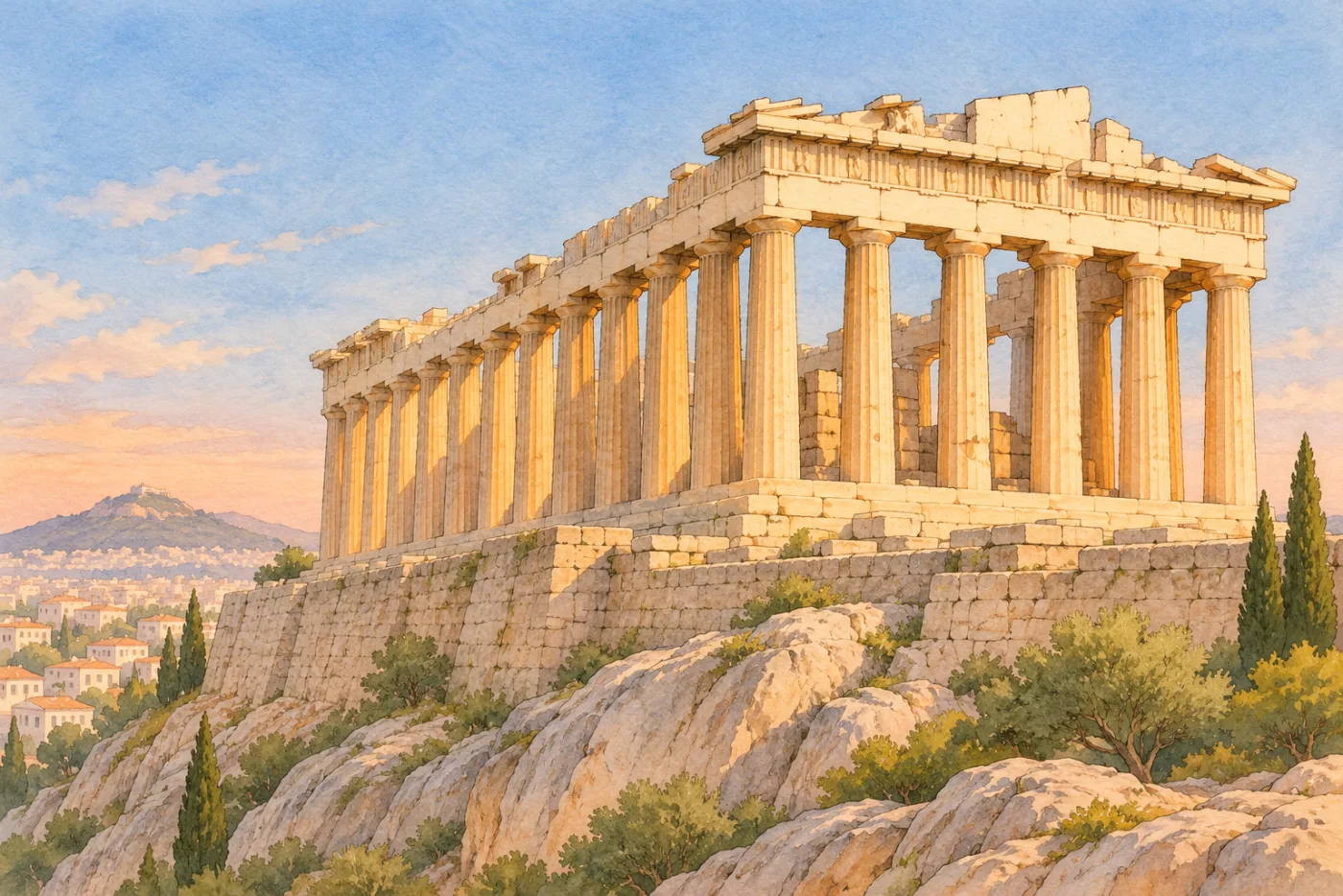
Text to type: The ancient Greeks did not have just one god. They had many. The most important gods were called the Olympians. People believed they lived on Mount Olympus. At 2,917 metres, it is the highest mountain in Greece, and its top is often hidden in clouds. So it seemed the right home for gods. People could see the mountain, but they could not see what happened at the top. The Greek gods looked like people and acted like people. They fell in love, became angry and jealous, and argued with each other. They were a family, with parents, brothers, sisters and children. But there was one big difference: they were immortal. They never died. A Greek god was like a person with enormous power and no end. Because the gods had human feelings, the Greeks believed they could please them with gifts. The most important gift was a sacrifice: people killed an animal on an altar, a stone table for gifts. The altar stood outside, in front of the temple. The temple was the house of the god, and a statue of the god stood inside. In a sacrifice, people burned the bones and fat for the god. Then they cooked the meat and ate it together. Meat was expensive, so many Greeks rarely ate it except at festivals for the gods. The biggest festival was at Olympia, a holy place of Zeus. About 2,800 years ago, the Greeks started the Olympic Games there. They held them every four years to please Zeus. The Games were sport, but they were also religion. During the Games, 100 bulls were killed for Zeus. Then the crowd shared a huge meal of meat, bread, olives and wine.
Ready. The timer starts with your first key.
Complete
Great job!
Strong finish — your speed stayed steady.
Your rhythm
Speed over time- Time
- 0:00
- Raw speed
- 0 WPM
- Wrong keys
- 0
- Corrected
- 0
Check your understanding
Check: Part 1: Who the Greek Gods Were
1. Why did the Greeks believe they could please the gods with gifts?
Sample answer
Because the gods had human feelings, like people.
 Part 2: Zeus, King of the Sky
Reading
Part 2: Zeus, King of the Sky
Typing practice
Type the text exactly. Timer starts with your first key.
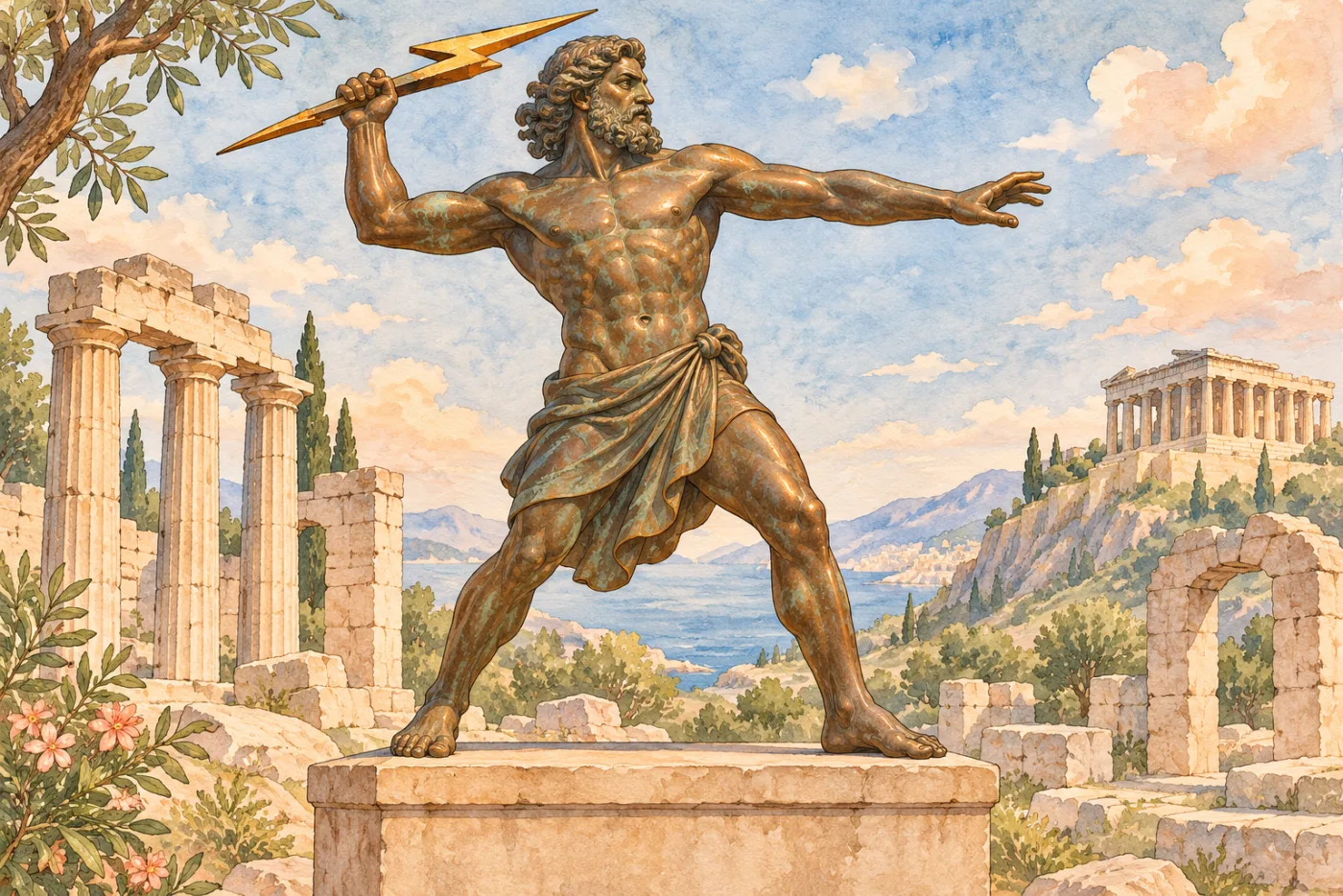
Text to type: Zeus was the king of the gods. He ruled the sky and the weather. He gathered the clouds, sent the rain, and threw thunderbolts when he was angry. A thunderbolt is lightning used as a weapon. In paintings and statues, he usually holds a thunderbolt in his hand. His most famous story explains how he became king. His father, Cronus, ruled the world before him. Cronus was afraid that one of his children would take his power. So every time his wife Rhea had a baby, he swallowed it whole. When Zeus was born, Rhea had a plan. She wrapped a stone in baby clothes and gave it to Cronus. He swallowed the stone without noticing. The real baby grew up in secret on the island of Crete. When Zeus was an adult, he forced his father to throw up his brothers and sisters, still alive. Together they fought Cronus and won. The story shows the character of Zeus: clever, strong and ready to fight for power. Why did the Greeks need Zeus? First, most of them were farmers, and their crops needed rain. Second, Zeus kept order among gods and people, and he protected guests. When a stranger knocked on your door, Zeus wanted you to give them food and a bed. Travelling was slow and dangerous, so a traveller often depended on the kindness of strangers. Zeus turned that kindness into a duty.
Ready. The timer starts with your first key.
Complete
Great job!
Strong finish — your speed stayed steady.
Your rhythm
Speed over time- Time
- 0:00
- Raw speed
- 0 WPM
- Wrong keys
- 0
- Corrected
- 0
Check your understanding
Check: Part 2: Zeus, King of the Sky
1. How did Rhea save baby Zeus?
Sample answer
She gave Cronus a stone wrapped in baby clothes, and he swallowed the stone instead.
 Part 3: Poseidon, God of the Sea
Reading
Part 3: Poseidon, God of the Sea
Typing practice
Type the text exactly. Timer starts with your first key.
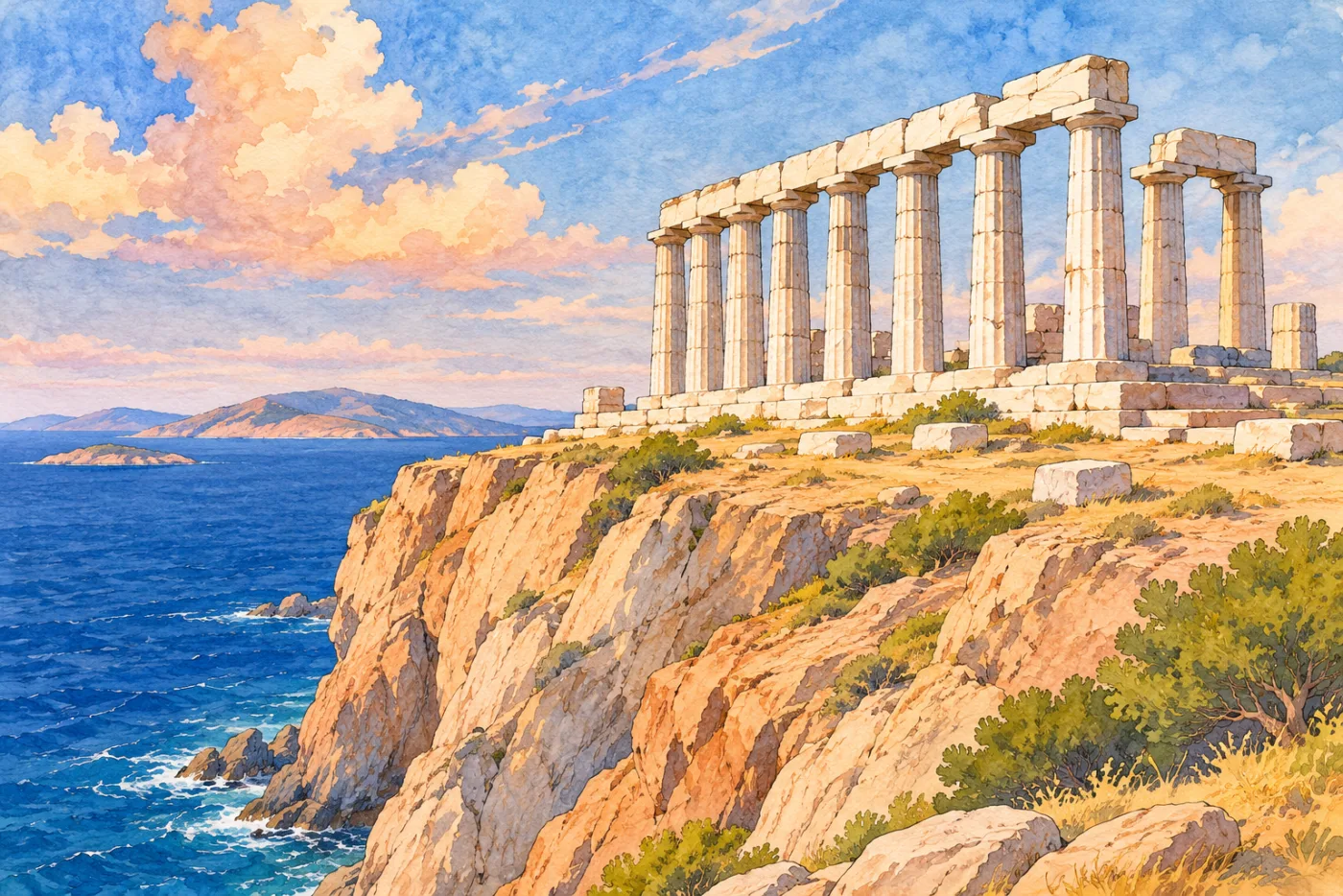
Text to type: After their victory, Zeus and his two brothers drew lots to share the world. Drawing lots is choosing by chance, like picking a paper from a box. Zeus got the sky, Hades got the underworld, the land of the dead, and Poseidon got the sea. Poseidon carries a trident, a big fork with three points. People used tools like this to catch fish. Poseidon did not rule only the water. The Greeks also called him the Earth-shaker. They believed he caused earthquakes by hitting the ground with his trident. Greece has many earthquakes, and it has sea on three sides and thousands of islands. Sailors gave gifts to Poseidon and asked him to protect them. For them, a calm sea meant life, and a storm meant death. At Sounion, on a cliff south-east of Athens, his temple still stands above the water. Ships on their way to Athens could see it. His most famous story shows that Poseidon did not easily forgive anyone who hurt his family. In the Odyssey, a famous Greek poem, the hero Odysseus is going home after a long war. On an island, a giant with one eye traps him and his men in a cave. The giant, Polyphemus, begins to eat them. Odysseus escapes by blinding the giant. But Polyphemus is the son of Poseidon. The angry god sends storms, and Odysseus wanders the sea for ten years before he gets home. For the Greeks, the message was clear. The sea is powerful, it does not forget, and you must respect it.
Ready. The timer starts with your first key.
Complete
Great job!
Strong finish — your speed stayed steady.
Your rhythm
Speed over time- Time
- 0:00
- Raw speed
- 0 WPM
- Wrong keys
- 0
- Corrected
- 0
Check your understanding
Check: Part 3: Poseidon, God of the Sea
1. Why did sailors give gifts to Poseidon?
Sample answer
Because he controlled the sea, and a storm could kill them.
 Part 4: Athena, Goddess of Wisdom
Reading
Part 4: Athena, Goddess of Wisdom
Typing practice
Type the text exactly. Timer starts with your first key.
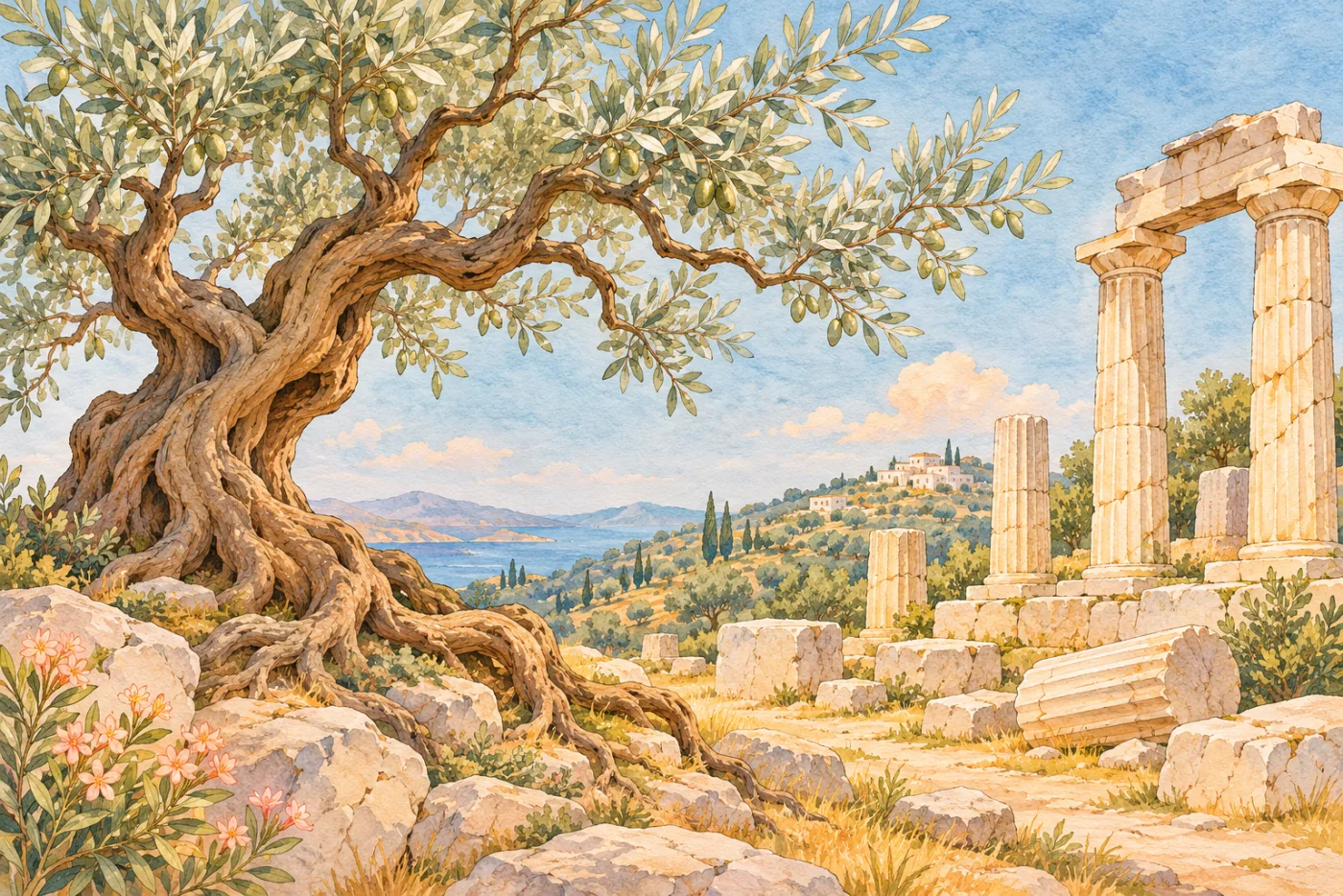
Text to type: Athena was a daughter of Zeus and his favourite child. She was the goddess of wisdom, but also of war and of crafts like making cloth. This seems strange, but there is a reason. In war, Athena was the goddess of clever plans, not of anger or strength. Plans, not anger, win a war. Her bird was the owl, and the Greeks connected owls with wisdom. Her most famous story is a contest for a city. Athena and Poseidon both wanted to protect the same city in Greece. So each god gave the people a gift. Poseidon hit a rock with his trident, and water came out. But it was salt water, like the sea. The people could not drink it or use it on their fields. Athena made an olive tree grow. The people chose her gift, and the city took her name: Athens. Why was a tree better than water? Olives were food, and olive oil was used for cooking, for lamps at night and for cleaning the body. Olive trees also grow well in dry Greek land and live for hundreds of years. Olive oil was so valuable that winners at the festival of Athena received large jars of it as prizes. Her gift was not exciting, but it was useful for a very long time. That is exactly her character: she thinks about the future. The people of Athens thanked her with the Parthenon, a great temple. It stands on the Acropolis, the hill of rock above the city. Inside stood a statue of Athena, more than 12 metres tall, made of gold and ivory. Stone figures high on one end of the building told the story of the contest with Poseidon.
Ready. The timer starts with your first key.
Complete
Great job!
Strong finish — your speed stayed steady.
Your rhythm
Speed over time- Time
- 0:00
- Raw speed
- 0 WPM
- Wrong keys
- 0
- Corrected
- 0
Check your understanding
Check: Part 4: Athena, Goddess of Wisdom
1. Why did the people choose the gift of Athena?
Sample answer
Because the olive tree gave food and oil, but the salt water from Poseidon was not useful.
 Part 5: Demeter, Goddess of the Harvest
Reading
Part 5: Demeter, Goddess of the Harvest
Typing practice
Type the text exactly. Timer starts with your first key.
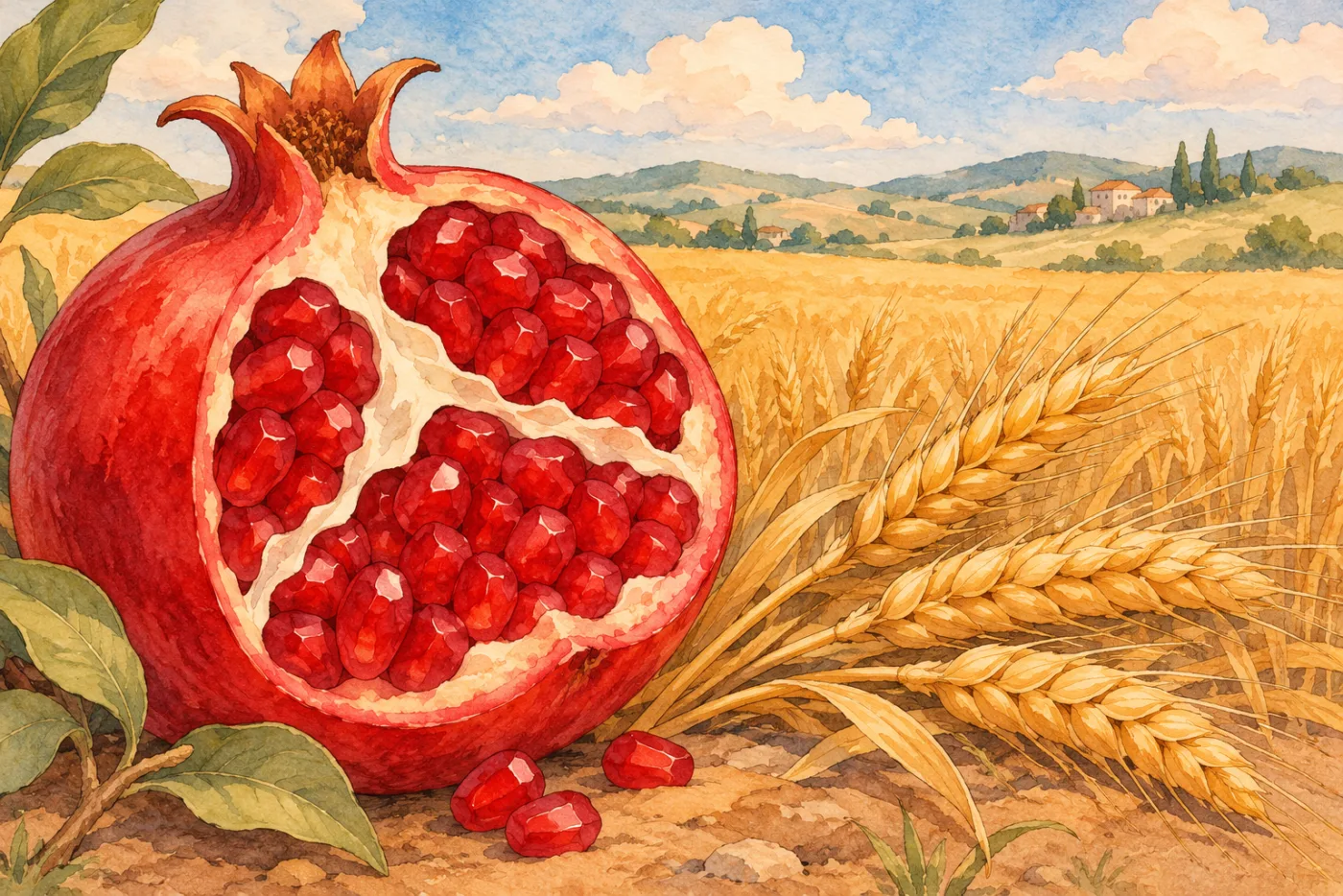
Text to type: Demeter was the goddess of the harvest, the time when farmers collect their crops. She helped the plants in the fields grow. From these plants came bread, the most important food in Greece. Without Demeter, the Greeks believed, there would be nothing to eat. Her story is also the Greek explanation for the seasons. Demeter had a daughter, Persephone, whom she loved more than anything. One day, Persephone was picking flowers. Suddenly Hades, the god of the underworld, came up from the ground. He carried her away to his dark kingdom to be his wife. Demeter searched the whole earth for her daughter. She was so sad that she stopped looking after the plants. Nothing grew, and people began to die of hunger. Finally, Zeus told Hades to send Persephone back. But before she left, Hades gave her a pomegranate seed, and she ate it. A pomegranate is a round red fruit full of small seeds. Hades knew that food from the underworld would tie her to his kingdom. So Persephone had to spend one third of every year with Hades, and the rest with her mother. This, the Greeks said, is why winter comes. When Persephone is in the underworld, Demeter is sad, and the fields are empty. When her daughter returns, Demeter is happy, and spring arrives with flowers and young plants. The myth gave farmers a reason for the hard months and a promise that life always comes back.
Ready. The timer starts with your first key.
Complete
Great job!
Strong finish — your speed stayed steady.
Your rhythm
Speed over time- Time
- 0:00
- Raw speed
- 0 WPM
- Wrong keys
- 0
- Corrected
- 0
Check your understanding
Check: Part 5: Demeter, Goddess of the Harvest
1. In the myth, why are the fields empty for part of the year?
Sample answer
Because Persephone is in the underworld, and Demeter is sad.
 Part 6: The Greek Gods Today
Reading
Part 6: The Greek Gods Today
Typing practice
Type the text exactly. Timer starts with your first key.
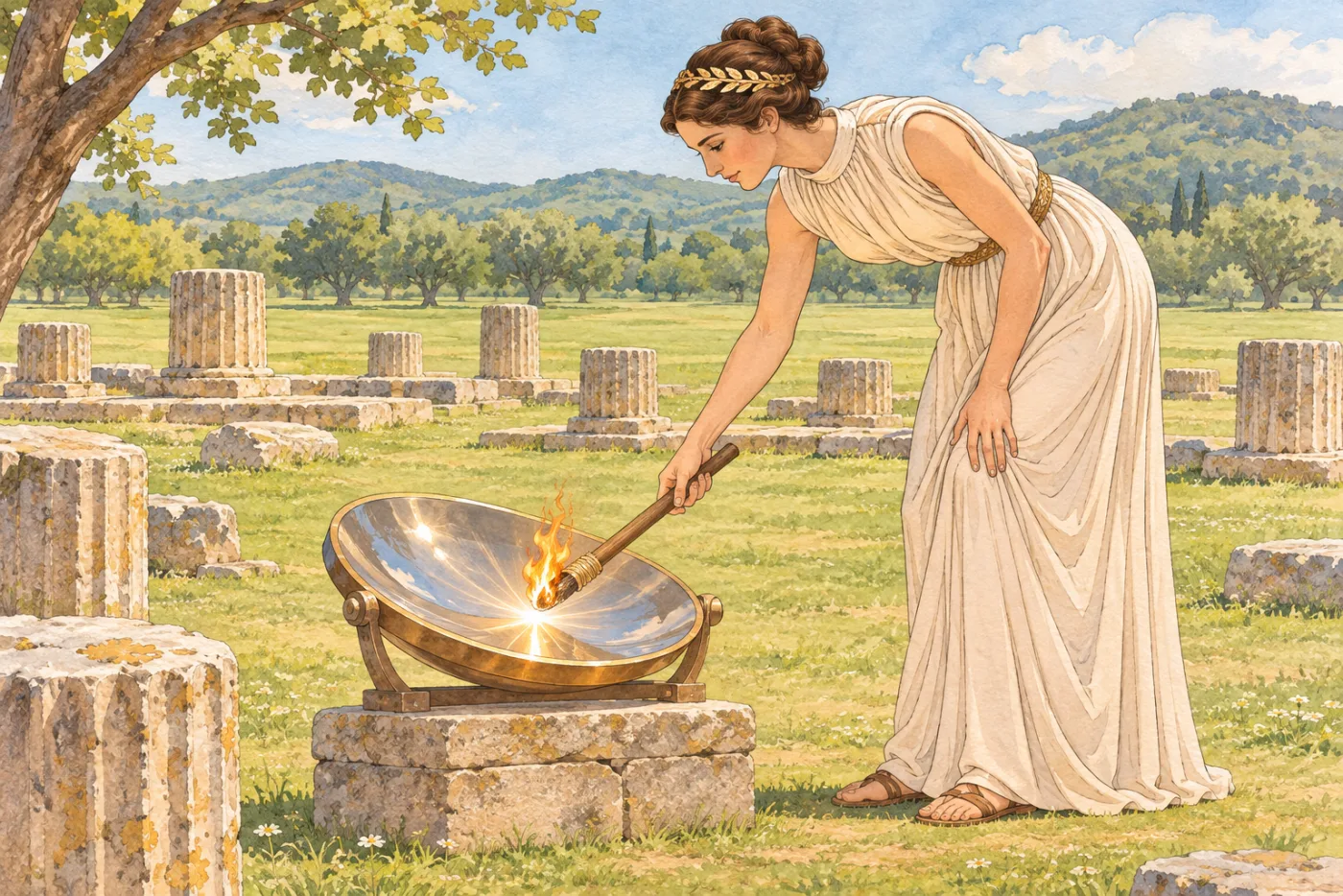
Text to type: The temples are ruins now, but the gods are still part of daily life. The clearest example is the Olympic flame. A few months before every Olympic Games, there is a ceremony at Olympia. It takes place in front of the Temple of Hera. Hera was the wife of Zeus. An actress is dressed like a woman from an ancient temple. She holds a torch above a curved mirror. A torch is a stick for carrying fire. The mirror collects sunlight into one very hot point. This heat lights the torch. Then many runners carry the fire on its way to the city that hosts the Games. The ceremony is modern, but it happens where the ancient Games for Zeus took place. So the modern Games begin with fire from the holy place of the old Games. The gods are also in shops. In 1971, a sports company in the United States chose the name Nike for its new shoes. Nike was the goddess of victory. She was a less important goddess, often with wings. The giant statue of Athena in the Parthenon held a small Nike in her right hand. For a sports company, the name was perfect: every athlete wants to win. Finally, the gods are in people's pockets. The Greek one-euro coin shows an owl, the bird of Athena. Its design copies a coin that Athens used about 2,500 years ago. When people in Greece buy a coffee today, they may pay with the same owl as ancient Athens.
Ready. The timer starts with your first key.
Complete
Great job!
Strong finish — your speed stayed steady.
Your rhythm
Speed over time- Time
- 0:00
- Raw speed
- 0 WPM
- Wrong keys
- 0
- Corrected
- 0
Check your understanding
Check: Part 6: The Greek Gods Today
1. How is the Olympic flame lit?
Sample answer
An actress holds a torch above a curved mirror at Olympia. The hot sunlight from the mirror lights it.
What you can do now
Final Reflection
Each Greek god explained something that people needed or feared, so their stories still matter today.
Which of the four gods do you think was most important for ordinary Greeks, and why?
Which myth from this lesson would you like to tell a friend?
Do old stories in your culture explain nature, like the seasons or earthquakes? Give an example.
Where have you seen Greek gods in modern life, in names, films or products?
Learning cards
My cards
Greek Gods and Why People Needed Them
0 due · 0 new · about 1 min
Learn the sense first · then retrieve it
No saved cards yet
Open a word or phrase in the article and choose Save to My Words.
Focused Reading Mode is open.
Listening
Lesson audio
Listen from the beginning, or choose “Play this part” as you read along.
Reading
Part 1: Who the Greek Gods Were
Reading
Part 2: Zeus, King of the Sky
Reading
Part 3: Poseidon, God of the Sea
Reading
Part 4: Athena, Goddess of Wisdom
Reading
Part 5: Demeter, Goddess of the Harvest
Reading
Part 6: The Greek Gods Today
Finished listening?
Mark this listening practice complete when you have followed the lesson audio.
Listening complete
Listen Mode
Word-by-word syncPlay the audio and follow the highlighted word.
Article complete
Choose your next step
Open the next same-level lesson, replay the article, or save this page for later.
Listen Again
Replay the article once and notice how much more you understand.
One replay is enough. Then move on.
Lesson resources
Resources
Sources and fact review (18)
- Zeus, World History Encyclopedia
Zeus as king of the gods, sky, weather and thunderbolt; Cronus swallowing his children and Rhea's stone; Crete; Zeus as protector of guests; Olympic Games from 776 BC (about 2,800 years ago) every four years for Zeus
- Poseidon, World History Encyclopedia
brothers drawing lots; sea, earthquakes, trident; sailors' offerings; Polyphemus as his son and ten years of wandering for Odysseus; Sounion temple above the water; salt-water spring vs olive tree
- Greek Facts, Hellenic Film Commission
land borders to the north; Ionian Sea to the west, Mediterranean to the south, Aegean to the east
- Athena, World History Encyclopedia
wisdom, war and crafts; favourite child of Zeus; owl; olive tree and Athens named after her; festival prizes of olive-oil jars; Parthenon statue over 12 m of gold and ivory holding Nike in her right hand
- Demeter, World History Encyclopedia
Demeter and farming; Persephone taken by Hades; grief stopped growth; Zeus made Hades release her; pomegranate seed; one third of the year; the seasons
- Homeric Hymn to Demeter (Perseids)
pomegranate seed given before she left; a third part of the year below
- Athena vs Poseidon: The Contest for the Name of Athens
salt water not fit to drink or for the fields
- Twelve Olympians, Wikipedia
Olympians named after Mount Olympus; height 2,917 m, highest mountain in Greece
- Ancient Greek religion, Wikipedia
gods in human form and immortal; altar outside the temple; temple as the god's house with a statue; bones burned for the god, meat eaten by people
- The ancient Olympics: Day Three, OpenLearn
100 bulls sacrificed to Zeus; feast of meat, bread, olives and wine; sacrifices almost the only time people ate meat
- Parthenon, Wikipedia
temple of Athena on the Acropolis; contest with Poseidon shown in pediment figures
- Olympic torch lit in Olympia, Olympics.com
flame lit at the Temple of Hera with a curved mirror and the sun's rays by an actress playing a priestess
- Stage Overview: Lighting Ceremony, Olympics.com
the priestess lights her torch with sun's rays collected by a parabolic mirror in front of the Temple of Hera
- The Lighting Ceremony, Hellenic Olympic Committee
the flame is lit at Ancient Olympia, the place of the ancient Games
- Nike, Inc., Wikipedia
US company took the Nike name in 1971; name from the Greek goddess of victory
- Nike: A Lasting Legacy, University of Ottawa Museum of Classical Antiquities
Nike as a relatively minor goddess, usually shown with large wings
- Greece's Euro Uses the Same Design Found on Ancient Coins 2,500 Years Ago, My Modern Met
Greek one-euro coin copies the owl from an ancient Athenian coin
- hunger, Oxford Learner's Dictionaries
hunger in "die of hunger" means a serious lack of food