Wine Through 8,000 Years of History
Quality checked lesson
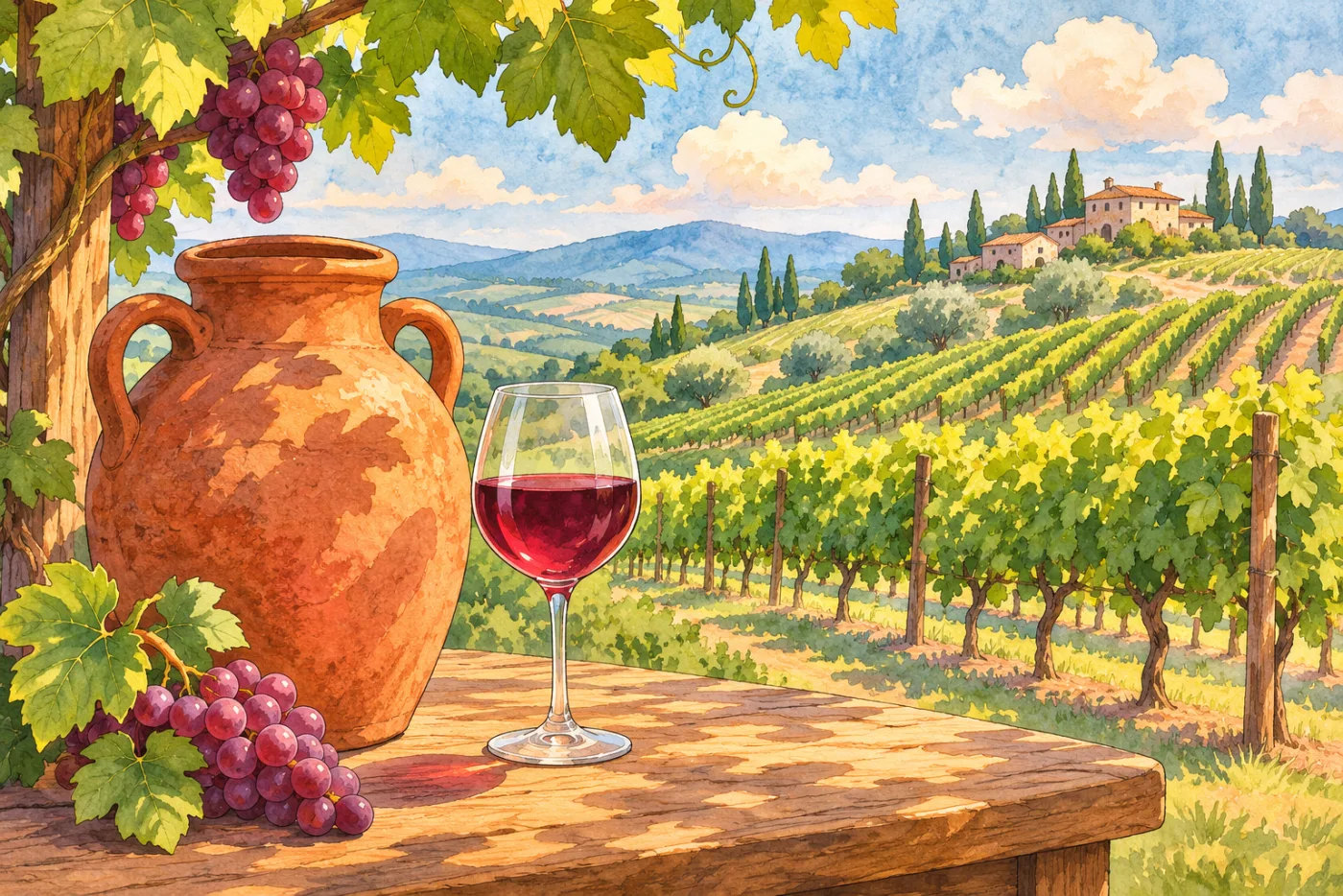
For 8,000 years, people have valued wine as more than a drink: as a gift to the gods, a sign of holy time and a reason to gather around a table.
 English lesson

Article
Choose how to use this lesson
You can switch anytime.
Study mode
Introduction
Typing practice
Type the text exactly. Timer starts with your first key.
Text to type: Wine is one of the oldest drinks in the world. For most of its history, it was much more than a drink. In this lesson, you travel from buried clay jars in Georgia to the tomb of an Egyptian king. Then two parts look at wine in religion: Greek gods, secret Roman nights, Jewish blessings, Christian prayers and Persian poems. Finally, you see how monks carried wine across the world. You also see how Georgians still use it to turn dinner into a ritual.
Ready. The timer starts with your first key.
Complete
Great job!
Strong finish — your speed stayed steady.
Your rhythm
Speed over time- Time
- 0:00
- Raw speed
- 0 WPM
- Wrong keys
- 0
- Corrected
- 0
Before you begin
Warm-up
Do you like wine, or do you prefer other drinks?
Where do you think people first made wine?
When do people in your country make a toast?
 Part 1: Where Wine Began
Reading
Part 1: Where Wine Began
Typing practice
Type the text exactly. Timer starts with your first key.
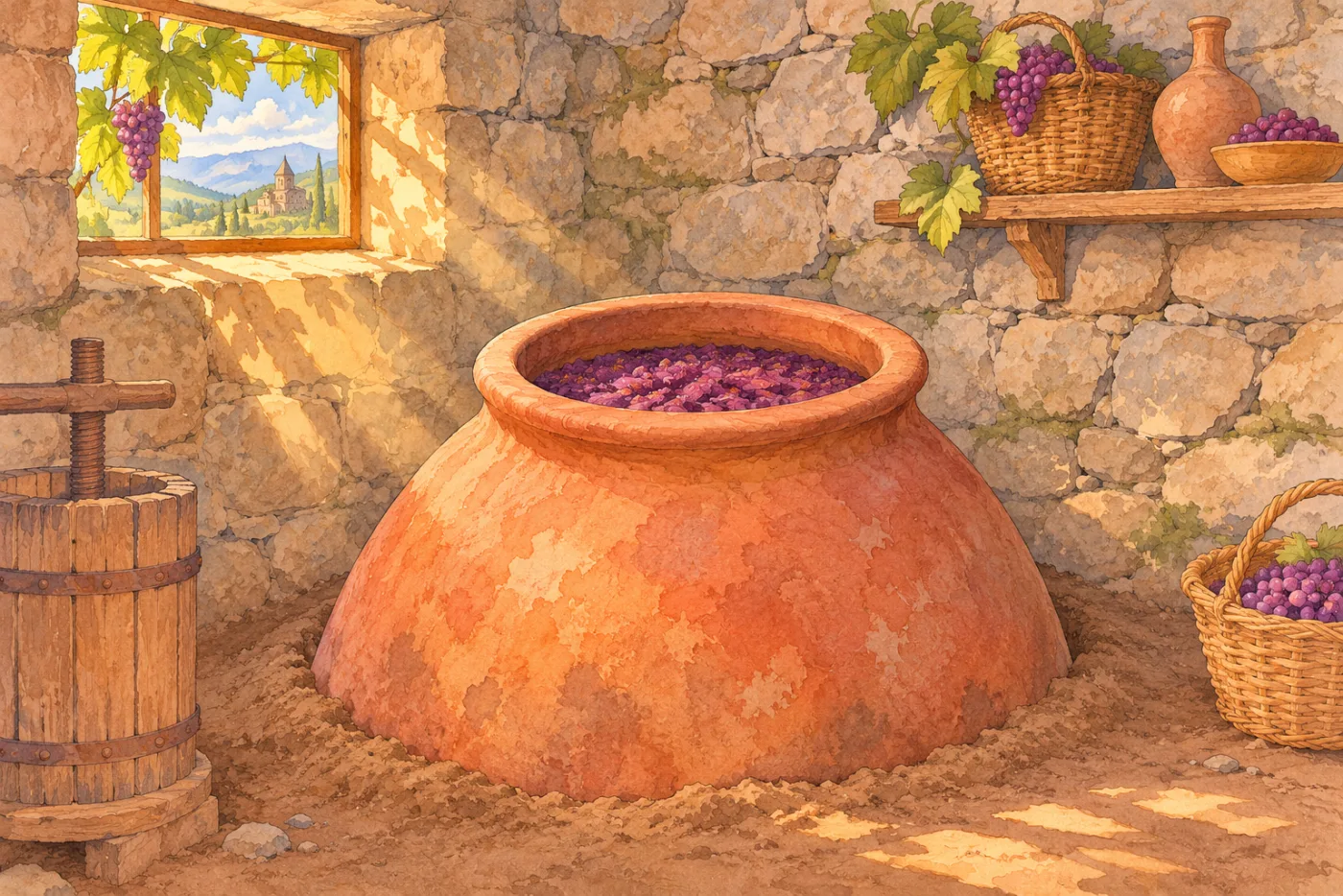
Text to type: About 8,000 years ago, farmers in Georgia were already making wine. In 2017, scientists studied pieces of old clay jars from two villages there. The villages, Gadachrili Gora and Shulaveris Gora, are about 50 kilometres south of the capital, Tbilisi. Inside, they found tartaric acid, a chemical that grapes leave behind. It works like a fingerprint of wine. The jars are from about 6000 BC, and they are the oldest sign of grape wine found so far. China has an even older drink. Around 7000 BC, people at Jiahu made a drink from rice, honey and fruit. Jiahu is a village in the Yellow River valley. But this drink was not wine made from grapes alone. Georgians still make wine in a very old way. They use a qvevri, a large egg-shaped clay jar, buried in the ground up to its neck. They fill it with pressed grapes, together with their skins, stems and seeds. Why bury the jar? The earth keeps the temperature cool and steady, without a fridge. Here, the juice ferments, slowly turning into alcohol. Then the jar is closed, and the wine stays there for months. In 2013, UNESCO added this method to its list of the world's living traditions. Georgians see the marani, the room where the jars are buried, as the holiest place in a family home. The oldest winery, a place where wine is made, was found in a cave in Armenia called Areni-1. Around 4100 BC, people pressed grapes in a shallow basin there. The juice ran into a deep pot to ferment. The press is surrounded by graves, so researchers believe this wine was for ceremonies for the dead. About 6,000 years ago, wine was already connected to the sacred, the world of gods and the dead.
Ready. The timer starts with your first key.
Complete
Great job!
Strong finish — your speed stayed steady.
Your rhythm
Speed over time- Time
- 0:00
- Raw speed
- 0 WPM
- Wrong keys
- 0
- Corrected
- 0
Check your understanding
Check: Part 1: Where Wine Began
1. Why do Georgians bury the qvevri in the ground?
Sample answer
The earth keeps the wine cool and steady while it ferments.
 Part 2: Wine for the Pharaohs
Reading
Part 2: Wine for the Pharaohs
Typing practice
Type the text exactly. Timer starts with your first key.
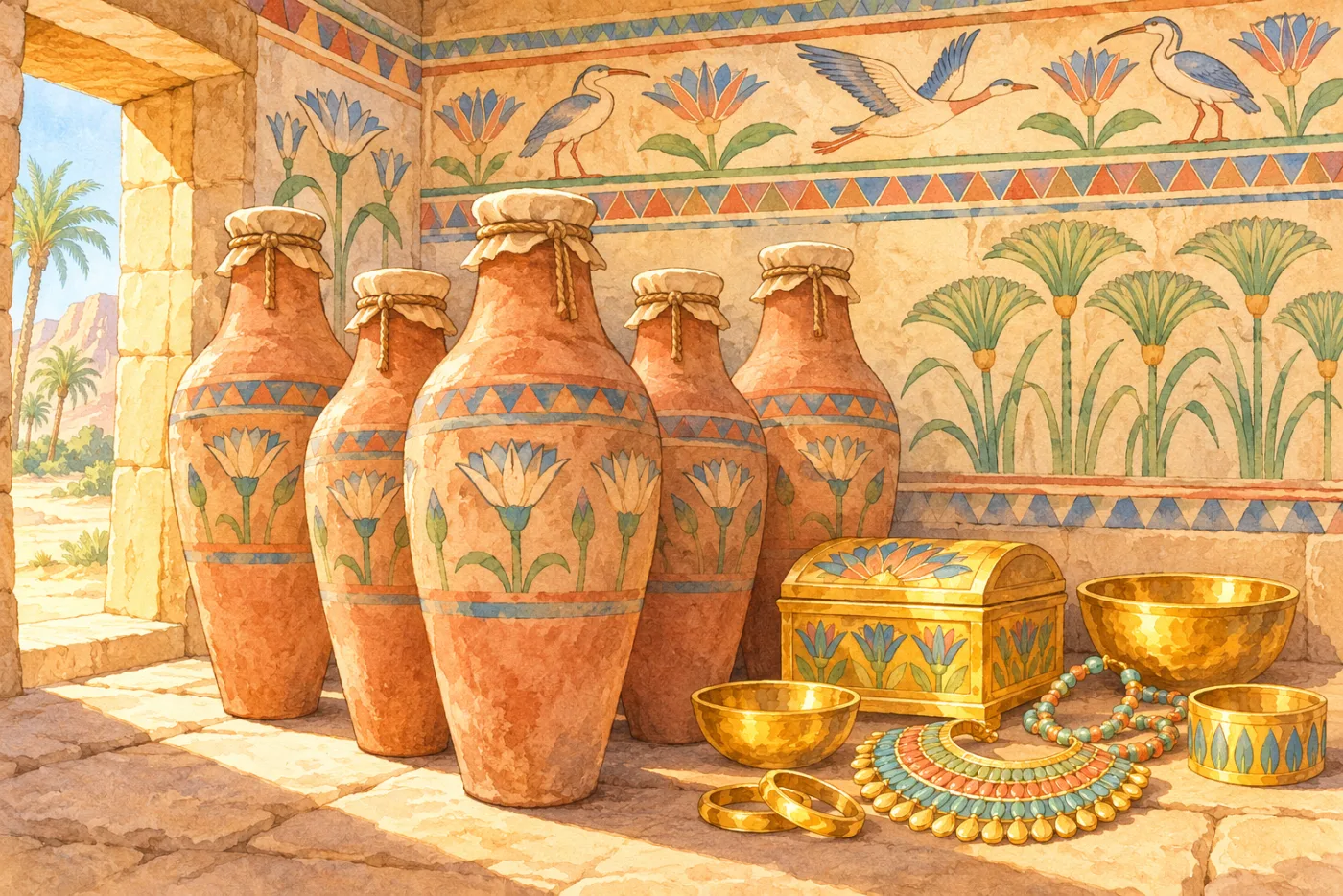
Text to type: In ancient Egypt, ordinary people drank beer every day. Wine was a luxury for the pharaohs, the kings of Egypt, and for priests. Temples even had their own vineyards, fields where grapes grow, because the gods needed wine too. Pictures on temple walls show pharaohs offering wine, giving it as a gift, to the gods. Wine also had a deep meaning. Texts from about 2400 BC call the god Osiris the Lord of Wine. Egyptians believed Osiris died and came back to life, and they compared red wine with his blood. So red wine became a sign of new life after death. In 1922, Howard Carter's team opened the tomb, the burial room, of the young king Tutankhamun. Among the treasures were 26 wine jars. Egyptians believed the king would need food and drink in the afterlife, the life after death. The labels on the jars gave the year, the type of wine and its quality. Some also gave the place where the grapes grew and the name of the winemaker. Some of the wine came from the Western River, a branch of the Nile that is desert today. These labels give almost the same information as a wine bottle in a shop now. In 2005 and 2006, scientists tested what was left in the jars. They found both red and white wine. Japan has a similar custom. People there offer sake to the gods at Shinto shrines, just as Egyptians offered wine in their temples.
Ready. The timer starts with your first key.
Complete
Great job!
Strong finish — your speed stayed steady.
Your rhythm
Speed over time- Time
- 0:00
- Raw speed
- 0 WPM
- Wrong keys
- 0
- Corrected
- 0
Check your understanding
Check: Part 2: Wine for the Pharaohs
1. Why did Tutankhamun's tomb have wine jars in it?
Sample answer
Egyptians believed the king would need drink in the afterlife.
 Part 3: Wine and Religion in Greece and Rome
Reading
Part 3: Wine and Religion in Greece and Rome
Typing practice
Type the text exactly. Timer starts with your first key.
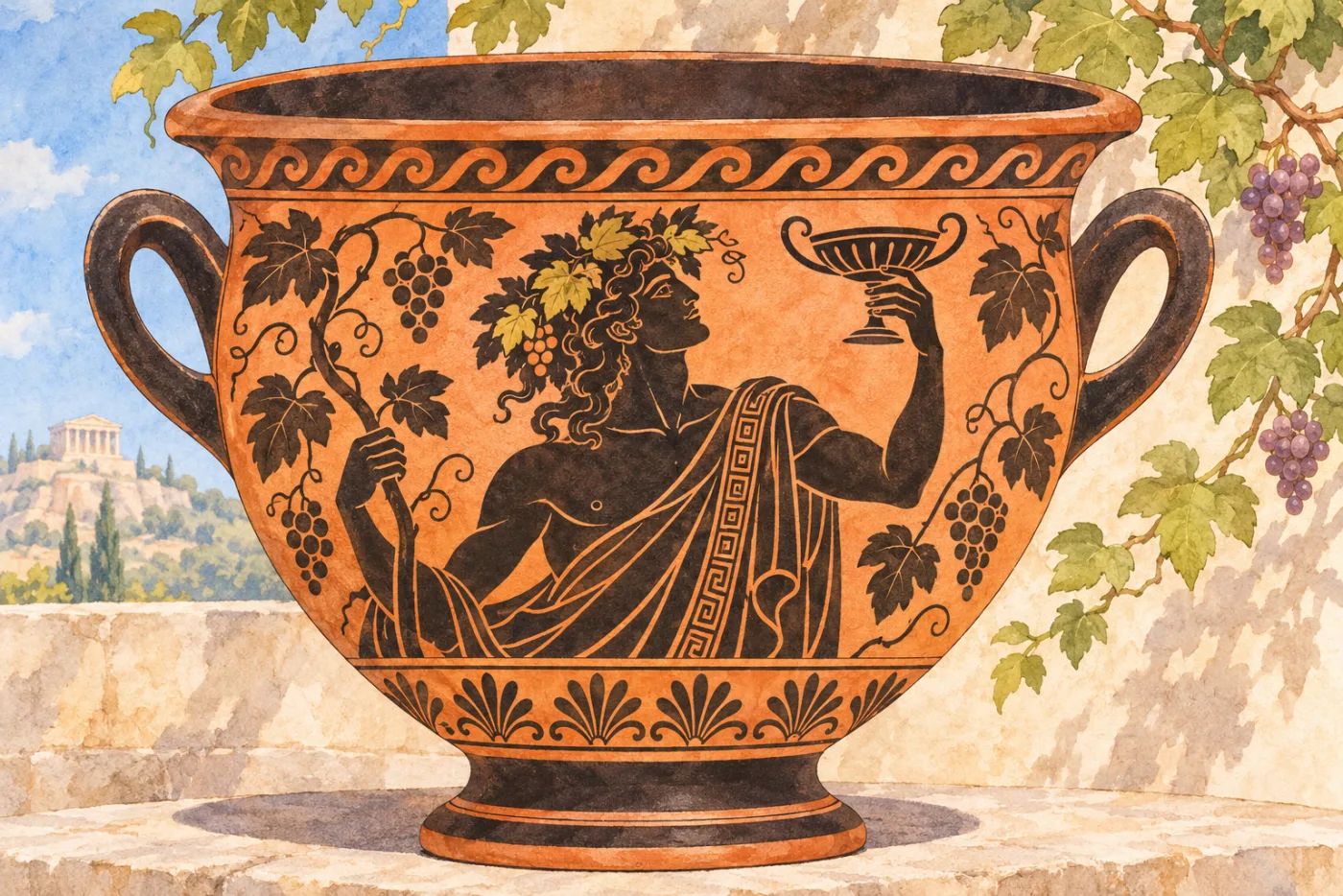
Text to type: The ancient Greeks gave wine its own god, Dionysus. He was the god of grapes, wine, parties and theatre. He had two sides, like wine itself: he brought joy, but he could also make people lose control. Greek men drank together at a symposium, an evening party with wine, conversation, music and games. It began with a libation: each guest poured a little wine for the gods, mostly for Dionysus. Then a leader, the symposiarch, decided how much water to mix with the wine. They mixed it in a big bowl called a krater, from a Greek word meaning to mix. Many writers describe about three parts water to one part wine. Why add water? The Greeks believed only barbarians, people they saw as wild foreigners, drank pure wine. Mixed wine let guests talk for hours and still think clearly. Dionysus also gave the world theatre. Every spring, Athens held a big festival for him, the City Dionysia, and writers presented new plays there. Greek tragedy, serious plays that end in sadness, was born at this festival in the 500s BC. The first great plays in Europe were written for the god of wine. The Romans called the same god Bacchus. His followers met at night in secret ceremonies called the Bacchanalia. In 186 BC, the Roman Senate banned these meetings across Italy unless the Senate itself gave permission. The rulers feared groups that met in secret, because they could not control them. A bronze copy of the law was found in 1640 in Tiriolo, a village in southern Italy. Today it is in a museum in Vienna.
Ready. The timer starts with your first key.
Complete
Great job!
Strong finish — your speed stayed steady.
Your rhythm
Speed over time- Time
- 0:00
- Raw speed
- 0 WPM
- Wrong keys
- 0
- Corrected
- 0
Check your understanding
Check: Part 3: Wine and Religion in Greece and Rome
1. Why did the Greeks mix water with their wine?
Sample answer
They thought only wild foreigners drank pure wine, and mixed wine let them talk clearly for hours.
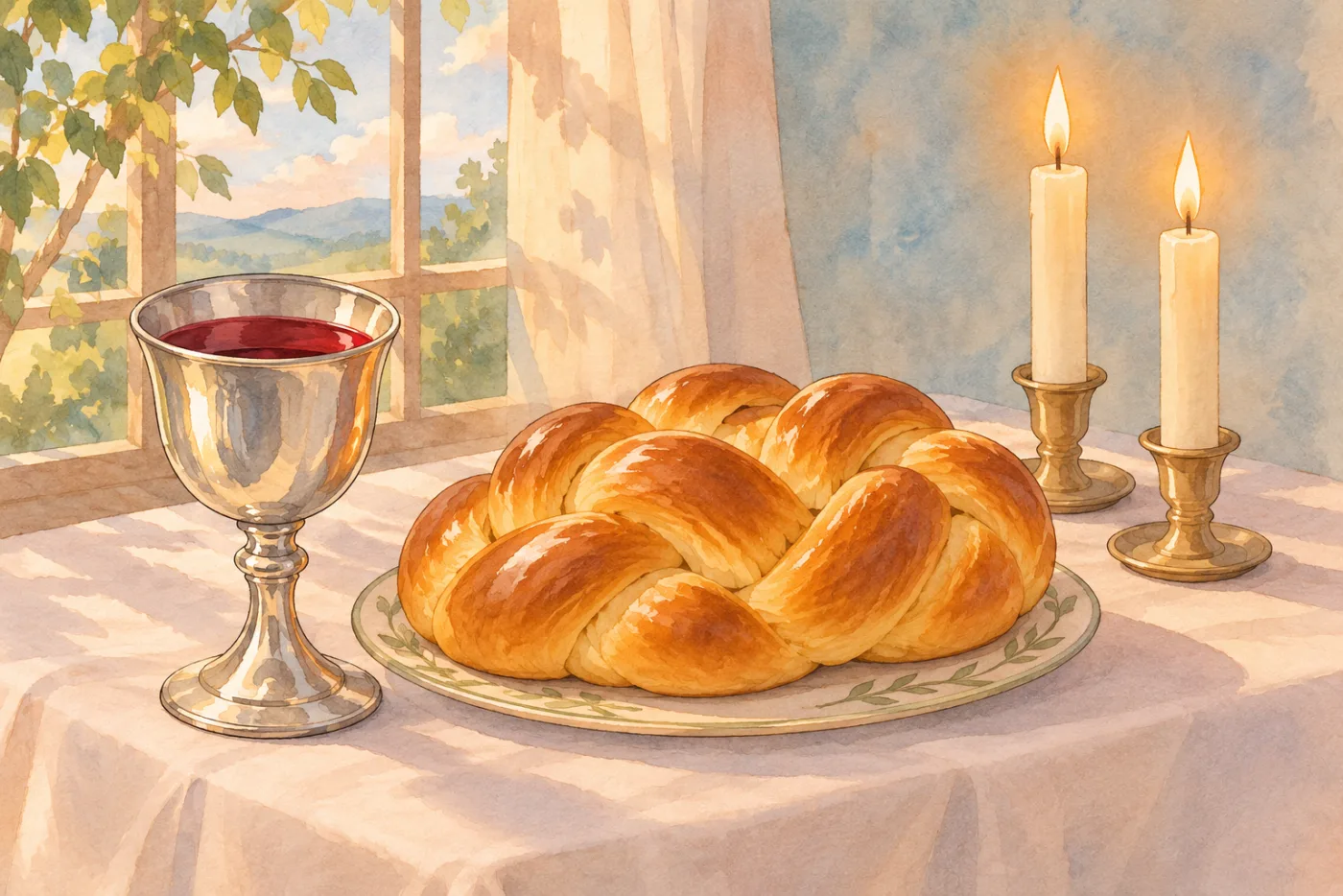 Part 4: Wine and Religion at the Holy Table
Reading
Part 4: Wine and Religion at the Holy Table
Typing practice
Type the text exactly. Timer starts with your first key.
Text to type: In Judaism, wine marks holy time, time that belongs to God. The Sabbath, the weekly day of rest, starts every Friday evening. It begins with Kiddush, a blessing said over a cup of wine. Kiddush means making holy. The wine separates an ordinary day from a special one. Passover is the spring holiday that remembers the escape of the Jewish people from Egypt. During its evening meal, each person drinks four cups of wine. A rule written about 1,800 years ago says even the poorest person must have all four. The most common reason comes from the Book of Exodus. There, God makes four promises to the people. God will free them, save them, rescue them and take them as God's own. There is one cup for each promise. Children and people who do not drink alcohol use grape juice. Christianity put wine at the centre of its most important ritual. The Bible says that at the Last Supper, a Passover meal, Jesus blessed bread and called it his body. Then he shared a cup of wine and called it his blood. Christians repeat this in the Eucharist, also called Holy Communion. Catholics believe the wine truly becomes the blood of Christ, while many Protestants see it as a symbol. In Georgia, wine and faith grew together. Saint Nino brought Christianity there in the 300s. The story says she carried a cross made of grapevine, tied with her own hair. In a land that had made wine for thousands of years, a cross of vine was a strong sign. Georgians still keep it in Sioni Cathedral in Tbilisi. Islam took a different path. The Quran forbids wine on earth, yet it describes rivers of wine in paradise. Muslim scholars explain that this heavenly wine does not make anyone drunk. In the 1300s, the poet Hafez lived in Persia, today's Iran. His name was a title for people who knew the Quran by heart. He filled his poems with wine. For many readers, his wine stands for love for God.
Ready. The timer starts with your first key.
Complete
Great job!
Strong finish — your speed stayed steady.
Your rhythm
Speed over time- Time
- 0:00
- Raw speed
- 0 WPM
- Wrong keys
- 0
- Corrected
- 0
Check your understanding
Check: Part 4: Wine and Religion at the Holy Table
1. Why do Jewish families drink four cups of wine at Passover?
Sample answer
Each cup matches one of God's four promises in the Book of Exodus.
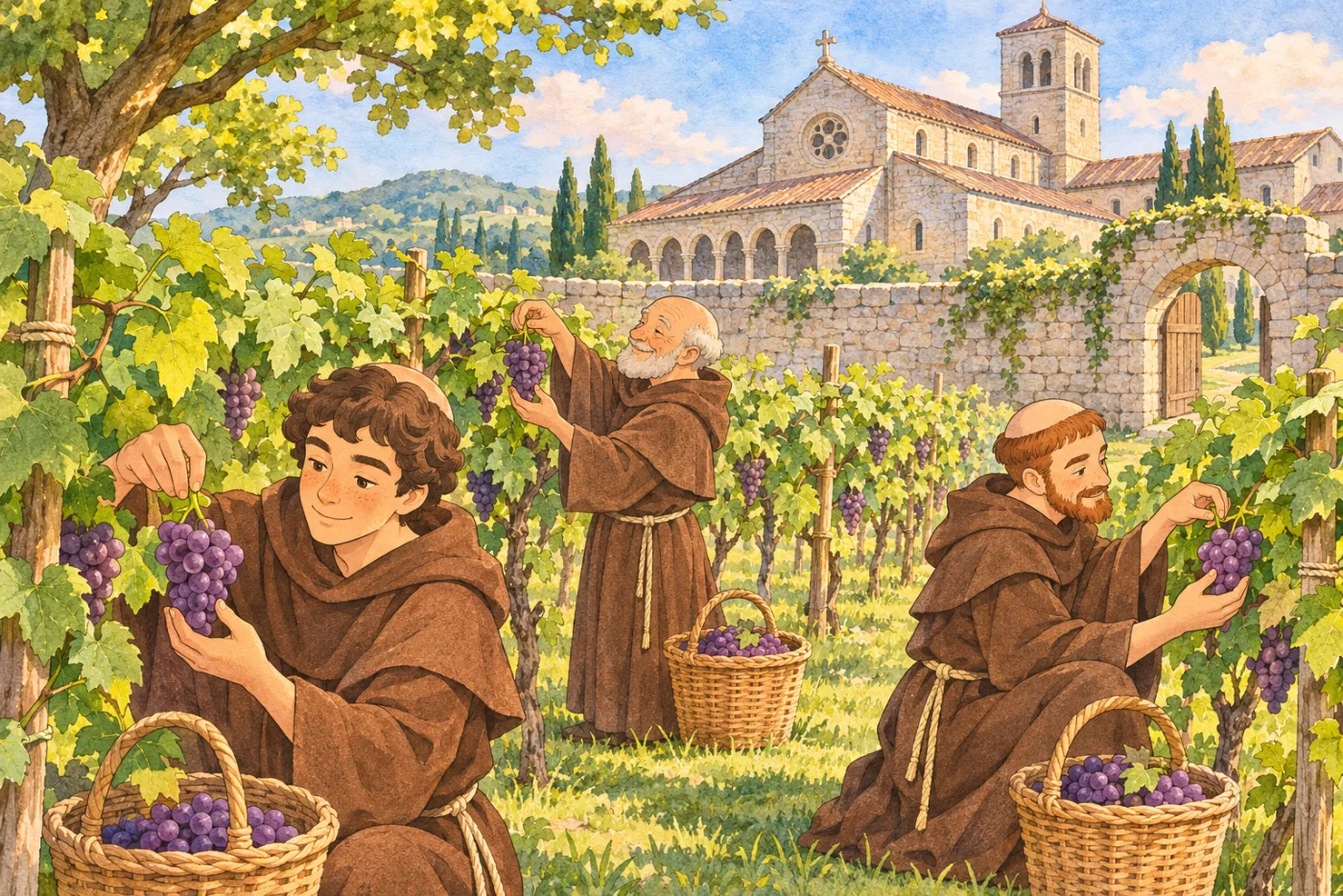 Part 5: How Monks and Missionaries Spread Wine
Reading
Part 5: How Monks and Missionaries Spread Wine
Typing practice
Type the text exactly. Timer starts with your first key.
Text to type: Wine travelled with armies and with faith. The Romans planted vineyards along the Mosel and Rhine rivers in today's Germany. They did this because carrying wine all the way from Italy was expensive and difficult. Old Roman wine presses still stand in Mosel villages such as Piesport. After the Roman Empire fell, monks, men who live a religious life together, kept wine alive in Europe. The Christian Mass needed wine, so monasteries, the homes of monks, planted vineyards. The Cistercian monks of Cîteaux Abbey in Burgundy, France, created one of the most famous: Clos de Vougeot. Their abbey was founded in 1098. For about 200 years, they bought or were given land. By 1336, they had built a stone wall around it, and the wall still stands. The monks studied their hill closely. They made their best wine from the best soil and simpler wine from the lower parts. This idea, that the place shapes the taste, is still at the heart of Burgundy wine. After the French Revolution of 1789, the monks lost their land. Today more than 80 owners share its 50 hectares. Missionaries, people who travel to spread their faith, took the vine even further. In the late 1700s, Franciscan missionaries from Spain planted grapes in California. They needed wine for Mass, and supplies from Mexico arrived slowly. This grape is still called the Mission grape. It was California's main wine grape until the 1880s. Religion even protected wine when the law turned against it. From 1920 to 1933, during Prohibition, the United States banned making, selling and carrying alcohol. Drinking it was not banned, and priests and rabbis could still get sacramental wine, wine for religious ceremonies. Some people even pretended to be rabbis and sold their permits to restaurants.
Ready. The timer starts with your first key.
Complete
Great job!
Strong finish — your speed stayed steady.
Your rhythm
Speed over time- Time
- 0:00
- Raw speed
- 0 WPM
- Wrong keys
- 0
- Corrected
- 0
Check your understanding
Check: Part 5: How Monks and Missionaries Spread Wine
1. Why did monasteries plant vineyards?
Sample answer
The Christian Mass needed wine.
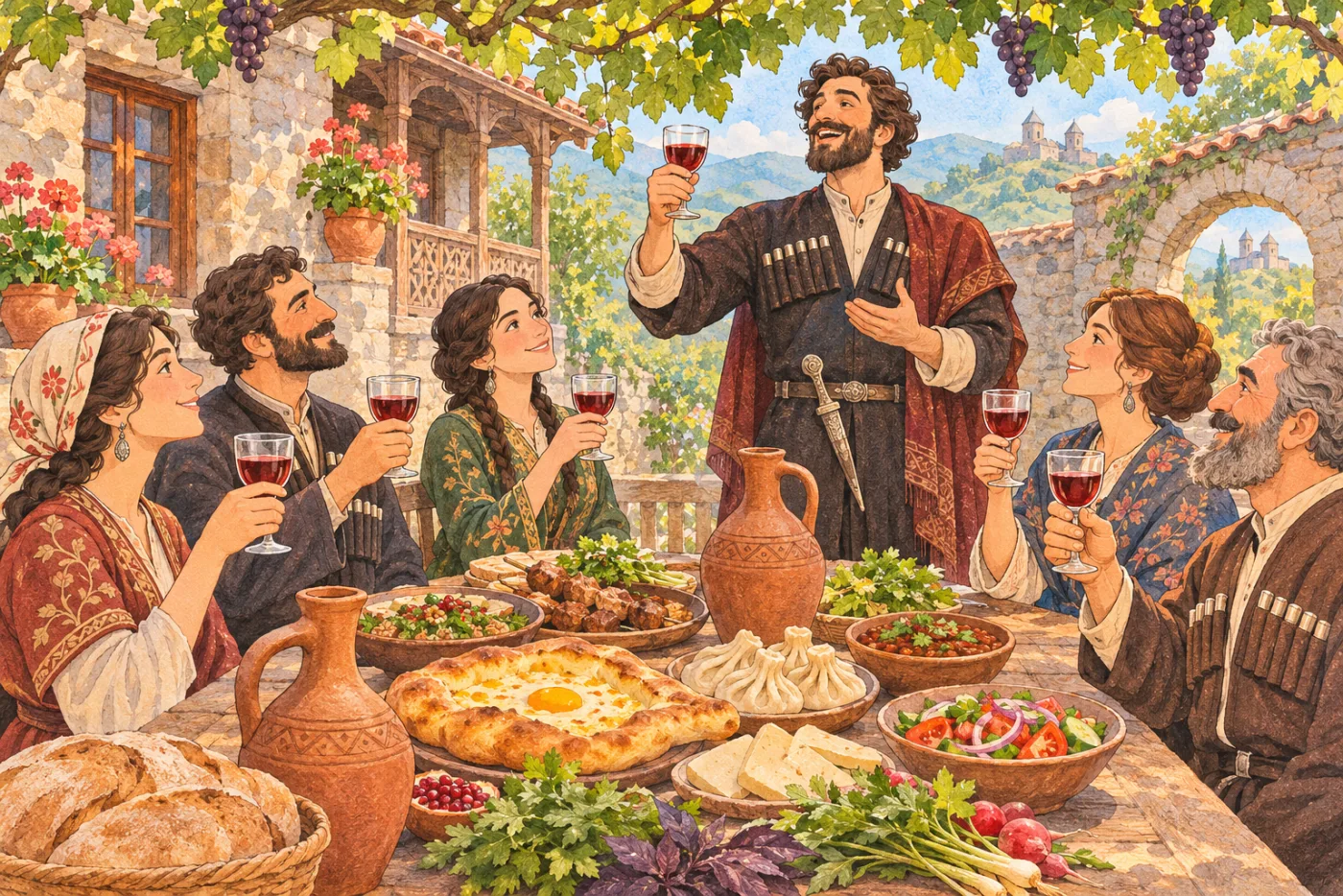 Part 6: Toasts at a Georgian Supra
Reading
Part 6: Toasts at a Georgian Supra
Typing practice
Type the text exactly. Timer starts with your first key.
Text to type: Georgia also shows how wine can turn a meal into a ritual. A ritual is a set of actions people repeat because they carry meaning. A Georgian feast, a big special meal, is called a supra, a word that means tablecloth. Every supra is led by a tamada, a toastmaster chosen by the guests or the host. A good tamada speaks beautifully and can drink a lot without looking drunk. The tamada gives a series of toasts, speeches before everyone drinks. The tamada also chooses the theme of each one: God, Georgia, family, friends, ancestors. After the tamada speaks, guests raise their glasses but wait to drink. The toast then moves around the table. Each guest who wants to speak adds a few words and then empties the glass. Eating during a toast is fine, but chatting while someone speaks is rude. Why so many words? The oldest Georgian word for a toast means for long life. Each toast is a wish for the people at the table. It can also be a way to remember the people who are gone. There is even a sad supra, the kelekhi, held after a funeral. The supra feels ancient, but historians say its modern form took shape in the 1800s. The wine on the table, however, often comes from buried clay jars. Georgians were already making wine in clay jars 8,000 years ago.
Ready. The timer starts with your first key.
Complete
Great job!
Strong finish — your speed stayed steady.
Your rhythm
Speed over time- Time
- 0:00
- Raw speed
- 0 WPM
- Wrong keys
- 0
- Corrected
- 0
Check your understanding
Check: Part 6: Toasts at a Georgian Supra
1. What does the tamada do at a supra?
Sample answer
The tamada leads the feast and chooses the theme of each toast.
What you can do now
Final Reflection
For 8,000 years, wine has helped people speak to their gods, mark holy time and gather around a table.
Which tradition in this lesson surprised you most, and why?
Why do you think so many religions gave wine a special meaning?
Is there a drink in your country that people use in ceremonies or celebrations?
Learning cards
My cards
Wine Through 8,000 Years of History
0 due · 0 new · about 1 min
Learn the sense first · then retrieve it
No saved cards yet
Open a word or phrase in the article and choose Save to My Words.
Focused Reading Mode is open.
Listening
Lesson audio
Listen from the beginning, or choose “Play this part” as you read along.
Reading
Part 1: Where Wine Began
Reading
Part 2: Wine for the Pharaohs
Reading
Part 3: Wine and Religion in Greece and Rome
Reading
Part 4: Wine and Religion at the Holy Table
Reading
Part 5: How Monks and Missionaries Spread Wine
Reading
Part 6: Toasts at a Georgian Supra
Finished listening?
Mark this listening practice complete when you have followed the lesson audio.
Listening complete
Listen Mode
Word-by-word syncPlay the audio and follow the highlighted word.
Article complete
Choose your next step
Open the next same-level lesson, replay the article, or save this page for later.
Listen Again
Replay the article once and notice how much more you understand.
One replay is enough. Then move on.