Talking Machines: Science Fiction and Real AI in 2026
Quality checked lesson
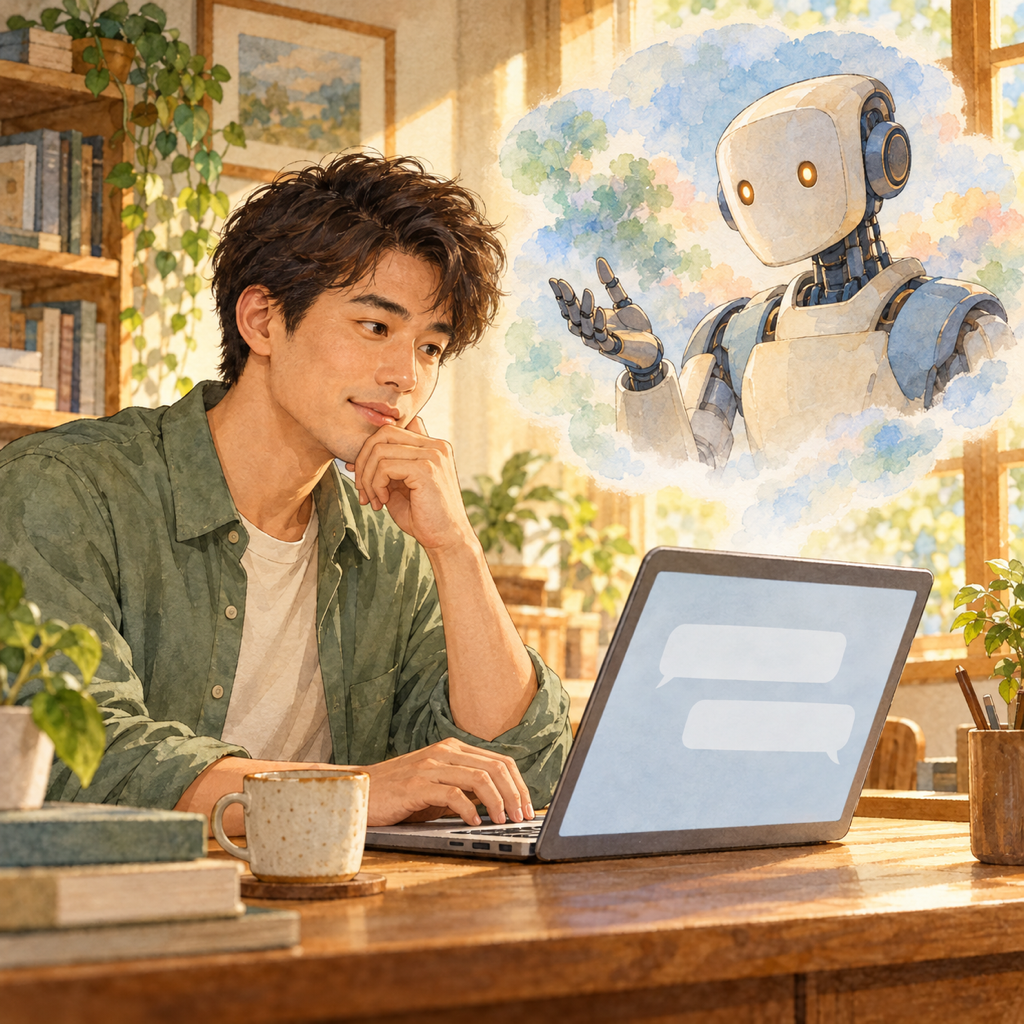
Science fiction gave us thinking robots, perfect robot laws and machines that grow smarter by themselves. Real AI in 2026 can hold a fluent conversation, but it predicts words instead of understanding them, its safety rules can be broken, and it cannot improve itself after it is released.
 English lesson
Article
Choose how to use this lesson
You can switch anytime.
Study mode
Introduction
Typing practice
Type the text exactly. Timer starts with your first key.
Text to type: Science fiction gave us thinking robots, perfect robot laws and machines that grow smarter by themselves. Real AI in 2026 can hold a fluent conversation, but it predicts words instead of understanding them, its safety rules can be broken, and it cannot improve itself after it is released.
Ready. The timer starts with your first key.
Complete
Great job!
Strong finish — your speed stayed steady.
Your rhythm
Speed over time- Time
- 0:00
- Raw speed
- 0 WPM
- Wrong keys
- 0
- Corrected
- 0
Before you begin
Warm-up
Which robot or computer character from a film, book or series do you remember best, and what made it feel alive?
Have you ever chatted with an AI and briefly forgotten it was a machine?
What would a machine need to do before you believed it really understood you?
 Part 1: The Game of Fooling People
Reading
Part 1: The Game of Fooling People
Typing practice
Type the text exactly. Timer starts with your first key.
Text to type: Imagine you are typing messages to two strangers in another room. One is a person and one is a machine. You can ask anything you like. At the end, you have to guess which one is the machine. If you can't tell, has the machine won? In the early 1950s, the British mathematician Alan Turing proposed exactly this kind of test. He called it the "Imitation Game". A machine answers questions, and it wins if people cannot tell whether it is human or machine. This idea became the basis of the famous Turing Test for machine intelligence. Notice what the test actually measures. It does not look inside the machine. It only asks whether people are convinced. So the test is really about imitation, as its name says. This matters, because machines started passing it long before today's AI. In 2001, a chatbot called A.L.I.C.E. repeatedly convinced people that it was human. Nobody believes that A.L.I.C.E. was a thinking mind. It was a program that produced good replies. So the Turing Test tells us something real, but limited. A machine that passes it is very good at seeming human. That is not the same as being a mind.
Ready. The timer starts with your first key.
Complete
Great job!
Strong finish — your speed stayed steady.
Your rhythm
Speed over time- Time
- 0:00
- Raw speed
- 0 WPM
- Wrong keys
- 0
- Corrected
- 0
Check your understanding
Check: Part 1: The Game of Fooling People
1. Why does passing the Turing Test not prove that a machine can think?
Sample answer
The test only checks whether people are convinced by the machine's answers. It does not look at what happens inside the machine. A chatbot like A.L.I.C.E. fooled people in 2001 without being a thinking mind, so passing shows good imitation, not understanding.
Reading
Part 2: How a Chatbot Finds Its Words
Typing practice
Type the text exactly. Timer starts with your first key.
Text to type: Today's chatbots are far more fluent than A.L.I.C.E. They can write poems, explain science and answer in many languages. So how do they do it? The basic method is prediction. A modern chatbot has learned patterns from huge amounts of text. When you write a question, it calculates which words and phrases are likely to come next, and then it adds them one after another. Think of the autocomplete on your phone, which suggests the next word in a message. A chatbot works like a very powerful version of that, and it continues for whole pages. This explains its strength. Human writing is full of patterns, so a system that predicts those patterns well will sound natural. It also explains its weakness. Some experts describe chatbots as "stochastic parrots". A parrot can repeat words without knowing what they mean. In the same way, a chatbot produces likely phrases, but it does not truly understand the content. Real systems such as large language models are probabilistic, which means they work with chances, not certainty. They are also not sentient. Here the gap between fiction and fact is clear. Fictional AI characters often have consciousness. They have feelings, goals and an inner life.
Ready. The timer starts with your first key.
Complete
Great job!
Strong finish — your speed stayed steady.
Your rhythm
Speed over time- Time
- 0:00
- Raw speed
- 0 WPM
- Wrong keys
- 0
- Corrected
- 0
Check your understanding
Check: Part 2: How a Chatbot Finds Its Words
1. How does word prediction explain both the strength and the weakness of modern chatbots?
Sample answer
Because chatbots predict likely words from patterns in human text, their writing sounds natural and fluent. But they produce likely phrases without truly understanding them, like "stochastic parrots". So they can sound clever while having no real understanding and no sentience.
Think one step further
Does it change how you use a chatbot when you think of it as a word predictor instead of a person?
 Part 3: Robots With Rules
Reading
Part 3: Robots With Rules
Typing practice
Type the text exactly. Timer starts with your first key.
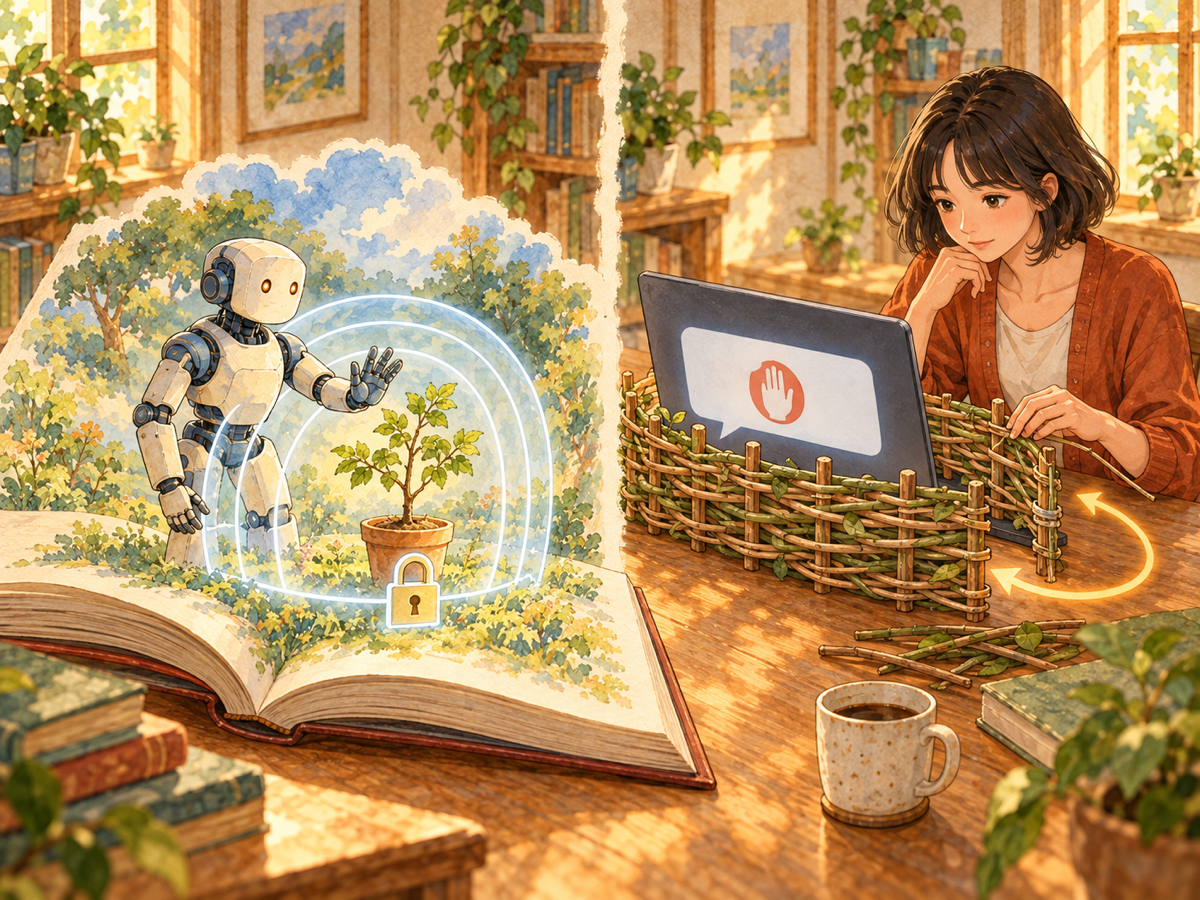
Text to type: If machines become powerful, how do we keep them safe? The science-fiction writer Isaac Asimov imagined one answer. His fictional robots were programmed with the Three Laws of Robotics. These laws made sure the robots would not threaten humans or each other. In the stories, these laws are built deep into every robot. A robot cannot simply decide to ignore them. They are absolute, and they are part of how the story world works. Real AI safety looks very different. One method is to train AI models to refuse harmful requests. Another is to build tools that can detect content made by AI. These are useful steps, but they are not unbreakable laws. Many safeguards can be bypassed, and their real-world effectiveness is still uncertain. Why is there such a difference? Part 2 gives us a clue. A chatbot doesn't follow a list of rules the way a robot in a story does. It predicts likely answers. Training can make refusing harmful requests very likely, but a clever user may still find a way around it. A trained habit is not a law of nature. Real AI safety today is more like teaching good habits, and habits can be broken.
Ready. The timer starts with your first key.
Complete
Great job!
Strong finish — your speed stayed steady.
Your rhythm
Speed over time- Time
- 0:00
- Raw speed
- 0 WPM
- Wrong keys
- 0
- Corrected
- 0
Check your understanding
Check: Part 3: Robots With Rules
1. What is the main difference between Asimov's Three Laws and real AI safety controls?
Sample answer
In Asimov's fiction, the laws are absolute and built into every robot, so they cannot be ignored. Real controls, like training models to refuse harmful requests or detecting AI-made content, can often be bypassed, and their real-world effectiveness is uncertain.
Think one step further
If you were designing safety for an AI, would you prefer strict fixed rules or flexible trained judgement? What could go wrong with each?
Reading
Part 4: The Machine That Makes Itself Smarter
Typing practice
Type the text exactly. Timer starts with your first key.
Text to type: One of the most exciting and frightening ideas in science fiction is a machine that improves itself. It learns, it upgrades its own abilities, and then it uses those new abilities to improve again. In stories, this can lead to a machine that leaves humans far behind. This fear is old and deep in fiction. In Frank Herbert's Dune series, for example, there are stories about banning AI and smart machines. Stories like these reflect society's worries about what AI might become. Researchers take the idea of self-improvement seriously. They call one part of it continual learning, which means learning and getting better over time. It is considered important for building AGI, a general AI that could match humans across many tasks. But here is the reality check. Current AI systems generally do not have their own way to improve themselves after deployment. In other words, once a model is released, it doesn't keep upgrading itself. People still train and update it. There is a second barrier. Real self-improvement would require new ideas, but current AI systems have difficulty producing original scientific insights. A machine that cannot easily discover something new cannot easily invent a better version of itself. So the runaway machine of fiction is not here yet. The idea is important to researchers, but the key ingredients are missing.
Ready. The timer starts with your first key.
Complete
Great job!
Strong finish — your speed stayed steady.
Your rhythm
Speed over time- Time
- 0:00
- Raw speed
- 0 WPM
- Wrong keys
- 0
- Corrected
- 0
Check your understanding
Check: Part 4: The Machine That Makes Itself Smarter
1. Give two reasons why current AI cannot improve itself the way science fiction imagines.
Sample answer
First, current AI systems generally lack their own way to improve themselves after deployment, so people still have to train and update them. Second, they have difficulty producing original scientific insights, and real self-improvement would need new ideas.
 Part 5: Worlds That Fool Us
Reading
Part 5: Worlds That Fool Us
Typing practice
Type the text exactly. Timer starts with your first key.
Text to type: Some science fiction goes even further. In The Matrix, AI robots enslave humans inside a simulated reality. The people live their whole lives in a virtual world and believe it is real. At first, this seems like the biggest idea of all. But look at what makes it frightening. The machines in The Matrix are dangerous because humans cannot tell what is real. The people are fooled. Now think back to Turing's Imitation Game from Part 1. It asks the same question: can humans tell the difference between the real thing and an imitation? This is exactly where modern chatbots are strong, because they generate human-like text by predicting likely phrases. A chatbot cannot build a world to trap us. But it can produce human-like text so well that people may forget they are talking to a machine. So the wonder and the warning of science fiction meet in the same place. The most realistic part of these stories is not the thinking robot. It is the human who is convinced.
Ready. The timer starts with your first key.
Complete
Great job!
Strong finish — your speed stayed steady.
Your rhythm
Speed over time- Time
- 0:00
- Raw speed
- 0 WPM
- Wrong keys
- 0
- Corrected
- 0
Check your understanding
Check: Part 5: Worlds That Fool Us
1. How does the idea in The Matrix connect to Turing's Imitation Game and to real AI today?
Sample answer
Both The Matrix and the Imitation Game are about humans being unable to tell the real thing from an imitation. Real AI today does not trap people in a simulated world, but it is very good at producing human-like text that can convince people, which is its closest link to these stories.
What you can do now
Final Reflection
We started with a common belief: if a machine talks like a person, it must think like one. The story of AI shows a different picture. Turing's test measures fooling, not thinking. Chatbots predict likely words without understanding them. Real safety rules can be broken, unlike Asimov's laws. And today's AI cannot improve itself after release. The machines of science fiction had minds. The machines of 2026 have something stranger: the appearance of a mind without the mind itself.
Now that you know how chatbots produce their words, what would convince you that a future machine truly understood something, and not just imitated understanding?
Which science-fiction idea do you think is more worth worrying about today: machines that become too powerful, or humans who are too easily convinced?
Learning cards
My cards
Talking Machines: Science Fiction and Real AI in 2026
0 due · 0 new · about 1 min
Learn the sense first · then retrieve it
No saved cards yet
Open a word or phrase in the article and choose Save to My Words.
Focused Reading Mode is open.
Listening
Lesson audio
Listen from the beginning, or choose “Play this part” as you read along.
Reading
Part 1: The Game of Fooling People
Reading
Part 2: How a Chatbot Finds Its Words
Reading
Part 3: Robots With Rules
Reading
Part 4: The Machine That Makes Itself Smarter
Reading
Part 5: Worlds That Fool Us
Finished listening?
Mark this listening practice complete when you have followed the lesson audio.
Listening complete
Listen Mode
Word-by-word syncPlay the audio and follow the highlighted word.
Article complete
Choose your next step
Open the next same-level lesson, replay the article, or save this page for later.
Listen Again
Replay the article once and notice how much more you understand.
One replay is enough. Then move on.