Six More Unusual Traditions from Six Places
Quality checked lesson
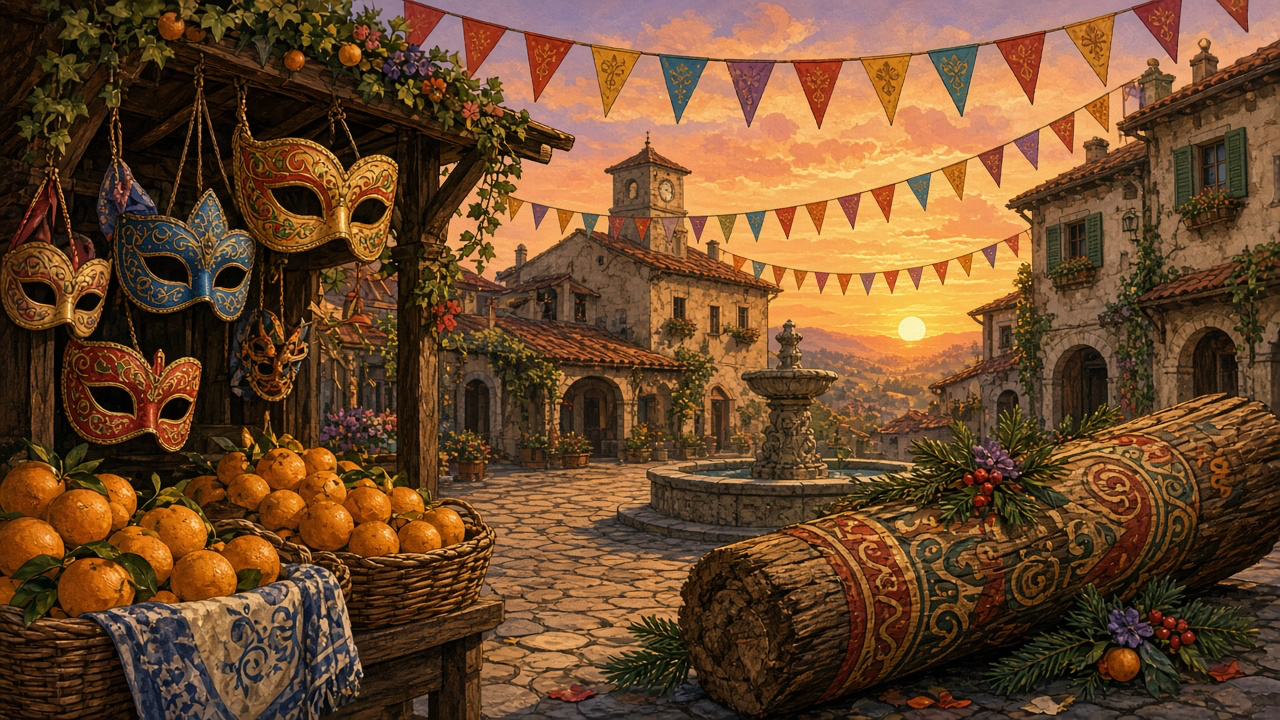
El Colacho, the Battle of the Oranges, Busójárás, Onbashira, Tinku, and Thaipusam offer six different traditions to explore. Look at each one through three simple ideas: its place, its actions, and its meaning.
 English lesson
Article
Choose how to use this lesson
You can switch anytime.
Study mode
Introduction
Typing practice
Type the text exactly. Timer starts with your first key.
Text to type: El Colacho, the Battle of the Oranges, Busójárás, Onbashira, Tinku, and Thaipusam offer six different traditions to explore. Look at each one through three simple ideas: its place, its actions, and its meaning.
Ready. The timer starts with your first key.
Complete
Great job!
Strong finish — your speed stayed steady.
Your rhythm
Speed over time- Time
- 0:00
- Raw speed
- 0 WPM
- Wrong keys
- 0
- Corrected
- 0
Before you begin
Warm-up
What local tradition do you enjoy, and why?
How can clothes or music make a celebration special?
Why do you think people keep very old traditions?
 Part 1: El Colacho — a jump with a special meaning
Reading
Part 1: El Colacho — a jump with a special meaning
Typing practice
Type the text exactly. Timer starts with your first key.
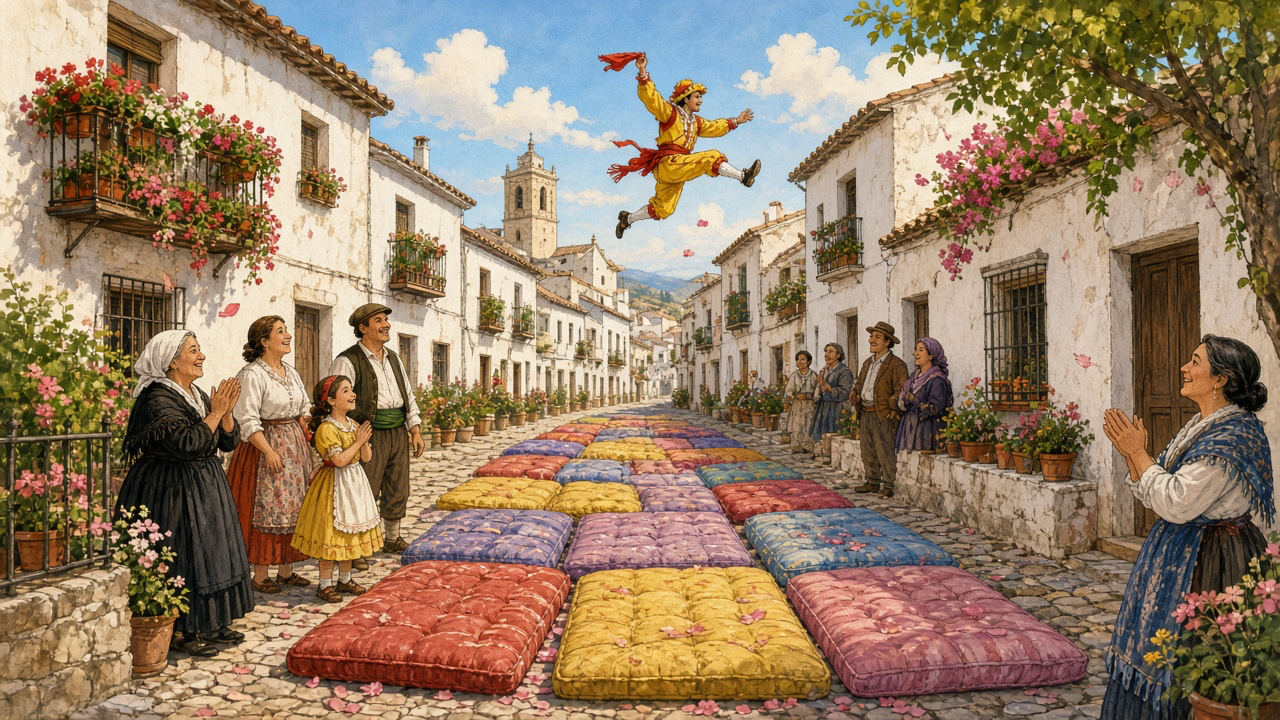
Text to type: El Colacho is a tradition in Castrillo de Murcia, a village near Burgos in Spain. It began in 1620, so it is more than 400 years old. It takes place on the Sunday after Corpus Christi, a Christian celebration. In 2026, that Sunday was 7 June. The tradition is also called baby jumping. Babies born during the past year lie on mattresses in the street. A man dressed as the devil jumps over them. This man is called El Colacho. The jump has a special meaning. People believe it takes away bad luck and evil. To understand this tradition, remember that the action and the belief belong together. It is not simply a jump over mattresses.
Ready. The timer starts with your first key.
Complete
Great job!
Strong finish — your speed stayed steady.
Your rhythm
Speed over time- Time
- 0:00
- Raw speed
- 0 WPM
- Wrong keys
- 0
- Corrected
- 0
Check your understanding
Check: Part 1: El Colacho — a jump with a special meaning
1. What do people believe the jump does for the babies?
Sample answer
People believe the jump takes away bad luck and evil.
Think one step further
What would you want to understand before watching this tradition?
What traditions for babies do you know from your country?
How could you explain this custom respectfully to someone who finds it unusual?
Reading
Part 2: The Battle of the Oranges — a story told together
Typing practice
Type the text exactly. Timer starts with your first key.
Text to type: The Battle of the Oranges is the biggest part of the Historic Carnival of Ivrea. Ivrea is a town in Piedmont, in northern Italy. The event lasts for three days before Carnival ends. Teams on foot throw oranges at throwers riding in carts. The people throwing on foot are called aranceri. There are nine teams on foot, including the Diavoli and the Scacchi. Visitors who do not throw wear a red hat. Behind these actions is a story about the people of Ivrea standing up against a cruel ruler. The event remembers that story through a shared activity. Here, the meaning is different from El Colacho. It connects the town's celebration with a story about its people.
Ready. The timer starts with your first key.
Complete
Great job!
Strong finish — your speed stayed steady.
Your rhythm
Speed over time- Time
- 0:00
- Raw speed
- 0 WPM
- Wrong keys
- 0
- Corrected
- 0
Check your understanding
Check: Part 2: The Battle of the Oranges — a story told together
1. What story does the Battle of the Oranges remember?
Sample answer
It remembers the people of Ivrea standing up against a cruel ruler.
Think one step further
Have you ever been to a big festival in a town square?
Would you like to be on a festival team?
Would you prefer to join an activity or watch it, and why?
 Part 3: Busójárás — saying goodbye to winter
Reading
Part 3: Busójárás — saying goodbye to winter
Typing practice
Type the text exactly. Timer starts with your first key.
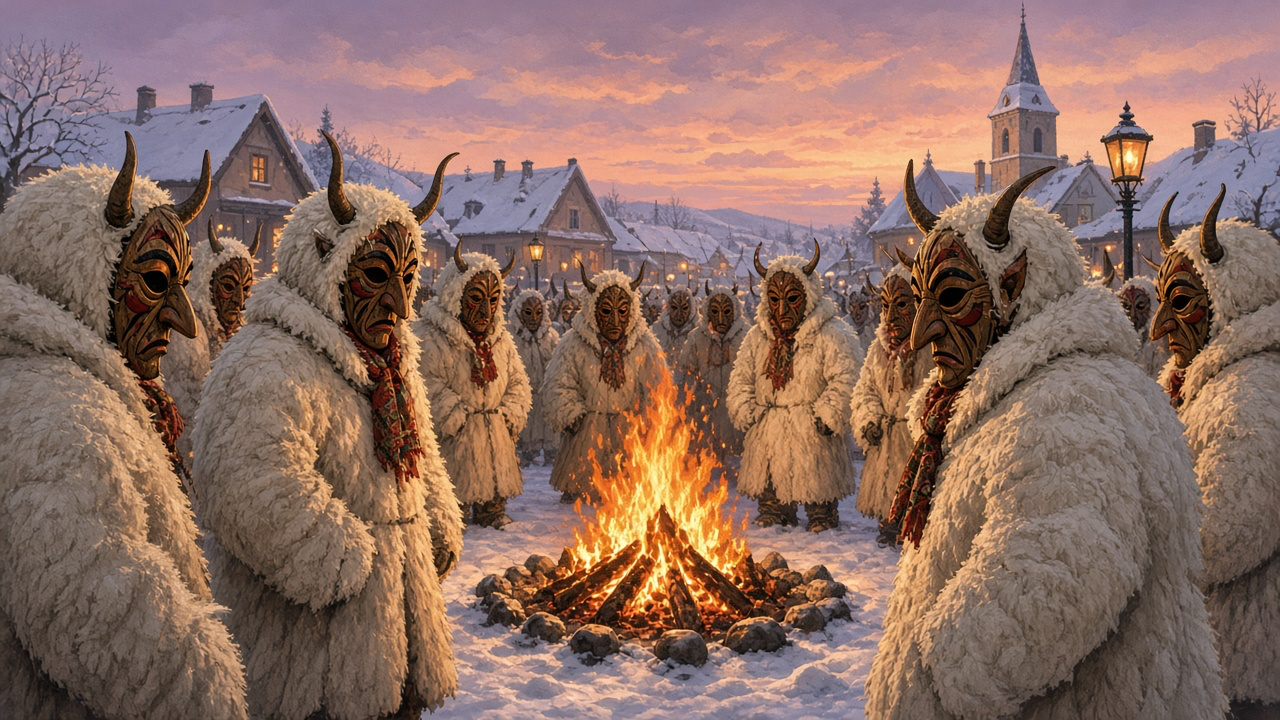
Text to type: Busójárás is a six-day carnival in Mohács, a town in southern Hungary. It happens at the end of winter. In 2026, it ran from 12 to 17 February and ended with a big bonfire, a large outdoor fire. Men called busós wear scary wooden masks and sheepskin coats. These coats are made from sheep's skins. The men also carry noisemakers, objects that make loud sounds. Masks, warm coats, and noise give this celebration its special character. The custom says goodbye to winter. The season is therefore part of its meaning, not just its date. In 2009, Busójárás joined UNESCO's list of Intangible Cultural Heritage. This list recognises living traditions, including customs that communities continue to practise.
Ready. The timer starts with your first key.
Complete
Great job!
Strong finish — your speed stayed steady.
Your rhythm
Speed over time- Time
- 0:00
- Raw speed
- 0 WPM
- Wrong keys
- 0
- Corrected
- 0
Check your understanding
Check: Part 3: Busójárás — saying goodbye to winter
1. How do the busós take part, and what does the custom mark?
Sample answer
The busós wear wooden masks and sheepskin coats and carry noisemakers. The custom marks the end of winter.
Think one step further
Do you like winter, or are you happy when it ends?
Which would create the strongest atmosphere for you: masks, noise, or a bonfire?
What seasonal change would you like your community to celebrate?
Reading
Part 5: Tinku — meeting with hope for the harvest
Typing practice
Type the text exactly. Timer starts with your first key.
Text to type: Tinku is an Andean ritual from northern Potosí in Bolivia. A ritual is an activity with a special meaning that people repeat. The best-known Tinku takes place in Macha during the Fiesta de la Cruz. In 2026, it was on 3 and 4 May. Communities come to the town's main square with music, colourful clothes, and dance. The ritual is a meeting between two groups of the community. People believe it brings a good harvest, meaning a good amount of food gathered from the fields. Tinku is also a famous dance at carnival in Oruro. Its name therefore connects with both a community ritual and a dance. In Macha, hope for the harvest is central to its meaning.
Ready. The timer starts with your first key.
Complete
Great job!
Strong finish — your speed stayed steady.
Your rhythm
Speed over time- Time
- 0:00
- Raw speed
- 0 WPM
- Wrong keys
- 0
- Corrected
- 0
Check your understanding
Check: Part 5: Tinku — meeting with hope for the harvest
1. What happens at Tinku in Macha, and what do people hope it brings?
Sample answer
Two groups of the community meet, and communities gather with music, colourful clothes, and dance. People believe the ritual brings a good harvest.
Think one step further
Do you know any festivals for a good harvest?
What kind of music do you like at a festival?
What hope would you choose to express through a community celebration?
 Part 6: Thaipusam — a journey of religious belief
Reading
Part 6: Thaipusam — a journey of religious belief
Typing practice
Type the text exactly. Timer starts with your first key.
Text to type: Thaipusam is a Hindu festival for Lord Murugan, celebrated by Tamil people. Its biggest celebration is at Batu Caves, near Kuala Lumpur in Malaysia. In 2026, Thaipusam was on 1 February. Before the festival, more than 2.5 million visitors were expected at Batu Caves. That was an expectation, not a final visitor count. Devotees, people strongly committed to their religion, climb 272 colourful steps to the temple in the cave. Many carry a kavadi, a decorated frame, or pots of milk. Religious belief is central to this festival. The steps, the things people carry, and the temple visit are parts of the celebration for Lord Murugan. Understanding that purpose helps us see more than a large crowd or colourful steps.
Ready. The timer starts with your first key.
Complete
Great job!
Strong finish — your speed stayed steady.
Your rhythm
Speed over time- Time
- 0:00
- Raw speed
- 0 WPM
- Wrong keys
- 0
- Corrected
- 0
Check your understanding
Check: Part 6: Thaipusam — a journey of religious belief
1. Where do devotees go at Batu Caves, and what do many carry?
Sample answer
Devotees climb 272 colourful steps to the temple in the cave. Many carry a decorated frame called a kavadi or pots of milk.
Think one step further
Would you like to climb the steps at Batu Caves?
How would you feel watching Thaipusam at Batu Caves?
Which festival in your country do you like most, and why?
What you can do now
Final Reflection
Across all six traditions, which seems most strongly connected with belief, community, the seasons, or an old story? Explain your choices.
Which two of the six traditions do you think are most similar, and why?
Learning cards
My cards
Six More Unusual Traditions from Six Places
0 due · 0 new · about 1 min
Learn the sense first · then retrieve it
No saved cards yet
Open a word or phrase in the article and choose Save to My Words.
Focused Reading Mode is open.
Listening
Lesson audio
Listen from the beginning, or choose “Play this part” as you read along.
Reading
Part 1: El Colacho — a jump with a special meaning
Reading
Part 2: The Battle of the Oranges — a story told together
Reading
Part 3: Busójárás — saying goodbye to winter
Reading
Part 5: Tinku — meeting with hope for the harvest
Reading
Part 6: Thaipusam — a journey of religious belief
Finished listening?
Mark this listening practice complete when you have followed the lesson audio.
Listening complete
Listen Mode
Word-by-word syncPlay the audio and follow the highlighted word.
Article complete
Choose your next step
Open the next same-level lesson, replay the article, or save this page for later.
Listen Again
Replay the article once and notice how much more you understand.
One replay is enough. Then move on.