Six Unusual Traditions from Six More Places
Quality checked lesson
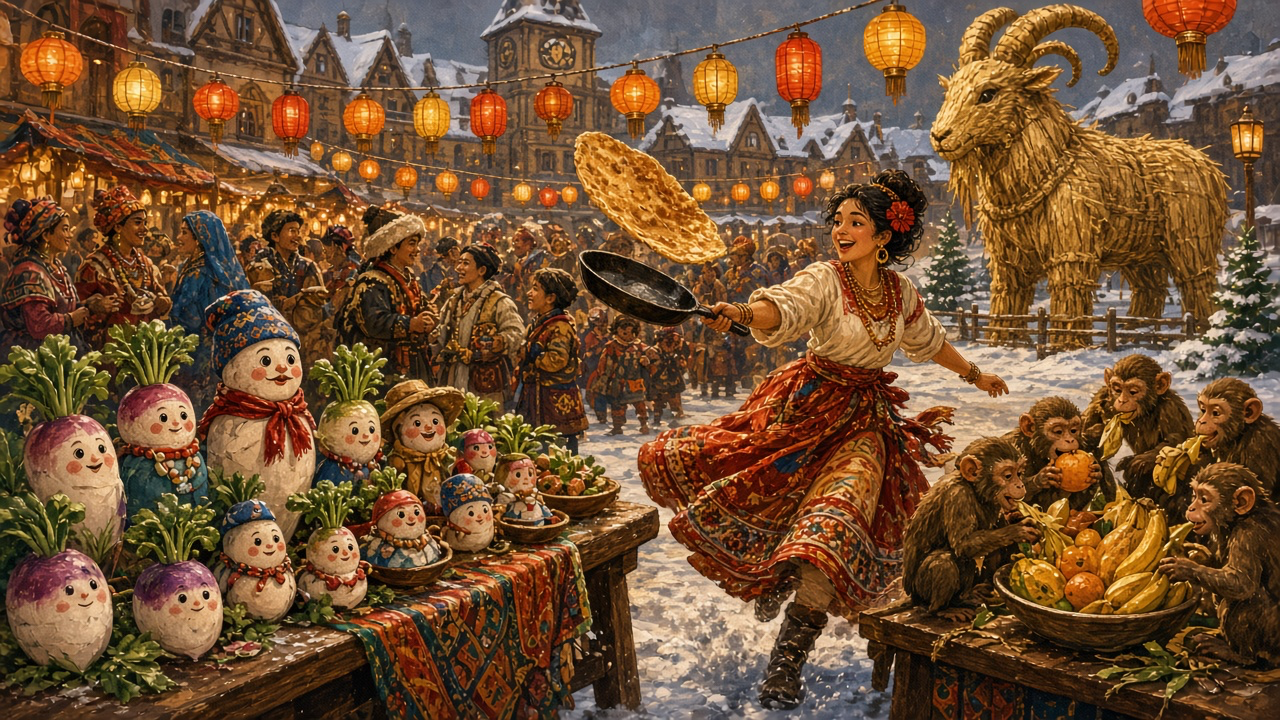
The Night of the Radishes in Oaxaca, the Olney Pancake Race, the Gävle Goat, the Guérewol in Niger, the Monkey Buffet Festival in Lopburi, and fire-walking on Beqa bring people together in very different ways. Looking at where, when, what, and why helps us understand each tradition.
 English lesson
Article
Choose how to use this lesson
You can switch anytime.
Study mode
Introduction
Typing practice
Type the text exactly. Timer starts with your first key.
Text to type: The Night of the Radishes in Oaxaca, the Olney Pancake Race, the Gävle Goat, the Guérewol in Niger, the Monkey Buffet Festival in Lopburi, and fire-walking on Beqa bring people together in very different ways. Looking at where, when, what, and why helps us understand each tradition.
Ready. The timer starts with your first key.
Complete
Great job!
Strong finish — your speed stayed steady.
Your rhythm
Speed over time- Time
- 0:00
- Raw speed
- 0 WPM
- Wrong keys
- 0
- Corrected
- 0
Before you begin
Warm-up
What local tradition do you enjoy watching?
What everyday object could become an interesting festival decoration?
Why do you think people continue old traditions?
 Part 1: The Night of the Radishes — food becomes art
Reading
Part 1: The Night of the Radishes — food becomes art
Typing practice
Type the text exactly. Timer starts with your first key.
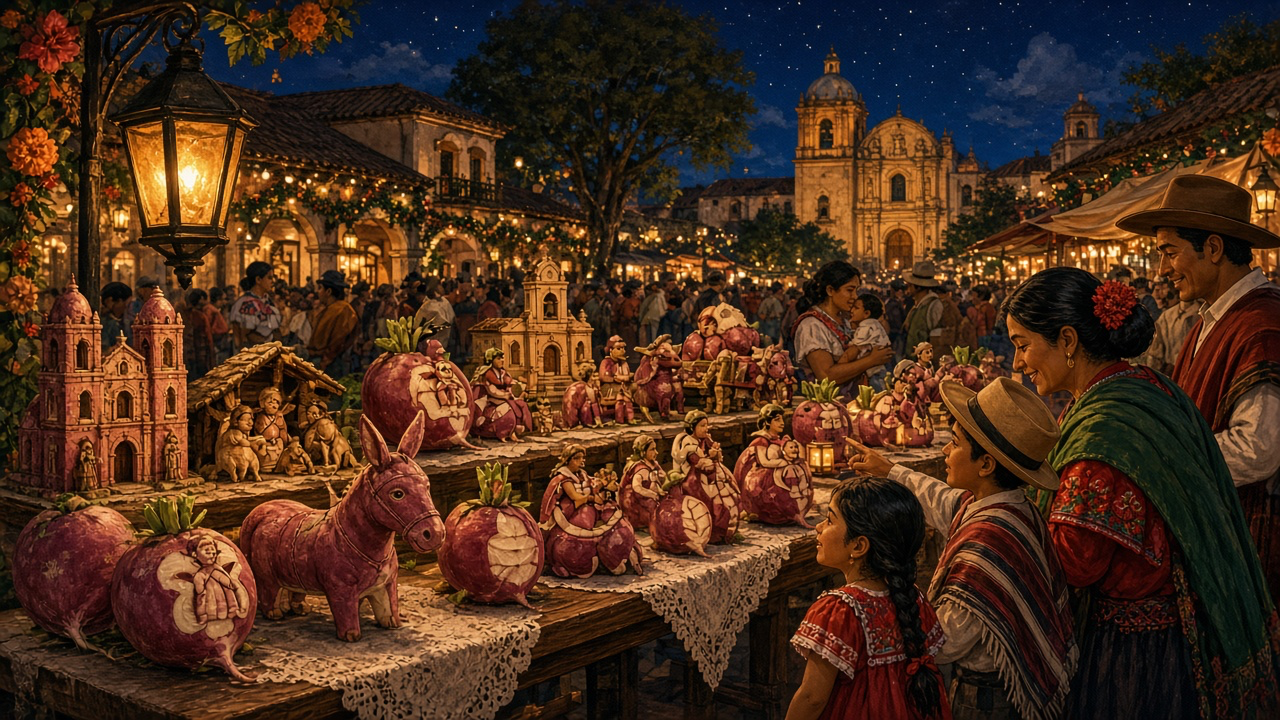
Text to type: The Night of the Radishes takes place every December 23 in Oaxaca, Mexico. A radish is a vegetable, but here it becomes material for art. People carve oversized radishes into scenes and compete for prizes. The tradition began with farmers who wanted to attract customers at the Christmas market in the main square. Their carved vegetables helped people notice what they were selling. The city started the formal competition in 1897. Timing matters because radishes wilt, or lose their fresh shape, soon after cutting. The works are shown for only a few hours, and visitors wait in very long lines. There are also works made from corn husks and dried flowers.
Ready. The timer starts with your first key.
Complete
Great job!
Strong finish — your speed stayed steady.
Your rhythm
Speed over time- Time
- 0:00
- Raw speed
- 0 WPM
- Wrong keys
- 0
- Corrected
- 0
Check your understanding
Check: Part 1: The Night of the Radishes — food becomes art
1. Explain why visitors have only a short time to see the radish works.
Sample answer
Visitors have only a short time because the radishes wilt soon after cutting, so the works are shown for only a few hours.
Think one step further
What scene would you choose to make from vegetables?
Would you wait in a long line to see art that lasts only a few hours?
Do you think a prize changes the way people prepare their work?
Reading
Part 2: The Olney Pancake Race — a kitchen object joins a race
Typing practice
Type the text exactly. Timer starts with your first key.
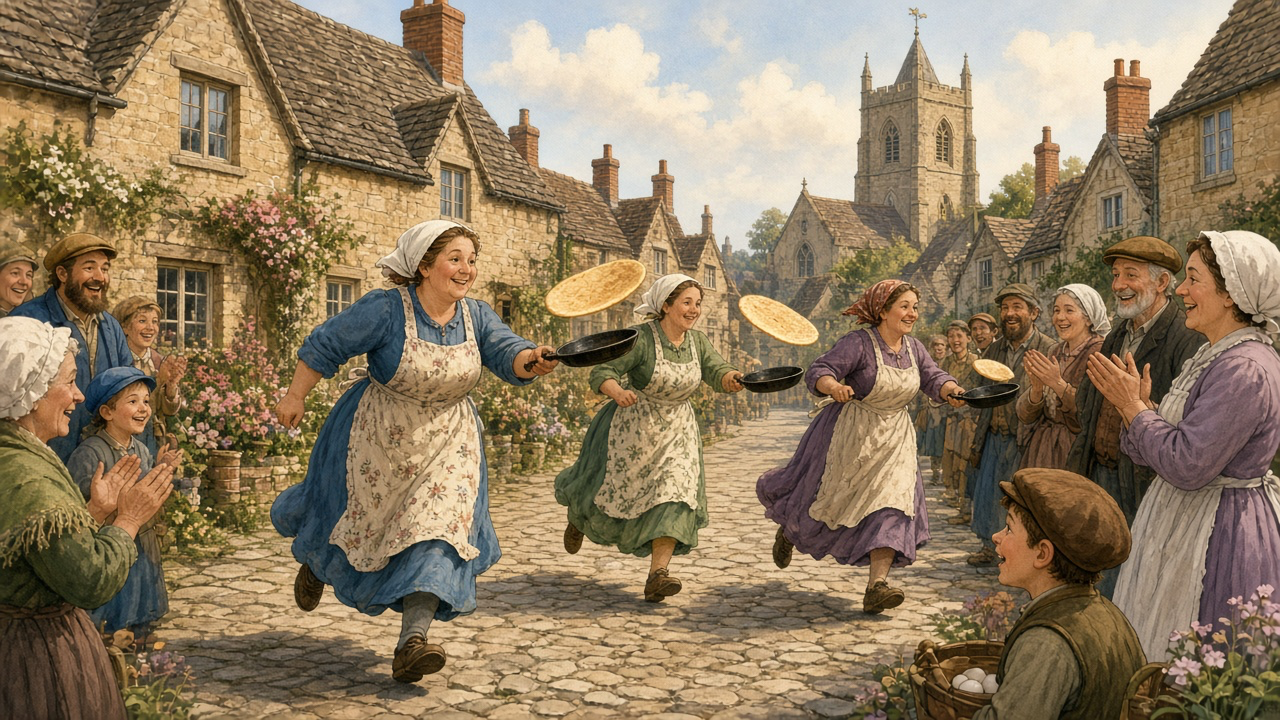
Text to type: The Olney Pancake Race happens in Olney, Buckinghamshire, England, on Pancake Day, also called Shrove Tuesday. The traditional runners are women. They wear a scarf and an apron and carry a frying pan along a course. They must toss their pancake at the start and the finish. The story behind the tradition goes back to 1445. A woman was busy making pancakes when she heard the church bells. She ran to church still carrying her pan and pancake. The race remembers that story through action. Since 1950, Olney and Liberal, Kansas, have held an International Pancake Day race and compared their times. A local tradition therefore also creates a connection between two places.
Ready. The timer starts with your first key.
Complete
Great job!
Strong finish — your speed stayed steady.
Your rhythm
Speed over time- Time
- 0:00
- Raw speed
- 0 WPM
- Wrong keys
- 0
- Corrected
- 0
Check your understanding
Check: Part 2: The Olney Pancake Race — a kitchen object joins a race
1. Explain how the race connects with the story of the woman.
Sample answer
The runners carry a frying pan and pancake, just as the woman in the story did when she ran to church.
Think one step further
Which would you find harder, running with the pan or tossing the pancake?
What everyday object would you use to make a race more interesting?
Why might two towns enjoy comparing their race times?
 Part 3: The Gävle Goat — a large seasonal symbol
Reading
Part 3: The Gävle Goat — a large seasonal symbol
Typing practice
Type the text exactly. Timer starts with your first key.
Text to type: In Gävle, Sweden, a giant goat made of straw stands at Castle Square in the centre of the city. It is a Yule goat, a goat figure connected with the Christmas season. Local community groups build it over two days at the beginning of Advent, the period leading up to Christmas. The first Gävle Goat appeared in 1966. Since 1986, there have been two goats: one built by the Southern Merchants and another by the Natural Science Club of the School of Vasa. Here, the main activity is building and displaying a seasonal figure. A new giant straw goat is put up every year at Castle Square in central Gävle.
Ready. The timer starts with your first key.
Complete
Great job!
Strong finish — your speed stayed steady.
Your rhythm
Speed over time- Time
- 0:00
- Raw speed
- 0 WPM
- Wrong keys
- 0
- Corrected
- 0
Check your understanding
Check: Part 3: The Gävle Goat — a large seasonal symbol
1. Describe when the goat is built and what it represents.
Sample answer
Local community groups build the goat at the beginning of Advent, and it is a Yule goat connected with the Christmas season.
Think one step further
Where would you put a large seasonal decoration in your town?
What material would you choose for a public decoration?
Why do you think building something together helps a community?
Reading
Part 4: The Guérewol — meeting, music, and choosing
Typing practice
Type the text exactly. Timer starts with your first key.
Text to type: The Guérewol is a yearly courtship competition among the Wodaabe Fula people of Niger. Courtship means trying to attract someone as a possible partner. Young men wear rich decorations and traditional face painting. They stand in lines, dance, and sing to win the attention of young women. The dance is called the Yaake. The gathering happens when Wodaabe cattle herders meet at the southern edge of the Sahara before moving south for the dry season. These herders traditionally move from place to place with their animals. A main meeting place is In-Gall in northwest Niger, where there is a festival and a market. The Guérewol lasts about a week, bringing courtship and a seasonal gathering together.
Ready. The timer starts with your first key.
Complete
Great job!
Strong finish — your speed stayed steady.
Your rhythm
Speed over time- Time
- 0:00
- Raw speed
- 0 WPM
- Wrong keys
- 0
- Corrected
- 0
Check your understanding
Check: Part 4: The Guérewol — meeting, music, and choosing
1. Explain how the gathering connects with the herders’ movement.
Sample answer
The herders meet before moving south for the dry season, so the Guérewol takes place at an important point in their seasonal movement.
Think one step further
Why do you think music is important at a large gathering?
Would you prefer to watch a dance or join one?
Do you prefer a week-long gathering or a one-day event?
Reading
Part 5: The Monkey Buffet Festival — food for animal neighbours
Typing practice
Type the text exactly. Timer starts with your first key.
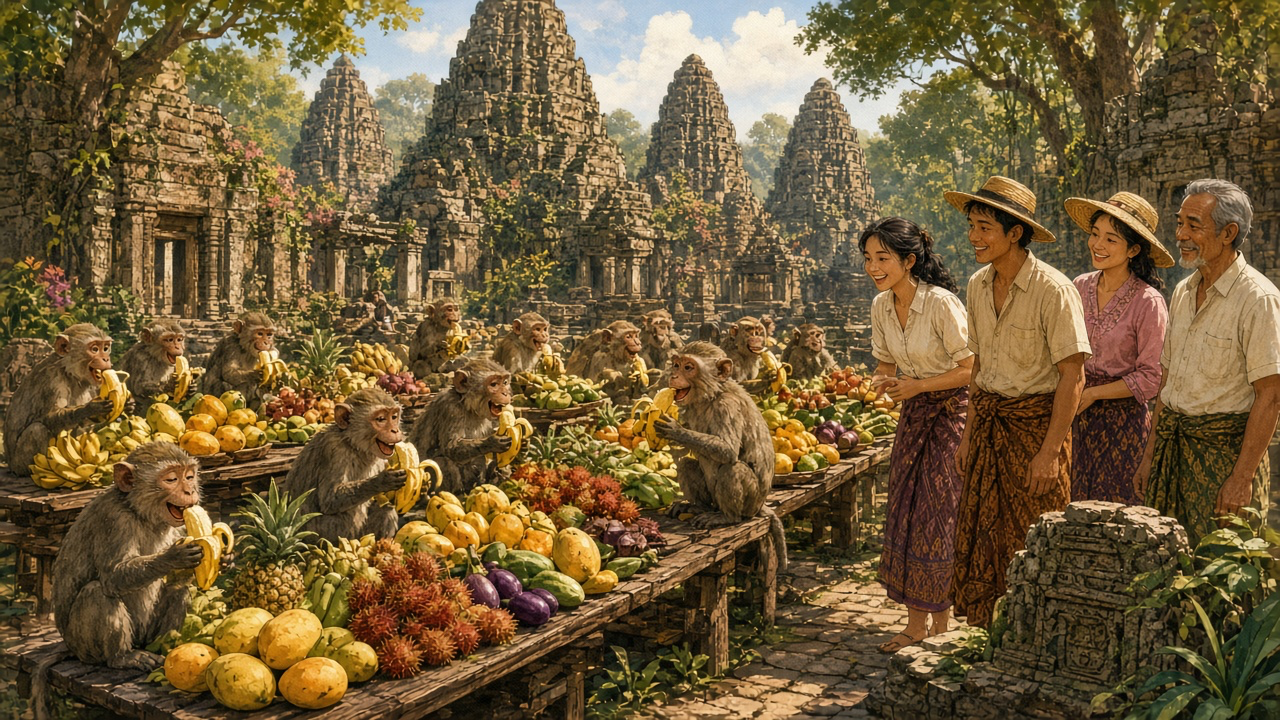
Text to type: The Monkey Buffet Festival happens every year in Lopburi, Thailand, north of Bangkok. A buffet usually offers a range of food to choose from. Here, the food is for local crab-eating macaques, a kind of monkey. People give them fruit and vegetables, for example at the Phra Prang Sam Yod temple. Sometimes fruit is frozen inside blocks of ice. The activity centres on feeding the local monkeys, but sharing a town with them is not always simple. By 2024, Lopburi had about 3,000 monkeys. They caused problems for residents by taking bags, drinks, and food. The government started a campaign to catch monkeys and stop them from having babies.
Ready. The timer starts with your first key.
Complete
Great job!
Strong finish — your speed stayed steady.
Your rhythm
Speed over time- Time
- 0:00
- Raw speed
- 0 WPM
- Wrong keys
- 0
- Corrected
- 0
Check your understanding
Check: Part 5: The Monkey Buffet Festival — food for animal neighbours
1. Explain the contrast between the festival and daily life with the monkeys.
Sample answer
During the festival, people give food to the monkeys, but in daily life the monkeys also caused problems by taking residents’ bags, drinks, and food.
Think one step further
What would you enjoy about watching this festival?
What rule would you suggest for people visiting animals in a town?
What would you do to balance an animal festival with residents’ needs?
 Part 6: Fire-walking on Beqa — a local practice with a long history
Reading
Part 6: Fire-walking on Beqa — a local practice with a long history
Typing practice
Type the text exactly. Timer starts with your first key.
Text to type: Beqa is an island in Fiji, about 10 kilometres south of the main island, Viti Levu. Several of Beqa’s nine villages are known for fire-walking. In this practice, people walk across hot stones. In Fiji, it is practised by the Sawau clan, a community group on Beqa. The approved accounts do not give one yearly date for this tradition. They do show its long history as something visitors came to see: it was already a tourist attraction in 1902. Fire-walking has different purposes around the world, including healing, faith, and entering adult life. Those general purposes do not establish one specific reason for Beqa’s practice. Here, we can identify a local tradition that also attracts visitors.
Ready. The timer starts with your first key.
Complete
Great job!
Strong finish — your speed stayed steady.
Your rhythm
Speed over time- Time
- 0:00
- Raw speed
- 0 WPM
- Wrong keys
- 0
- Corrected
- 0
Check your understanding
Check: Part 6: Fire-walking on Beqa — a local practice with a long history
1. Identify the local community and the historical detail connected with this practice.
Sample answer
The Sawau clan practises fire-walking on Beqa, and it was already a tourist attraction in 1902.
Think one step further
What do you think visitors learn by watching a local tradition?
Why is it useful to learn who practises a tradition?
Do you think visitors change the way a community feels about its tradition?
What you can do now
Final Reflection
These six traditions use different materials and activities: carved vegetables, pancakes and pans, straw, dance and decoration, food for monkeys, and hot stones. Their timing also differs. Some have a named day or season, while others connect with a yearly gathering or a continuing local practice. Their purposes are not all the same, so looking closely helps us avoid treating every tradition as simply a show.
Which of the six would you most like to learn more about, and why?
Which two traditions would you compare, and what important similarity and difference would you explain?
Learning cards
My cards
Six Unusual Traditions from Six More Places
0 due · 0 new · about 1 min
Learn the sense first · then retrieve it
No saved cards yet
Open a word or phrase in the article and choose Save to My Words.
Focused Reading Mode is open.
Listening
Lesson audio
Listen from the beginning, or choose “Play this part” as you read along.
Reading
Part 1: The Night of the Radishes — food becomes art
Reading
Part 2: The Olney Pancake Race — a kitchen object joins a race
Reading
Part 3: The Gävle Goat — a large seasonal symbol
Reading
Part 4: The Guérewol — meeting, music, and choosing
Reading
Part 5: The Monkey Buffet Festival — food for animal neighbours
Reading
Part 6: Fire-walking on Beqa — a local practice with a long history
Finished listening?
Mark this listening practice complete when you have followed the lesson audio.
Listening complete
Listen Mode
Word-by-word syncPlay the audio and follow the highlighted word.
Article complete
Choose your next step
Open the next same-level lesson, replay the article, or save this page for later.
Listen Again
Replay the article once and notice how much more you understand.
One replay is enough. Then move on.