Spicy Curry: History, Spices, and Why It Feels Different in Japan
Quality checked lesson
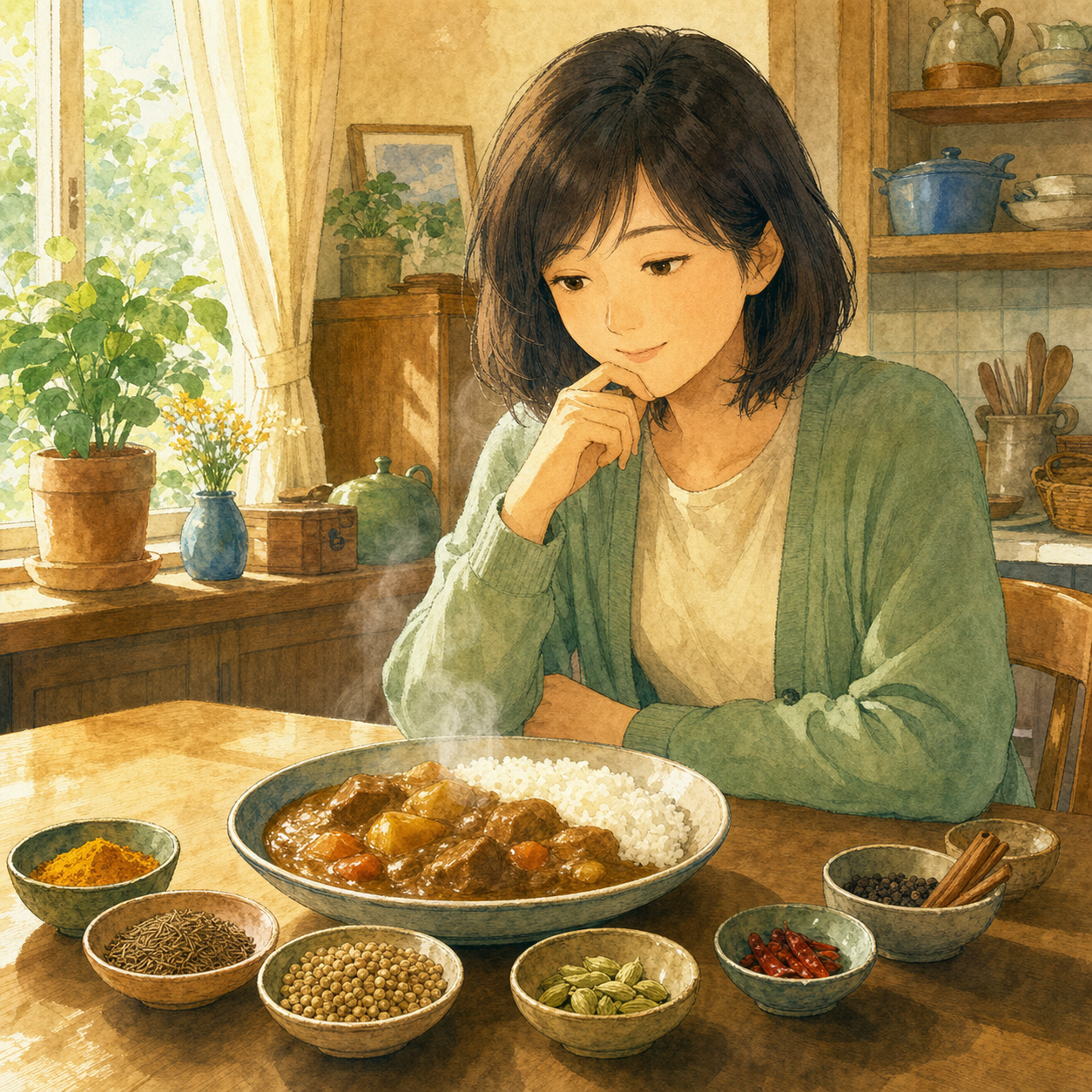
Curry is not one single food. This lesson looks at where curry came from, what the spices inside it actually do, and why Japanese curry became mild, sweet and comforting.
 English lesson
Article
Choose how to use this lesson
You can switch anytime.
Study mode
Introduction
Typing practice
Type the text exactly. Timer starts with your first key.
Text to type: Curry is not one single food. This lesson looks at where curry came from, what the spices inside it actually do, and why Japanese curry became mild, sweet and comforting.
Ready. The timer starts with your first key.
Complete
Great job!
Strong finish — your speed stayed steady.
Your rhythm
Speed over time- Time
- 0:00
- Raw speed
- 0 WPM
- Wrong keys
- 0
- Corrected
- 0
 Part 1: Curry Is Not One Food
Reading
Part 1: Curry Is Not One Food
Typing practice
Type the text exactly. Timer starts with your first key.
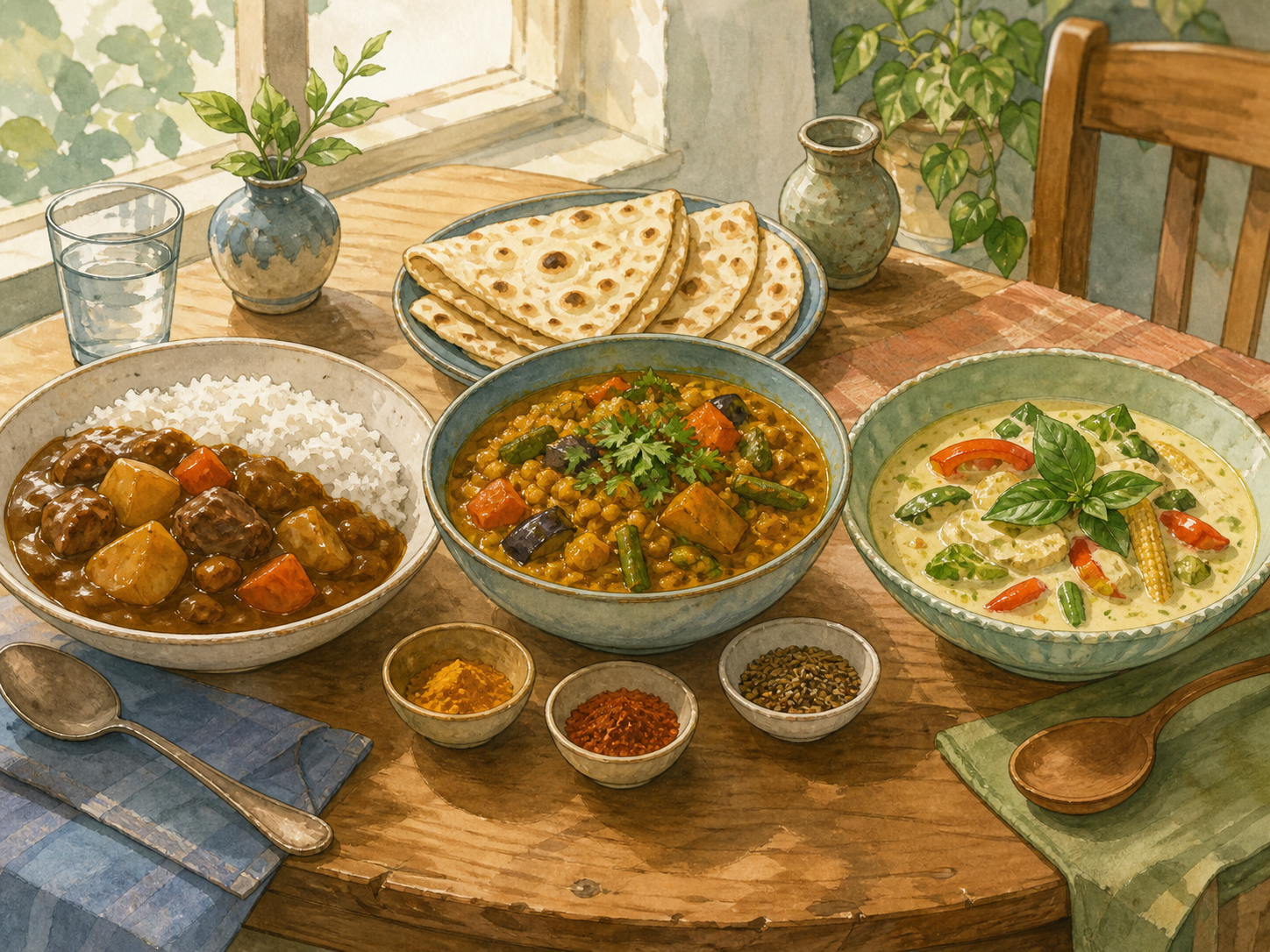
Text to type: When Japanese people hear "curry," they often imagine Japanese curry rice: thick brown sauce, rice, potatoes, carrots, onions, and maybe pork, beef, or chicken. But around the world, curry is not one single food. It can mean many different dishes. Some curries are thick, some are watery, some use coconut milk, some use tomatoes, and some are very spicy. The word "curry" became popular through British colonial history. Indian food had many different regional dishes and spice mixtures, but the British simplified many of them under the word "curry." Later, curry powder became an easy spice mix that could travel around the world. Japanese curry came through this British version, not directly from ordinary Indian home cooking. House Foods explains that Japanese curry developed from Indian masala, moved through British curry powder, and then reached Japan.
Ready. The timer starts with your first key.
Complete
Great job!
Strong finish — your speed stayed steady.
Your rhythm
Speed over time- Time
- 0:00
- Raw speed
- 0 WPM
- Wrong keys
- 0
- Corrected
- 0
Check your understanding
Check: Part 1: Curry Is Not One Food
1. Why is curry not just one single food?
Sample answer
Around the world, curry can mean many different dishes. Some are thick, some are watery, some use coconut milk, some use tomatoes, and some are very spicy. The single word "curry" came from British colonial history, which simplified many different regional Indian dishes under one name.
Think one step further
When you hear "curry," what image comes to your mind first?
Reading
Part 2: India — The World of Spices
Typing practice
Type the text exactly. Timer starts with your first key.
Text to type: Curry's deeper roots are connected to South Asian cooking, especially Indian cooking. But in India, people do not usually think of "curry powder" as one fixed thing. Different regions, families, and dishes use different spice combinations. This is very different from Japan. Japanese home cooking often depends on dashi, soy sauce, miso, mirin, sake, salt, and sugar. These flavors are usually gentle and balanced. Traditional Japanese cooking often tries to bring out the natural taste of the ingredient. Indian cooking often builds flavor in layers. Spices are not just added for heat. They create color, smell, bitterness, sweetness, warmth, earthiness, and depth. One study on Indian cuisine found that spices are central to how Indian recipes are built. So the interesting difference is this: Japanese cooking often asks, "How can we bring out the natural taste?" Indian-style spice cooking often asks, "How can we build a deep flavor using many strong ingredients together?"
Ready. The timer starts with your first key.
Complete
Great job!
Strong finish — your speed stayed steady.
Your rhythm
Speed over time- Time
- 0:00
- Raw speed
- 0 WPM
- Wrong keys
- 0
- Corrected
- 0
Check your understanding
Check: Part 2: India — The World of Spices
1. How is Indian-style spice cooking different from traditional Japanese cooking?
Sample answer
Indian-style cooking builds flavor in layers, using many strong spices together to create color, smell, bitterness, sweetness, warmth and depth. Traditional Japanese cooking uses gentler seasonings such as dashi, soy sauce, miso and mirin, and tries to bring out the natural taste of the ingredient.
Reading
Part 3: What Is Inside Curry Spice?
Typing practice
Type the text exactly. Timer starts with your first key.
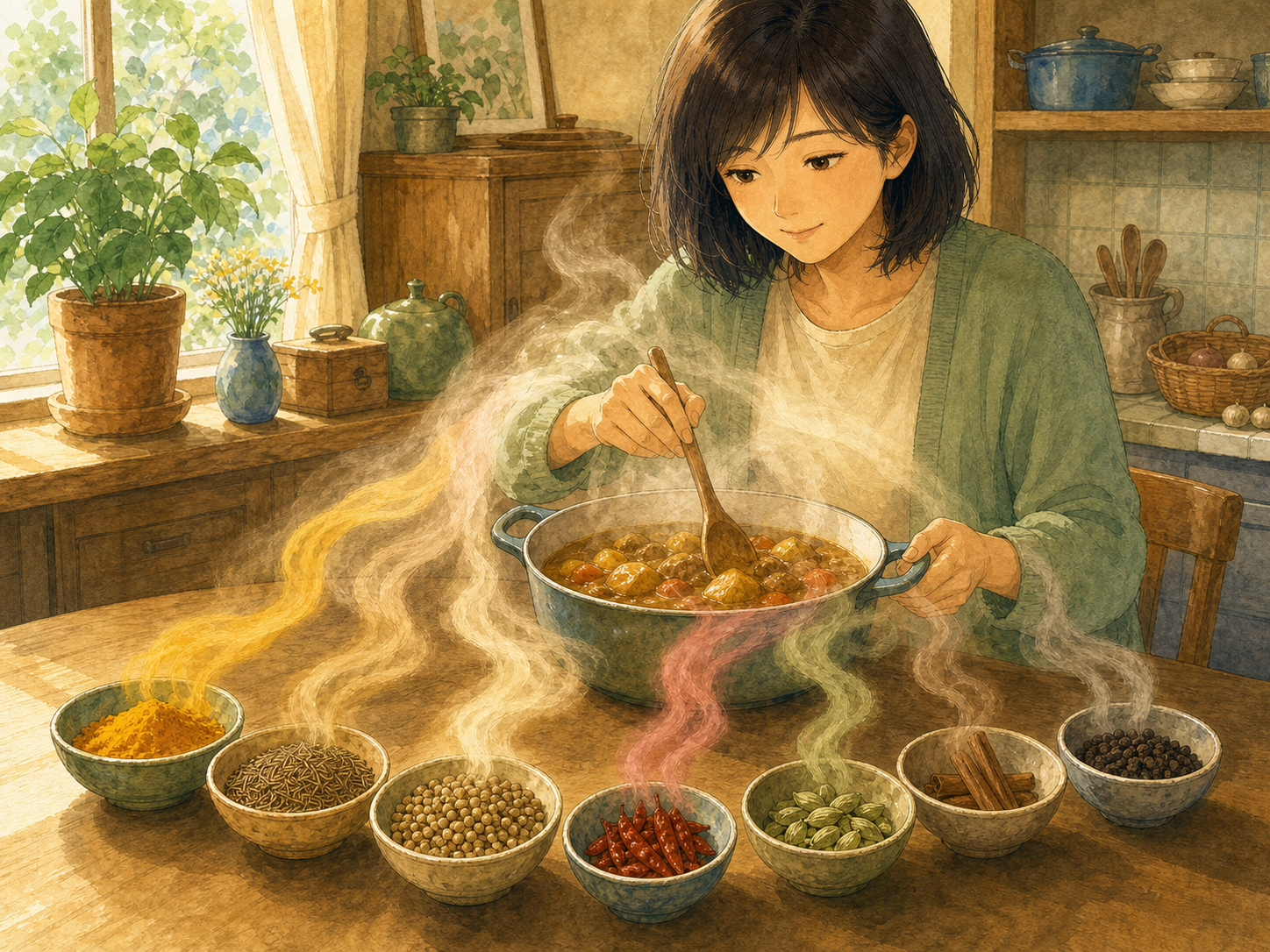
Text to type: A curry spice mix often includes several important spices. The exact mix changes by country, region, and brand, but common curry powder ingredients include turmeric, coriander, cumin, cardamom, black pepper, chilies, cinnamon, fenugreek, and sometimes other spices. Each spice has a different job. Turmeric gives curry its yellow color and earthy taste. It is not usually spicy-hot. It makes curry look warm and rich. Cumin gives curry a deep, warm, slightly smoky smell. When people say curry smells like "real curry," cumin is often one of the reasons. Coriander seed gives a lighter, slightly citrus-like flavor. It helps balance heavier spices. Chili pepper gives heat. This is the spice that makes curry feel spicy on the tongue. Black pepper gives sharp warmth. It is different from chili because it feels more dry and sharp. Cardamom, cinnamon, and cloves can add sweetness and perfume-like aroma. They make curry smell complex, not just hot. Good curry is not only about making food spicy. It is about making different spices work together.
Ready. The timer starts with your first key.
Complete
Great job!
Strong finish — your speed stayed steady.
Your rhythm
Speed over time- Time
- 0:00
- Raw speed
- 0 WPM
- Wrong keys
- 0
- Corrected
- 0
Check your understanding
Check: Part 3: What Is Inside Curry Spice?
1. Why is spicy curry not only about chili pepper?
Sample answer
Chili pepper only gives heat. Turmeric gives color and earthiness, cumin gives a warm smoky smell, coriander adds lightness, black pepper adds sharpness, and cardamom, cinnamon and cloves add sweetness and aroma. Good curry is about making these different spices work together.
Reading
Part 4: Heat, Aroma, and Depth
Typing practice
Type the text exactly. Timer starts with your first key.
Text to type: To understand curry, it helps to separate three ideas: heat, aroma, and depth. Heat means the spicy feeling. Chili pepper creates this. It can make your mouth feel hot, and sometimes it makes you sweat. Aroma means smell. Cumin, cardamom, cinnamon, cloves, and coriander are important for aroma. Curry smells strong before you even eat it. Depth means the flavor feels full and not simple. This can come from toasted spices, onions, garlic, ginger, tomatoes, meat, oil, or long cooking. Japanese curry usually has some spice aroma, but it often becomes mild, sweet, and thick. Indian-style or Thai-style curries may feel sharper, hotter, fresher, or more layered. So when someone says "this curry is spicy," they might mean different things. Maybe it has a lot of chili. Maybe it has strong spice aroma. Maybe it has deep flavor. These are related, but they are not the same.
Ready. The timer starts with your first key.
Complete
Great job!
Strong finish — your speed stayed steady.
Your rhythm
Speed over time- Time
- 0:00
- Raw speed
- 0 WPM
- Wrong keys
- 0
- Corrected
- 0
Check your understanding
Check: Part 4: Heat, Aroma, and Depth
1. What is the difference between heat, aroma, and depth?
Sample answer
Heat is the spicy feeling from chili pepper. Aroma is the smell, which comes from spices such as cumin, cardamom, cinnamon, cloves and coriander. Depth is the full, not-simple flavor that comes from toasted spices, onions, garlic, ginger, tomatoes, meat, oil or long cooking.
 Part 5: Why Spices Work Together
Reading
Part 5: Why Spices Work Together
Typing practice
Type the text exactly. Timer starts with your first key.
Text to type: Spices in curry work like a team. If curry only has chili, it can be hot but simple. If it only has turmeric, it can be colorful but not exciting. If it only has cumin, it can smell strong but feel heavy. A good curry balances many roles. Turmeric gives color and earthiness. Cumin gives warmth and a "curry-like" smell. Coriander makes the flavor lighter. Chili gives heat. Cardamom or cinnamon can give sweetness and aroma. Black pepper gives sharpness. This is very different from Japanese seasoning. In Japan, flavor often comes from umami and balance. In curry, flavor often comes from contrast: hot and sweet, earthy and fresh, sharp and creamy, heavy and bright. That is why curry can feel exciting. The spices are almost fighting, but if the cook balances them well, they become one flavor.
Ready. The timer starts with your first key.
Complete
Great job!
Strong finish — your speed stayed steady.
Your rhythm
Speed over time- Time
- 0:00
- Raw speed
- 0 WPM
- Wrong keys
- 0
- Corrected
- 0
Check your understanding
Check: Part 5: Why Spices Work Together
1. Why do curry spices need balance?
Sample answer
Because each spice alone is limited: only chili is hot but simple, only turmeric is colorful but not exciting, only cumin smells strong but feels heavy. Balance lets the spices work as a team so that contrast — hot and sweet, earthy and fresh, sharp and creamy — becomes one flavor.
Think one step further
Do you think food is more interesting when flavors are balanced or when they strongly contrast?
Reading
Part 6: Curry Comes to Japan
Typing practice
Type the text exactly. Timer starts with your first key.
Text to type: Curry came to Japan during the Meiji period, when Japan was modernizing and learning many things from Western countries. House Foods says curry powder began entering Japan around 1870, and a book explaining how to cook curry appeared in Japan in 1872. This is important: curry arrived in Japan as Western food, not as "Indian food." At that time, Britain had already changed Indian spice cooking into a curry powder system. Japan received that British-style curry and then changed it again. Japanese curry became thicker, milder, and sweeter. Flour was used to make the sauce thick. Potatoes, carrots, and onions became common. The dish was eaten with rice, so it fit Japanese eating habits very well. This is why Japanese curry is familiar but also strange: it has Indian roots, British form, and Japanese comfort-food feeling.
Ready. The timer starts with your first key.
Complete
Great job!
Strong finish — your speed stayed steady.
Your rhythm
Speed over time- Time
- 0:00
- Raw speed
- 0 WPM
- Wrong keys
- 0
- Corrected
- 0
Check your understanding
Check: Part 6: Curry Comes to Japan
1. Why did curry feel like Western food when it first came to Japan?
Sample answer
Because it arrived through Britain during the Meiji period, not directly from India. Britain had already turned Indian spice cooking into a curry powder system, so Japan received a British-style curry and then changed it again.
Reading
Part 7: Curry Powder and Curry Roux
Typing practice
Type the text exactly. Timer starts with your first key.
Text to type: One reason curry became popular in Japan is that it became easy to cook. S&B Foods says its founder Minejiro Yamazaki succeeded in producing Japan's first homegrown curry powder in 1923. S&B also says the first home-use curry powder was launched in 1930. Later, curry roux made curry even easier. A roux is a block that already contains spices, fat, flour, salt, and flavor. You can cook meat and vegetables, add water, and then melt the roux into the pot. This changed curry from a special dish into a home dish. Families did not need to understand each spice. They could use one block and get a stable, familiar flavor. This is very Japanese in a way: the complex spice world became convenient, safe, and repeatable.
Ready. The timer starts with your first key.
Complete
Great job!
Strong finish — your speed stayed steady.
Your rhythm
Speed over time- Time
- 0:00
- Raw speed
- 0 WPM
- Wrong keys
- 0
- Corrected
- 0
Check your understanding
Check: Part 7: Curry Powder and Curry Roux
1. How did curry powder and curry roux help curry become popular in Japan?
Sample answer
They made curry easy to cook. Curry roux is a block that already contains spices, fat, flour, salt and flavor, so families did not need to understand each spice. They could melt one block into the pot and get a stable, familiar flavor every time.
Reading
Part 8: Why Japanese Curry Is Usually Not Very Spicy
Typing practice
Type the text exactly. Timer starts with your first key.
Text to type: Japanese curry is usually milder than many Indian, Thai, or South Asian curries. One reason is that Japanese food culture traditionally did not use many strong dried spices. Japanese cooking used strong flavors too, but they were different: miso, soy sauce, dashi, vinegar, wasabi, ginger, and green onion. Another reason is that Japanese curry became a family food. Children often eat curry at home and school. So the taste became sweeter, thicker, and less aggressive. Japanese curry often uses sweetness from onions, apples, honey, or fruit-like flavors. It also has a thick texture that makes it feel comforting. So Japanese curry is not really about spice shock. It is about comfort, rice, sauce, and familiar home taste.
Ready. The timer starts with your first key.
Complete
Great job!
Strong finish — your speed stayed steady.
Your rhythm
Speed over time- Time
- 0:00
- Raw speed
- 0 WPM
- Wrong keys
- 0
- Corrected
- 0
Check your understanding
Check: Part 8: Why Japanese Curry Is Usually Not Very Spicy
1. Why did Japanese curry become milder and sweeter?
Sample answer
Japanese food culture traditionally did not use many strong dried spices, and curry became a family food that children eat at home and at school. So the taste became sweeter, thicker and less aggressive, often using sweetness from onions, apples or honey.
Think one step further
Do you think curry should be exciting and spicy, or warm and comforting?
 Part 9: Spicy Curry and the Body
Reading
Part 9: Spicy Curry and the Body
Typing practice
Type the text exactly. Timer starts with your first key.
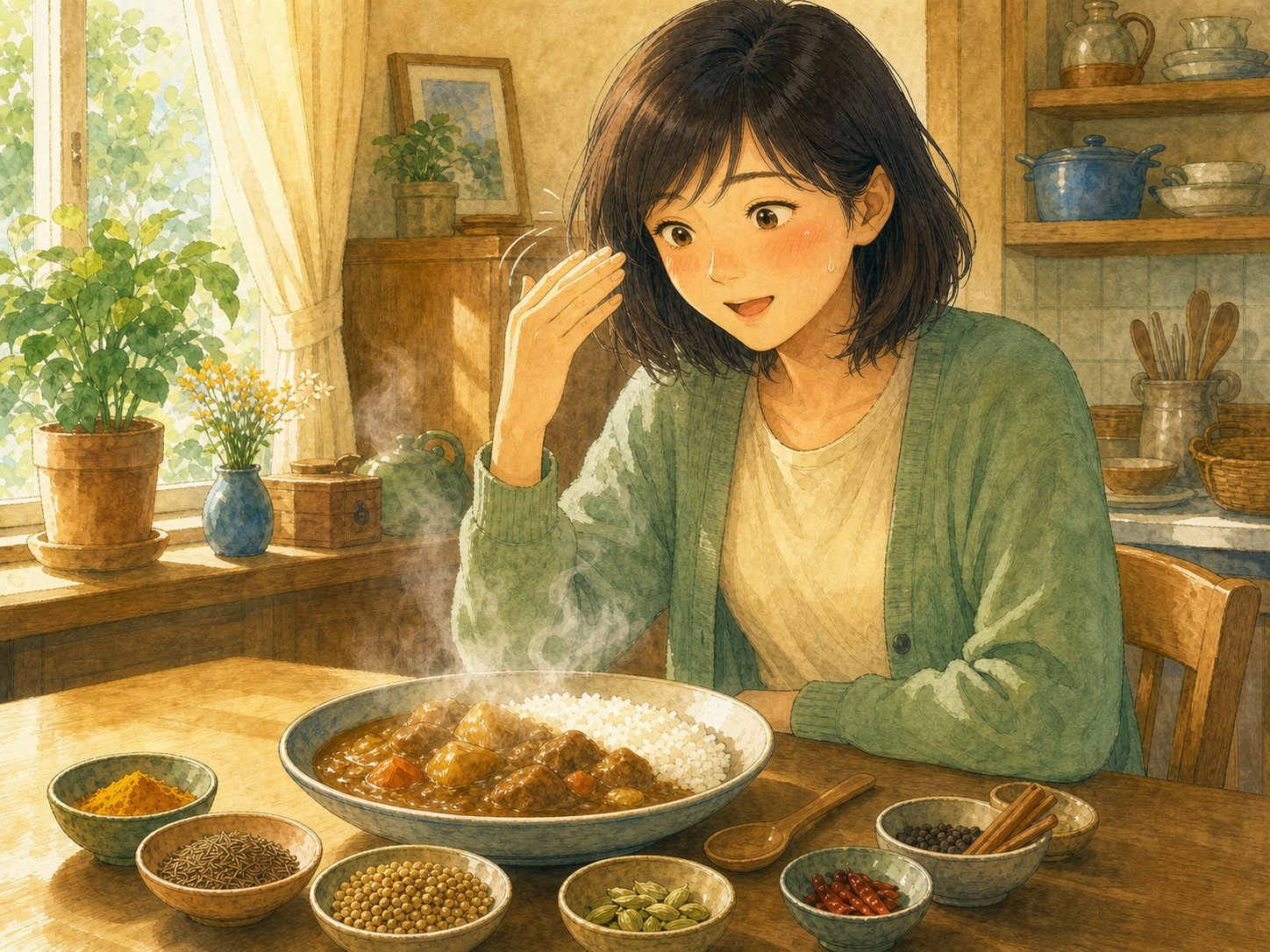
Text to type: Spicy curry affects the body strongly. Chili pepper can make your mouth feel hot, your face warm, and your body sweat. This happens because the brain reacts to chili as if it is heat. This is why spicy food can feel exciting. It is not only taste. It is also a body experience. Spices also affect smell and memory. Curry smell can stay in a room, on clothes, or in the mind. Many people connect curry with home, travel, school lunch, restaurants, or family. For Japanese learners, this is interesting because curry is a good example of food becoming emotional. Even though the spice idea came from outside Japan, curry became deeply connected to Japanese daily life.
Ready. The timer starts with your first key.
Complete
Great job!
Strong finish — your speed stayed steady.
Your rhythm
Speed over time- Time
- 0:00
- Raw speed
- 0 WPM
- Wrong keys
- 0
- Corrected
- 0
Check your understanding
Check: Part 9: Spicy Curry and the Body
1. Why is spicy curry more than just a taste experience?
Sample answer
Chili makes the mouth feel hot, the face warm and the body sweat, because the brain reacts to chili as if it is heat, so it is a body experience. Curry smell also stays in a room, on clothes or in the mind, and connects to memories of home, travel, school lunch or family.
What you can do now
Final Reflection
What food smell strongly connects to your memories?
Learning cards
My cards
Spicy Curry: History, Spices, and Why It Feels Different in Japan
0 due · 8 new · about 3 min
Learn the sense first · then retrieve it
Focused Reading Mode is open.
Listening
Lesson audio
Listen from the beginning, or choose “Play this part” as you read along.
Reading
Part 1: Curry Is Not One Food
Reading
Part 2: India — The World of Spices
Reading
Part 3: What Is Inside Curry Spice?
Reading
Part 4: Heat, Aroma, and Depth
Reading
Part 5: Why Spices Work Together
Reading
Part 6: Curry Comes to Japan
Reading
Part 7: Curry Powder and Curry Roux
Reading
Part 8: Why Japanese Curry Is Usually Not Very Spicy
Reading
Part 9: Spicy Curry and the Body
Finished listening?
Mark this listening practice complete when you have followed the lesson audio.
Listening complete
Listen Mode
Word-by-word syncPlay the audio and follow the highlighted word.
Article complete
Choose your next step
Open the next same-level lesson, replay the article, or save this page for later.
Listen Again
Replay the article once and notice how much more you understand.
One replay is enough. Then move on.