B1: Why Socks Disappear: The Psychology and Science of a Small Mystery
Quality checked lesson
Use one funny daily problem to understand attention, habits, memory, static electricity, small spaces, and simple systems thinking.

Transcript
Choose how to use this lesson
You can switch anytime.
Today's path
One clear way through the lesson
Start with Read core, then move forward when you feel ready.
- 1 Read core
- 2 Check understanding
Selected
Study mode: article with quick checks.
Study Layout
Experience
Read-along works with this web player.
Introduction
Use one funny daily problem to understand attention, habits, memory, static electricity, small spaces, and simple systems thinking.
Where do socks usually disappear in your home: bedroom, laundry basket, washing machine, drying area, or drawer?
When something small is missing, do you first blame yourself, another person, or the object?
What other small thing do you often lose: keys, pens, hair ties, chargers, or remote controls?
Reading
are the is small, but it You only one It the has a
Check your understanding
Why is the missing sock problem more than a joke?
You can start like this: Because...
Of do not by The is more A is small, to and to It or and At one small is
This lesson the as a The question is not only "Where did it The question is "Why are and so at small
One is we In is A by and that can a when they are on This is
the same of in a You may at the but your is about or A under a may be but it is not important to your
Check your understanding
What is the difference between looking and noticing?
You can start like this: I think...
So the is not it is only The but the does not it as important.
is a We do it in the same with the same and that in the same can That is we do not to about small
Check your understanding
How can a useful habit create a sock problem?
You can start like this: I think...
But routines have a side. When you do on you may pick up most but leave one under the bed. You may move from to but drop one behind the You may but a inside a
mental but it does not check corner. That is why a boring can produce a mistake.

After a is also joins the mystery. We may "I put both in the wash." Maybe we did. Maybe we only planned to. Maybe one was under the bed, but our in the story.
researcher as one of It when and do not connect well. In life, that can mean forgetting a small or believing you completed a you complete it.
This is why The is gone, but the complete. Our brain a story: "The ate it." The story is dramatic: "I was tired and did not the small
Check your understanding
Why can memory make the sock mystery feel stronger?
You can start like this: Because...
There is also some physics. are light and so they can move with They can roll into a leg, inside a sheet, or stick to a
Check your understanding
How can physics help a sock disappear?
You can start like this: I think...
can make this worse. The of Congress as an between negative and positive When materials together, can move from one surface to In dry conditions, can stay longer. In can so a small may stay to a larger item.
This does not mean is the main criminal It means the physical of makes them to twist, and inside
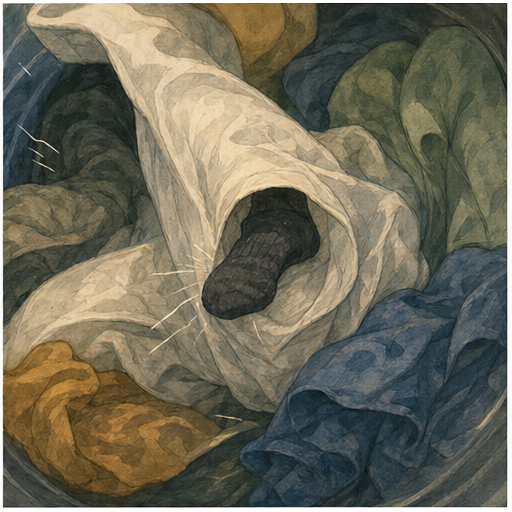
the That is the is closed, and hard to see inside. It
Most are probably lost before or after But the can be involved. In small items can in the rubber Appliance guidance from Whirlpool even tells to pull back in the and check for foreign including the Some small items may also a pump or on the design and access.
Check your understanding
What is the careful conclusion about washing machines?
You can start like this: I think...
The conclusion is this: the is not a monster, but it is part of the system. It has small water, spinning rubber seals, and A small can those than a can.
An odd is one its partner. keep odd for weeks or months. This is but also psychological.
The odd an story. If you throw it away today and find the partner you If you keep it, you keep a small hope alive. The is almost useless, but not completely useless. It to a pair, and the pair might return.
Check your understanding
Why do people keep odd socks?
You can start like this: Because...
This is why an odd can to throw away than an old The is finished. The odd is It "Wait. My partner may still be under the
A helpful way to is A system is a set of connected The system has foot to to to to to to
Check your understanding
What does systems thinking show about missing socks?
You can start like this: I think...
At the can It can fall, stick, be carried away by a pet or child, or be placed in the wrong The mystery does not need one big cause. It only needs one
This is beyond this way. A lost a missed email, a forgotten and a late may all come from The lesson is not "be The lesson is "make the system easier to check."
You can reduce with a experiment. For one week, put all directly into one or Before count the After count again. After count again. Before them in the count one more
This sounds but it the Instead of saying, you where the system them. Maybe the is the zone. Maybe the is. Maybe the is Maybe the needs checking.
Check your understanding
How does a sock experiment change the problem?
You can start like this: I think...
starts this way: count, one and check again. Even a can the scientific method.

Practice
Why is the missing sock problem more than a joke?
It shows how small objects can be lost through attention limits, habits, memory mistakes, static cling, machine spaces, and messy home systems.
Which part sounds most interesting to you: the psychology, the machine, or the daily habit?
What is the difference between looking and noticing?
Looking means your eyes receive information, but noticing means your attention treats something as important.
Have you ever missed something that was right in front of you?
How can a useful habit create a sock problem?
A habit lets us do laundry with little thought, so we may miss one small step or one small object.
What daily task do you often do on autopilot?
Why can memory make the sock mystery feel stronger?
We may remember the normal routine, but not the exact small detail of where each sock actually went.
Do you trust your memory for small routine tasks?
How can physics help a sock disappear?
Socks are light and flexible, and static electricity or fabric folds can make them stick to or hide inside other clothes.
What clothes in your home often stick together after washing or drying?
What is the careful conclusion about washing machines?
They are not usually magic sock-eaters, but small socks can sometimes get caught in gaskets, filters, or tight spaces.
Would you check the machine first or check the room first?
Why do people keep odd socks?
They hope the missing partner may return, so throwing the odd sock away feels like deciding too early.
Do you keep incomplete things because they might become useful later?
What does systems thinking show about missing socks?
It shows that one small failure at any transfer point can break the whole pair.
What daily system in your life has weak transfer points?
How does a sock experiment change the problem?
It helps you find the step where socks are lost instead of guessing or blaming the whole process.
What would you measure if you ran this experiment?
Summary
Missing socks are interesting because they connect ordinary life with real ideas.
Attention is limited.
Habits can run on autopilot.
Memory can simplify the past.
Static electricity and fabric folds can hide small items.
Washing machines have small spaces.
Home systems have weak transfer points.
So the answer is not one big mystery.
It is many tiny mistakes working together.
That is why the joke stays alive.
A sock disappears, and for a moment, daily life feels like a detective story.
The useful lesson is also bigger than socks.
If something small keeps going wrong, do not only blame yourself.
Map the system.
Find the weak step.
Make that step easier to see.
Final Reflection
are they connect life with is
can run on can the past.
and can small items. have small
have
So the answer is not one big mystery. It is mistakes working together.
That is why the joke stays alive. A and for a life a detective story.
Key Point
The lesson is also bigger than If small going wrong, do not only yourself.
the system. Find the
Make that easier to see.
Simple Meaning
Word
This word has no saved lesson sentence yet.
Simple Meaning
Preparing dictionary popup...
In this sentence
No context meaning available yet.
Simple version
Example sentence
Reference
Language assist
Loading assist...
Extra language help is not ready for this word yet.
Question
Lesson vocabulary
Vocabulary
Save words from this lesson, then use flashcards and quiz here.
Practice your saved words. We'll bring back the ones you need to review.
Flashcards
No saved words yet
Tap words in the transcript to start your lesson vocabulary.
Article complete
Choose your next step
Open the next same-level lesson, replay the article, or save this page for later.
Listen Again
Replay the lesson once after studying and notice how much more you understand.
One replay is enough. Then move on.
Save, rate, or report an issue
Quick issue note
Mark one confusing or broken spot on the page, then send a short note.
Resources
Save, share, or contact support from one place.